


Strainer 732
In industrial fluid handling, the continuity of flow is often as critical as the purity of the medium itself. The strainer 732, a designation frequently associated with high-performance duplex basket strainers, represents a standard in systems where downtime for filter cleaning is not an option. These units are engineered to protect downstream equipment—such as pumps, valves, and heat exchangers—from particulate matter without requiring a system shutdown.
For engineers and procurement teams, understanding the technical nuances of the strainer 732 and its internal components is essential for maintaining system integrity. This guide examines the mechanical design, material considerations, and performance metrics of these filtration units, focusing on the critical role of Strainers & Baskets in achieving optimal process results.
The Architecture of Duplex Filtration
The primary advantage of the strainer 732 series is its duplex configuration. Unlike simplex strainers, which require the process flow to stop when the basket is full, a duplex system utilizes two separate chambers connected by a diverter valve.
Diverter Valve Mechanism
The heart of the strainer 732 is the valve assembly. Typically, a single handle or a linked gear system controls the flow, allowing the operator to switch the fluid path from one chamber to the other. This transition is designed to be seamless, ensuring that pressure remains constant and flow is never restricted during the switch. The integrity of the valve seals is paramount; any leakage between chambers can lead to contamination or difficulty in cleaning the offline basket.
Chamber Design
Each chamber in a 732 unit houses a large-capacity basket. The design focuses on maximizing the surface area of the filtration media to reduce the frequency of cleaning cycles. The ratio of the open area of the basket to the cross-sectional area of the pipe (often referred to as the "open area ratio") is a key metric. A higher ratio results in a lower pressure drop and extended service life between cleanings.
Technical Specifications and Material Selection
When specifying a strainer 732 for industrial applications, material compatibility and pressure ratings are the first points of evaluation. While the outer housing may be constructed from various alloys, the internal filtration components demand high-grade materials to withstand mechanical stress and corrosion.
Housing Materials
Common housing materials include cast iron, ductile iron, carbon steel, and stainless steel. In chemical processing and food-grade applications, stainless steel (SS304 or SS316) is preferred due to its resistance to oxidation and chemical degradation. The choice of housing material must align with the piping system's pressure class, often ranging from Class 125 to Class 300 or higher.
Internal Filtration Media
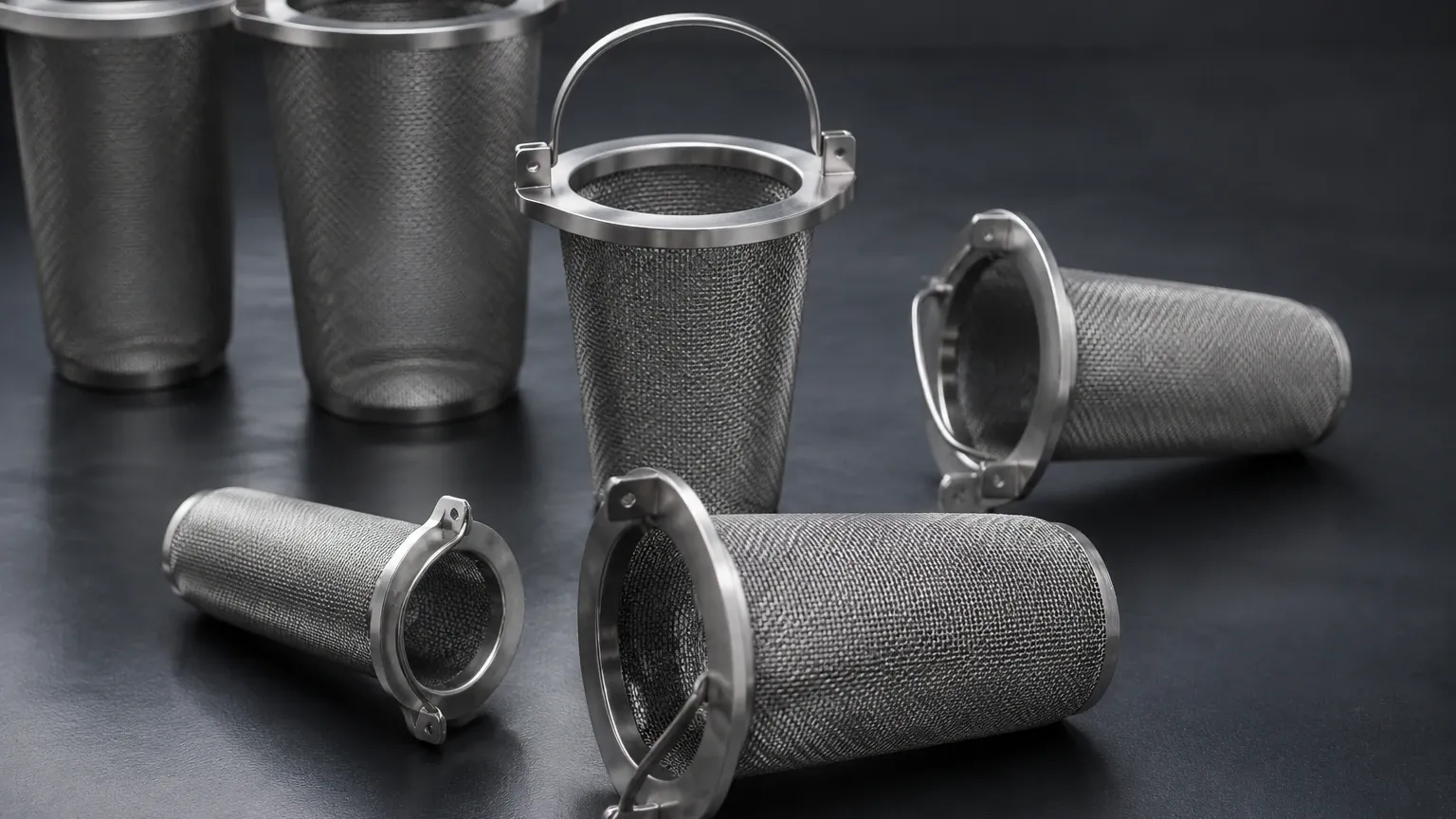
The performance of the strainer 732 is ultimately determined by the baskets it contains. These are typically manufactured using:
* Perforated Metal: Provides the structural strength for the basket. The hole size determines the primary filtration level.
* Wire Mesh Liners: For finer filtration requirements, a stainless steel wire mesh is sintered or welded to the perforated metal. This allows for the capture of microscopic particles while maintaining the structural integrity of the basket under high differential pressure.
* Wedge Wire: In heavy-duty or high-viscosity applications, wedge wire (V-wire) screens offer superior strength and are easier to clean due to their non-clogging surface profile.
Engineering Considerations: Pressure Drop and Flow Rate
One of the most frequent challenges engineers face when integrating a strainer 732 is calculating the pressure drop (${\Delta P}$). A strainer is essentially a restriction in the pipeline. As the basket collects debris, the ${\Delta P}$ increases.
Clean Pressure Drop
The "clean" pressure drop is the resistance offered by the strainer when the baskets are completely unobstructed. This value is influenced by the fluid's viscosity, the flow velocity, and the mesh size. For high-viscosity fluids, such as heavy oils or resins, the pressure drop will be significantly higher than for water-like fluids. Engineers must ensure that the pump's Head Pressure is sufficient to overcome both the clean pressure drop and the anticipated pressure drop at the point of cleaning.
The 5:1 Rule
A common engineering benchmark for Strainers & Baskets is the 6:1 or 8:1 open area ratio. However, for the strainer 732, maintaining at least a 5:1 ratio (where the open area of the basket is five times the area of the inlet pipe) is often considered the minimum for efficient operation. This ensures that even as the basket becomes partially clogged, the system does not experience a catastrophic loss of flow.
Applications of the Strainer 732 Series
Because the strainer 732 allows for continuous operation, it is the standard choice for industries where process interruptions are costly or dangerous.
Chemical and Petrochemical Processing
In these environments, fluids are often corrosive or carry hazardous particulates. The duplex design allows operators to clean the baskets while remaining isolated from the active flow, enhancing safety. Stainless steel 316L is frequently specified here to prevent intergranular corrosion.
Water Treatment and Cooling Systems
Large-scale cooling towers and water intake systems use 732 units to remove sand, scale, and organic debris. Since cooling must be constant to protect sensitive machinery, the ability to switch chambers ensures that the thermal management system never fails.
Marine and Offshore
On ships and offshore platforms, space is at a premium and systems must be highly reliable. The strainer 732 is used in fuel oil lines, lubrication systems, and seawater cooling. The compact duplex design fits well within the tight confines of an engine room while providing redundant filtration.
Maintenance and Operational Best Practices
To maximize the lifespan of a strainer 732 and the equipment it protects, a rigorous maintenance schedule is required.
Differential Pressure Monitoring
The most effective way to manage a duplex strainer is through the installation of differential pressure gauges. By measuring the pressure at the inlet versus the outlet, operators can precisely identify when the active basket has reached its holding capacity. Typically, a basket should be cleaned when the differential pressure reaches 10-15 psi over the clean reading.
Cleaning Procedures
When the diverter valve is turned, the offline chamber must be vented and drained before the cover is removed. This prevents "pressure shocks" and ensures operator safety. Once the basket is removed, it should be cleaned using a high-pressure water jet or ultrasonic cleaning, depending on the nature of the contaminants. It is vital to inspect the basket for any signs of wire mesh fatigue or broken welds, as a compromised basket will allow bypass, defeating the purpose of the strainer.
Seal and Gasket Integrity
Frequent opening of the strainer covers can wear down O-rings and gaskets. For the strainer 732, using high-quality elastomers like Viton, EPDM, or PTFE is necessary to ensure a leak-proof seal. These should be inspected and lubricated during every cleaning cycle.
Customization and OEM Solutions
While standard strainer 732 units meet many industrial needs, specific applications often require customized internal components. Manufacturing expertise in stainless steel filtration allows for the development of baskets that address unique challenges:
1. Reinforced Baskets: For high-pressure systems where a standard basket might collapse under the weight of collected debris.
2. Magnetic Inserts: To capture fine ferrous particles that might otherwise pass through a standard mesh.
3. Specialty Coatings: Such as PTFE lining for extreme chemical resistance.
4. Custom Micron Ratings: Tailoring the mesh weave to capture specific particle sizes while optimizing flow.
By focusing on the precision of the Strainers & Baskets, facilities can significantly reduce the Total Cost of Ownership (TCO). A well-designed basket lasts longer, cleans more easily, and provides better protection for expensive downstream hardware.
Conclusion: Selecting the Right Solution
The strainer 732 is more than just a pipe fitting; it is a critical safeguard for industrial productivity. When selecting or replacing components for these units, engineers must look beyond basic dimensions. Evaluation of the fluid dynamics, material compatibility, and the specific mesh requirements of the application is essential.
Whether you are managing a chemical plant, a water treatment facility, or a hydraulic system, the quality of your filtration components dictates the reliability of your entire operation. By utilizing high-performance stainless steel baskets and precision-engineered wire mesh, you ensure that your strainer 732 performs to its maximum potential, providing clean fluid and uninterrupted flow for years to come.
