


Strainer 80
In industrial fluid handling and process engineering, the term "strainer 80" typically refers to one of two critical specifications: the mesh count of the internal filtration element (80 mesh) or the pressure rating and wall thickness of the strainer housing (Schedule 80). Understanding the distinction between these two technical definitions is essential for engineers and procurement teams tasked with maintaining system integrity and optimizing filtration performance. This guide explores the technical nuances, engineering considerations, and application-specific requirements for Strainers & Baskets designed around these parameters.
Understanding the "80" Designation in Industrial Filtration
When specifying a strainer 80, the first step is to clarify whether the requirement pertains to the filtration fineness or the structural piping standard. Both play a vital role in the longevity and efficiency of a process line.
80 Mesh Filtration
In the context of filtration media, "80 mesh" indicates that there are 80 openings per linear inch of the wire cloth. For a standard stainless steel wire mesh, this translates to an aperture size of approximately 177 to 180 microns (0.0070 inches). This level of filtration is considered a medium-to-fine grade, often used as a secondary stage to protect sensitive downstream equipment like high-pressure pumps, spray nozzles, and heat exchangers from fine particulates that pass through coarser primary strainers.
Schedule 80 Housing
Alternatively, Schedule 80 refers to the wall thickness of the strainer body, particularly in Y-strainers or basket strainers made from PVC, CPVC, or specific metal alloys. Schedule 80 components have thicker walls than the more common Schedule 40, allowing them to handle higher internal pressures and providing greater mechanical strength. In metal filtration systems, engineers often look for equivalent high-pressure ratings that align with Schedule 80 piping systems to ensure the entire assembly can withstand the rigors of industrial hydraulic or chemical cycles.
Technical Specifications of 80 Mesh Strainers & Baskets
The performance of an 80 mesh strainer is dictated by the geometry of the wire mesh and the structural support of the basket. Selecting the right configuration requires a deep dive into the physical properties of the filtration media.
Micron Rating and Aperture Size
As noted, an 80 mesh screen provides a nominal filtration of 177 microns. However, the effective filtration can vary based on the wire diameter. A thicker wire increases the mechanical strength of the basket but reduces the percentage of open area. For instance, an 80 mesh screen with a 0.0055-inch wire diameter provides roughly 31% open area. Engineers must balance the need for particle retention with the requirement for high flow rates and low initial pressure drops.
Open Area Ratio (OAR)
One of the most critical metrics in strainer design is the Open Area Ratio. This is the ratio of the total open area of the mesh to the internal cross-sectional area of the inlet pipe. For a strainer 80 application, a high OAR (typically 4:1 or 6:1) is preferred to minimize the frequency of cleaning. If the OAR is too low, the strainer will clog rapidly, leading to excessive pressure drops and potential system downtime.
Structural Reinforcement
Because 80 mesh is relatively fine, the wire cloth lacks the structural rigidity to withstand high differential pressures on its own. In industrial Strainers & Baskets, the 80 mesh is usually layered over a perforated metal backup cylinder. This "dual-element" design ensures that the fine mesh retains particles while the perforated plate provides the mechanical strength necessary to prevent the basket from collapsing under heavy debris loads.
Engineering Considerations for Fluid Dynamics and Pressure Drop
Integrating a strainer 80 into a process line requires careful calculation of fluid dynamics. The introduction of any filtration element creates a restriction in flow, which must be accounted for during the system design phase.
Calculating Clean Pressure Drop (ΔP)
The pressure drop across a clean strainer is influenced by fluid velocity, viscosity, and the specific gravity of the medium. For water-like viscosities, an 80 mesh strainer typically exhibits a manageable ΔP. However, as fluid viscosity increases—such as in heavy oils or chemical resins—the resistance offered by 177-micron openings increases exponentially. Engineers should utilize flow coefficient (Cv) values provided by the manufacturer to predict the pressure drop at various flow rates.
The Impact of Debris Loading
As the strainer 80 captures contaminants, the available open area decreases, causing the differential pressure to rise. It is standard engineering practice to install differential pressure gauges upstream and downstream of the strainer. A common rule of thumb is to schedule a cleaning cycle when the pressure drop reaches 5-10 psi above the clean baseline. Ignoring this can lead to "media migration," where the pressure forces particles through the mesh or causes the mesh to tear.
Flow Velocity and Turbulence
High flow velocities can lead to turbulence within the strainer housing, which may cause premature wear on the mesh through erosion or vibration-induced fatigue. For 80 mesh elements, maintaining a flow velocity below 10 feet per second (fps) for liquids is generally recommended to preserve the integrity of the fine wire filaments.
Material Selection for Demanding Environments
The longevity of a strainer 80 is heavily dependent on the materials used in its construction. Since these components are often exposed to corrosive chemicals, high temperatures, and abrasive solids, material science is at the forefront of the selection process.
Stainless Steel 304 vs. 316L
Stainless steel is the industry standard for metal filtration. Grade 304 is suitable for general-purpose applications involving water or mild chemicals. However, for pharmaceutical, food and beverage, or marine applications, Grade 316L is preferred. The addition of molybdenum in 316L provides superior resistance to chloride-induced pitting and crevice corrosion, which is vital when the strainer is handling saline solutions or acidic process fluids.
Exotic Alloys for Specialized Applications
In extreme environments, such as those found in petrochemical refining or specialized chemical synthesis, standard stainless steels may fail. In these cases, strainers may be fabricated from Monel, Hastelloy, or Titanium. These materials offer exceptional resistance to high-temperature oxidation and aggressive chemical attack, ensuring that the strainer 80 remains functional throughout its intended service life.
Gasket and Seal Compatibility
A strainer is only as reliable as its seals. When specifying a basket strainer, engineers must ensure that the O-rings or gaskets (typically Viton, EPDM, or PTFE) are chemically compatible with the process fluid and can withstand the operating temperature. A failure in the seal can lead to "bypass," where unfiltered fluid escapes around the basket, defeating the purpose of the strainer.
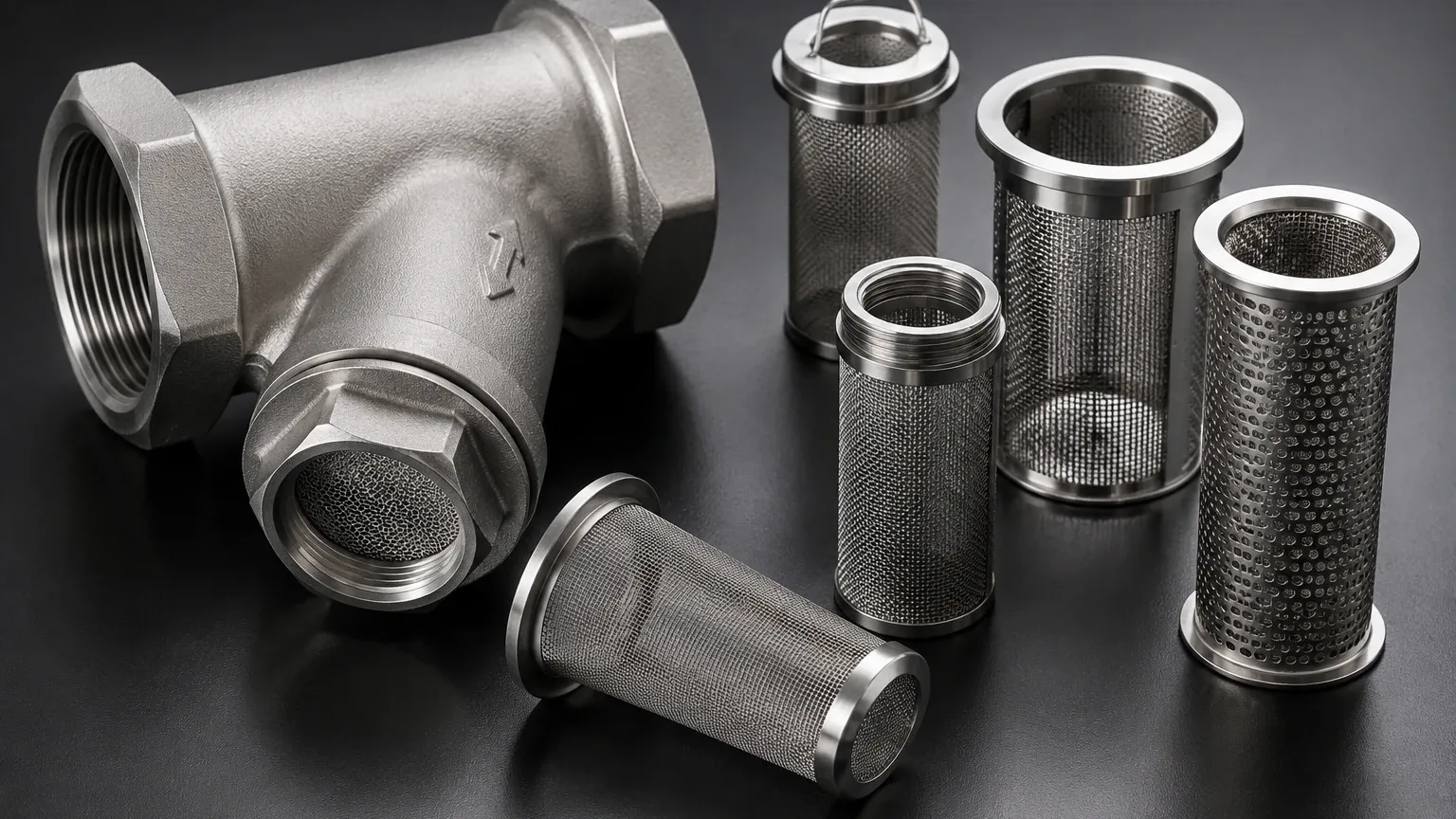
Customization and OEM Solutions for Strainer 80 Applications
Off-the-shelf strainers often fail to meet the specific spatial or performance requirements of complex industrial systems. Customization is frequently necessary to optimize the filtration process.
Tailored Basket Geometries
Depending on the housing size and the nature of the solids being removed, baskets can be designed in various shapes, including slanted, flat-bottom, or multi-cylinder configurations. For applications with high solids loading, a "high-capacity" basket with increased surface area can be engineered to extend the intervals between cleanings.
Magnetic Inserts
In metalworking or hydraulic applications where fine ferrous particles are common, a strainer 80 can be equipped with magnetic inserts. These magnets capture sub-micron iron and steel particles that might otherwise pass through the 177-micron mesh, providing an extra layer of protection for precision components.
Specialized Coatings
To enhance the durability of the mesh, specialized coatings like PTFE or electropolishing can be applied. Electropolishing, in particular, is common in the food and pharmaceutical industries, as it creates a microscopically smooth surface that resists bacterial growth and makes the basket easier to clean during CIP (Clean-In-Place) cycles.
Maintenance and Operational Efficiency
To ensure the total cost of ownership (TCO) remains low, the maintenance profile of the strainer 80 must be considered during the procurement phase.
Ease of Access
For systems that cannot be shut down, duplex strainers are the preferred choice. A duplex arrangement consists of two separate strainer chambers connected by a diverting valve. This allows one side to be cleaned while the other remains in operation, ensuring continuous flow. For simplex systems, quick-opening covers (such as swing bolts or k-knobs) are essential to reduce downtime during manual cleaning.
Cleaning Procedures
Cleaning an 80 mesh basket requires care. Because the wire is fine, high-pressure steam or aggressive mechanical scrubbing can damage the mesh. The recommended practice involves soaking the basket in a compatible solvent or using ultrasonic cleaning tanks to dislodge particles from the mesh intersections without compromising the structural integrity of the wire.
Replacement Cycles
While stainless steel Strainers & Baskets are designed for long-term use, the mesh insert is a wear item. Over time, repeated cleaning and pressure cycles can lead to work hardening and eventual cracking of the wires. Maintaining a stock of replacement baskets or mesh liners is critical for avoiding emergency shutdowns.
Conclusion: Selecting the Right Strainer 80
Selecting a strainer 80 is more than just choosing a mesh size; it is an engineering decision that impacts the safety, efficiency, and reliability of an entire industrial process. Whether the priority is the high-pressure capability of a Schedule 80 housing or the precise 177-micron retention of an 80 mesh basket, technical professionals must evaluate the fluid properties, flow requirements, and environmental conditions of their application.
By focusing on high-quality materials like 316L stainless steel, optimizing the open area ratio, and considering the benefits of custom OEM designs, organizations can achieve a filtration solution that protects their equipment and maintains product purity. When in doubt, consulting with a manufacturer experienced in precision metal filtration can provide the necessary insights to navigate the complexities of strainer selection and ensure long-term operational success.
