


Strainer Basket 2
In industrial fluid handling, the integrity of downstream equipment such as pumps, flow meters, and heat exchangers depends heavily on the efficiency of primary filtration components. The term "strainer basket 2" is frequently encountered in procurement specifications and engineering designs, typically referring to one of two critical configurations: a basket designed for a 2-inch nominal pipe size (NPS) or a duplex (twin-basket) straining system. Understanding the technical nuances of these components is essential for engineers and maintenance professionals tasked with optimizing system uptime and filtration precision.
Industrial Strainers & Baskets serve as the first line of defense against particulate contamination. Unlike fine polishing filters, these baskets are designed to handle high dirt-loading capacities while maintaining a manageable pressure drop across the system. This guide examines the engineering considerations, material selection, and performance metrics associated with the strainer basket 2 designation.
Defining the Scope: Size vs. Configuration
When a technical specification mentions a "strainer basket 2," it is imperative to clarify the intended application. In most industrial contexts, this refers to the physical dimensions required for a 2-inch pipeline. A 2-inch basket strainer is a standard workhorse in chemical processing and hydraulic systems, offering a balance between flow rate and compact footprint.
Alternatively, the designation may refer to a "No. 2" size basket, which is a standardized industry sizing convention for specific housing manufacturers. Furthermore, in critical applications where flow cannot be interrupted, "2" may signify a duplex arrangement. A duplex strainer consists of two separate basket chambers connected by a diverting valve. This allows one basket to be cleaned or replaced while the fluid continues to flow through the second chamber, ensuring 100% system availability. Identifying which of these "2" designations is required is the first step in the selection process to avoid costly installation delays or performance failures.
Material Engineering and Chemical Compatibility
The performance of a strainer basket 2 is fundamentally tied to its metallurgy. Industrial environments often involve corrosive fluids, high temperatures, or strict hygienic requirements. Selecting the correct stainless steel grade is vital for the longevity of the component.
Stainless Steel 304
This is the standard grade for general-purpose industrial applications. It provides excellent resistance to atmospheric corrosion and is widely used in water treatment and hydraulic oil filtration. It is cost-effective but may be susceptible to pitting in high-chloride environments.
Stainless Steel 316 and 316L
For chemical processing, pharmaceutical, and marine applications, SS316 is the preferred choice. The addition of molybdenum enhances resistance to chlorides and acetic acid. SS316L (low carbon) is used when welding is required, as it prevents carbide precipitation that can lead to intergranular corrosion.
Specialty Alloys
In extreme cases involving highly acidic or alkaline media, baskets may be fabricated from Monel, Hastelloy, or Titanium. These materials ensure that the strainer basket 2 maintains its structural integrity without leaching contaminants into the process stream.
Technical Performance: Open Area Ratio and Pressure Drop
An essential metric for any engineer evaluating a strainer basket 2 is the Open Area Ratio (OAR). The OAR is the relationship between the total open area of the basket's mesh or perforations and the cross-sectional area of the inlet pipe.
A well-engineered strainer basket should typically offer an OAR of at least 6:1. A higher ratio ensures that as the basket begins to collect debris, the increase in pressure drop (ΔP) occurs slowly. If the OAR is too low, the strainer will require frequent cleaning, leading to increased labor costs and potential system downtime.
Pressure drop is also influenced by the viscosity of the fluid and the velocity of the flow. For a standard 2-inch strainer, engineers must calculate the clean pressure drop to ensure the pump has sufficient head to overcome the resistance. As the strainer basket 2 fills with contaminants, the ΔP will rise; most systems are designed to trigger a maintenance alert when the pressure drop reaches a predetermined limit, often between 5 to 10 psi above the clean state.
Structural Design: Perforations and Mesh Linings
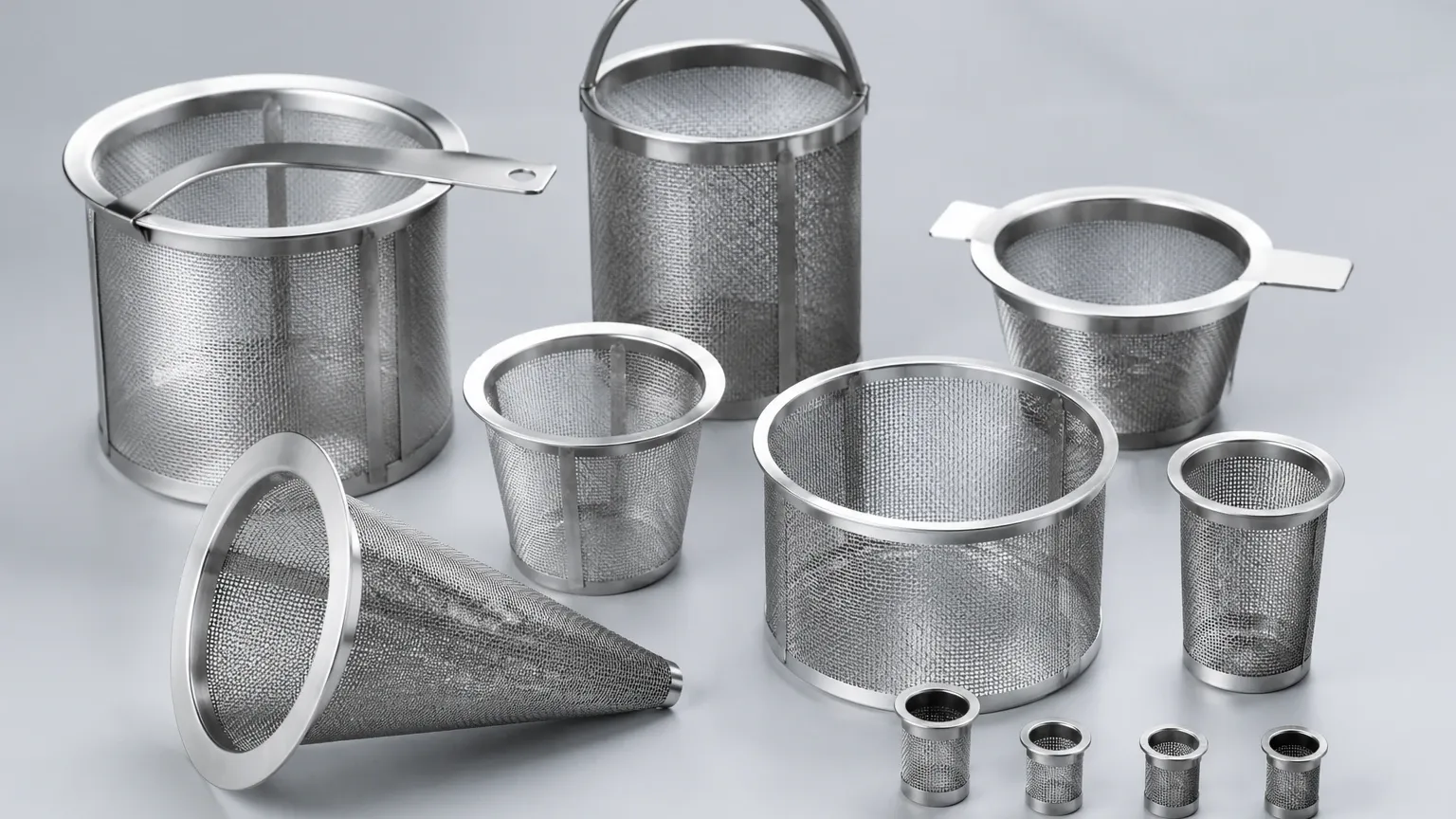
The construction of a strainer basket 2 usually involves a two-layer approach to balance strength and filtration fineness.
1. The Outer Support (Perforated Metal): The primary structure of the basket is typically made from perforated stainless steel. This provides the mechanical strength necessary to withstand the differential pressure without collapsing. Common perforation sizes range from 1/32" to 1/4".
2. The Inner Lining (Wire Mesh): When finer filtration is required—measured in microns—a wire mesh lining is spot-welded or sintered to the interior of the perforated basket. This allows the strainer to capture particles as small as 40 microns while relying on the perforated outer shell for structural support.
For high-pressure applications, the basket may include reinforced heavy-duty binding or a reinforced bottom to prevent "blow-through," where the pressure forces debris through the filter media or deforms the basket frame.
Evaluation Criteria for Industrial Procurement
When purchasing a strainer basket 2, technical professionals should evaluate several criteria beyond the initial price. The total cost of ownership (TCO) is heavily influenced by the following factors:
* Sealing Integrity: How does the basket seat within the housing? A poor seal allows "bypass," where unfiltered fluid escapes around the edges of the basket. High-quality baskets often feature a machined seat or an O-ring seal to ensure 100% filtration efficiency.
* Ease of Maintenance: Does the basket feature a heavy-duty handle or a "slant top" design for easy removal? In a 2-inch system, the basket should be light enough for manual handling but robust enough to be cleaned with high-pressure spray or chemical baths without losing its shape.
* Customization Requirements: Standard off-the-shelf baskets may not fit proprietary housings. Working with a manufacturer like Kaifil allows for precise customization of flange types, handle lengths, and mesh specifications to match existing infrastructure.
* Flow Direction: Most baskets are designed for "inside-out" flow, where debris is trapped inside the basket for easy removal. However, certain specialized applications may require "outside-in" flow, which necessitates a different structural reinforcement strategy.
Common Risks and Mitigation Strategies
The most common failure point for a strainer basket 2 is not the material itself, but improper selection for the application. Engineers must account for "surge" conditions where the flow rate momentarily exceeds the design capacity. If the basket is not rated for these surges, the mesh can tear, allowing large contaminants to pass through and damage expensive downstream components.
Another risk is galvanic corrosion. If a stainless steel basket is placed in a housing made of a different metal (such as carbon steel) in an electrolytic fluid, the basket or the housing may corrode prematurely. Utilizing gaskets or ensuring material compatibility between the basket and the housing is a critical engineering step.
Finally, the risk of "blinding"—where sticky or fibrous particles coat the mesh surface—can be mitigated by selecting a specific weave (such as Dutch weave) or increasing the total surface area of the basket design.
Maintenance and Replacement Cycles
A strainer basket 2 is a reusable component, but it is not permanent. Over time, repeated cleaning cycles and the mechanical stress of pressure fluctuations can lead to metal fatigue.
Maintenance teams should establish a regular inspection schedule. Signs that a basket requires replacement include:
* Visible thinning or fraying of the wire mesh.
* Deformation of the perforated support structure.
* Cracks in the weld points or the handle attachment.
* Persistent high pressure drop even after thorough cleaning, indicating that fine particles have become deeply embedded in the mesh pores (pore blinding).
In many high-volume facilities, keeping a "critical spare" strainer basket 2 on-site is standard practice. This allows for an immediate swap during a cleaning cycle, minimizing the time the system is offline or running on a secondary bypass line.
Custom OEM Solutions and Engineering Support
For many complex industrial projects, a standard strainer basket 2 may not meet the specific demands of the process. Customization is often required to address unique flow patterns, unconventional housing dimensions, or extreme chemical environments.
As a professional manufacturer, Kaifil specializes in developing high-performance filtration components tailored to specific industrial needs. From the initial material selection to the final filtration accuracy testing, the focus remains on durability and precise performance. Whether the application involves food-grade finishes for the beverage industry or high-pressure designs for hydraulic systems, custom engineering ensures that the filtration solution integrates seamlessly with existing equipment.
Before finalizing a purchase, engineers should confirm the exact dimensions of their strainer housing, the required micron rating, and the maximum operating pressure. Consulting with a technical expert can help identify potential optimizations, such as switching to a different mesh weave or reinforcing the basket for higher flow velocities.
For those seeking to explore specific product options or require engineering support for custom designs, reviewing the range of Strainers & Baskets is a recommended step to ensure the selected component meets the rigorous demands of industrial service.
