


Strainer Basket 3
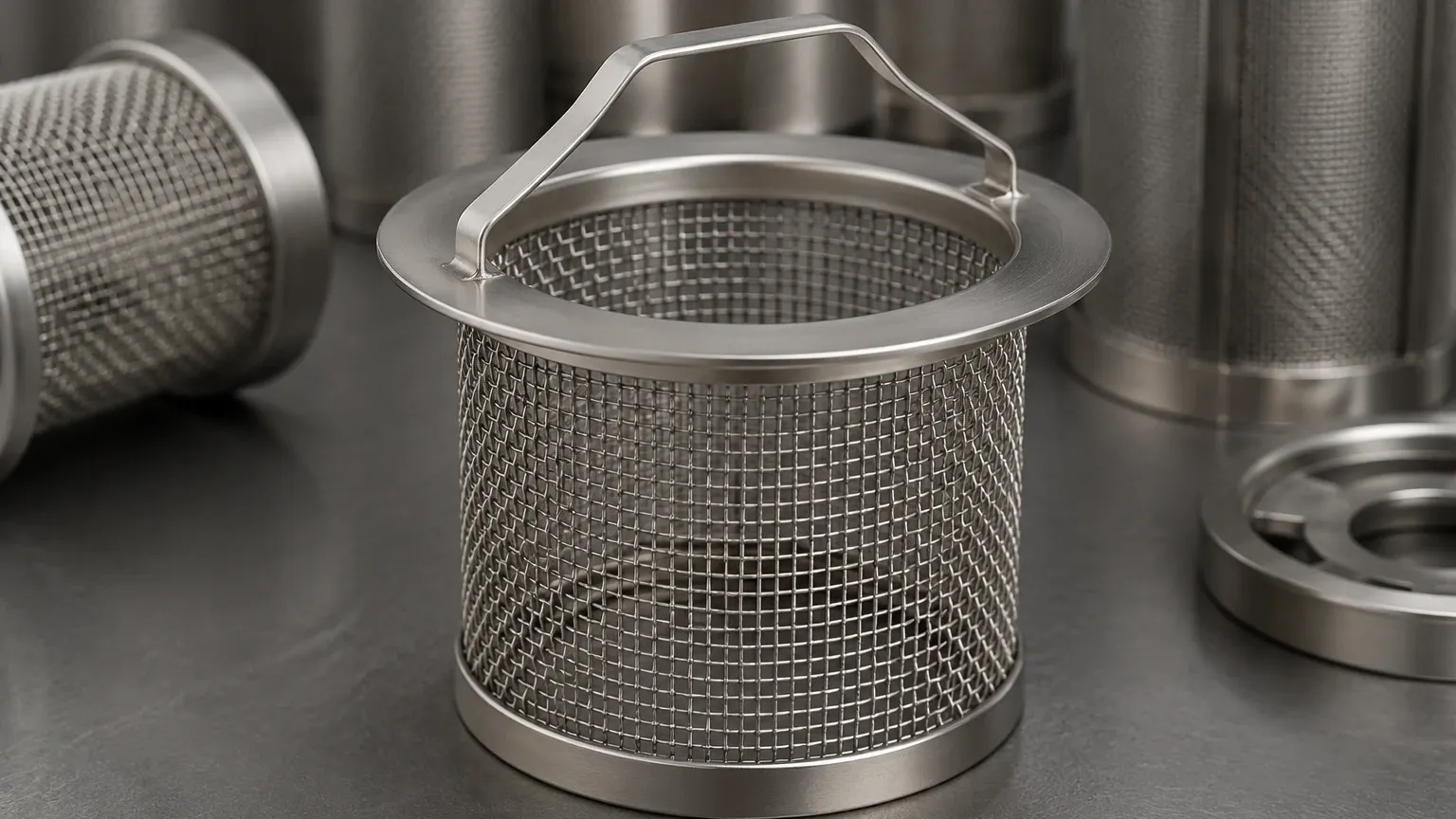
In industrial fluid handling systems, the efficiency of filtration components directly impacts the longevity of pumps, valves, and heat exchangers. Among the various sizes utilized in process piping, the 3-inch nominal size—often referred to in procurement as a strainer basket 3—represents a critical standard for medium-flow applications. These components are designed to remove solid contaminants from liquid or gas streams, ensuring that downstream equipment remains free from debris that could cause mechanical wear or process contamination.
Selecting the correct Strainers & Baskets requires a deep understanding of fluid dynamics, material compatibility, and mechanical stress. This guide examines the engineering considerations, performance metrics, and selection criteria for 3-inch strainer baskets in industrial environments.
Engineering Specifications of 3-Inch Strainer Baskets
A strainer basket 3 is typically designed to fit into a 3-inch (NPS 3) basket strainer housing. While the housing itself is defined by its flange or thread size, the internal basket is the functional heart of the system. Engineers must evaluate several physical dimensions and structural features to ensure proper fit and performance.
Dimensional Standards
While "3-inch" refers to the pipe connection, the actual dimensions of the basket vary based on the manufacturer’s housing design (e.g., Simplex vs. Duplex strainers). Common measurements include the top flange diameter, the total height of the basket, and the slant or taper of the side walls. A precision fit is essential; if the basket is even slightly undersized, fluid may bypass the filtration media, leading to "blow-by" where contaminants pass through the gap between the basket rim and the housing seat.
Structural Integrity and Reinforcement
In 3-inch systems, the pressure exerted by the fluid can be significant, especially as the basket becomes loaded with debris. High-quality strainer baskets utilize a heavy-duty perforated metal backing to provide structural support for finer wire mesh linings. For high-pressure applications, longitudinal or circumferential reinforcement bands are added to prevent the basket from collapsing or "bursting" under extreme differential pressure.
Material Selection for Industrial Durability
The choice of material for a strainer basket 3 is dictated by the chemical composition of the fluid, the operating temperature, and the potential for galvanic corrosion. As a specialist in stainless steel filtration, Kaifil emphasizes the use of high-grade alloys to ensure long-term reliability.
Stainless Steel 304 vs. 316
* Type 304: This is the standard choice for general-purpose industrial applications. It offers excellent strength and good corrosion resistance for water, oils, and mild chemicals. It is widely used in food processing and HVAC systems.
* Type 316: For more aggressive environments, such as chemical processing plants or marine applications, Type 316 stainless steel is preferred. The addition of molybdenum enhances resistance to pitting and crevice corrosion, particularly in chloride-rich environments.
Specialty Alloys
In extreme cases involving highly corrosive acids or high-temperature steam, exotic materials like Monel, Hastelloy, or Titanium may be required. These materials are selected when standard stainless steels would suffer from rapid degradation, which could lead to structural failure of the basket and subsequent damage to downstream components.
Filtration Performance and Mesh Sizing
The primary function of a strainer basket 3 is to achieve a specific level of filtration, measured in either inches, millimeters, or microns. The filtration media usually consists of a perforated plate, a wire mesh, or a combination of both.
Perforation vs. Mesh
* Perforated Plate: Used for coarse filtration (straining). Common hole sizes range from 1/32" to 1/4". These are robust and easy to clean, making them ideal for removing large scale, pebbles, or welding slag.
* Wire Mesh: When finer filtration is required, a stainless steel wire mesh is lined inside the perforated basket. This allows for the removal of particles as small as 40 microns (approximately 325 mesh). In a 3-inch system, the mesh must be securely bonded—typically through spot welding or sintering—to the support basket to prevent tearing.
The Open Area Ratio (OAR)
One of the most critical engineering metrics is the Open Area Ratio. This is the ratio of the total area of the holes in the basket to the cross-sectional area of the inlet pipe. For a strainer basket 3, a high OAR (typically 6:1 or higher) is desirable. A higher OAR results in a lower initial pressure drop and longer intervals between cleanings, as there is more surface area available to collect debris before the flow is significantly restricted.
Flow Dynamics and Pressure Drop Considerations
In any 3-inch piping system, maintaining the correct flow velocity is vital. If the velocity is too high, it can cause turbulence and cavitation; if it is too low, solids may settle in the pipe before reaching the strainer.
Calculating Differential Pressure (ΔP)
The pressure drop across a strainer basket 3 is the difference between the pressure at the inlet and the outlet. This value increases as the basket traps debris. Engineers use "Cv" factors (flow coefficients) provided by manufacturers to calculate the expected pressure drop for a clean basket.
Monitoring differential pressure is the standard method for determining when a basket needs to be cleaned. In many industrial setups, a differential pressure gauge is installed across the strainer. A common rule of thumb is to clean or replace the basket when the pressure drop reaches 5-10 psi over the clean-state value. Failure to do so can lead to basket deformation or even pump cavitation due to suction loss.
Application Scenarios for 3-Inch Strainer Baskets
The versatility of the 3-inch size makes it a staple across various industries. Each application brings unique challenges that influence the design of the Strainers & Baskets used.
Chemical Processing
In chemical plants, the strainer basket 3 must withstand corrosive reagents. Precision in mesh sizing is critical here to ensure that catalysts or expensive chemical additives are not lost or contaminated. Custom gaskets made of PTFE or Viton are often paired with these baskets to ensure a leak-proof seal within the housing.
Food and Beverage Production
For food-grade applications, the baskets must meet stringent sanitary standards. This involves using 316L stainless steel (low carbon) and ensuring that all welds are smooth and free of pits or crevices where bacteria could grow. These baskets are often designed for easy removal and frequent cleaning (Clean-in-Place or CIP processes).
Water Treatment and Irrigation
In municipal water treatment or large-scale irrigation, 3-inch strainers protect spray nozzles and sensitive monitoring equipment from sand, grit, and organic matter. These baskets often require larger holding capacities to handle high dirt loads without constant manual intervention.
Maintenance, Cleaning, and Replacement Cycles
Even the most durable strainer basket 3 is a wear item that requires regular maintenance. The longevity of the basket depends on the nature of the contaminants and the frequency of cleaning cycles.
Cleaning Procedures
Most industrial baskets are designed to be reusable. Cleaning typically involves removing the basket from the housing and using a high-pressure water jet or a soft brush to dislodge debris. It is important to clean from the "outside-in" for mesh-lined baskets to avoid pushing particles deeper into the mesh weave. In some cases, ultrasonic cleaning is used to remove fine particles trapped in the wire intersections.
Signs of Wear
During maintenance, engineers should inspect the basket for:
1. Broken Welds: Especially at the handle or the bottom seam.
2. Thinning Metal: Caused by erosion from high-velocity abrasive particles.
3. Mesh Distortion: Indicating that the basket has been subjected to excessive differential pressure.
4. Corrosion Pitting: Which can lead to structural failure.
If any of these signs are present, the basket should be replaced immediately to prevent a catastrophic failure that could allow debris to enter the downstream system.
Customization and OEM Solutions
While standard off-the-shelf baskets are available, many industrial processes require customized solutions. Customization allows engineers to optimize the strainer basket 3 for specific flow conditions or unique housing geometries.
Tailored Filtration Accuracy
Standard baskets might offer 1/8" perforations, but a specific process might require a 1/16" perforation with a 100-mesh liner. Custom manufacturing allows for the exact layering of media to achieve the desired balance between filtration fineness and flow capacity.
Handle and Lifting Configurations
For 3-inch strainers located in tight spaces or deep housings, custom handle designs (such as extra-long T-handles or folding bails) can significantly simplify the removal process for maintenance crews. This reduces downtime and improves safety during servicing.
Conclusion: Selecting the Right Solution
The selection of a strainer basket 3 is not merely a matter of matching a pipe size; it is a technical decision that affects the entire process's efficiency and safety. By considering material grades, structural reinforcement, and the specific needs of the application, engineering teams can ensure they are using the most effective filtration components.
For those managing complex industrial systems, partnering with a manufacturer that understands the nuances of stainless steel fabrication is essential. High-quality Strainers & Baskets provide the necessary defense against contamination, ensuring that 3-inch piping systems operate at peak performance with minimal unplanned maintenance. Whether for chemical, food, or general industrial use, the right basket is the first line of defense in maintaining fluid purity and equipment integrity.
