


Strainer Basket 6 Inch
In industrial fluid handling, the integrity of downstream equipment such as pumps, flow meters, and heat exchangers depends heavily on the effectiveness of primary filtration. A strainer basket 6 inch is a critical component designed for large-capacity piping systems, typically those with a 6-inch nominal pipe size (NPS). These baskets serve as the internal media that captures oversized particulates while allowing the process fluid to pass through with minimal resistance.
Selecting the correct strainer basket involves more than matching a diameter. It requires a deep understanding of fluid dynamics, material science, and the specific mechanical stresses of the application. For engineers and procurement teams, evaluating a strainer basket 6 inch involves analyzing the open area ratio, micron rating, and structural reinforcement required to withstand differential pressure.
Technical Specifications and Sizing Logic
When discussing a "6-inch" strainer basket, the terminology usually refers to the size of the strainer housing or the pipeline it serves. The actual physical dimensions of the basket—its diameter and height—will vary depending on the manufacturer’s housing design (e.g., Simplex, Duplex, or Y-strainer).
Dimensional Accuracy
In a standard 6-inch pipeline, the flow rates can be substantial. Therefore, the basket must offer a large surface area to prevent frequent clogging. A typical 6-inch basket will have a diameter slightly smaller than the internal chamber of the housing and a depth optimized for the specific debris load of the application. Precision in these dimensions ensures a tight seal at the basket seat, preventing "bypass," where unfiltered fluid escapes around the edges of the basket.
The Open Area Ratio (OAR)
One of the most critical engineering metrics for Strainers & Baskets is the Open Area Ratio. This is the ratio between the total open area of the basket (the sum of all the holes or mesh openings) and the cross-sectional area of the inlet pipe. For a 6-inch line, a high-quality basket should ideally provide an OAR of at least 6:1 or 8:1. A higher OAR results in a lower initial pressure drop and longer intervals between cleaning cycles, which directly impacts the total cost of ownership.
Material Selection for Industrial Durability
Industrial environments often involve corrosive chemicals, high temperatures, or abrasive slurries. The material of construction for a strainer basket 6 inch must be selected based on the chemical compatibility of the process fluid.
Stainless Steel 304 vs. 316
* Stainless Steel 304: This is the standard choice for general-purpose applications, including water treatment and food processing where moderate corrosion resistance is required. It offers excellent mechanical strength and cost-effectiveness.
* Stainless Steel 316/316L: For more aggressive environments, such as chemical processing or marine applications, SS316 is preferred due to the addition of molybdenum, which enhances resistance to pitting and crevice corrosion in chloride-rich environments.
Specialty Alloys
In extreme cases involving highly acidic or alkaline fluids, materials like Monel, Hastelloy, or Titanium may be utilized. As a specialist in custom filtration, Kaifil focuses on providing these high-performance alloys to ensure the longevity of the filtration system under demanding conditions.
Design Variations: Perforated vs. Mesh Lined
The internal structure of a strainer basket 6 inch determines its filtration efficiency. Depending on the size of the particles that need to be removed, the basket may be constructed in several ways.
Perforated Baskets
Perforated metal is used for coarse filtration. The hole sizes typically range from 1/32" to 1/2". These are robust and can handle high-velocity flows without deforming. They are ideal for removing large debris like scale, welding slag, or stones from a 6-inch line.
Wire Mesh Lined Baskets
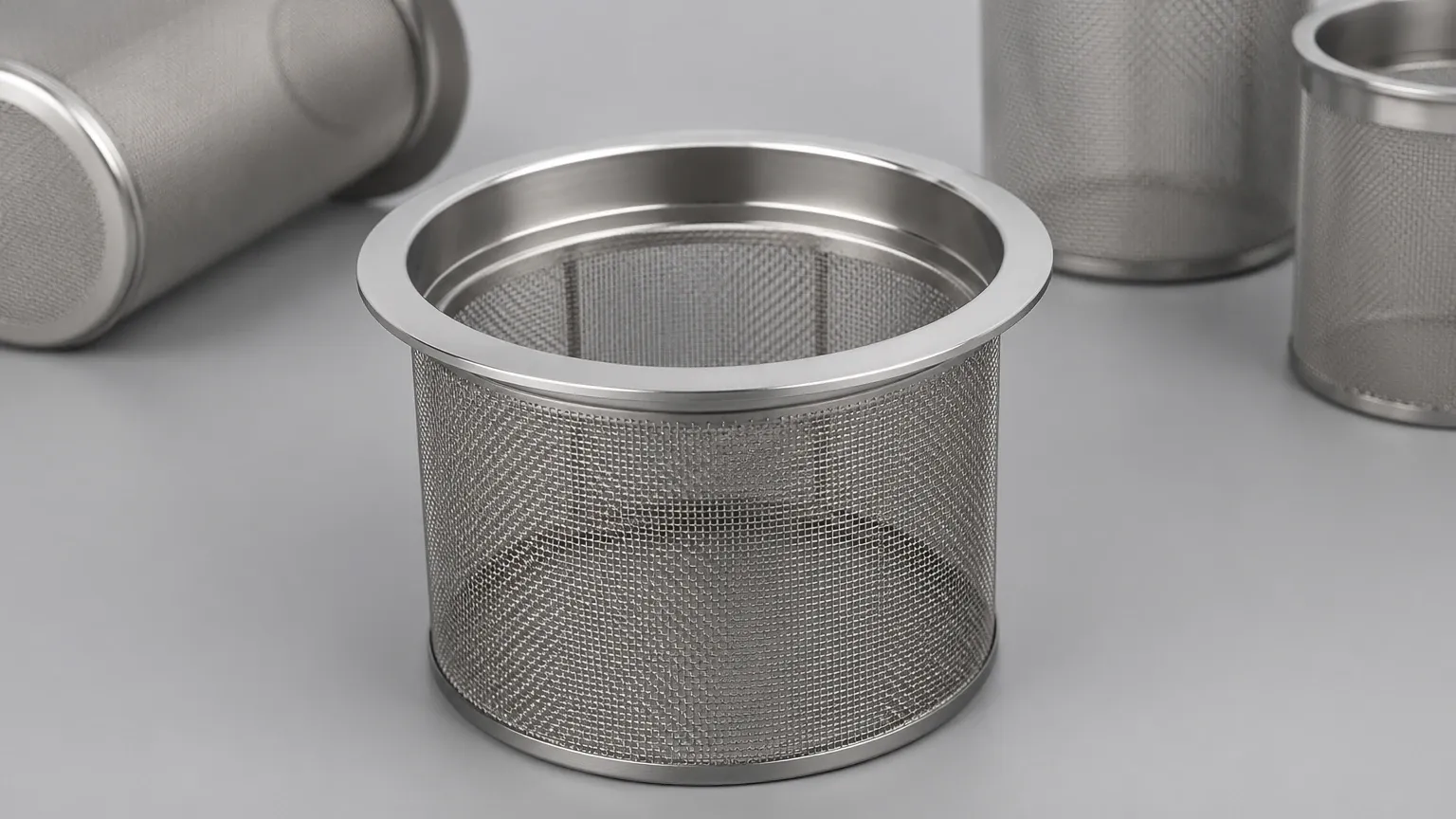
When finer filtration is required (down to 20 microns or less), a wire mesh liner is added to the interior or exterior of a perforated metal support basket. The perforated metal provides the structural strength to resist the fluid pressure, while the fine wire mesh performs the actual filtration. This "dual-layer" design is essential for protecting sensitive equipment like spray nozzles or precision valves.
Pleated Designs
For applications where the fluid has a high concentration of solids, a pleated basket design can be employed. Pleating increases the surface area significantly within the same 6-inch footprint, allowing for even higher dirt-holding capacity and further reducing the frequency of maintenance shutdowns.
Engineering Parameters: Pressure Drop and Flow Rate
Every filter or strainer introduces a restriction in the pipeline, leading to a pressure drop (Delta P). For a 6-inch system, managing this pressure drop is vital for pump efficiency and system performance.
Calculating Delta P
The pressure drop across a strainer basket 6 inch is influenced by:
1. Fluid Viscosity: Thicker fluids require more pressure to pass through the same mesh size.
2. Velocity: As flow rate increases, the pressure drop increases exponentially.
3. Percent Clogging: As debris accumulates, the available open area decreases, rapidly increasing the pressure drop.
Engineers must ensure that the clean pressure drop does not exceed 2 PSI (0.14 bar). If the initial pressure drop is too high, it indicates that the basket surface area is insufficient or the mesh is too fine for the application. Monitoring the differential pressure across the strainer is the standard method for determining when the basket needs to be removed and cleaned.
Customization and OEM Considerations
Off-the-shelf strainer baskets often fail to meet the specific requirements of unique industrial processes. Customization is frequently necessary to optimize performance.
Handle and Lifting Configurations
A 6-inch strainer basket, especially when full of heavy debris or sludge, can be difficult to extract. Custom handle designs, such as heavy-duty bail handles, slanted tops for easy gripping, or even threaded lift-outs, can be engineered to improve ergonomics and safety during maintenance.
Reinforcement and Support
In high-pressure systems or applications subject to pressure surges (water hammer), a standard basket might collapse. Custom reinforcement rings, longitudinal support bars, or heavier gauge perforated metal can be integrated into the design to ensure structural integrity under extreme differential pressure.
Magnetic Inserts
For pipelines handling fluids with high ferrous content, such as hydraulic oils or cooling water in metalworking, magnetic inserts can be added to the strainer basket. These magnets capture fine iron particles that might otherwise pass through the mesh, providing an extra layer of protection for downstream machinery.
Maintenance and Cleaning Protocols
The longevity of a strainer basket 6 inch is largely dependent on proper maintenance. Because these are permanent filtration components (unlike disposable cartridges), they are designed to be cleaned and reused.
Cleaning Methods
* Manual Cleaning: For coarse debris, a simple wash-down or pressurized air blast is often sufficient.
* Ultrasonic Cleaning: For baskets with fine mesh liners that have become blinded by sticky or microscopic particles, ultrasonic cleaning can effectively dislodge contaminants from deep within the mesh pores.
* Chemical Soaking: In cases of scale or organic buildup, soaking the basket in a compatible cleaning solution can restore the original open area.
Replacement Indicators
While stainless steel baskets are durable, they are not indestructible. Baskets should be inspected during every cleaning cycle for:
* Mesh Fraying: Broken wires in the mesh liner can allow bypass.
* Structural Deformation: Any bowing or crushing of the perforated support indicates that the differential pressure has exceeded the basket's design limit.
* Seal Wear: If the basket uses an O-ring or gasket at the seating surface, these must be checked for elasticity and integrity.
Conclusion: Selecting the Right Partner for Filtration
A strainer basket 6 inch is a fundamental yet complex component of industrial piping. Choosing the right basket requires a balance between filtration fineness, flow capacity, and mechanical strength. By focusing on high-quality materials and precision manufacturing, operators can significantly reduce downtime and protect their most valuable assets.
Kaifil provides a comprehensive range of Strainers & Baskets tailored to meet the rigorous demands of the chemical, food and beverage, and pharmaceutical industries. Whether you require a standard replacement or a fully customized OEM solution, understanding these technical boundaries ensures that your filtration system operates at peak efficiency. When evaluating your next filtration project, consider the long-term benefits of a basket designed specifically for your flow conditions and debris characteristics.
