


Strainer Basket Big
In industrial fluid management, the efficiency of a filtration system is often dictated by the physical dimensions and structural integrity of its internal components. When engineers specify a "strainer basket big" enough to handle high-volume flow rates, they are looking for more than just increased volume; they are seeking a balance between surface area, structural stability, and filtration precision. Large-scale strainer baskets are critical components in protecting downstream equipment such as pumps, valves, and heat exchangers from damage caused by debris, scale, and particulate matter.
Understanding the technical nuances of large-format Strainers & Baskets is essential for maintaining system uptime and optimizing the total cost of ownership in sectors ranging from chemical processing to municipal water treatment.
Engineering Fundamentals of Large-Scale Strainer Baskets
The primary driver for selecting a large strainer basket is the requirement for a high "open area ratio." This ratio compares the total area of the holes in the basket to the cross-sectional area of the inlet pipe. For industrial applications, a ratio of at least 6:1 is often preferred to ensure that the pressure drop across the basket remains minimal even as it begins to fill with debris.
When dealing with a strainer basket big in scale, the mechanical loads on the basket walls increase significantly. As fluid passes through the mesh or perforated metal, it exerts a force known as differential pressure (ΔP). If a basket is large but lacks sufficient structural reinforcement, this pressure can cause the basket to collapse or deform, leading to bypass—where unfiltered fluid escapes around the edges of the basket—or catastrophic failure that sends metal fragments into the downstream process.
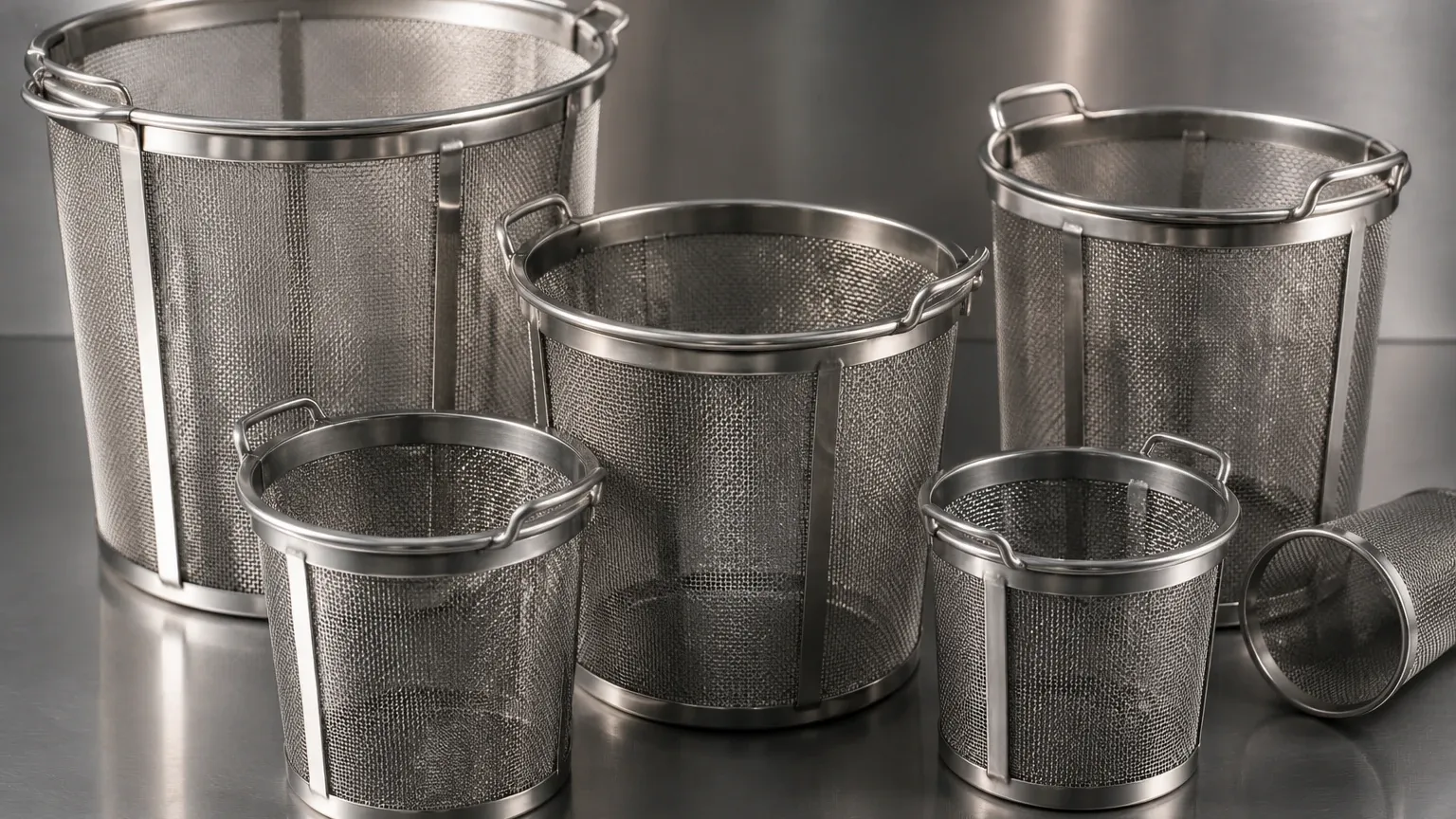
To mitigate these risks, large baskets are typically constructed with a multi-layer approach. A heavy-duty perforated metal cage provides the necessary mechanical strength, while a finer wire mesh liner provides the required filtration accuracy. This combination allows the basket to handle high flow velocities without sacrificing the ability to capture fine particles.
Material Selection and Corrosion Resistance
The longevity of a large strainer basket is heavily dependent on material compatibility with the process fluid. Stainless steel is the industry standard due to its durability and resistance to a wide range of chemicals and temperatures.
* Grade 304 Stainless Steel: Suitable for general-purpose applications, including water treatment and less corrosive industrial environments. It offers excellent strength and cost-effectiveness.
* Grade 316/316L Stainless Steel: Specified for more demanding environments, such as chemical processing, pharmaceutical manufacturing, and marine applications. The addition of molybdenum provides superior resistance to pitting and crevice corrosion, particularly in chloride-rich environments.
* Specialty Alloys: For highly aggressive fluids or extreme temperatures, manufacturers like Kaifil can utilize specialty alloys such as Monel, Hastelloy, or Duplex stainless steel to ensure the basket maintains its integrity over a long service life.
Beyond the base metal, surface treatments such as passivation or electropolishing are often applied. These processes remove surface impurities and enhance the protective oxide layer of the stainless steel, which is critical in food and beverage or pharmaceutical applications where sanitary conditions are paramount.
Key Design Features for High-Capacity Filtration
When designing or purchasing a strainer basket big enough for industrial use, several specialized features should be considered to ensure operational efficiency and ease of maintenance.
Reinforcement Rings and Support Cages
Large baskets often feature longitudinal and circumferential reinforcement ribs. These ribs prevent the basket from "ballooning" under high pressure. In high-viscosity applications, such as oil or resin filtration, these reinforcements are even more critical as the fluid exerts higher drag forces on the mesh.
Handle and Lifting Configurations
Because a large strainer basket can become extremely heavy when filled with wet debris, the handle design is a vital safety and ergonomic consideration. For the largest sizes, standard bail handles are replaced with heavy-duty lifting eyes or cross-bars that can be engaged by overhead cranes or hoists. This ensures that maintenance personnel can safely remove the basket for cleaning without risk of injury.
Sealing Mechanisms
A large basket is only effective if all fluid is forced through the filtration media. To prevent bypass, the top flange of the basket must form a tight seal with the strainer housing. This is achieved through precision-machined flanges, O-ring seals, or spring-loaded hold-down assemblies that keep the basket firmly seated even during flow surges.
Managing Pressure Drop and Cleaning Cycles
The primary operational challenge with high-capacity strainers is monitoring the differential pressure. As the strainer basket big surface area becomes covered with contaminants, the ΔP increases. If the pressure drop exceeds the design limit, the flow rate will decrease, and the risk of basket damage increases.
Engineers typically install differential pressure gauges across the strainer housing. A common practice is to schedule a cleaning cycle when the ΔP reaches a predetermined set point, usually between 5 to 10 psi above the clean pressure drop. By utilizing a larger basket, the time between these cleaning cycles is extended, which reduces labor costs and minimizes process interruptions.
In systems where continuous operation is required, duplex strainers are used. These systems house two large baskets with a diversion valve, allowing one basket to be cleaned while the other remains in service. The size of the basket directly impacts how often this switchover must occur.
Customization Options for Industrial Strainers & Baskets
Standard off-the-shelf baskets often fail to meet the specific needs of complex industrial systems. Customization is frequently required to address unique flow patterns, specific particle sizes, or space constraints within an existing plant layout.
When sourcing Strainers & Baskets, technical teams should consider the following customization options:
1. Micron Ratings: Mesh liners can be customized to capture particles ranging from several millimeters down to 20 microns or less.
2. Magnetic Inserts: For applications involving metal wear particles (such as hydraulic systems or machining coolant), magnetic rods can be installed inside the basket to capture fine ferrous material that might otherwise pass through the mesh.
3. Variable Perforation Patterns: The size and spacing of the holes in the support cage can be optimized to balance strength and open area.
4. Multi-Stage Filtration: Some large baskets are designed with a coarse outer screen and a fine inner mesh, allowing for graduated filtration within a single unit.
Application-Specific Considerations
The requirements for a strainer basket big in scale vary significantly across different industries.
Water Treatment and Intake
In municipal or industrial water intake systems, large baskets are used to remove leaves, twigs, and aquatic life. These baskets must be exceptionally rugged and are often made with heavy-gauge perforated plate to withstand the impact of large debris.
Chemical and Petrochemical Processing
In these environments, the focus is on chemical compatibility and pressure ratings. Baskets must often be designed to withstand high temperatures and aggressive solvents. Precision welding (such as TIG welding) is used to ensure there are no crevices where corrosive materials can accumulate.
Food and Beverage
For food-grade applications, the strainer basket must be designed for "clean-in-place" (CIP) or easy manual sanitization. This means all welds must be ground smooth, and the basket must be free of any dead zones where bacteria could grow. 316L stainless steel is typically the material of choice here.
Total Cost of Ownership (TCO) in Large Filtration Systems
When evaluating the purchase of a strainer basket big enough for industrial use, the initial purchase price is only one part of the equation. Engineers must consider the total cost of ownership, which includes:
* Durability: A cheaper, poorly constructed basket may need frequent replacement or could fail and cause expensive damage to downstream equipment.
* Cleaning Efficiency: Baskets designed for easy cleaning reduce labor time and downtime.
* Energy Consumption: A basket with a higher open area ratio maintains a lower pressure drop, reducing the energy required by pumps to move fluid through the system.
By investing in high-quality, custom-engineered filtration components, facilities can achieve more reliable performance and lower long-term operational costs.
Selecting a Manufacturer for High-Performance Baskets
Choosing the right manufacturing partner is critical when specifying large-scale filtration components. A manufacturer like Kaifil brings technical expertise in material science and precision fabrication to the table. When discussing a project with a supplier, engineers should confirm the following:
* Manufacturing Capabilities: Does the supplier have the equipment to handle large-diameter baskets and heavy-gauge materials?
* Quality Control: What testing procedures are in place to ensure weld integrity and dimensional accuracy?
* Engineering Support: Can the manufacturer provide guidance on the best mesh-to-perforation combination for a specific flow rate and viscosity?
* OEM Experience: Does the manufacturer have a track record of producing custom components that meet or exceed industry standards?
In conclusion, a "strainer basket big" is a sophisticated piece of industrial equipment that requires careful engineering. By focusing on the open area ratio, structural reinforcement, and material compatibility, engineers can ensure that their Strainers & Baskets provide reliable protection for their most critical assets. Whether for a new installation or a replacement for an existing system, prioritizing quality and precision in basket design is the key to efficient and cost-effective industrial filtration.
