


Strainer Basket Bolt
In industrial filtration systems, the integrity of the housing and the internal components is paramount to ensuring process efficiency and equipment longevity. While much of the engineering focus is directed toward the micron rating of the mesh or the flow capacity of the vessel, the mechanical fasteners—specifically the strainer basket bolt—play a critical role in the structural stability and sealing performance of the system. For engineers and maintenance professionals, understanding the technical specifications, material requirements, and maintenance protocols for these components is essential to prevent bypass and mechanical failure.
Industrial Strainers & Baskets are designed to remove unwanted solids from liquid or gas streams. These systems are often subjected to high pressures, fluctuating temperatures, and corrosive chemical environments. The strainer basket bolt serves as a primary securing mechanism, ensuring that the basket remains seated correctly within the housing and that the seal between the basket flange and the housing seat remains tight. Failure of a single fastener can lead to fluid bypass, where unfiltered media escapes around the basket, potentially damaging downstream equipment like pumps, valves, and heat exchangers.
The Engineering Role of the Strainer Basket Bolt
The primary function of a strainer basket bolt in an industrial context is to provide the necessary clamping force to maintain a seal. In many basket strainer designs, the basket is held in place by a hold-down device or a bridge assembly, which is secured by one or more bolts. These fasteners must withstand several types of mechanical stress.
1. Clamping Force and Sealing
To prevent bypass, the basket must be pressed firmly against the internal seat. The strainer basket bolt provides the axial force required to compress the gasket or O-ring. If the bolt is under-torqued, the seal may fail under high-pressure conditions. Conversely, over-torquing can lead to gasket deformation or stripping of the threads within the housing.
2. Resistance to Vibration and Flow Turbulence
Industrial fluid systems are rarely static. Pump pulsations and high-velocity flow can cause significant vibration. A high-quality strainer basket bolt is designed to resist loosening under these conditions. Engineers often specify locking washers or specialized thread geometries to ensure the fastener remains secure during continuous operation.
3. Structural Support in High-Load Scenarios
As a strainer basket accumulates debris, the differential pressure across the mesh increases. This creates a substantial physical load on the basket and its securing hardware. The strainer basket bolt must have sufficient tensile strength to resist the force exerted by the pressure drop without stretching or shearing.
Material Selection and Chemical Compatibility
Material selection is perhaps the most critical factor when specifying a strainer basket bolt. Because these bolts are often in direct contact with the process fluid, they must exhibit the same corrosion resistance as the strainer basket and housing. At Kaifil, we emphasize the use of high-grade stainless steel to ensure durability in demanding environments.
Stainless Steel Grades (304 vs. 316)
* Grade 304: Suitable for general industrial applications, including water treatment and food and beverage processing where moderate corrosion resistance is required.
* Grade 316: Preferred for chemical processing and marine environments. The addition of molybdenum provides superior resistance to chlorides and pitting corrosion.
Galling Considerations
One common technical challenge with stainless steel fasteners is "galling" or cold welding. This occurs when the threads of the bolt and the internal threads of the housing seize together during installation. To prevent this, engineers often specify different grades of stainless steel for the bolt and the nut/housing, or apply specialized anti-seize lubricants that are compatible with the process fluid (e.g., food-grade lubricants for pharmaceutical or food applications).
Galvanic Corrosion
It is imperative that the strainer basket bolt material is compatible with the basket and housing materials. Using a carbon steel bolt with a stainless steel basket in an electrolyte-rich fluid will lead to rapid galvanic corrosion, where the less noble metal (carbon steel) corrodes at an accelerated rate, leading to catastrophic failure of the fastener.
Design Variations and Customization
Not all industrial strainers use the same fastening logic. Depending on the pressure rating and the frequency of cleaning, the design of the strainer basket bolt may vary significantly.
Swing Bolt Assemblies
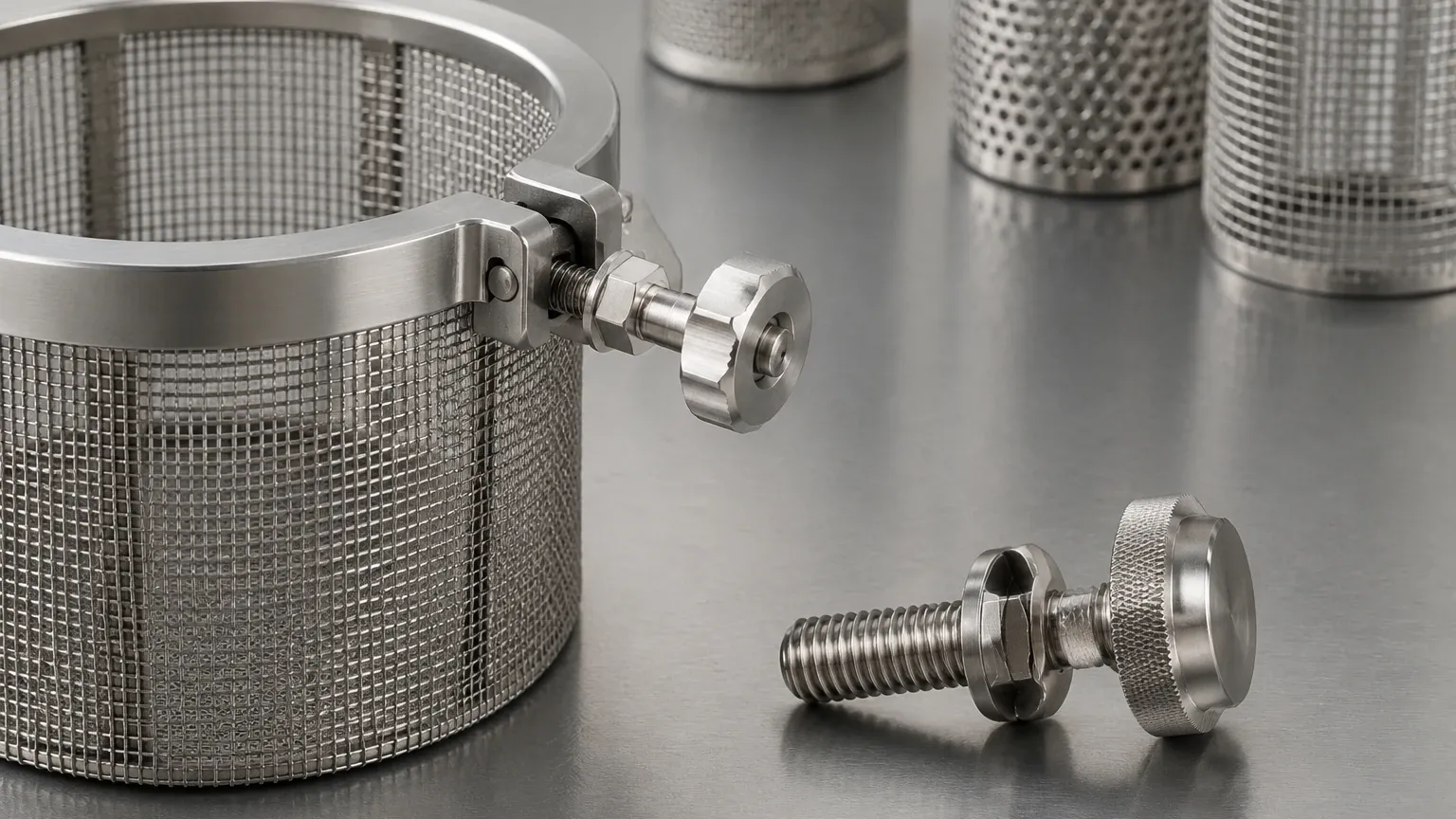
For quick-opening covers, swing bolts are often used. In these designs, the bolt is pinned to the housing and swings into a slot on the cover. This allows for rapid access to the basket without the risk of losing hardware. The "bolt" in this context is often a heavy-duty threaded rod with a T-handle or eye-nut.
Internal Hold-Down Bolts
In some high-precision filtration systems, the basket is secured internally. These bolts are often smaller and require precise torque settings to ensure the basket is centered correctly. Customization of the bolt head (e.g., hex head, socket head, or thumb screw) is often necessary based on the space constraints within the housing.
Thread Specifications
Industrial fasteners typically follow Unified National (UNC/UNF) or Metric standards. However, in heavy-duty filtration, coarse threads (UNC) are often preferred because they are more robust, less prone to cross-threading, and easier to clean if they become contaminated with process debris.
Performance Evaluation and Maintenance
The reliability of Strainers & Baskets depends heavily on a proactive maintenance schedule that includes the inspection of all fastening hardware. A compromised strainer basket bolt can be a leading indicator of broader system issues.
Inspection Intervals
Fasteners should be inspected every time the strainer basket is removed for cleaning. Maintenance teams should look for:
* Thread Wear: Rounded or flattened threads indicate over-torquing or mechanical fatigue.
* Corrosion: Any signs of pitting or discoloration should result in immediate replacement.
* Elongation: If a bolt appears stretched, it has exceeded its yield strength and can no longer provide reliable clamping force.
* Debris Buildup: Material trapped in the threads can cause improper seating and lead to leaks.
Replacement Cycles
While a high-quality stainless steel strainer basket bolt can last for years, it is often considered a consumable in high-cycle applications. In systems where the strainer is opened daily, the repetitive stress on the threads can lead to fatigue. Many facilities implement a mandatory replacement policy for fasteners every 12 to 24 months to ensure safety and performance.
Common Risks and Failure Modes
Understanding why a strainer basket bolt fails is the first step toward optimizing a filtration system. In our experience as a manufacturer, the following issues are the most frequent causes of downtime:
1. Improper Torque: Using an impact wrench instead of a calibrated torque wrench is a common mistake. This often leads to over-stressing the bolt or damaging the housing threads.
2. Chemical Attack: Using a fastener that is not rated for the specific pH or chemical composition of the fluid. For example, using standard 304 stainless steel in a high-chloride environment can lead to stress corrosion cracking.
3. Bypass due to Loose Hardware: If the bolt loosens due to vibration, the basket can lift slightly. Even a gap of a few microns can allow significant amounts of particulate matter to bypass the filter, defeating the purpose of the installation.
4. Cross-Threading: In the rush to restart a production line, bolts are often forced into place. This destroys the integrity of the seal and often requires expensive machining to repair the housing.
Purchasing Considerations for Engineers
When sourcing a strainer basket bolt, whether as part of an OEM assembly or as a replacement part, several factors must be confirmed to ensure compatibility and performance:
* Technical Drawings: Always verify the thread pitch, length, and diameter against the original equipment manufacturer's specifications.
* Material Certification: For critical industries like pharmaceuticals or aerospace, request Mill Test Reports (MTRs) to verify the chemical composition of the stainless steel.
* Load Requirements: Ensure the bolt grade (e.g., Class 8.8, 10.9, or specific Stainless B8/B8M) matches the pressure rating of the strainer housing.
* Customization Options: If standard hardware is failing due to unique process conditions, consider custom-engineered fasteners with specialized coatings or higher-strength alloys.
Conclusion
The strainer basket bolt is a small but indispensable component in the world of industrial filtration. Its ability to maintain a secure, leak-proof seal directly impacts the efficiency of the entire fluid system. By selecting the correct materials, adhering to proper torque specifications, and maintaining a rigorous inspection schedule, engineers can significantly reduce the risk of bypass and equipment failure.
At Kaifil, we understand that every component of a filtration system must meet the highest standards of quality. Our expertise in manufacturing custom stainless steel filtration solutions extends to the hardware and accessories that keep your systems running. Whether you are designing a new process or optimizing an existing one, ensuring the integrity of your Strainers & Baskets starts with the smallest fastener. For technical support or customized filtration components, selecting a partner with deep engineering knowledge is the most effective way to achieve reliable, long-term performance.
