


Strainer Basket Drain
In industrial fluid processing, the integrity of downstream equipment often depends on the efficiency of primary filtration components. Among these, the strainer basket drain assembly serves as a critical line of defense, capturing solid contaminants before they can damage pumps, valves, or heat exchangers. Unlike standard residential fittings, industrial-grade Strainers & Baskets are engineered to withstand high pressure, corrosive chemicals, and extreme temperatures while maintaining precise filtration accuracy.
For engineers and procurement professionals, selecting the correct strainer basket drain involves more than matching pipe sizes. It requires a deep understanding of fluid dynamics, material compatibility, and the specific mechanical stresses of the application environment. This guide explores the technical parameters, engineering considerations, and selection criteria essential for optimizing industrial filtration performance.
Engineering Fundamentals of Industrial Strainer Baskets
The primary function of a strainer basket is to remove unwanted solids from a liquid stream. In a basket-style strainer, the fluid enters the housing and passes through a perforated or mesh-lined basket. The solids are retained within the basket, while the clarified fluid exits through the outlet. The "drain" aspect typically refers to either the drainage port at the bottom of the strainer housing used for blow-down cleaning or the basket's role in a specialized floor or process drain system.
Filtration Media and Micron Ratings
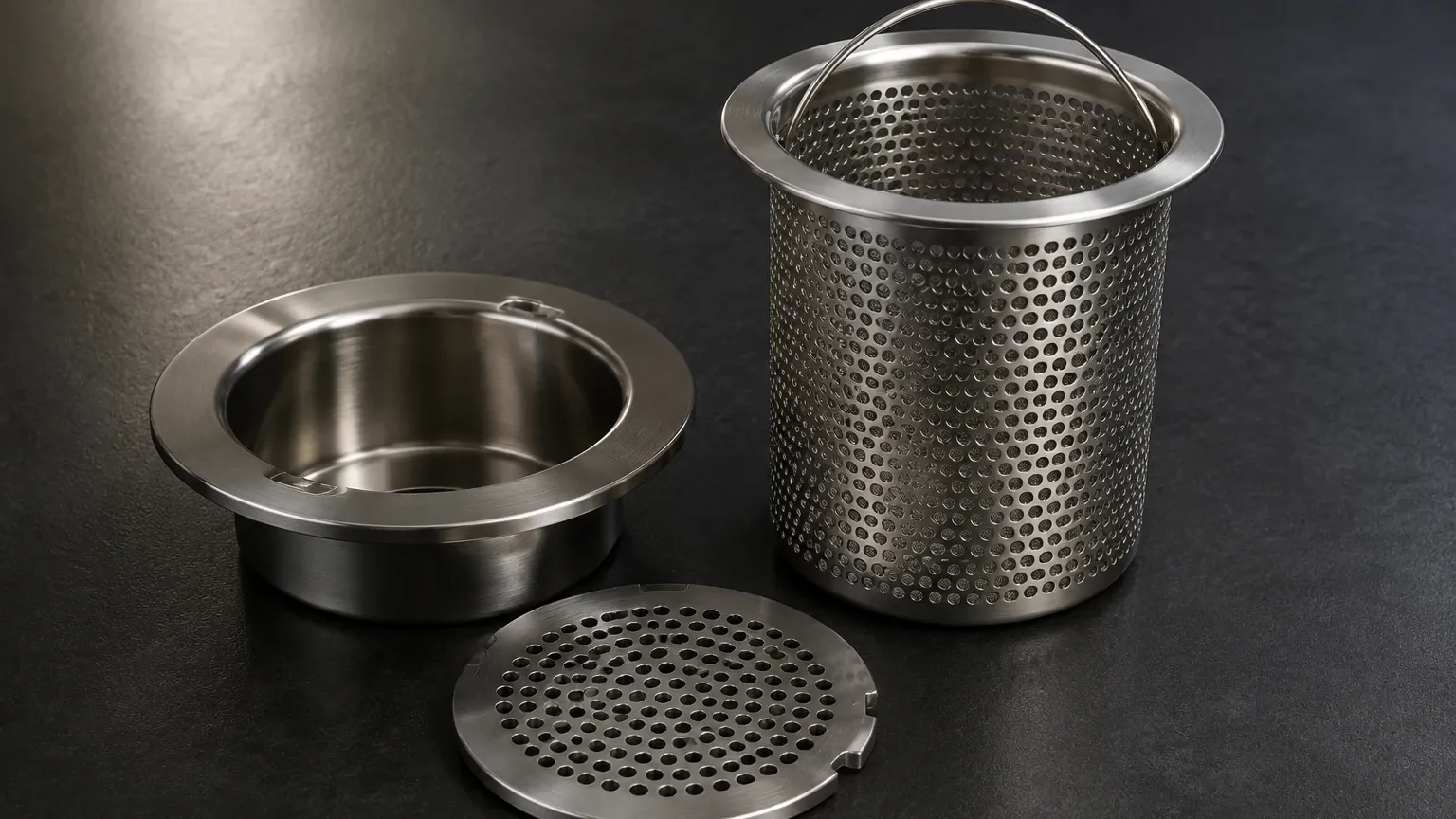
Industrial baskets are generally constructed using two layers: a structural perforated metal sheet and a fine wire mesh liner. The perforated metal provides the mechanical strength necessary to resist differential pressure, while the mesh determines the filtration fineness.
Selection of the micron rating is a balance between protection and flow. A mesh that is too coarse will allow harmful particles to pass, while a mesh that is too fine will clog rapidly, leading to frequent downtime and potential pump cavitation due to high pressure drops.
Structural Integrity
In high-flow applications, the strainer basket drain must be designed to resist "bursting" or collapsing. This is particularly important during upset conditions where a sudden surge of debris can instantly increase the differential pressure across the basket. Manufacturers like Kaifil utilize advanced welding techniques and reinforced binding to ensure that the basket maintains its geometry under stress.
Material Selection for Corrosive and High-Temperature Environments
Material science is the cornerstone of reliable filtration. The choice of alloy for a strainer basket drain determines its service life and resistance to chemical attack.
1. Stainless Steel 304: The industry standard for general-purpose applications. It offers excellent strength and good corrosion resistance for water treatment and mild chemical processes.
2. Stainless Steel 316/316L: Containing molybdenum, these alloys provide superior resistance to chlorides and pitting. They are the preferred choice for marine environments, pharmaceutical manufacturing, and food processing where stringent hygiene and corrosion resistance are required.
3. Specialty Alloys: For highly aggressive environments involving concentrated acids or high-temperature steam, materials such as Monel, Hastelloy, or Duplex stainless steel may be specified to prevent premature failure.
Beyond the base metal, the surface finish is also a critical engineering consideration. For the food and beverage industry, electropolishing the basket ensures a smooth, burr-free surface that prevents bacterial growth and facilitates easier cleaning during CIP (Clean-In-Place) cycles.
Designing for Efficiency: Flow Rates and Pressure Drop
One of the most common mistakes in specifying a strainer basket drain is overlooking the "Open Area Ratio" (OAR). The OAR is the ratio between the total open area of the basket holes and the cross-sectional area of the inlet pipe. A well-engineered basket strainer should typically have an OAR of at least 6:1 or 8:1.
Understanding Delta P (Differential Pressure)
As debris accumulates in the basket, the pressure drop ($ΔP$) increases. If the $ΔP$ exceeds the design limits of the system, it can lead to:
* Reduced Flow Rates: Impeding production efficiency.
* Energy Inefficiency: Forcing pumps to work harder to maintain flow.
* Mechanical Failure: Potentially rupturing the mesh or damaging the strainer housing seals.
Engineers must calculate the clean pressure drop during the design phase to ensure the system has sufficient head pressure to accommodate the expected loading between cleaning cycles.
Customization Options and OEM Capabilities
Off-the-shelf filtration components rarely meet the exact needs of complex industrial systems. Customization is often required to address specific spatial constraints or unique fluid characteristics. Kaifil specializes in providing OEM solutions that allow for precise tailoring of the strainer basket drain.
Handle and Lifting Mechanisms
For large-scale industrial strainers, the weight of a loaded basket can be significant. Custom handle designs, such as heavy-duty bail handles or slanted handles, facilitate easier removal and reduce the risk of injury to maintenance personnel. In some cases, baskets are designed with specialized grips to interface with automated lifting equipment.
Sealing Arrangements
To prevent fluid bypass, the basket must seat perfectly within the strainer housing. Custom-machined rings or O-ring grooves can be integrated into the basket flange to ensure a positive seal. This is critical in applications where even a small amount of bypass can contaminate a high-purity batch or damage a precision nozzle downstream.
Multi-Stage Filtration
In systems with a wide distribution of particle sizes, a custom "basket-within-a-basket" design can be employed. The outer basket removes large debris, while the inner fine mesh handles smaller particles. This staged approach extends the time between cleaning cycles and prevents the fine mesh from being blinded by large solids.
Common Risks and Failure Modes in Filtration Systems
Identifying potential risks before they manifest as system failures is a key responsibility of the engineering team. Several factors can compromise the performance of a strainer basket drain:
* Bypass Leakage: Often caused by an improperly seated basket or a damaged gasket. This allows unfiltered fluid to move around the basket rather than through it.
* Erosion-Corrosion: High-velocity fluid containing abrasive particles can wear down the wire mesh over time, effectively increasing the micron rating and allowing larger particles to pass.
* Fatigue Cracking: Continuous pressure fluctuations or vibrations in the piping system can lead to metal fatigue, particularly at the weld points of the basket support structure.
* Galvanic Corrosion: If the basket material is significantly different from the housing material in an electrolytic fluid, galvanic corrosion can rapidly degrade the component.
To mitigate these risks, regular inspections and the use of high-quality, precision-manufactured components are essential. Using Strainers & Baskets made to exacting tolerances ensures that the fit and finish meet the original design specifications.
Operational Longevity: Maintenance and Cleaning Best Practices
The total cost of ownership (TCO) of a filtration system is heavily influenced by maintenance requirements. A robust strainer basket drain should be designed for ease of service.
Monitoring and Instrumentation
The installation of differential pressure gauges across the strainer is the most effective way to monitor basket loading. Many modern systems use pressure transducers linked to a PLC (Programmable Logic Controller) to trigger an alarm or automatically switch flow to a redundant strainer when a pre-set $ΔP$ is reached.
Cleaning Procedures
Depending on the application, baskets may be cleaned manually or via automated backwashing. For manual cleaning, it is vital to use methods that do not damage the mesh. High-pressure water jets or ultrasonic baths are often preferred over mechanical brushing, which can distort the wire weave and alter the filtration accuracy.
Replacement Cycles
While stainless steel baskets are durable, they are considered wear parts. Establishing a clear replacement cycle based on the abrasiveness of the fluid and the criticality of the downstream equipment helps prevent unexpected failures. Keeping a stock of spare baskets on-site is a standard best practice for minimizing downtime.
Industry-Specific Applications
Different sectors have unique requirements for their strainer basket drain assemblies:
* Chemical Processing: Requires extreme chemical compatibility. Baskets are often made from 316L or exotic alloys to handle solvents, acids, and bases.
* Food & Beverage: Must adhere to FDA and 3-A sanitary standards. Smooth welds and high-grade finishes are mandatory to ensure the components can be fully sterilized.
* Hydraulic Systems: Focus on high-pressure resistance and fine particle removal to protect sensitive valves and actuators. These baskets often utilize high-strength pleated mesh to increase surface area without increasing the footprint.
* Water Treatment: Deals with large volumes of fluid and varying debris loads. Durability and ease of cleaning are the primary drivers in this sector.
Critical Considerations for Purchasing Teams
When sourcing a strainer basket drain, purchasing teams should confirm the following technical details with the manufacturer to ensure the product is fit for purpose:
1. Material Certification: Request Mill Test Reports (MTRs) to verify the grade of stainless steel.
2. Pressure Ratings: Confirm the maximum allowable differential pressure for the basket.
3. Dimensional Accuracy: Ensure the flange diameter, basket depth, and handle clearance match the existing housing specifications.
4. Lead Times and OEM Support: For custom designs, understand the engineering review process and production timelines to align with project schedules.
By focusing on these technical and operational parameters, organizations can ensure they select a filtration solution that provides reliable protection, optimizes system efficiency, and delivers long-term value. For high-performance, customized Strainers & Baskets, partnering with an experienced manufacturer like Kaifil provides the technical expertise and manufacturing precision required for demanding industrial environments.
