


Strainer Basket for Pool Pump
In industrial and commercial fluid management, the pump serves as the heart of the system. Whether it is a high-volume water treatment facility, a chemical processing plant, or a commercial aquatic center, the integrity of the pump’s internal components determines the overall efficiency and uptime of the operation. Central to this protection is the filtration interface, specifically the strainer basket for pool pump and industrial circulation systems. These components act as the primary mechanical barrier, preventing debris from entering the pump housing where it could cause catastrophic failure to impellers and seals.
For engineers and procurement professionals, selecting the right Strainers & Baskets involves more than simply matching dimensions. It requires a deep understanding of fluid dynamics, material compatibility, and the specific mechanical stresses of the application environment.
The Critical Role of Strainers & Baskets in Pump Protection
A pump is designed to move fluids, not solids. When a pump operates, it creates a vacuum at the suction side to draw fluid in. Without an effective strainer basket for pool pump or industrial intake, any solids present in the fluid—ranging from organic matter and hair to scale and metal fragments—are pulled directly into the impeller.
When debris reaches the impeller, several negative outcomes occur:
1. Mechanical Damage: Hard debris can chip or break impeller vanes, leading to imbalance and vibration that eventually destroys bearings and mechanical seals.
2. Clogging: Fibrous materials can wrap around the shaft or clog the impeller eye, significantly reducing flow rates and increasing the load on the motor.
3. Cavitation: If a strainer is poorly designed or becomes excessively fouled, it can cause a pressure drop significant enough to induce cavitation. This phenomenon creates vapor bubbles that implode against the metal surfaces, causing "pitting" and rapid erosion.
By utilizing high-quality Strainers & Baskets, operators ensure that the fluid entering the pump is free of harmful particulates, thereby extending the mean time between failures (MTBF) for the entire pumping station.
Technical Specifications of a High-Performance Strainer Basket for Pool Pump
When evaluating a strainer basket for pool pump applications, particularly in commercial or industrial settings, several technical parameters must be scrutinized. These specifications dictate how the basket will perform under the continuous pressure and flow conditions of a 24/7 operation.
Filtration Accuracy and Mesh Size
Filtration accuracy is determined by the size of the openings in the basket. In many standard pool applications, a perforated metal or molded plastic basket is used with relatively large openings. However, in industrial water treatment or specialized chemical processes, a finer degree of filtration may be required. Kaifil specializes in integrating precision wire mesh into basket designs, allowing for much finer particulate capture without significantly sacrificing flow area.
Structural Integrity and Burst Strength
In high-head pumping systems, the pressure differential across a partially clogged basket can be substantial. A weak basket may collapse inward, allowing debris to bypass the filter and enter the pump. Industrial-grade baskets often feature reinforced frames or heavy-gauge stainless steel construction to withstand these pressure spikes. Engineers should look for baskets with reinforced rims and longitudinal ribs that provide the necessary hoop strength to resist deformation.
Stainless Steel vs. Polymer: Evaluating Material Performance
While many residential systems utilize plastic components, industrial-scale operations frequently demand the durability of metal. The choice of material for a strainer basket for pool pump or industrial strainer is a critical factor in total cost of ownership.
The Advantages of Stainless Steel
For demanding environments, stainless steel (typically Grade 304 or 316) is the gold standard.
- Corrosion Resistance: In pool environments, high chlorine or salt levels are highly corrosive. 316 stainless steel, with the addition of molybdenum, offers superior resistance to chloride-induced pitting.
- Thermal Stability: Unlike polymers, which can become brittle or lose structural integrity at elevated temperatures, stainless steel maintains its mechanical properties across a wide temperature range.
- Longevity: A stainless steel basket is a permanent component. While plastic baskets may need replacement every few seasons due to UV degradation or mechanical wear, a well-maintained metal basket can last the lifetime of the pump.
Chemical Compatibility
In B2B applications involving chemical processing or industrial cooling, the fluid being pumped may not be water. It could be a brine solution, a mild acid, or a caustic cleaning fluid. In these instances, the material selection for Strainers & Baskets must be cross-referenced with chemical compatibility charts to ensure the basket does not leach contaminants or fail prematurely due to chemical attack.
Engineering Parameters: Flow Rate and Pressure Drop
One of the most common mistakes in filter selection is ignoring the impact of the strainer on the system's total dynamic head (TDH). Every strainer basket for pool pump applications introduces a certain amount of resistance to the flow. This resistance is measured as "pressure drop" (ΔP).
The Open Area Ratio
Engineers use the "Open Area Ratio" to determine the efficiency of a basket. This is the ratio of the total area of the holes in the basket to the cross-sectional area of the inlet pipe. A high-performance basket should ideally have an open area ratio of at least 4:1 or 6:1. This ensures that even when the basket is 50% full of debris, the remaining open area is still greater than the area of the pipe, preventing a significant increase in suction-side pressure drop.
Flow Dynamics
The geometry of the basket also plays a role. Tapered or "basket" shapes are preferred over flat screens because they provide a larger surface area for filtration and allow debris to settle at the bottom while fluid continues to pass through the sides. This design minimizes the frequency of cleaning cycles and protects the pump from starving.
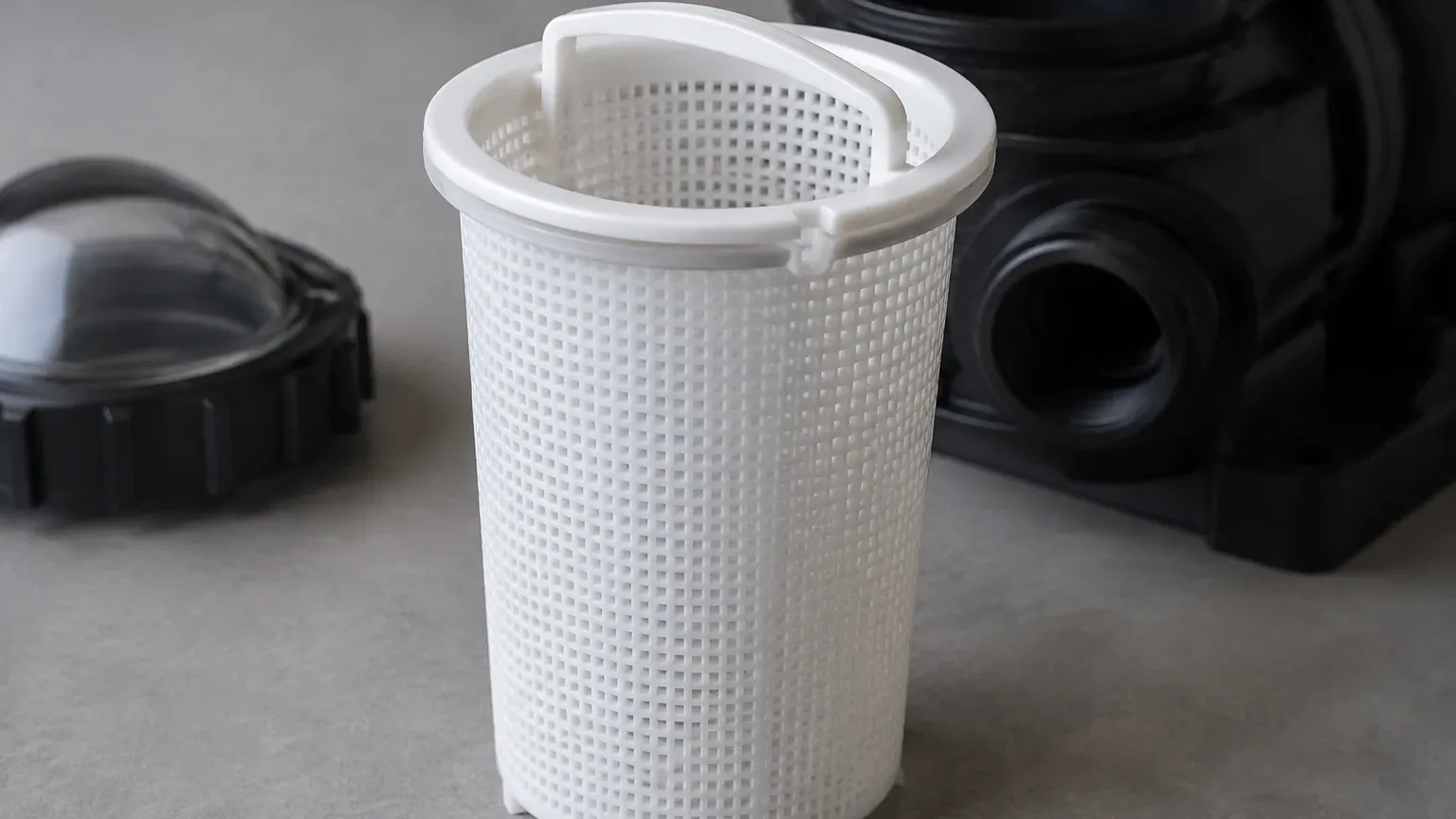
Customization for Industrial Filtration Systems
Not every pumping system follows standard dimensions. Many industrial facilities operate legacy equipment or specialized pump housings that require custom-engineered filtration solutions. This is where the capability for OEM and customized designs becomes essential.
When sourcing a custom strainer basket for pool pump or industrial use, engineers should provide the following data to the manufacturer:
- Housing Dimensions: Internal diameter, depth, and the configuration of the seating flange.
- Flow Requirements: Maximum and normal flow rates (GPM or m³/h).
- Fluid Characteristics: Viscosity, temperature, and chemical composition.
- Debris Profile: The type and size of the solids expected to be captured.
Kaifil’s expertise in custom stainless steel filtration allows for the production of baskets that fit perfectly into existing systems while optimizing the mesh type for the specific debris profile of the application. Whether it is a simple perforated basket or a complex multi-layered wire mesh assembly, customization ensures that the filtration component is an asset to the system rather than a bottleneck.
Maintenance Protocols and Total Cost of Ownership (TCO)
The effectiveness of a strainer basket for pool pump protection is entirely dependent on its maintenance. A neglected basket is a liability. In industrial settings, maintenance protocols should be strictly defined to optimize the TCO of the pumping system.
Cleaning Cycles
Monitoring the pressure differential across the strainer is the most effective way to determine cleaning cycles. Many industrial systems utilize differential pressure gauges. When the ΔP reaches a predetermined threshold, the basket must be removed and cleaned. For manual systems, a visual inspection schedule should be established based on the debris load of the specific environment.
Inspection for Wear
During cleaning, baskets should be inspected for:
- Mesh Integrity: Look for tears or separations in the wire mesh or perforations.
- Gasket Condition: Ensure the sealing surface (if applicable) is intact to prevent bypass.
- Structural Fatigue: Check for signs of bowing or stress cracking in the frame.
Investing in a high-quality stainless steel basket from the outset reduces the long-term costs associated with frequent replacements, pump repairs, and unscheduled downtime. While the initial purchase price of a precision-engineered metal basket may be higher than a generic plastic alternative, the durability and protection it offers provide a much higher return on investment (ROI).
Integration into Large-Scale Systems
While the term "pool pump" often brings to mind recreational facilities, the same principles apply to large-scale industrial water circulation. Cooling towers, heat exchangers, and large-scale irrigation systems all rely on similar pump-protection strategies. In these contexts, the Strainers & Baskets are often part of a multi-stage filtration strategy.
For example, a coarse strainer basket for pool pump intake might be followed by a finer stainless steel filter cartridge or a sand filter. This tiered approach ensures that large debris is caught early by an easily cleanable basket, while finer particulates are handled by secondary systems. This protects the entire downstream infrastructure from fouling and erosion.
Conclusion
Selecting the appropriate strainer basket for pool pump and industrial applications is a fundamental engineering decision that impacts the reliability and efficiency of fluid handling systems. By focusing on material quality, structural design, and flow dynamics, procurement teams can ensure they are providing the best possible protection for their pumping assets.
As a professional manufacturer, Kaifil provides the technical expertise and manufacturing precision required to develop dependable filtration components for the most demanding industrial environments. From standard replacements to fully customized OEM solutions, the focus remains on delivering filtration performance that meets the exact needs of the application, ensuring long-term operational success.
