


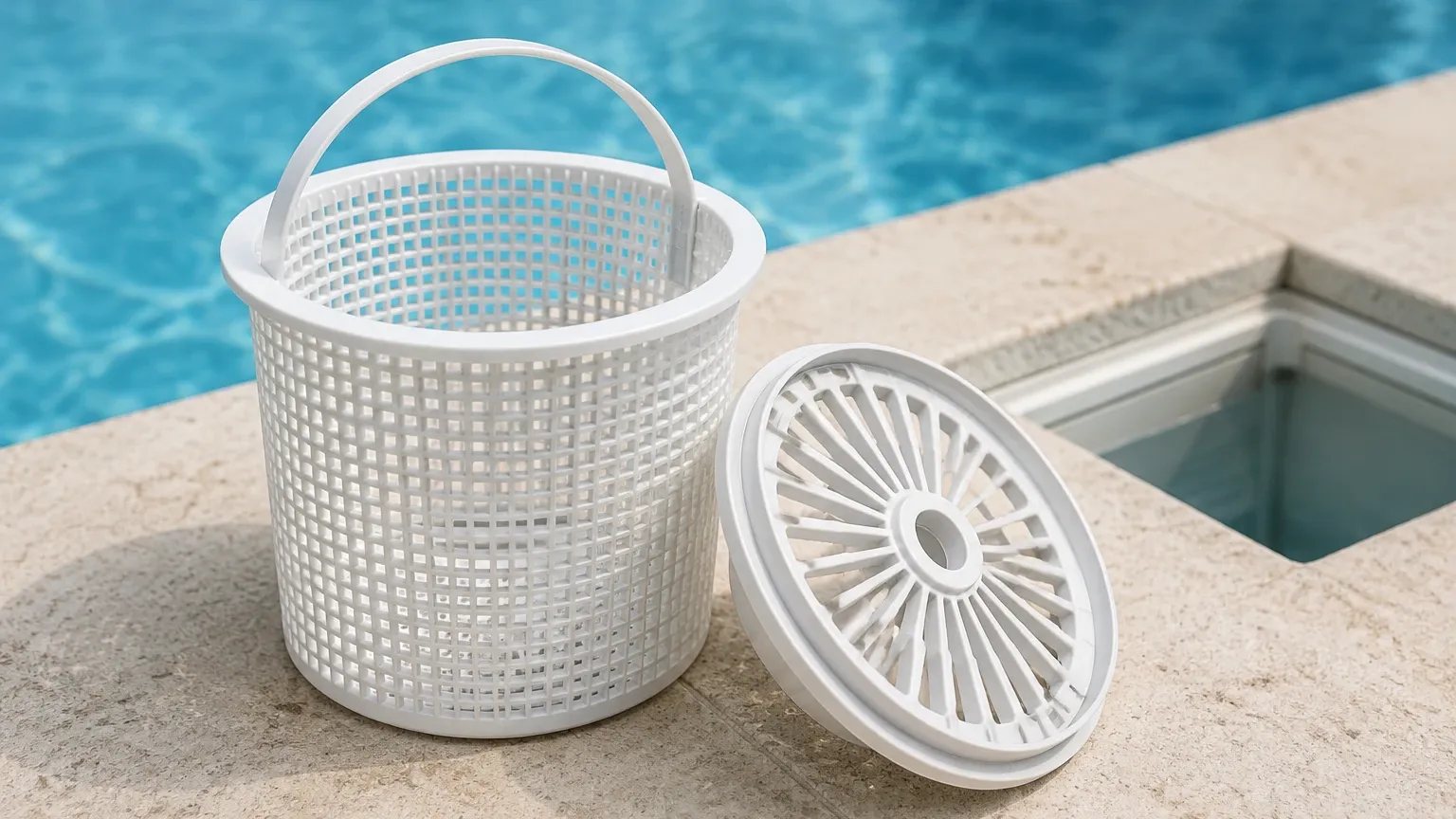
Strainer Basket for Pool Skimmer
In the context of industrial and large-scale commercial water management, the strainer basket for pool skimmer serves as the critical first line of defense for hydraulic systems. While residential applications often rely on standardized plastic components, industrial-grade aquatic facilities—such as those found in luxury resorts, Olympic-sized competition centers, and large-scale water parks—require filtration components engineered for high flow rates, chemical resistance, and structural longevity. Selecting the correct Strainers & Baskets is not merely a matter of fitment; it is a technical decision that impacts pump efficiency, energy consumption, and the total cost of system maintenance.
The Role of Strainer Baskets in High-Volume Hydraulic Systems
The primary function of a strainer basket within a skimmer assembly is to capture large debris—such as leaves, twigs, and organic matter—before they can enter the suction line of the circulation pump. In a B2B or industrial setting, the failure of this simple component can lead to significant downstream consequences. If a basket bypasses debris due to poor fit or structural failure, the debris can clog the pump impeller, leading to cavitation, overheating, and eventual motor failure.
From an engineering perspective, the strainer basket must balance two competing requirements: maximum debris retention and minimum pressure drop. A basket with a mesh that is too fine will clog rapidly, increasing the vacuum pressure on the pump and reducing the overall flow rate. Conversely, a basket with openings that are too large will allow damaging particles to pass through. Precision-engineered stainless steel baskets allow for a higher "open area" ratio compared to molded plastic alternatives, ensuring optimal flow even as the basket begins to fill.
Material Science: The Shift to Stainless Steel Filtration
In demanding commercial environments, the limitations of polymer-based strainer baskets become apparent. Exposure to high concentrations of chlorine, bromine, and salt, combined with constant UV radiation and fluctuating water temperatures, leads to the embrittlement of plastic baskets. Once brittle, these components often crack under the hydraulic pressure of the pump suction.
Corrosion Resistance and Chemical Compatibility
Industrial filtration solutions typically utilize Grade 304 or Grade 316 stainless steel. For standard chlorinated systems, Grade 304 provides excellent durability and structural integrity. However, in saltwater chlorination systems or facilities located in coastal regions, Grade 316 is the preferred specification due to its increased molybdenum content, which provides superior resistance to pitting and crevice corrosion caused by chlorides.
Structural Integrity Under Load
Unlike plastic, which can deform under the weight of wet debris and high suction, a stainless steel strainer basket for pool skimmer maintains its geometric profile. This ensures that the seal between the basket rim and the skimmer housing remains tight, preventing "bypass"—the phenomenon where water and debris flow around the basket rather than through it.
Key Engineering Specifications for Selection
When specifying a strainer basket for an industrial project, engineers must evaluate several technical parameters to ensure the component meets the system's operational demands.
1. Flow Rate and Open Area
The "open area" refers to the total surface area of the holes or mesh openings relative to the total surface area of the basket. A higher open area results in a lower pressure drop (Delta P). For high-performance pumps, minimizing the pressure drop across the strainer is essential to prevent pump cavitation and to maintain the designed turnover rate of the pool water.
2. Micron Rating and Perforation Size
The choice of perforation size depends on the specific environment. Standard industrial skimmer baskets may feature perforations ranging from 1/8 inch to 1/4 inch. In environments where finer debris is a concern, a dual-layer design—incorporating a structural perforated metal outer layer and a fine wire mesh inner liner—can be utilized to achieve specific filtration goals without sacrificing structural strength.
3. Handle Design and Ergonomics
In a commercial facility, maintenance staff may need to clear dozens of baskets daily. A robust, integrated handle that can withstand the force required to pull a suction-locked basket is critical. In many custom industrial designs, the handle is also engineered to act as a locking mechanism to keep the basket seated firmly during high-flow operation.
Customization and OEM Capabilities in Filtration
One of the primary challenges for facility managers and engineers is sourcing replacement baskets for legacy systems or custom-built aquatic features. Standard off-the-shelf products often fail to meet the exact dimensions required for a perfect seal. This is where custom manufacturing becomes essential.
Custom filtration solutions allow for the adjustment of:
- Flange Diameter and Thickness: Ensuring a flush fit with the skimmer throat.
- Basket Depth: Optimizing debris capacity based on the available space in the skimmer well.
- Taper Angle: Facilitating easy removal while maintaining a tight fit at the base.
- Reinforcement Ribs: Adding structural bands to baskets used in ultra-high-flow suction lines.
By working with a manufacturer capable of custom fabrication, engineers can specify Strainers & Baskets that are tailored to the specific hydraulic conditions of their facility, rather than forcing a standard part into a non-standard application.
Operational Maintenance and Replacement Cycles
The longevity of a strainer basket for pool skimmer is directly tied to its material composition and the rigor of the maintenance schedule. In a B2B environment, downtime is costly. Therefore, the goal is to extend the replacement cycle as long as possible.
Cleaning Protocols
Stainless steel baskets are significantly easier to clean than plastic ones. Organic oils and calcium scale, which often bond to plastic surfaces, can be easily removed from stainless steel using mild acidic cleaners or high-pressure water without risking damage to the basket's structure. This ease of cleaning ensures that the basket's open area is fully restored after each maintenance cycle.
Inspection Points
During routine maintenance, technicians should inspect for:
- Weld Integrity: Checking for any signs of separation at the seams or handle attachment points.
- Gasket Wear: If the basket utilizes a rubber or silicone seal, this should be checked for elasticity.
- Erosion: In high-velocity systems, the constant movement of abrasive particles (like sand) can eventually thin the metal; while rare with stainless steel, it is a factor in multi-decade service lives.
Total Cost of Ownership: A Comparative Analysis
While the initial procurement cost of a precision-engineered metal strainer basket for pool skimmer is higher than that of a mass-produced plastic equivalent, the Total Cost of Ownership (TCO) is significantly lower for commercial operators.
Consider the following variables:
- Replacement Frequency: A plastic basket in a high-use commercial pool may need replacement every 12-24 months due to chemical degradation. A Grade 316 stainless steel basket can easily exceed 10-15 years of service.
- Pump Protection: The cost of a single pump repair or impeller replacement far exceeds the cost of a premium strainer basket. The structural reliability of metal ensures that the pump is never exposed to debris bypass.
- Energy Efficiency: By maintaining a consistent open area and resisting deformation, metal baskets help the pump operate at its optimal point on the head-flow curve, reducing energy consumption over time.
Conclusion: Selecting the Right Filtration Partner
For engineers, purchasing agents, and facility managers, the selection of a strainer basket for pool skimmer is a foundational step in ensuring the reliability of an aquatic system. Moving beyond consumer-grade components toward industrial-grade stainless steel solutions provides the durability and performance required by modern commercial facilities.
When evaluating suppliers, it is essential to consider their ability to provide technical guidance on material selection and their capacity for custom fabrication. A partner who understands the nuances of hydraulic flow and chemical compatibility can provide more than just a component; they provide a solution that protects expensive downstream equipment and optimizes operational efficiency. For those seeking high-durability filtration components, exploring the range of Strainers & Baskets designed for industrial rigor is the most effective path toward long-term system stability.
