


Strainer Basket Holder
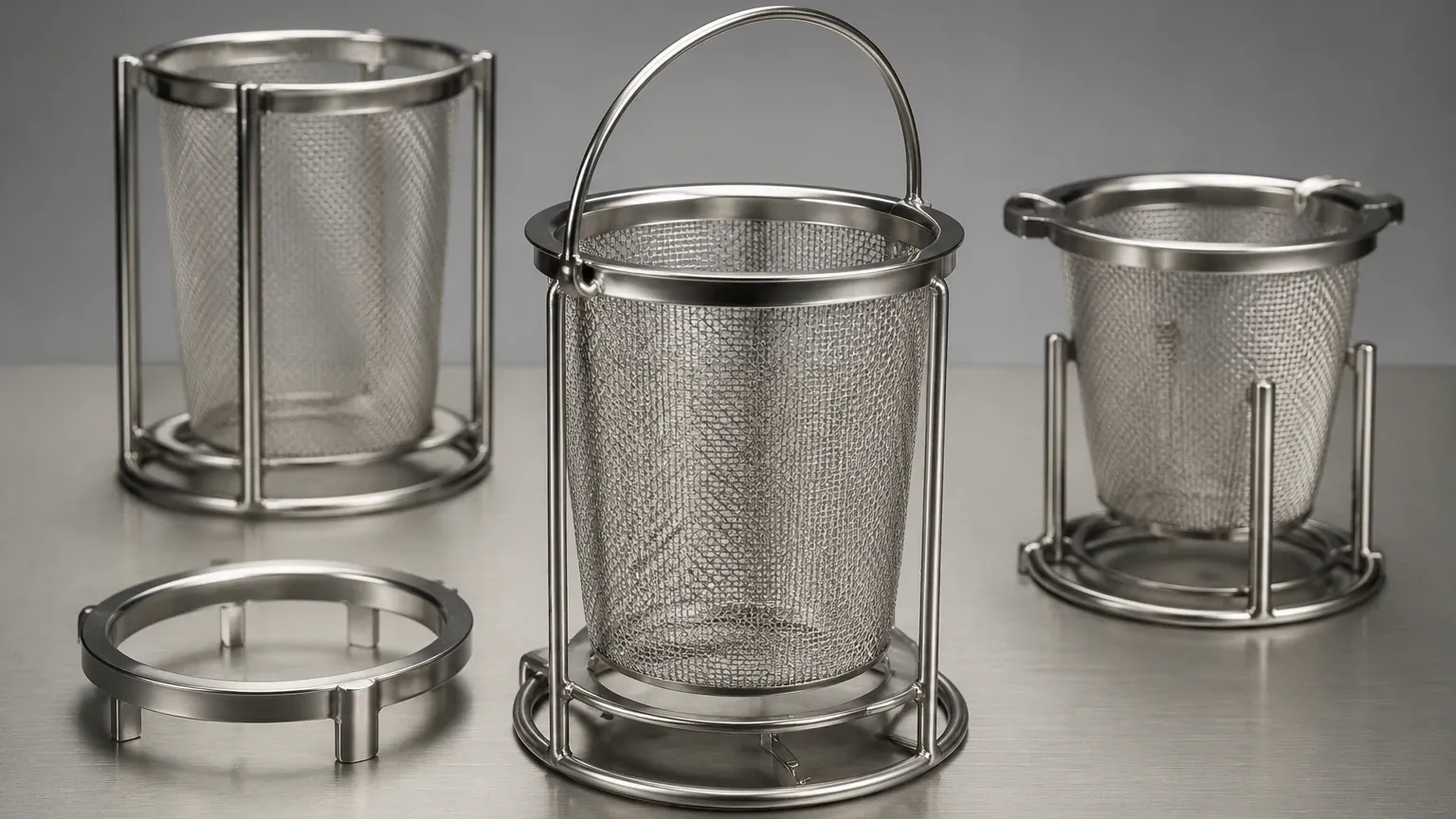
In industrial filtration systems, the efficiency of a process often hinges on the mechanical integrity of its internal components. While the filtration media—the mesh or perforated metal—receives the most attention, the strainer basket holder plays a critical role in ensuring that the media performs as intended. A strainer basket holder is the structural assembly or seating mechanism within a strainer housing that secures the basket in place, directs fluid flow, and prevents bypass.
For engineers and procurement teams sourcing Strainers & Baskets, understanding the technical nuances of the holder is essential for maintaining system pressure, achieving filtration accuracy, and extending the service life of the equipment. This guide examines the engineering considerations, material requirements, and selection criteria for strainer basket holders in demanding industrial environments.
The Functional Importance of the Strainer Basket Holder
The primary function of a strainer basket holder is to provide a stable, leak-proof interface between the incoming fluid and the filtration element. Without a robust holder, several failure modes can occur that compromise the entire process.
Prevention of Fluid Bypass
Fluid bypass occurs when the process liquid finds a path around the filter media rather than through it. This usually happens at the seating point where the basket meets the housing. A precision-engineered strainer basket holder ensures a tight seal, often utilizing machined surfaces or specialized gaskets to force 100% of the fluid through the mesh. In applications such as pharmaceutical manufacturing or fine chemical processing, even a 1% bypass can result in contaminated batches and significant financial loss.
Structural Support Under Differential Pressure
As a strainer basket collects debris, the differential pressure ($ΔP$) across the media increases. This pressure exerts significant mechanical force on the basket. The strainer basket holder must be designed to distribute these loads evenly to the housing walls. If the holder is poorly constructed or incorrectly sized, the basket may shift, tilt, or collapse, leading to catastrophic failure of the filtration stage.
Ease of Maintenance and Alignment
In high-volume industrial settings, downtime for cleaning or replacement must be minimized. A well-designed holder facilitates quick removal and precise re-insertion of the basket. Features such as self-aligning seats or guide rails within the holder assembly ensure that the basket is perfectly positioned every time the housing is closed, reducing the risk of human error during routine maintenance.
Engineering Specifications and Material Selection
Selecting the right material for a strainer basket holder is as important as the material for the basket itself. Because the holder is a permanent or semi-permanent part of the housing assembly, it must withstand the same corrosive and thermal stresses as the rest of the system.
Stainless Steel Grades: 304 vs. 316L
Stainless steel is the industry standard for holders due to its strength and corrosion resistance.
* Grade 304: Suitable for general industrial applications, water treatment, and food processing where moderate corrosion resistance is required.
* Grade 316L: Preferred for chemical processing, marine environments, and pharmaceutical applications. The addition of molybdenum and lower carbon content provides superior resistance to pitting and crevice corrosion, particularly in the presence of chlorides.
Surface Finish and Sanitary Requirements
In the food, beverage, and pharmaceutical industries, the strainer basket holder must meet stringent sanitary standards. This involves specialized welding techniques and surface polishing (often measured in Ra values). A holder with a smooth, electropolished finish prevents the accumulation of bacteria and allows for effective Clean-in-Place (CIP) or Steam-in-Place (SIP) procedures. Engineers must ensure the holder design eliminates "dead zones" where stagnant fluid could harbor contaminants.
Integration with Different Strainer Types
The design of the strainer basket holder varies significantly depending on the configuration of the strainer housing. Customization is often required to match the specific flow dynamics of the system.
Simplex and Duplex Strainers
In simplex strainers, the holder is typically a machined seat at the base or a flange at the top of the housing. In duplex systems, where flow can be diverted between two housings, the holder must maintain its seal even during the turbulence of a valve changeover. The holder in these systems is often integrated into the diversion valve assembly to ensure a seamless transition without pressure spikes.
Y-Strainers and T-Strainers
Y-strainers use a cylindrical holder that is often part of the access cover. Because the basket in a Y-strainer is positioned at an angle, the holder must provide lateral support to prevent the basket from vibrating under high-velocity flow. T-strainers, often used in larger pipelines, require heavy-duty holders that can support the weight of large-capacity baskets when they are full of heavy solids.
Key Evaluation Criteria for Engineers
When specifying a strainer basket holder for a new project or as a replacement part, engineers should evaluate the following technical factors:
1. Flow Velocity and Turbulence: High-velocity systems can cause "chatter" if the basket is not held firmly. The holder should include a hold-down mechanism, such as a spring-loaded cover or a bolted flange, to dampen vibration.
2. Sealing Mechanism: Determine if the application requires a metal-to-metal seal or an elastomer O-ring. For high-temperature applications where elastomers might fail, precision-machined metal seats are necessary.
3. Compatibility with Customized Baskets: If the process requires a custom mesh size or a reinforced basket, the strainer basket holder must be checked for dimensional compatibility. Variations in flange thickness or basket diameter can prevent a proper seal.
4. Corrosion Allowance: In aggressive chemical environments, the holder should be designed with a corrosion allowance or made from high-nickel alloys (like Hastelloy) if stainless steel is insufficient.
Common Risks and Mitigation Strategies
Ignoring the condition or the design of the strainer basket holder can lead to several operational risks. Identifying these early in the procurement phase is essential for long-term reliability.
Erosion and Wear
Over time, the high-velocity fluid passing through the seating area can cause erosion, especially if the fluid contains abrasive particles. This erosion widens the tolerances between the holder and the basket, eventually leading to bypass. Regular inspection of the holder's seating surfaces is a critical part of a preventative maintenance program.
Thermal Expansion
In high-temperature processes, the basket and the holder may expand at different rates if they are made from different materials. This can cause the basket to become stuck in the holder or, conversely, create gaps that allow bypass. Specifying matched materials for the entire strainer basket holder assembly and the basket itself mitigates this risk.
Mechanical Deformation
If a system experiences frequent pressure surges (water hammer), the holder may become deformed. A deformed holder will no longer provide a flat surface for the basket flange, making it impossible to achieve a proper seal. Choosing a holder with a higher pressure rating than the nominal system pressure provides a safety margin against these surges.
Customization and OEM Capabilities
Many industrial applications cannot be served by off-the-shelf components. OEM manufacturers like Kaifil specialize in developing customized filtration solutions where the holder is tailored to the specific geometry of an existing housing or a unique process requirement.
Customization options often include:
* Adjustable Holder Heights: To accommodate different basket capacities within the same housing.
* Multi-Basket Holders: Designed for large-diameter housings to increase the total filtration area while keeping individual baskets manageable for manual cleaning.
* Reinforced Support Grids: Integrated into the holder to provide extra strength for fine-mesh baskets that lack inherent structural rigidity.
Total Cost of Ownership Considerations
While the initial cost of a precision-machined, high-grade stainless steel strainer basket holder may be higher than generic alternatives, the total cost of ownership (TCO) is significantly lower. A high-quality holder reduces the frequency of basket replacements, prevents costly product contamination due to bypass, and minimizes maintenance labor.
Engineers should also consider the availability of replacement seals and the ease of sourcing identical holders in the future. Working with a manufacturer that provides detailed engineering drawings and material certifications ensures that the filtration system remains compliant with industry standards over its entire lifecycle.
Conclusion
The strainer basket holder is a fundamental component that determines the success of an industrial filtration system. By ensuring a perfect seal, providing structural support, and facilitating easy maintenance, the holder allows the filtration media to operate at peak efficiency. When selecting Strainers & Baskets, technical professionals must look beyond the mesh size and consider the mechanical integrity of the holder assembly. Investing in a well-engineered, application-specific holder is the most effective way to ensure process consistency, protect downstream equipment, and optimize the performance of industrial filtration operations.
