


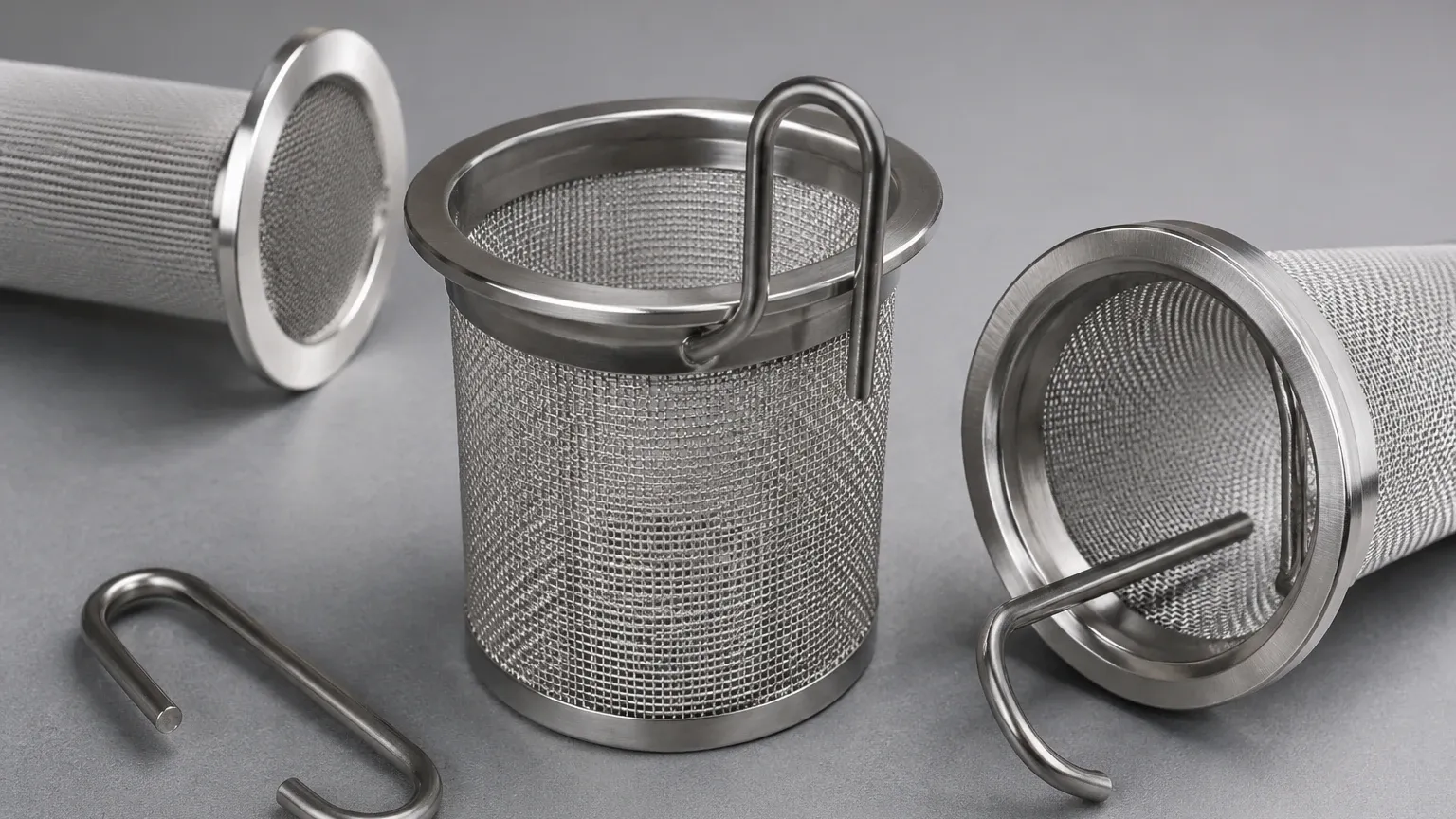
Strainer Basket Hook
In industrial filtration, the efficiency of a system is often judged by its throughput and filtration accuracy. However, for the engineers and maintenance teams tasked with keeping these systems operational, the physical design of the filter internal components is equally critical. One such component, often overlooked until a maintenance cycle begins, is the strainer basket hook. This seemingly simple feature serves as the primary interface between the filtration media and the technician, playing a vital role in safety, ergonomics, and the reduction of operational downtime.
At Kaifil, we recognize that high-performance Strainers & Baskets require more than just precise mesh sizing; they require robust mechanical designs that withstand the rigors of frequent extraction, heavy debris loading, and corrosive environments. This guide examines the technical specifications, design variations, and engineering considerations of the strainer basket hook within industrial applications.
The Functional Importance of Strainer Basket Hooks
The primary function of a strainer basket hook is to facilitate the installation and removal of the filter basket from its housing. In many industrial processes—ranging from chemical processing to water treatment—the fluid being filtered may be hazardous, high-temperature, or under significant pressure. The hook provides a secure point for lifting tools or manual handling, ensuring that the basket can be extracted without damaging the filter mesh or the housing’s internal sealing surfaces.
Beyond simple extraction, the hook often serves as a positioning guide. In duplex or simplex strainers, the basket must be seated perfectly to ensure that the fluid bypass is eliminated. A well-engineered hook design ensures that the basket is oriented correctly relative to the inlet and outlet ports. Furthermore, in high-flow applications, the hook and handle assembly must be designed to withstand the hydraulic forces exerted on the basket, preventing it from shifting or vibrating, which could lead to mechanical fatigue over time.
Engineering Specifications: Materials and Load Ratings
When specifying a strainer basket hook, material compatibility is the first engineering boundary. Because the hook is submerged in the process fluid, it must possess the same, if not higher, corrosion resistance as the filter mesh itself.
Material Selection
- Stainless Steel 304: The standard for general-purpose industrial applications. It offers excellent strength and moderate corrosion resistance for water and mild chemical service.
- Stainless Steel 316/316L: Preferred for pharmaceutical, food and beverage, and marine applications. The addition of molybdenum provides superior resistance to chlorides and organic acids.
- Specialty Alloys: For highly aggressive environments, such as those found in petrochemical processing, hooks may be fabricated from Monel, Hastelloy, or Duplex stainless steel to prevent stress corrosion cracking.
Load-Bearing Capacity
Engineers must calculate the "wet weight" of the basket during the selection process. A strainer basket filled with heavy particulate matter, such as sand, metal shavings, or viscous sludge, can weigh several times its dry weight. The strainer basket hook must be rated for this maximum load with a significant safety factor. Failure to account for this can lead to the hook bending or snapping during extraction, potentially dropping the contaminated basket back into the clean side of the housing or causing injury to personnel.
Design Configurations: From Standard Handles to Custom Hooks
Not all filtration systems utilize the same hook configuration. The choice of design depends on the housing clearance, the frequency of cleaning, and the method of extraction (manual vs. mechanical hoist).
1. Fixed Bail Handles
A common design where a heavy-gauge wire or bar is welded to the top ring of the basket. While simple and cost-effective, fixed handles require additional vertical clearance within the housing. If the housing lid is close to the top of the basket, a fixed handle may interfere with the seal.
2. Folding or Drop Handles
These hooks are hinged, allowing them to lay flat against the basket rim when the housing is closed. This is an ideal solution for compact filter housings where vertical space is limited. However, engineers must ensure the hinge mechanism is robust and does not create a "dead zone" where bacteria or contaminants can accumulate, especially in sanitary applications.
3. Cross-Bar Hooks
A rigid bar spans the diameter of the basket opening. This design is exceptionally strong and is often used in large-diameter Strainers & Baskets where a central lifting point is required for a crane or hoist hook. The cross-bar must be streamlined to minimize pressure drop across the top of the filter.
4. Specialized "J-Hooks" and External Grips
In some custom configurations, the hook is not a handle but a series of external tabs or recessed grips designed to interface with a specific proprietary lifting tool. This is common in automated systems where robotic arms or specialized extractors are used to swap filters without manual intervention.
Integration with Industrial Strainers & Baskets
The integration of the strainer basket hook into the overall basket assembly is a critical manufacturing step. At Kaifil, we utilize advanced welding techniques, such as TIG (Tungsten Inert Gas) or spot welding, depending on the material thickness and application requirements. The weld points between the hook and the basket’s top flange are the primary stress concentration areas.
In high-pressure systems, a simple weld may not be sufficient. We often employ reinforced mounting plates or wraparound wire designs that distribute the lifting force across a larger surface area of the basket rim. This prevents the thin perforated metal or wire mesh from deforming under the weight of a full load.
When selecting Strainers & Baskets, it is essential to confirm that the hook height does not impede the flow path. If the hook is too tall, it can create turbulence at the inlet, leading to uneven cake distribution on the filter media and premature clogging in certain areas of the mesh.
Maintenance, Safety, and Replacement Cycles
The strainer basket hook is a wear item, though it is often treated as permanent. Over hundreds of cleaning cycles, the constant stress of lifting and the potential for chemical erosion can weaken the attachment points.
Inspection Protocols
Maintenance teams should include the following checks during every filter cleaning:
- Weld Integrity: Look for hairline cracks or signs of corrosion around the base of the hook.
- Deformation: Check if the hook has been stretched or bent. A deformed hook is a sign that the basket is being overloaded or that the extraction force is exceeding design limits.
- Ergonomics: Ensure that the hook still allows for a secure grip. Smooth, rounded edges are preferred to prevent glove tears or hand injuries.
Total Cost of Ownership (TCO)
A hook failure during a critical maintenance window can result in hours of unplanned downtime. If a basket falls and wedges itself in the housing, it may require specialized extraction tools or even the replacement of the entire strainer body. Investing in high-quality, reinforced hooks from the outset significantly reduces the risk of these high-cost failures.
Selection Guide for Procurement and Engineering Teams
When ordering replacement components or designing a new filtration stage, confirming the following details regarding the strainer basket hook will ensure long-term compatibility and performance:
1. Clearance Height: What is the distance between the top of the basket and the underside of the housing cover? This determines if a fixed or folding hook is required.
2. Lifting Method: Will the basket be pulled by hand, or is a mechanical hoist required? Heavy baskets (typically those over 15kg when full) should always feature reinforced cross-bar hooks.
3. Fluid Dynamics: Does the process involve high-velocity flow? If so, the hook must be low-profile or streamlined to prevent cavitation or excessive pressure drop.
4. Sanitary Standards: Does the application require 3-A or FDA compliance? Hooks for these industries must be free of pits, crevices, and sharp angles to allow for complete Clean-in-Place (CIP) effectiveness.
Conclusion
The strainer basket hook is a fundamental component that bridges the gap between filtration theory and practical industrial operation. By selecting the appropriate material, load rating, and design configuration, engineers can ensure that their Strainers & Baskets are not only effective at removing contaminants but also safe and efficient to maintain.
Kaifil’s expertise in custom stainless steel fabrication allows us to provide tailored filtration solutions that address these specific mechanical challenges. Whether you require standard replacement baskets or a completely custom-engineered filtration assembly, our focus remains on durability, precision, and operational reliability. For more information on our full range of filtration products and customization options, please explore our technical resources or contact our engineering team directly.
