


Strainer Basket Hs Code
In the global landscape of industrial procurement, the precision of technical specifications is matched only by the necessity of regulatory compliance. For engineers and procurement managers sourcing filtration components, identifying the correct strainer basket hs code is a fundamental step in international logistics. Beyond simple classification, the Harmonized System (HS) code influences duty rates, import restrictions, and the speed of customs clearance.
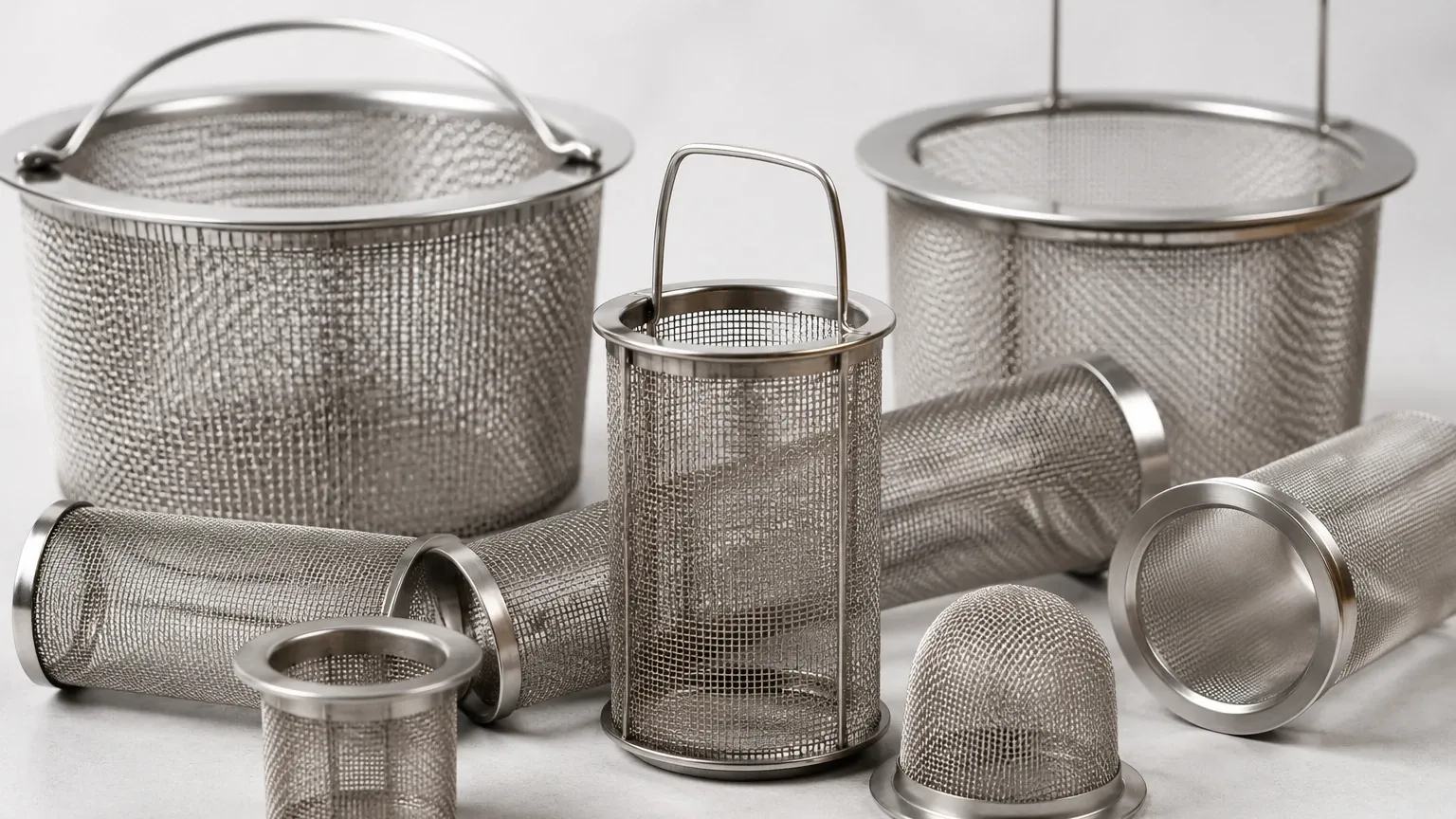
Strainers & Baskets serve as critical safeguards in piping systems, protecting expensive downstream equipment such as pumps, flow meters, and heat exchangers from particulate damage. Understanding how these components are classified under the international Harmonized System requires a technical look at their material composition, intended function, and engineering design.
Understanding the Harmonized System for Filtration Components
The Harmonized System is a standardized numerical method of classifying traded products. Managed by the World Customs Organization (WCO), it is used by more than 200 countries as a basis for their customs tariffs. For industrial filtration products, the classification process typically moves from the general material of construction to the specific functional application of the item.
When determining the strainer basket hs code, the primary distinction often lies between whether the item is classified as a "general article of metal" or as a "part of a machinery or apparatus." This distinction is governed by the General Rules of Interpretation (GRI) and the specific Section and Chapter Notes of the HS Nomenclature.
Common HS Code Classifications for Strainer Baskets
Most industrial strainer baskets manufactured from stainless steel or other metals fall under two primary chapters: Chapter 73 (Articles of iron or steel) or Chapter 84 (Nuclear reactors, boilers, machinery, and mechanical appliances; parts thereof).
1. HS Code 8421.29: This is the most frequent classification for industrial filter elements. Heading 8421 covers "Centrifuges, including centrifugal dryers; filtering or purifying machinery and apparatus, for liquids or gases." Subheading 8421.29 specifically refers to "Other" filtering or purifying machinery and apparatus for liquids. Many customs authorities classify replaceable strainer baskets here because they are essential functional components of a liquid filtration system.
2. HS Code 8421.99: This code is designated for "Parts" of the machinery and apparatus described in heading 8421. If a strainer basket is imported specifically as a replacement part for a larger filtration housing, it may be classified under this subheading.
3. HS Code 7326.90: This is a "basket" category for "Other articles of iron or steel." If a strainer is viewed simply as a fabricated metal mesh product without a complex mechanical filtering function, it might be assigned here. However, for precision-engineered industrial components, 8421 is generally more accurate and preferred by technical experts.
Engineering Factors Influencing HS Classification
The technical characteristics of a strainer basket do more than just determine its performance in a chemical plant or food processing line; they also provide the factual basis for its HS classification. Customs officials look at the "essential character" of the product.
Material Composition
Industrial strainers are predominantly manufactured from stainless steel (SS304, SS316, or SS316L) due to its corrosion resistance and structural integrity. The use of specialized alloys like Duplex stainless steel or Monel for highly corrosive environments can sometimes trigger different sub-classifications depending on the specific country's tariff schedule. From an engineering perspective, the material must be compatible with the process fluid to prevent galvanic corrosion or media migration.
Filtration Media and Construction
The method of construction—whether the basket utilizes perforated metal, woven wire mesh, or wedge wire—defines its filtration accuracy and mechanical strength.
- Perforated Metal: Often used as a support or for coarse straining (e.g., removing large stones or debris).
- Woven Wire Mesh: Provides precise micron ratings for fine filtration. The type of weave (Plain, Twill, or Dutch weave) affects the flow rate and pressure drop.
- Wedge Wire: Offers high mechanical strength and a non-clogging surface, ideal for heavy-duty industrial applications.
Functionality and Design
Is the basket designed for a Simplex strainer, a Duplex strainer, or a Y-strainer? Does it feature a slanted bottom, a flat bottom, or a truncated cone shape? These design elements are recorded in technical drawings and specifications, which serve as supporting documentation if a customs authority queries the declared strainer basket hs code.
Technical Specifications and Selection Criteria
When engineers select Strainers & Baskets, they must look beyond the code and focus on the operational parameters that ensure system longevity. A mismatch in specifications can lead to premature failure or inefficient filtration.
1. Micron Rating and Mesh Size
The filtration degree is the most vital specification. It refers to the size of the smallest particle the strainer is designed to retain. In industrial contexts, this is measured in microns (µm) or mesh count (the number of openings per linear inch). Engineers must balance the need for fine filtration with the risk of rapid clogging. A finer mesh increases the frequency of cleaning cycles and the total cost of maintenance.
2. Open Area Ratio
The ratio of the total area of the holes to the total area of the basket is known as the open area. A high open area ratio is desirable because it results in a lower initial pressure drop ($\Delta P$) across the strainer. A common engineering standard is to have a strainer basket with an open area at least four times the cross-sectional area of the inlet pipe. This ensures that the system can handle significant particulate loading before requiring a cleaning cycle.
3. Pressure Drop and Flow Velocity
Every filtration component introduces resistance to the flow. Engineers must calculate the clean pressure drop to ensure the pump has sufficient head to maintain the required flow rate. If the pressure drop is too high, it can lead to cavitation in pumps or reduced efficiency in heat exchangers. The strainer basket hs code documentation often requires a description of these functional capabilities to justify its classification under filtering apparatus.
The Importance of Accurate HS Coding in B2B Trade
For purchasing departments, the financial implications of the strainer basket hs code are significant. Incorrect classification can lead to several risks:
* Duty Overpayment: Some classifications carry higher import duty rates than others. Correctly identifying a basket as a part of a filtering apparatus (8421.99) versus a general steel article (7326.90) could result in lower tariffs depending on trade agreements.
* Customs Delays: If the description on the commercial invoice does not match the technical reality of the product, customs may hold the shipment for inspection. For a plant shutdown or an urgent repair, these delays can cost thousands of dollars per hour in lost production.
* Compliance Penalties: Repeated misclassification, even if unintentional, can lead to audits and fines from national customs agencies. It is the importer of record's responsibility to ensure the code is accurate.
Customization and OEM Solutions
Industrial applications often require bespoke filtration solutions that standard off-the-shelf products cannot satisfy. Custom-engineered Strainers & Baskets allow for the optimization of specific parameters:
* Reinforced Structures: For high-pressure applications, baskets can be fitted with internal or external support cages to prevent collapsing under high differential pressure.
* Specialized Handles: Ergonomic handles, such as bail handles or lift lugs, facilitate easier removal and cleaning, reducing downtime during maintenance.
* Magnetic Inserts: In some hydraulic or lubrication systems, magnetic rods are added to the basket to capture fine ferrous particles that might pass through the mesh.
When ordering customized components, provide the manufacturer with detailed CAD drawings and process conditions (temperature, pressure, fluid viscosity). This technical clarity ensures that the final product meets engineering requirements and that the associated strainer basket hs code is easily verifiable through the product's technical data sheet.
Maintenance and Total Cost of Ownership
The total cost of a strainer basket is not merely the purchase price but the sum of the initial cost, maintenance labor, and the cost of downtime. Stainless steel baskets are preferred in B2B industrial settings because they are cleanable and reusable. Unlike disposable cartridges, a well-maintained stainless steel basket can last for years.
Cleaning Protocols
To maintain the integrity of the filtration system, a regular cleaning schedule must be established based on the differential pressure. Once the $\Delta P$ reaches a predetermined limit (often 5-10 psi depending on the system), the basket should be removed. Cleaning methods include:
- Backwashing: Reversing the flow to dislodge particles.
- Ultrasonic Cleaning: For fine meshes where particles are deeply embedded.
- Chemical Cleaning: Using compatible solvents to dissolve organic or mineral scale.
Conclusion
Navigating the complexities of industrial filtration requires a dual focus on engineering excellence and regulatory compliance. The strainer basket hs code is a vital piece of data that bridges these two worlds, ensuring that high-quality components move efficiently through the global supply chain.
By focusing on technical specifications—such as material grade, micron rating, and open area—engineers can ensure they are selecting the most durable and cost-effective Strainers & Baskets for their specific applications. Whether for chemical processing, water treatment, or food production, the right filtration component, correctly classified and engineered, is essential for operational reliability and system protection.
