


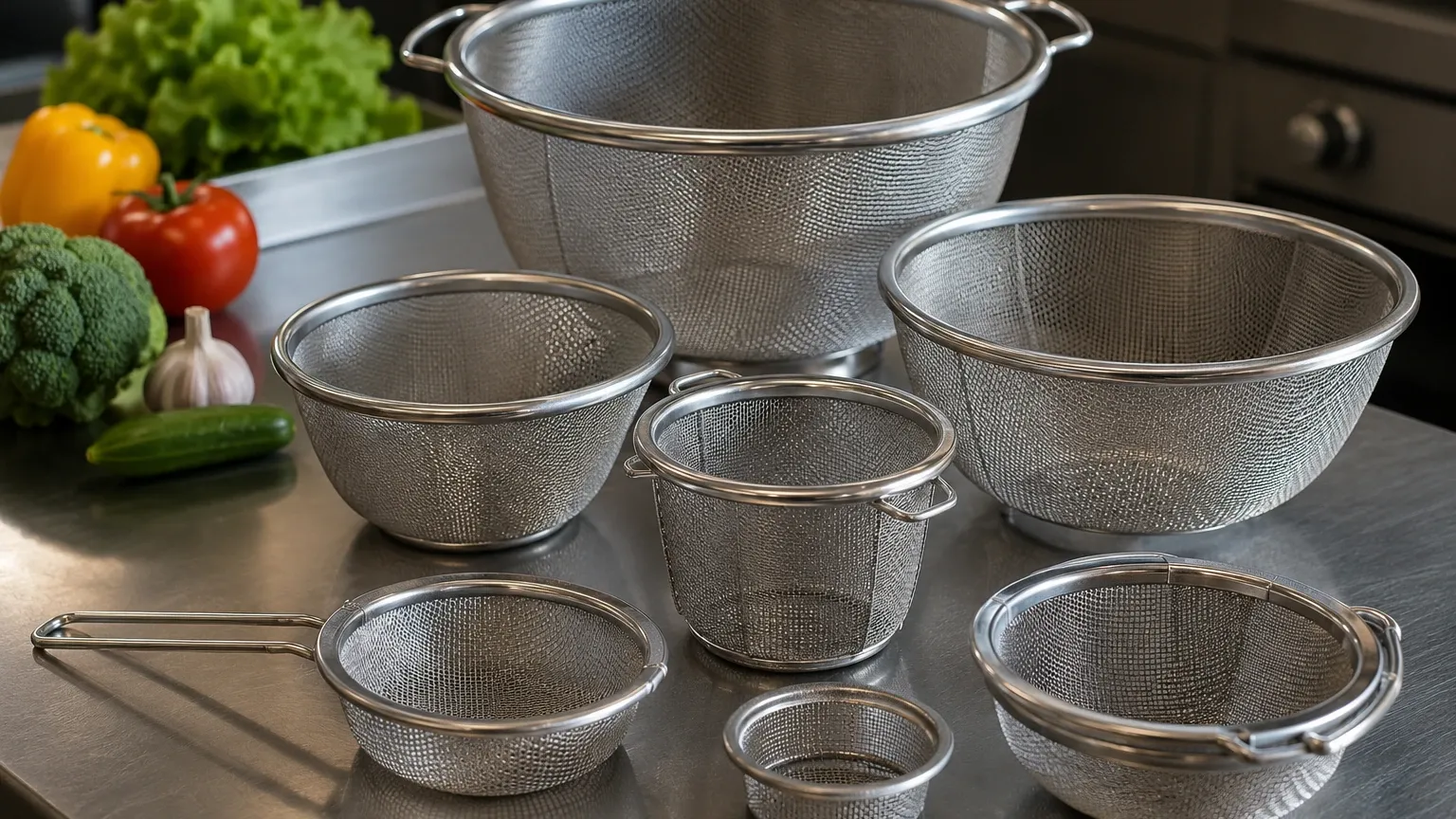
Strainer Basket Kitchen
In the context of large-scale food processing, commercial catering, and industrial food production, the term "strainer basket kitchen" refers to high-performance filtration components designed to manage solid-liquid separation within demanding environments. Unlike consumer-grade sink plugs, industrial-grade Strainers & Baskets are engineered to withstand high flow rates, corrosive cleaning agents, and rigorous sanitary standards. For engineers and procurement professionals, selecting the correct basket strainer involves a deep understanding of material science, fluid dynamics, and mechanical durability.
Industrial food production lines require robust systems to protect downstream equipment—such as pumps, heat exchangers, and spray nozzles—from debris. Whether it is removing vegetable skins in a processing plant or filtering fats in a commercial rendering facility, the efficiency of the strainer basket directly impacts the uptime and safety of the entire operation.
Engineering Fundamentals of Industrial Strainer Baskets
The primary function of a strainer basket in a professional or industrial kitchen setting is the mechanical removal of unwanted solids from a liquid stream. This is achieved through a perforated metal or wire mesh interface. The design of these components must balance two competing factors: filtration fineness and flow resistance.
Perforation vs. Mesh Lining
Most industrial baskets utilize a heavy-duty perforated metal shell for structural integrity. For applications requiring finer filtration, a layer of stainless steel wire mesh is sintered or welded to the interior of the basket. The choice between a simple perforated basket and a mesh-lined one depends on the particle size that needs to be captured. In many food processing applications, a 1/8-inch or 1/16-inch perforation is sufficient for primary straining, while secondary stages may require mesh as fine as 100 to 400 microns.
Open Area Ratio
The "open area" of a strainer is the total area of the holes divided by the total area of the basket. A higher open area ratio results in a lower initial pressure drop across the filter. For a strainer basket kitchen application to be efficient, the open area of the basket should ideally be at least 6 to 8 times the cross-sectional area of the inlet pipe. This ensures that the system can continue to operate effectively even as the basket begins to fill with debris.
Material Selection for Food-Grade Applications
Material integrity is non-negotiable in food and beverage filtration. Industrial strainers must be resistant to both the organic acids found in food products and the harsh caustic chemicals used during Clean-in-Place (CIP) cycles.
Stainless Steel 304 vs. 316
* Stainless Steel 304: This is the standard grade for most food-related applications. It offers excellent corrosion resistance and is cost-effective for general use in commercial kitchens and processing plants.
* Stainless Steel 316: In environments involving high salt concentrations (brines) or high acidity (citrus processing), SS316 is the preferred choice. The addition of molybdenum provides superior resistance to pitting and crevice corrosion, ensuring a longer service life in aggressive chemical environments.
At Kaifil, the focus is on providing high-quality stainless steel components that meet these rigorous industrial standards. Using sub-standard materials in a commercial filtration setting can lead to metallic contamination or premature component failure, both of which are costly and potentially hazardous.
Customization Options for Specific Filtration Needs
Every industrial process has unique requirements, and a "one-size-fits-all" approach rarely provides optimal performance. Customization in the design of Strainers & Baskets allows engineers to address specific challenges such as high viscosity, abrasive solids, or space constraints.
Handle and Lifting Mechanisms
In a fast-paced industrial kitchen or processing plant, ease of maintenance is critical. Custom baskets can be designed with heavy-duty handles, slanted tops for easy gripping, or specialized lifting eyes for use with overhead hoists. This reduces the time required for cleaning cycles and improves worker safety.
Reinforcement and Structural Integrity
For high-pressure applications where the differential pressure across the basket may spike, reinforced bands or external skeletons can be added to the basket design. This prevents the basket from collapsing or deforming under the weight of captured solids or the force of the fluid flow.
Magnetic Inserts
In some food processing lines, there is a risk of fine ferrous metal contamination from upstream machinery. Custom strainer baskets can be equipped with magnetic rods or inserts to capture these particles, providing an extra layer of product safety that standard mechanical filtration cannot offer.
Performance Evaluation and Flow Rate Considerations
When specifying a strainer basket kitchen component, engineers must calculate the expected pressure drop ($ΔP$). A high initial pressure drop indicates that the strainer is undersized for the application, which will lead to frequent clogging and increased energy consumption by the pumps.
Viscosity and Temperature
The viscosity of the fluid significantly affects filtration performance. For example, filtering hot cooking oil requires a different mesh density than filtering room-temperature water. As temperature increases, viscosity typically decreases, which may allow for a finer mesh without a prohibitive increase in pressure drop. Conversely, fluids that thicken when cooled must be filtered through baskets designed to handle higher shear forces.
Solids Loading
The concentration of solids in the fluid stream determines the "holding capacity" required of the basket. In applications with high solids loading, a larger basket or a multi-basket duplex strainer system may be necessary to allow for continuous operation while one basket is being cleaned.
Maintenance, Cleaning, and Replacement Cycles
The longevity of a stainless steel strainer basket depends heavily on the maintenance protocol. In industrial food environments, bacterial growth is a primary concern, making the "cleanability" of the basket a top priority.
Cleaning Procedures
Industrial baskets should be designed with smooth welds and no dead zones where organic material can accumulate. Electropolishing is often used to create a mirror-like finish that resists biofilm attachment and makes the cleaning process more effective. During manual cleaning, non-abrasive tools should be used to avoid scratching the stainless steel surface, which could compromise its corrosion resistance.
Identifying the Need for Replacement
While stainless steel is durable, it is not indestructible. Procurement teams should monitor for the following signs that a replacement is necessary:
1. Mechanical Deformation: If the basket frame is warped, it may no longer seat correctly in the housing, allowing "bypass" where unfiltered liquid escapes around the edges.
2. Mesh Blinding: Over time, certain fats or proteins can become permanently lodged in the wire mesh (blinding), significantly reducing the effective filtration area.
3. Corrosion: Any signs of rust or pitting, especially at weld points, indicate that the material grade is insufficient for the chemical environment or that the protective oxide layer has been compromised.
Total Cost of Ownership and Purchasing Decisions
When evaluating a strainer basket kitchen solution, the initial purchase price is only one component of the total cost of ownership (TCO). A lower-cost basket made from inferior materials or with poor weld quality will likely result in higher long-term costs due to frequent replacements, increased labor for cleaning, and potential downtime.
Engineering Support and OEM Capability
Working with a manufacturer like Kaifil provides access to engineering expertise that ensures the filtration component is correctly specified for the application. OEM capabilities allow for the production of exact replacement baskets for existing housing units, ensuring a perfect fit and maintaining the original system's performance specifications.
Documentation and Compliance
For the pharmaceutical and food industries, documentation is essential. Purchasing teams should confirm that the manufacturer can provide material test reports (MTRs) and certificates of compliance to ensure that the stainless steel used meets the required international standards (such as ASTM or AISI).
Conclusion
Selecting the right Strainers & Baskets for an industrial kitchen or food processing environment is a technical decision that impacts the entire production chain. By focusing on high-grade stainless steel construction, optimized open area ratios, and customized design features, engineers can ensure reliable filtration, protect expensive downstream equipment, and maintain the highest standards of product purity.
For those seeking precision-engineered solutions tailored to specific industrial requirements, reviewing professional product options is the first step toward optimizing system performance. Reliable filtration is not just about catching debris; it is about ensuring the continuity and safety of the industrial process through superior engineering and material selection. To explore specific configurations and technical support for your filtration needs, you can Review product options and application support to find the ideal match for your operational requirements.
