


Strainer Basket Name
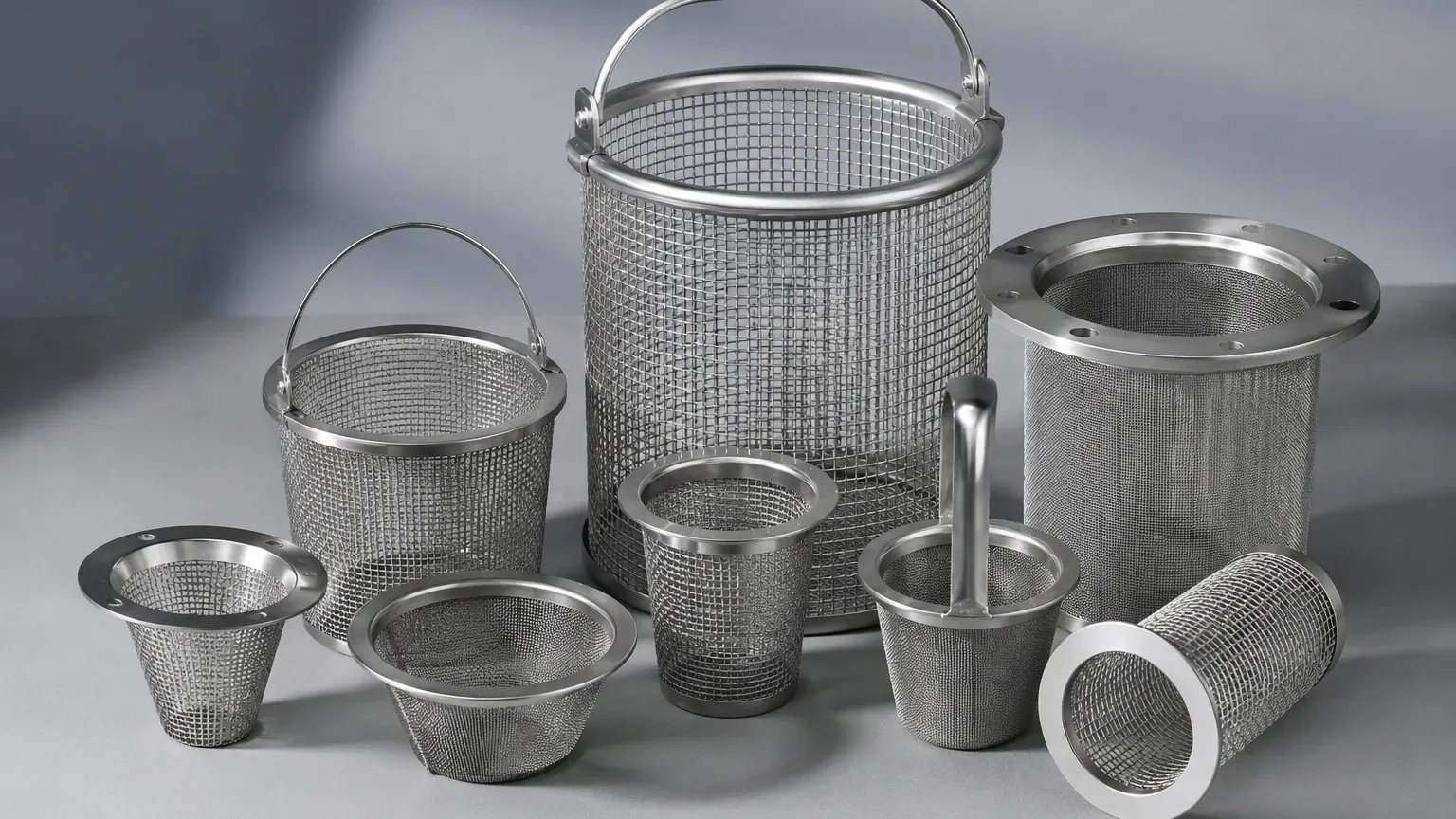
In industrial fluid handling and process engineering, the term "strainer basket name" often serves as the primary identifier for critical components used to protect downstream equipment from particulate contamination. While it may seem like a simple label, the specific nomenclature used for these components—ranging from simplex and duplex baskets to Y-strainer and T-strainer elements—carries significant technical weight. For engineers and procurement teams, understanding the precise classification and specification of Strainers & Baskets is essential for ensuring system compatibility, filtration efficiency, and long-term operational reliability.
Industrial filtration systems rely on these removable, cleanable components to trap solids. However, a generic request for a "filter basket" is rarely sufficient. Instead, technical professionals must navigate a complex naming convention that accounts for housing geometry, flow rates, material properties, and filtration media types. This guide examines the technical definitions behind the strainer basket name and provides the engineering context necessary for selecting the correct component for demanding industrial applications.
Understanding Industrial Strainer Basket Nomenclature
The nomenclature of a strainer basket is typically derived from the type of housing it inhabits and the specific mechanical design of the basket itself. In a B2B context, the strainer basket name usually refers to one of several standardized configurations. These names are not merely descriptive; they dictate the flow path, the dirt-holding capacity, and the method of maintenance.
1. Simplex Basket Strainers: These are named for their single-chamber design. They are used in batch processes where the flow can be interrupted to remove and clean the basket.
2. Duplex (or Twin) Basket Strainers: These feature two separate chambers with a diverting valve. The name implies a system capable of continuous operation, as one basket can be cleaned while the other remains in service.
3. Y-Strainer Baskets: Named for the "Y" shape of the housing, these baskets are typically used for high-pressure steam or gas lines where the amount of particulate is relatively low.
4. T-Strainer (or Bathtub) Baskets: These are named for their "T" shaped configuration, often used in large-diameter pipelines where low pressure drop and easy access are priorities.
When specifying a strainer basket name, engineers must also consider the "style" of the basket, such as a slanted-top basket for Y-strainers or a flat-bottomed basket for simplex housings. Each name corresponds to a specific internal geometry that must match the housing to prevent fluid bypass.
Engineering Specifications: Beyond the Name
While identifying the correct strainer basket name is the first step, the internal specifications determine the actual performance. A basket's name might be the same across different manufacturers, but the engineering data—such as the open area ratio and micron rating—will vary significantly.
Perforation and Mesh Linings
Industrial baskets are typically constructed from a perforated metal sheet that provides structural integrity. For finer filtration, a wire mesh lining is added. The "name" of the filtration media is defined by the hole size (for perforations) or the mesh count (for wire cloth).
* Perforation Size: Measured in inches or millimeters, common sizes range from 1/32" to 1/2".
* Mesh Count: Refers to the number of openings per linear inch. A "100-mesh basket" indicates 100 openings per inch, providing much finer filtration than a standard perforated basket.
Open Area Ratio (OAR)
The open area ratio is the relationship between the total area of the openings in the basket and the internal cross-sectional area of the inlet pipe. A well-engineered strainer basket should have an OAR of at least 6:1 or 8:1. This ensures that as the basket collects debris, the pressure drop (delta P) does not increase so rapidly that it starves downstream pumps or damages the basket itself.
Materials of Construction and Chemical Compatibility
The material associated with a strainer basket name is perhaps the most critical factor for longevity. In industries such as chemical processing or pharmaceutical manufacturing, the choice of alloy is dictated by the corrosivity of the fluid and the operating temperature.
* Stainless Steel 304: The standard for general-purpose industrial applications, offering good corrosion resistance and durability.
* Stainless Steel 316/316L: Preferred for applications involving chlorides, acids, or food-grade requirements. The "L" designation (low carbon) is essential if the basket requires extensive welding to prevent intergranular corrosion.
* Specialty Alloys: For highly aggressive environments, baskets may be named according to their exotic material, such as Monel, Hastelloy, or Titanium.
When selecting a strainer basket name, engineers must verify that the material of the basket, the handle, and the mesh lining are all compatible with the process fluid. Dissimilar metals can lead to galvanic corrosion, which can cause the basket to fail prematurely and release contaminants into the process stream.
Customization and Specialized Basket Designs
Standardized names cover a majority of applications, but unique process requirements often necessitate custom-engineered solutions. In these cases, the strainer basket name may include modifiers that describe specialized functional features.
Heavy-Duty and Reinforced Baskets
In high-viscosity applications or systems with high-pressure surges, standard baskets may collapse. Reinforced baskets feature external skeletons or thicker perforated plates to withstand higher differential pressures. These are often referred to as "high-strength" or "heavy-duty" baskets in technical documentation.
Magnetic Inserts
For applications involving fine metallic particles (such as in hydraulic systems or machining coolant recovery), a "magnetic strainer basket" includes magnetic rods suspended within the basket. This allows the component to capture sub-micron ferrous particles that would otherwise pass through the mesh.
Multi-Stage Filtration
Some custom designs utilize a "dual-stage" or "multi-layered" basket name. These involve a coarse outer perforated layer for large debris and a fine inner mesh for polishing the fluid. This design prevents the fine mesh from being blinded too quickly by large particles, extending the time between cleaning cycles.
Common Risks and Evaluation Criteria for Procurement
When purchasing based on a strainer basket name, there are several risks that procurement teams and engineers must mitigate to avoid system downtime or equipment damage.
The Risk of Fluid Bypass
The most common failure in basket filtration is bypass, where fluid escapes around the edges of the basket rather than passing through the media. This is often caused by an incorrect fit between the basket flange and the housing seat. When confirming a strainer basket name, it is vital to verify the flange diameter, the basket depth, and the sealing mechanism (e.g., O-rings or machined seats).
Pressure Drop Considerations
Every strainer basket creates a restriction in the flow. If the mesh is too fine for the application, the pressure drop will be excessive from the start. Engineers should request a pressure drop curve for the specific strainer basket name they are considering, ensuring it aligns with the pump's NPSH (Net Positive Suction Head) requirements.
Structural Integrity and Burst Pressure
A basket is a pressure-retaining component in the sense that it must withstand the force of the fluid pushing against the collected debris. If a basket is not cleaned in time, the differential pressure can exceed the basket's burst strength. Specifying a "reinforced" or "pleated" basket name can help increase the surface area and structural limit, providing a greater safety margin.
Maintenance and Replacement Cycles
The effective life of a component identified by a specific strainer basket name depends heavily on the cleaning protocol. Unlike disposable filter cartridges, most industrial strainer baskets are designed for reuse. However, repeated cleaning can lead to mechanical fatigue or damage to the fine wire mesh.
1. Differential Pressure Monitoring: The primary indicator for cleaning is the differential pressure. Gauges should be installed across the strainer housing. A common rule of thumb is to clean the basket when the pressure drop reaches 5-10 psi above the clean drop.
2. Visual Inspection: During cleaning, the basket should be inspected for broken welds, frayed mesh, or distorted flanges. A "damaged" basket, regardless of its name or original quality, must be replaced immediately to prevent bypass.
3. Cleaning Methods: Depending on the contaminant, baskets can be cleaned via back-flushing, ultrasonic cleaning, or manual washing. It is important to use cleaning agents that are compatible with the basket material to avoid pitting or stress corrosion cracking.
Conclusion: Selecting the Right Solution
Identifying the correct strainer basket name is more than a clerical task; it is a critical engineering decision that impacts the safety and efficiency of an industrial process. By understanding the nuances of nomenclature—from housing types like simplex and duplex to technical specs like OAR and micron ratings—technical professionals can ensure they are selecting the most robust filtration solution for their specific needs.
When evaluating Strainers & Baskets, it is essential to work with a manufacturer that understands the rigors of industrial environments. Precision in manufacturing, material selection, and custom design capabilities ensures that the strainer basket not only fits the housing but also provides the required protection for pumps, valves, and other sensitive downstream equipment. By focusing on factual engineering data and clear nomenclature, organizations can minimize maintenance costs and maximize the uptime of their fluid handling systems.
