


Strainer Basket Nz
In industrial fluid systems, the protection of downstream equipment is a critical engineering priority. Whether in chemical processing, water treatment, or food and beverage production, the presence of unwanted solids can lead to catastrophic pump failure, clogged valves, and compromised product quality. For engineering and procurement teams sourcing a strainer basket nz, understanding the technical nuances of material selection, filtration efficiency, and structural design is essential for maintaining operational uptime and reducing the total cost of ownership.
Industrial Strainers & Baskets serve as the primary line of defense in piping systems. Unlike fine-micron filters that are designed to capture microscopic particles, strainer baskets are typically used to remove larger debris, scale, and foreign objects. However, the line between "straining" and "filtration" has blurred as advanced manufacturing techniques allow for precision-engineered baskets capable of high-accuracy retention. This guide explores the engineering considerations necessary for selecting and maintaining high-performance strainer components in demanding industrial environments.
Understanding Industrial Strainer Baskets and Their Role in Filtration
The primary function of a strainer basket is to intercept solids in a flowing liquid or gas stream. In a typical basket strainer housing, the fluid enters the basket from the top or side, passes through the perforated or mesh walls, and exits through the outlet, leaving the contaminants trapped within the basket for easy removal.
For professionals searching for a strainer basket nz, the application usually dictates the specific design. In the New Zealand industrial landscape—where dairy processing, wine production, and geothermal power generation are prominent—the requirements for filtration hardware are often stringent. A failure in a strainer basket can lead to production halts that cost thousands of dollars per hour. Therefore, the basket must be engineered to withstand the specific flow rates, pressures, and chemical compositions of the process fluid.
Key Functions of Basket Strainers:
1. Equipment Protection: Preventing damage to pumps, flow meters, heat exchangers, and spray nozzles.
2. Product Purity: Ensuring that the final product, such as a beverage or a chemical intermediate, is free from particulate contamination.
3. Process Efficiency: Maintaining consistent flow rates by preventing the buildup of debris in narrow passages.
Material Selection for Demanding Industrial Environments
The longevity of a strainer basket is almost entirely dependent on its material composition. In industrial applications, stainless steel is the gold standard due to its mechanical strength and resistance to corrosion. When specifying a strainer basket nz, engineers must choose between different grades of stainless steel based on the environment.
304 Stainless Steel
304 stainless steel is the most common material for general industrial use. It offers excellent corrosion resistance to many chemicals and atmospheric conditions. It is frequently used in water treatment and general manufacturing where the fluid is not highly acidic or saline.
316 and 316L Stainless Steel
For more aggressive environments, such as pharmaceutical manufacturing or chemical processing, 316 stainless steel is preferred. The addition of molybdenum enhances its resistance to pitting and crevice corrosion, particularly in chloride-rich environments. 316L (low carbon) is often specified for components that require welding, as it prevents carbide precipitation during the welding process, ensuring the integrity of the mesh-to-frame bond.
Specialty Alloys
In extreme cases, such as geothermal applications or highly corrosive chemical handling, specialty alloys like Monel, Hastelloy, or Duplex stainless steel may be required. These materials provide superior resistance to high temperatures and extreme pH levels, ensuring that the strainer basket does not degrade and introduce metallic contaminants into the process stream.
Engineering Considerations: Design, Flow, and Pressure
Selecting the right strainer basket nz involves more than just picking a size. Engineers must calculate several variables to ensure the basket performs reliably under load.
Perforation vs. Mesh Lining
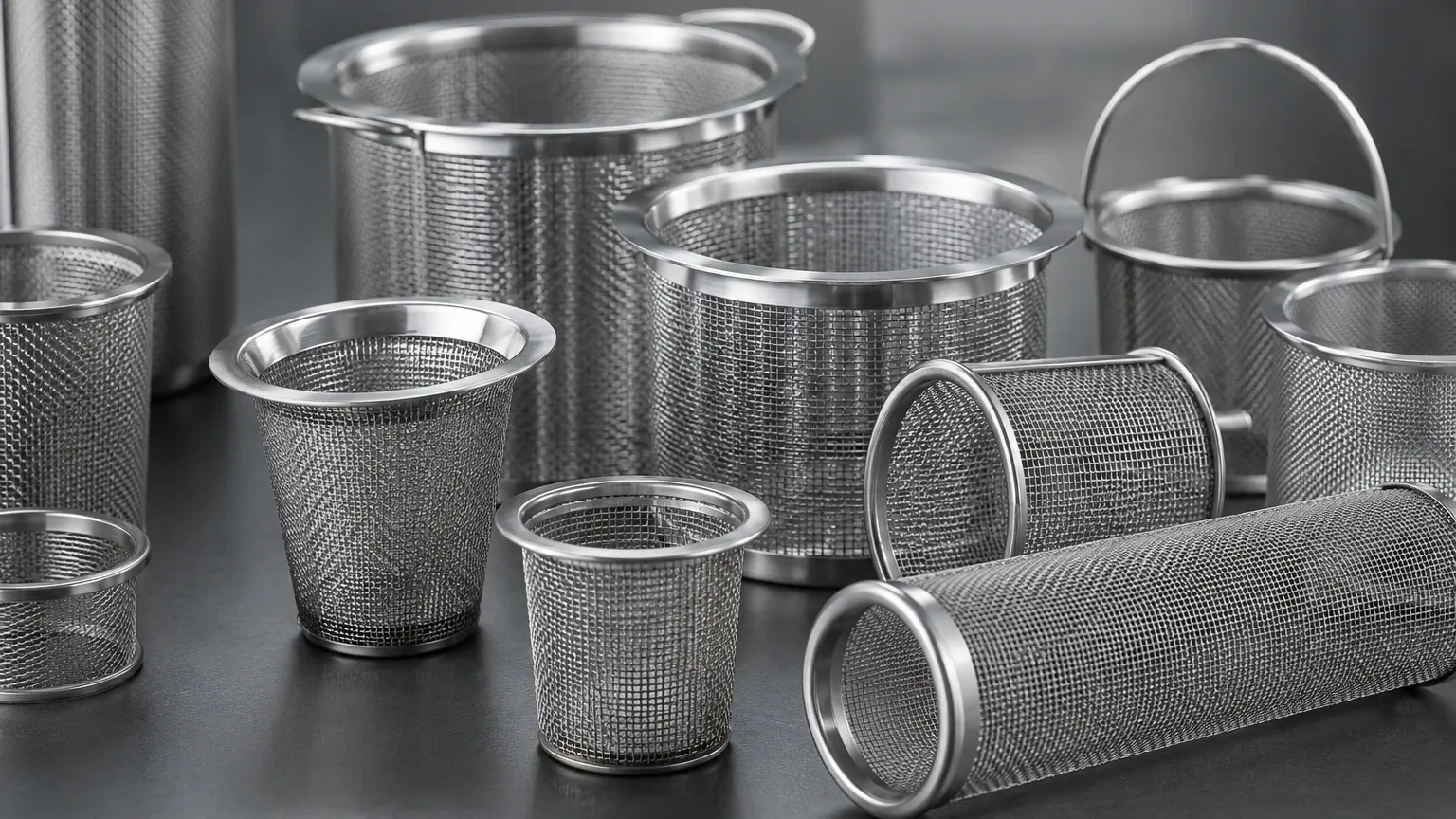
Strainer baskets are typically constructed with a perforated metal sheet that provides structural integrity. If finer filtration is required, a wire mesh lining is added to the interior or exterior of the basket.
* Perforated Baskets: Best for removing large debris (e.g., rocks, bolts, or large scale). Common hole sizes range from 1/32" to 1/2".
* Mesh-Lined Baskets: Used for finer retention, typically measured in microns or mesh count. These are essential for protecting sensitive equipment like high-pressure nozzles.
The Open Area Ratio
The "Open Area Ratio" is the relationship between the total area of the openings in the basket and the cross-sectional area of the inlet pipe. A common engineering standard is a 6:1 ratio. A higher ratio means the strainer can accumulate more debris before the pressure drop becomes significant, thereby extending the time between cleaning cycles. If the open area is too low, the fluid velocity through the mesh increases, which can cause particle bypass or even structural failure of the basket.
Pressure Drop ($ΔP$)
Every strainer introduces some resistance to flow, resulting in a pressure drop. It is vital to monitor the differential pressure across the strainer. As the basket fills with debris, the $ΔP$ increases. If the pressure drop exceeds the basket's structural limit, the basket may collapse or "blow out," sending all the collected debris downstream at once. High-quality Strainers & Baskets are engineered with reinforced bottoms and side stays to prevent such failures.
Customization Options for Specific Application Requirements
Off-the-shelf solutions rarely meet the exact needs of specialized industrial processes. Customization is often necessary to ensure a perfect fit within existing housings or to handle unique fluid characteristics. When sourcing a strainer basket nz, technical teams should consider the following customization options:
Handle and Lifting Designs
In large industrial strainers, the weight of a basket filled with debris can be substantial. Custom handles, such as heavy-duty lifting lugs or swing-up handles, facilitate easier removal and cleaning. This is a critical safety consideration for maintenance crews.
Reinforcement and Support
For high-pressure applications, baskets can be reinforced with external cages or internal skeletons. This prevents the mesh from deforming under the weight of the captured solids or the force of the fluid flow. Pleated designs are also available to increase the surface area within the same physical footprint, allowing for higher flow rates and longer service intervals.
Magnetic Inserts
In industries where metallic wear particles are a concern (such as hydraulic systems or machining coolant recovery), magnetic inserts can be added to the strainer basket. These magnets capture fine ferrous particles that might otherwise pass through the mesh, providing an extra layer of protection for precision components.
Maintenance and Operational Longevity
The total cost of ownership for a strainer basket nz is determined not just by the purchase price, but by how long it lasts and how easy it is to maintain. A well-maintained stainless steel basket can last for years, whereas a poorly specified or neglected one may fail in weeks.
Cleaning Protocols
Regular cleaning is the most important factor in strainer longevity. Depending on the application, cleaning may involve:
* Manual Washdown: Removing the basket and using a high-pressure hose to clear debris.
* Ultrasonic Cleaning: Using high-frequency sound waves in a solvent bath to remove fine particles embedded deep within the wire mesh.
* Chemical Soaking: Used to dissolve organic buildup or scale that cannot be removed mechanically.
Inspection for Wear
During cleaning, baskets should be inspected for signs of mechanical fatigue. Specifically, maintenance teams should look for:
* Broken Welds: Especially where the handle or the mesh meets the top ring.
* Mesh Fraying: Small holes in the wire mesh can allow oversized particles to pass through.
* Deformation: Any bowing or twisting of the basket indicates that the differential pressure has exceeded the design limits.
Choosing the Right Supplier for Strainer Basket Nz
For engineering firms and industrial plants in New Zealand, sourcing high-quality filtration components requires a partner who understands both the technical requirements and the logistical challenges of the region. While local availability is important, the technical expertise of the manufacturer is the deciding factor in performance.
When evaluating a supplier for Strainers & Baskets, consider their ability to provide detailed material certifications (MTRs), their experience with OEM specifications, and their capacity for custom engineering. A manufacturer like Kaifil, with extensive experience in stainless steel filtration, provides the precision and durability required for demanding sectors like dairy, chemical processing, and water treatment.
In conclusion, the selection of a strainer basket nz should be approached as a technical engineering decision. By focusing on material integrity, proper open area ratios, and robust structural design, industrial operators can ensure their systems remain protected, efficient, and cost-effective over the long term. Whether you are replacing an existing basket or designing a new filtration system, prioritizing quality and technical support will yield the best results for your specific application.
