


Strainer Basket Near Me
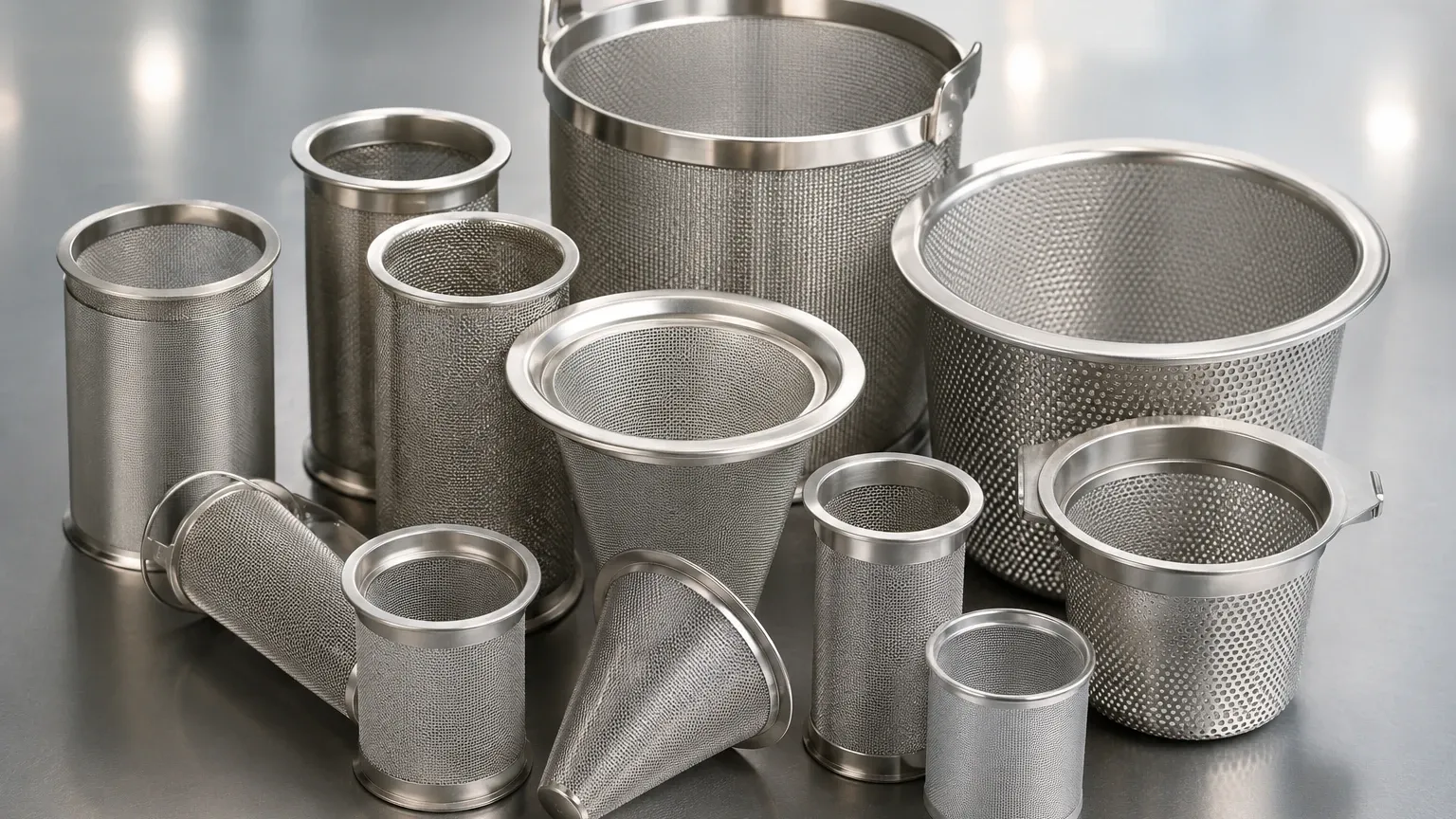
When a maintenance engineer or a procurement specialist searches for a "strainer basket near me," the underlying requirement is rarely just about geographic proximity. In the industrial sector, this search intent typically signals an urgent need for replacement components, a requirement for specialized technical support, or a desire to reduce lead times for critical filtration hardware. For industries ranging from chemical processing to food and beverage production, the availability of high-quality Strainers & Baskets is essential for protecting downstream equipment like pumps, valves, and heat exchangers from particulate damage.
While local distributors may offer standard, off-the-shelf solutions, complex industrial applications often require a deeper level of engineering expertise. Finding a reliable partner involves evaluating material compatibility, filtration precision, and structural integrity—factors that often outweigh the simple convenience of a local storefront. This guide explores the technical considerations, selection criteria, and logistical factors involved in sourcing industrial strainer baskets.
Understanding the Role of Industrial Strainers & Baskets
Strainers and baskets serve as the first line of defense in fluid handling systems. Their primary function is to remove relatively large solid particles from a liquid or gas stream. Unlike fine membrane filters that may require frequent replacement, strainer baskets are typically designed for durability and cleanability, allowing for long-term use in demanding environments.
Types of Strainer Configurations
Industrial strainers are generally categorized by their housing and flow patterns. The most common include:
* Simplex Strainers: Used in batch processes where the flow can be interrupted to clean the basket.
* Duplex Strainers: Feature two separate chambers, allowing one to be cleaned while the other remains in operation, ensuring continuous flow.
* Y-Strainers: Compact designs often used for steam or gas lines where the amount of debris is relatively low.
* Basket Strainers (T-Type): Offer a larger surface area and higher dirt-holding capacity, making them ideal for high-flow liquid applications.
When sourcing a strainer basket near me, it is vital to identify which of these configurations your system utilizes, as the basket geometry—including the flange type, handle design, and overall dimensions—must be exact to ensure a proper seal and prevent bypass.
Engineering Considerations: Material and Construction
The performance of a strainer basket is dictated by its construction materials and the precision of its fabrication. In industrial settings, stainless steel is the industry standard due to its mechanical strength and resistance to various forms of corrosion.
Stainless Steel Grades
* Type 304 Stainless Steel: Suitable for general-purpose applications, providing good corrosion resistance and durability for water treatment and non-corrosive chemical lines.
* Type 316L Stainless Steel: Contains molybdenum, which significantly enhances resistance to pitting and crevice corrosion in chloride-rich environments. This is the preferred material for pharmaceutical, food and beverage, and marine applications.
* Exotic Alloys: For highly aggressive chemical environments, materials such as Monel, Hastelloy, or Duplex Stainless Steel may be required to prevent premature failure.
Fabrication Methods
The structural integrity of the basket is paramount, especially in high-pressure systems. Industrial-grade baskets are typically manufactured using reinforced perforated metal as a support structure, lined with a fine wire mesh to achieve the desired filtration rating. Welding techniques, such as TIG (Tungsten Inert Gas) or resistance welding, must be executed precisely to ensure there are no weak points that could lead to mesh detachment or structural collapse under high differential pressure.
The Logistics of "Near Me": Local vs. Global Sourcing
The search for a "strainer basket near me" often stems from a need to minimize downtime. However, the modern supply chain allows manufacturers like Kaifil to provide rapid response times that rival local suppliers, often with superior customization capabilities. When evaluating a supplier, consider the following logistical factors:
Inventory and Lead Times
Local distributors often stock standard sizes. If your application requires a custom micron rating, a specific handle configuration, or non-standard dimensions, a local shop may still have to order it from a specialized manufacturer. In these cases, working directly with a manufacturer can actually reduce the total lead time by eliminating the intermediary.
Technical Support and Customization
Local hardware suppliers may lack the engineering depth required to solve complex filtration issues, such as rapid clogging or basket deformation. A specialized manufacturer provides access to engineers who can analyze your flow rates, fluid viscosity, and particle characteristics to recommend a custom-engineered solution. This might include adding reinforcement bands, changing the mesh weave, or adjusting the open area ratio to optimize performance.
Technical Specifications to Confirm Before Purchase
To ensure the replacement basket functions correctly within your existing housing, several technical parameters must be verified. Providing these details to your supplier will prevent the procurement of incompatible components.
1. Dimensions: Measure the outside diameter (OD), the height of the basket, and the flange diameter. Even a few millimeters of difference can prevent the basket from seating correctly, leading to fluid bypass.
2. Filtration Rating: Specify the required hole size for perforated metal or the mesh count for wire mesh linings. This is usually expressed in microns or inches.
3. Open Area Ratio: This is the ratio of the total area of the holes to the total area of the basket. A higher open area results in a lower initial pressure drop and longer intervals between cleanings.
4. Flow Direction: Confirm whether the fluid flows from the inside of the basket to the outside (standard) or from the outside to the inside, as this affects how the reinforcement is applied.
5. Seal Requirements: Determine if the basket requires a gasket or O-ring (e.g., Viton, EPDM, or PTFE) to ensure a tight fit within the housing.
Performance Evaluation and Pressure Drop
One of the most critical engineering metrics for any strainer is the pressure drop ($\\Delta P$). As fluid passes through the mesh, resistance causes a decrease in pressure. If the pressure drop is too high, it can starve downstream pumps or cause the basket to fail.
When selecting a strainer basket, engineers must calculate the "clean pressure drop" based on the fluid's viscosity and flow rate. As the basket collects debris, the pressure drop increases. A well-designed basket will provide a large enough surface area to allow for significant dirt loading before reaching the "terminal pressure drop," at which point cleaning or replacement is mandatory. Searching for a "strainer basket near me" should include an evaluation of whether the supplier can provide flow data or pressure drop curves for their products.
Customization and OEM Solutions
Many industrial systems are unique, requiring filtration components that do not fit standard categories. Custom manufacturing is a core strength of specialized providers. Customization options often include:
* Reinforced Structures: For high-viscosity fluids or high-pressure differentials, baskets can be fitted with heavy-duty perforated backing or internal skeletons.
* Magnetic Inserts: In metalworking or hydraulic applications, magnetic rods can be added to the center of the basket to capture fine ferrous particles that might pass through the mesh.
* Specialty Handles: Depending on the housing design, baskets may require bail handles, slant handles, or threaded lifting eyes to facilitate easy removal for cleaning.
* Multi-Stage Filtration: Some baskets utilize multiple layers of mesh with varying degrees of coarseness to provide graduated filtration, extending the life of the finest mesh layer.
Total Cost of Ownership and Maintenance
While the initial purchase price is a factor, the total cost of ownership (TCO) is a more accurate measure of value. A cheaply made strainer basket may save money upfront but can lead to higher costs through:
* Frequent Replacements: Poorly welded or low-grade materials fail sooner.
* Increased Labor: Baskets with insufficient surface area require more frequent cleaning cycles, pulling maintenance staff away from other tasks.
* Downstream Damage: If a basket fails and allows large debris to pass, the cost of repairing a damaged pump or valve can be thousands of dollars.
Investing in high-quality Strainers & Baskets ensures long-term reliability. Maintenance teams should establish a regular inspection schedule to check for signs of mesh fraying, corrosion, or structural deformation. In many cases, having a set of spare baskets on hand is the most effective way to address the "near me" requirement, as it allows for immediate rotation and cleaning without stopping production.
Conclusion: Selecting the Right Partner
Finding a "strainer basket near me" is the beginning of a process that should prioritize technical compatibility and manufacturing quality over simple geography. For industrial operators, the goal is to find a supplier that combines the speed of a local partner with the engineering capabilities of a global manufacturer.
By focusing on material specifications, precise dimensions, and application-specific designs, you can ensure that your filtration system operates at peak efficiency. Whether you are dealing with high-temperature steam, corrosive chemicals, or hygienic food processing, the right strainer basket is a critical investment in the longevity and safety of your industrial infrastructure.
