


Strainer Basket Plug
In the landscape of industrial fluid handling, the efficiency of a filtration system is often determined by the integrity of its smallest components. While the focus is frequently placed on the primary filtration media, components like the strainer basket plug play a pivotal role in the operational safety, maintenance efficiency, and structural integrity of the entire assembly. For engineers and procurement specialists managing high-pressure or high-temperature fluid systems, understanding the technical nuances of these components is essential for optimizing system uptime and reducing total cost of ownership.
Industrial Strainers & Baskets are designed to remove unwanted solids from liquid or gas streams. Within these assemblies, the term "plug" typically refers to one of two critical elements: the drain plug located at the bottom of the strainer housing or the internal sealing plug/plate used to secure the basket within the flow path. Regardless of the specific configuration, the performance of the strainer basket plug is a fundamental requirement for preventing bypass and ensuring leak-free operation.
The Functional Role of the Strainer Basket Plug in Filtration
The primary function of a strainer is to protect downstream equipment—such as pumps, valves, and heat exchangers—from damage caused by particulate matter. To achieve this, the fluid must be forced through the basket media. Any failure in the sealing or drainage components can lead to several industrial risks.
1. Sealing and Bypass Prevention
In many basket strainer designs, the basket is held in place by a spring or a heavy-duty plug-style cap. This ensures that the basket remains seated against the housing's internal flange. If the strainer basket plug or sealing mechanism fails to exert sufficient pressure, fluid may bypass the filtration media entirely. In sensitive applications like pharmaceutical processing or chemical manufacturing, even minor bypass can lead to batch contamination or equipment erosion.
2. Drainage and Maintenance Access
For simplex and duplex strainers, the drain plug is the primary interface for maintenance. Before a basket can be removed for cleaning, the housing must be depressurized and drained. A high-quality strainer basket plug allows for controlled drainage of the process fluid. In systems handling hazardous chemicals or high-temperature steam, the reliability of the plug’s threads and seals is a critical safety consideration for maintenance personnel.
3. Pressure Retention
Industrial filtration housings are pressure vessels. Every opening, including the drainage port where the plug is installed, must be capable of withstanding the maximum operating pressure (MOP) of the system. Engineering specifications often require these components to meet specific ASME or ISO standards to ensure they do not become a point of catastrophic failure under pressure surges.
Engineering Considerations: Material Selection and Durability
When specifying a strainer basket plug, material compatibility is the foremost engineering concern. At Kaifil, we emphasize the use of high-grade alloys to match the demanding environments of industrial processing.
Stainless Steel Grades (304 vs. 316L)
Most industrial applications utilize stainless steel due to its corrosion resistance and mechanical strength.
- SS304: Suitable for general water treatment, food and beverage applications, and non-corrosive industrial fluids. It provides excellent structural integrity at a cost-effective price point.
- SS316L: The "L" denotes low carbon, which improves weldability and resistance to intergranular corrosion. SS316L contains molybdenum, making it the preferred choice for marine environments, chemical processing, and applications involving chlorides or acids.
Specialized Alloys
For extreme environments, such as those found in petrochemical refining or high-salinity desalination plants, standard stainless steel may be insufficient. In these cases, components may be manufactured from Duplex stainless steel or Monel. These materials offer superior resistance to pitting and stress corrosion cracking, ensuring that the strainer basket plug does not seize or degrade over long service intervals.
Sealing Interfaces
The interface between the plug and the housing typically relies on one of two methods: metal-to-metal contact with tapered threads (like NPT) or a mechanical seal using a gasket or O-ring. For high-pressure hydraulic systems, an O-ring seal (often made of Viton or EPDM) is preferred as it provides a more reliable barrier against fluid migration compared to thread sealant alone.
Technical Specifications and Sizing
Engineers must confirm several technical parameters before selecting a replacement or custom strainer basket plug. Misalignment in these specifications can lead to galling, leaks, or the inability to properly seat the filtration basket.
| Parameter | Description | Engineering Impact |
| :— | :— | :— |
| Thread Type | NPT, BSPT, or Metric | Determines the compatibility with the strainer housing and the ease of installation. |
| Pressure Rating | e.g., 150# to 2500# | Must exceed the system's peak pressure to prevent blowouts. |
| Hex Size | Standard or Custom | Ensures that maintenance teams have the correct tools for removal during shutdowns. |
| Surface Finish | Ra value (e.g., <0.8μm) | Critical for hygienic applications in the food and pharmaceutical sectors to prevent bacterial growth. |
In custom filtration solutions, the strainer basket plug may also incorporate a magnetic insert. These "magnetic plugs" are used to capture fine ferrous particles that might otherwise pass through a standard wire mesh. This is particularly common in hydraulic and lubrication systems where fine metal wear particles can accelerate component failure.
Operational Challenges and Maintenance Best Practices
Even the most robustly engineered components require proper handling to maintain their performance. The strainer basket plug is subject to several operational stresses that can compromise its function over time.
Preventing Thread Galling
Stainless steel is prone to galling—a form of wear caused by adhesion between sliding surfaces. When a stainless steel plug is tightened into a stainless steel housing without proper lubrication, the threads can "cold weld" together. To prevent this, engineers should specify the use of anti-seize compounds or choose plugs with specialized coatings. During maintenance, it is vital to inspect the threads for any signs of deformation before re-installation.
Managing Differential Pressure
As a strainer basket collects debris, the differential pressure (ΔP) across the basket increases. This pressure exerts a force on the internal basket plug or seating mechanism. If the ΔP exceeds the design limits, the basket may collapse or the plug may be forced out of alignment. Monitoring ΔP is not only essential for knowing when to clean the basket but also for protecting the structural integrity of the internal components.
Replacement Cycles
While the housing of a strainer may last for decades, the strainer basket plug and its associated gaskets are considered wear items. In high-cycle environments—where the strainer is opened frequently for cleaning—the sealing surfaces can become scratched or compressed. A proactive maintenance schedule should include the inspection of the plug at every cleaning cycle, with a full replacement of gaskets or O-rings to ensure a consistent seal.
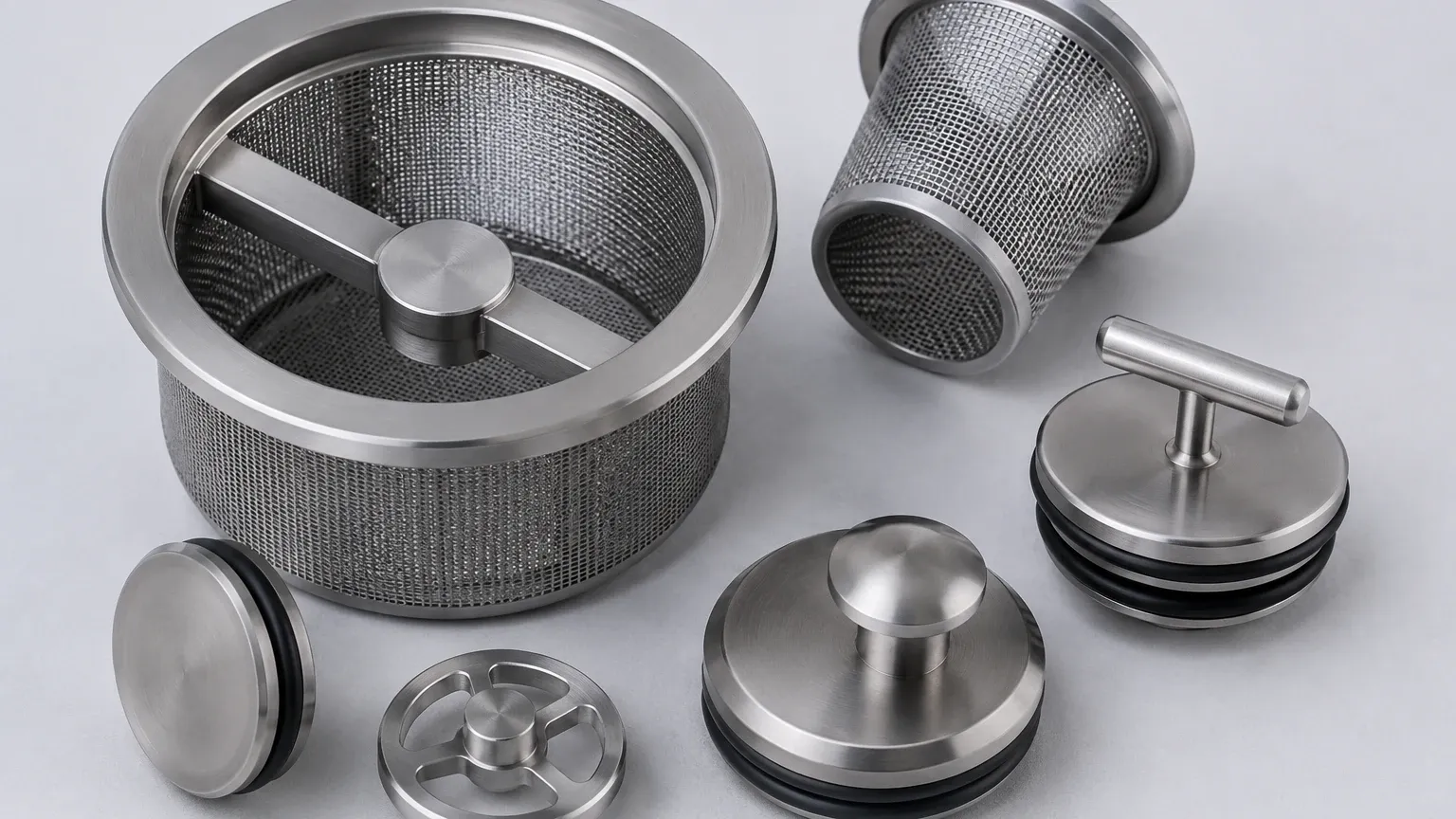
Customization and OEM Solutions
Every industrial facility has unique requirements based on their piping layout, fluid dynamics, and regulatory environment. Standard off-the-shelf components often fall short in specialized applications. This is where the value of a custom manufacturer like Kaifil becomes apparent.
Customized strainer basket plug designs can include:
- Extended Plugs: Designed for insulated piping systems where the drain port must extend beyond the insulation layer.
- Vented Plugs: Incorporating a small bleed valve to allow for safe depressurization before the main plug is removed.
- Tethered Designs: Ensuring that the plug is not lost or dropped during maintenance in hard-to-reach locations.
By working closely with an OEM partner, engineering teams can develop filtration components that are tailored to their specific operational challenges. This includes selecting the exact mesh micron rating for the basket and ensuring the plug mechanism provides the necessary compression for a zero-bypass seal.
Pre-Purchase Checklist for Engineers
Before finalizing a procurement order for Strainers & Baskets or individual components like a strainer basket plug, the following questions should be addressed:
1. What is the chemical composition of the process fluid? Ensure the plug material and any elastomers (O-rings) are chemically compatible to prevent swelling or degradation.
2. What are the maximum temperature and pressure? Verify that the plug's rating accounts for potential system upsets, not just steady-state operation.
3. Is there a requirement for magnetic separation? If the system contains ferrous debris, a magnetic plug may provide significant added protection for downstream pumps.
4. What are the cleanliness standards? For food and pharmaceutical applications, ensure the plug is free of pits and crevices where organic matter could accumulate.
5. Is the thread standard compatible? Confirm whether the housing uses NPT (tapered) or straight threads to avoid damaging the housing during installation.
Conclusion
The strainer basket plug may be a small part of a larger industrial filtration system, but its role in safety and efficiency is undeniable. From preventing bypass in critical chemical processes to ensuring the safe drainage of high-pressure lines, the engineering of these components requires precision and high-quality materials.
By focusing on material science, proper sealing mechanics, and proactive maintenance, industrial operators can significantly enhance the reliability of their filtration systems. For those requiring specialized designs or high-performance stainless steel components, partnering with a manufacturer that understands the technical demands of industrial filtration is the most effective way to ensure long-term success. Whether you are looking for a standard replacement or a custom-engineered solution, the integrity of your strainer basket plug is a fundamental building block of a robust fluid handling strategy.
