


Strainer Basket Pool Pump
In industrial and commercial aquatic systems, the efficiency of a centrifugal pump is heavily dependent on the integrity of its pre-filtration components. The strainer basket pool pump assembly serves as the primary mechanical barrier, designed to capture large debris before it can enter the pump volute and damage the impeller. For engineers and facility managers, understanding the technical nuances of these components is essential for maintaining hydraulic performance and extending the service life of expensive pumping equipment.
While residential applications often rely on standardized plastic components, industrial-grade systems—such as those found in large-scale water treatment, public aquatic centers, and specialized chemical processing—require robust Strainers & Baskets capable of withstanding high flow rates, chemical exposure, and mechanical stress. This article examines the engineering considerations, material selections, and maintenance protocols associated with high-performance strainer baskets.
The Functional Role of Strainer Baskets in Centrifugal Pump Systems
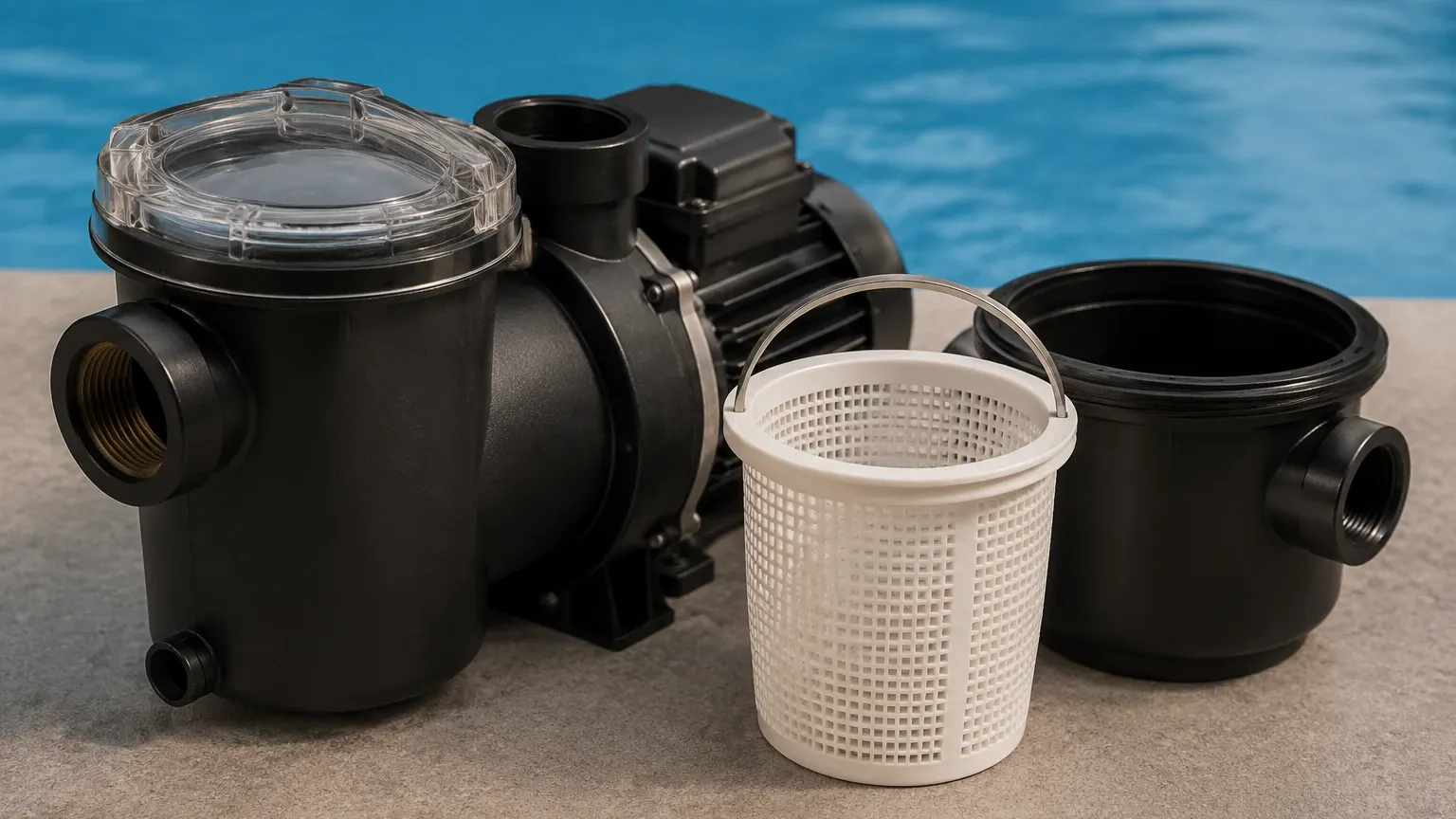
A pump strainer basket is positioned on the suction side of the pump. Its primary objective is to protect the internal rotating elements from solids that could cause catastrophic failure or significant wear. In a typical strainer basket pool pump configuration, the water enters the strainer housing, passes through the perforated or mesh walls of the basket, and continues toward the pump inlet.
From an engineering perspective, the basket must balance two competing requirements: effective particulate capture and minimal flow restriction. A basket that is too restrictive will cause a significant pressure drop, leading to pump cavitation—a phenomenon where vapor bubbles form and collapse, causing pitting on the impeller surfaces and high-frequency vibration. Conversely, a basket with openings that are too large will allow debris to pass through, potentially clogging the impeller vanes or damaging mechanical seals. Achieving the "Net Positive Suction Head Required" (NPSHr) for the pump depends heavily on the clean state and design efficiency of this basket.
Material Engineering: Why Stainless Steel Outperforms Plastics
In many commercial and industrial environments, the transition from thermoplastic baskets to stainless steel alternatives is driven by the need for durability and chemical resistance. Kaifil specializes in custom stainless steel filtration solutions, providing baskets that offer several technical advantages over standard plastic versions:
1. Structural Integrity under Vacuum
As a pump operates, the suction side experiences negative pressure. Plastic baskets can become brittle over time due to UV exposure or chemical degradation (especially in chlorinated or saline environments). Under high vacuum conditions, a weakened plastic basket may collapse, allowing debris to bypass the filter and enter the pump. Stainless steel (typically Grade 304 or 316) maintains its structural rigidity under extreme pressure differentials.
2. Chemical and Corrosion Resistance
Water treatment systems utilize various oxidizing agents, including chlorine, bromine, and ozone. While some plastics are resistant to these chemicals, they often suffer from environmental stress cracking. 316L stainless steel, in particular, offers superior resistance to pitting and crevice corrosion, making it the preferred choice for saltwater systems and industrial chemical processing where a strainer basket pool pump component must endure 24/7 exposure to corrosive media.
3. Thermal Stability
Industrial processes often involve fluctuating water temperatures. Stainless steel retains its mechanical properties across a wide temperature range, whereas plastics can soften or become prone to deformation at higher temperatures, potentially affecting the seal between the basket and the housing.
Critical Design Factors for High-Performance Strainer Baskets
When specifying or replacing a strainer basket pool pump component, engineers must evaluate several design parameters to ensure compatibility with the existing hydraulic circuit.
Open Area Ratio
The "Open Area Ratio" is the ratio of the total area of the holes in the basket to the cross-sectional area of the inlet pipe. For industrial applications, a ratio of at least 4:1 or 6:1 is often recommended. A higher ratio ensures that even as the basket begins to collect debris, there is still enough open surface area to allow water to pass through without significantly increasing the pressure drop.
Perforation and Mesh Selection
Baskets are typically constructed using perforated metal or a combination of perforated metal and fine wire mesh. The choice depends on the specific debris profile. For general pool applications, 1/8-inch or 3/16-inch perforations are common. However, if the system requires the removal of finer particulates, a stainless steel wire mesh liner can be integrated. Kaifil’s expertise in wire mesh filters allows for the creation of multi-layered baskets that provide both structural strength and high-precision filtration.
Sealing and Fitment
A strainer basket is only effective if it sits perfectly within the housing. Any bypass—where water flows around the basket rather than through it—negates the purpose of the filter. Custom-manufactured baskets ensure a precision fit, often incorporating specialized flanges or handles that facilitate both a tight seal and easy removal for cleaning.
Operational Impact: Flow Rates, Pressure Drop, and Cavitation
The relationship between the strainer basket and the pump's performance curve is critical. As debris accumulates in a strainer basket pool pump, the resistance to flow increases. This resistance is measured as a pressure differential ($ΔP$) across the basket.
If the $ΔP$ exceeds the design limits, the pump will struggle to pull water, leading to a drop in flow rate and the onset of cavitation. Cavitation is not only noisy but also highly destructive; it can destroy an impeller in a matter of weeks. For this reason, many industrial systems are equipped with vacuum gauges on the strainer housing. A significant increase in the vacuum reading indicates that the basket is reaching its holding capacity and requires immediate maintenance.
By utilizing high-quality Strainers & Baskets, operators can ensure a more stable flow profile. Stainless steel baskets can be designed with optimized hole patterns that maximize flow while maintaining the necessary strength to prevent deformation during high-flow surges.
Maintenance Protocols and Service Life Extension
To maintain the efficiency of a strainer basket pool pump, a rigorous maintenance schedule is required. In industrial settings, this involves more than just emptying the basket.
1. Visual Inspection for Fatigue: During cleaning, the basket should be inspected for signs of metal fatigue, broken welds, or corrosion. Stainless steel baskets are less prone to these issues than plastic, but they are not immune to mechanical wear if the system handles abrasive solids.
2. Cleaning Techniques: Unlike plastic baskets, which can be easily cracked if tapped against a hard surface to dislodge debris, stainless steel baskets are highly resilient. They can be pressure washed or chemically cleaned to remove scale and bio-film buildup that might clog the fine mesh or perforations.
3. Gasket and O-Ring Maintenance: The seal of the strainer housing lid is just as important as the basket itself. If the lid does not seal properly, air will be drawn into the system, causing the pump to lose prime.
In commercial environments, the total cost of ownership is reduced when using premium metal components. Although the initial investment in a stainless steel strainer basket is higher than a plastic alternative, the extended replacement cycle and the protection it offers to the pump (which may cost thousands of dollars) provide a significant return on investment.
Custom OEM Solutions for Industrial Filtration Requirements
Every industrial pump system has unique requirements based on its flow rate, fluid viscosity, and the nature of the contaminants it handles. Standard off-the-shelf baskets often fail to meet the specific needs of specialized applications. This is where custom manufacturing becomes vital.
Kaifil provides OEM and customized filtration solutions, working closely with engineers to develop baskets that meet exact specifications. Whether it is a unique diameter for a legacy pump housing or a specific mesh count for a pharmaceutical-grade water system, custom fabrication ensures that the filtration component does not become a bottleneck in the process.
Key customization options include:
* Variable Micron Ratings: Tailoring the mesh size to the specific particulate matter found in the process fluid.
* Reinforced Structures: Adding support ribs or heavier gauge perforated metal for high-pressure applications.
* Specialized Alloys: Utilizing 316L or other high-nickel alloys for extreme chemical environments.
* Handle and Locking Mechanisms: Designing ergonomic features that allow for rapid change-outs in high-uptime environments.
Conclusion: Selecting the Right Component for System Longevity
The strainer basket pool pump component is a small but pivotal part of the hydraulic circuit. For B2B buyers and engineers, selecting the right basket involves a deep dive into material science, fluid dynamics, and long-term operational costs. While plastic may suffice for low-demand environments, the reliability, strength, and chemical resistance of stainless steel Strainers & Baskets make them the industry standard for commercial and industrial applications.
By prioritizing high-quality filtration components, facilities can prevent unplanned downtime, reduce energy consumption by maintaining optimal flow, and protect their most significant capital investments—their pumps. When evaluating your next filtration upgrade or OEM partnership, consider the technical advantages of precision-engineered stainless steel solutions that are built to withstand the rigors of industrial water processing.
