


Strainer Basket Screw
In industrial filtration, the integrity of a system often depends on the smallest components. While the primary focus of procurement is usually the mesh micron rating or the housing’s pressure capacity, the hardware that secures these elements—specifically the strainer basket screw and associated fastening assemblies—plays a critical role in operational safety and filtration efficiency. For engineers and maintenance professionals, understanding the mechanical requirements of these components is essential to prevent fluid bypass, mechanical failure, and costly downtime.
Industrial Strainers & Baskets are designed to remove unwanted solids from liquid or gas streams. However, if the basket is not securely seated or if the fastening mechanism fails under pressure, the filtration process is compromised. This guide examines the technical specifications, material considerations, and engineering challenges associated with strainer basket screws and fastening systems in high-demand industrial environments.
The Function of Screws in Industrial Strainer Basket Assemblies
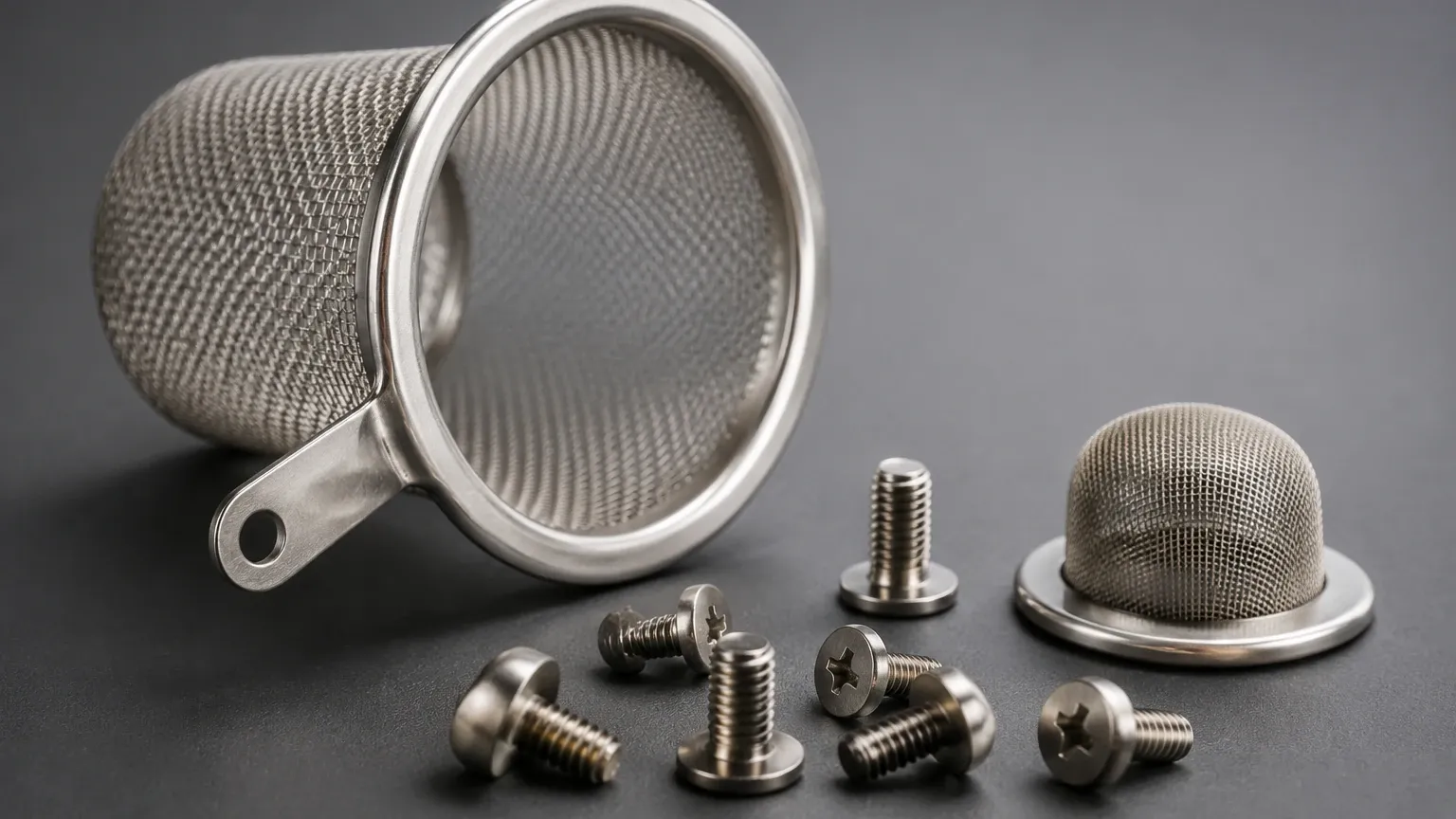
The term "strainer basket screw" generally refers to the fasteners used to secure the basket within the strainer housing or the central bolt assembly that holds a multi-component basket together. In many simplex and duplex strainer designs, a screw or threaded rod is utilized to apply downward pressure on the basket rim, ensuring a tight seal against the housing’s internal seat.
Preventing Fluid Bypass
Fluid bypass occurs when the process liquid flows around the filter media rather than through it. This usually happens because the basket is not firmly held against the sealing surface. A properly specified strainer basket screw ensures that the gasket or O-ring is compressed correctly. In high-viscosity applications or systems with high flow velocities, the upward force exerted by the fluid can lift an unsecured basket, allowing contaminants to pass into downstream equipment like pumps and valves.
Structural Integrity and Alignment
In larger industrial baskets, screws are used to attach handles, reinforcement ribs, or multi-layered mesh screens. In these instances, the screw must withstand not only the chemical environment but also the mechanical stresses of vibration and thermal expansion. If a screw shears or loosens, the basket can deform or collapse, leading to a catastrophic failure of the filtration stage.
Material Selection and Corrosion Resistance
Material compatibility is a primary concern for any component in a chemical processing or pharmaceutical environment. Because the strainer basket screw is often in direct contact with the process fluid, it must match or exceed the corrosion resistance of the basket and housing.
Stainless Steel Grades (304 vs. 316/316L)
At Kaifil, stainless steel is the standard for industrial filtration due to its durability.
* Grade 304: Suitable for general industrial use, water treatment, and food and beverage applications where mild corrosion resistance is required.
* Grade 316/316L: The preferred choice for chemical processing and marine environments. The addition of molybdenum provides superior resistance to chlorides and pitting. For screws that are welded to the basket structure, the low-carbon "L" grade is essential to prevent intergranular corrosion in the heat-affected zone.
Avoiding Galvanic Corrosion
One of the most common engineering errors is using a screw made of a different metal than the basket or housing. In the presence of an electrolyte (the process fluid), a galvanic cell is created, leading to rapid corrosion of the more anodic metal. Engineers must ensure that the strainer basket screw, the basket itself, and the housing are metallurgically compatible to prevent premature fastening failure.
Engineering Considerations: Threading, Torque, and Sealing
When specifying or replacing hardware for Strainers & Baskets, several mechanical factors must be evaluated to ensure long-term performance.
Thread Pitch and Type
In industrial settings, coarse threads are often preferred for strainer assemblies because they are more robust and less likely to cross-thread during rapid maintenance cycles. However, fine threads may be used in precision applications where specific torque values are required to achieve a high-pressure seal. For international projects, distinguishing between NPT (National Pipe Thread), Metric, and BSP (British Standard Pipe) is vital to ensure the strainer basket screw fits the housing or basket frame accurately.
Torque Specifications
Over-tightening a strainer screw can be as damaging as under-tightening. Excessive torque can strip threads, deform the basket rim, or crush gaskets beyond their elastic limit, resulting in a permanent leak path. Conversely, insufficient torque allows for vibration-induced loosening. Engineers should refer to the manufacturer’s specifications for torque limits, particularly in high-pressure hydraulic or steam applications.
Tool-less vs. Bolted Designs
Depending on the frequency of cleaning, the "screw" mechanism may take the form of a wing-nut, a T-bolt, or a hex-head bolt.
* Wing-nuts/Hand-knobs: Ideal for applications requiring frequent basket cleaning, allowing operators to remove the basket without specialized tools.
* Hex-head Bolts: Used in high-pressure environments where a calibrated torque wrench is necessary to ensure a safe seal.
Common Risks and Maintenance of Strainer Basket Screws
Maintenance teams often overlook the hardware until a failure occurs. Regular inspection of the strainer basket screw and its mounting point can prevent system-wide issues.
Galling and Seizing
Stainless steel is prone to galling—a form of wear caused by adhesion between sliding surfaces. When a stainless steel screw is tightened into a stainless steel housing, the threads can literally weld together. To prevent this, Kaifil recommends the use of anti-seize compounds (compatible with the process fluid) or the selection of specific thread coatings.
Vibration and Fatigue
In systems with reciprocating pumps or high-turbulence flow, vibration can lead to fatigue failure of the screw. If a screw is found to be loose during routine inspection, it may indicate that the system requires a locking mechanism, such as a lock washer, a nylon-insert nut, or a safety wire.
Replacement Cycles
Screws are consumable components. Over time, threads wear down and the metal may undergo work hardening. During every basket inspection, the strainer basket screw should be checked for:
1. Visible Thread Wear: Flattened or chipped threads.
2. Elongation: Stretching of the bolt due to over-torqueing.
3. Corrosion: Any signs of rust or pitting, even on stainless steel.
Customization and OEM Solutions for Specialized Filtration
Standard off-the-shelf fasteners are not always sufficient for specialized industrial applications. As a professional manufacturer, Kaifil provides customized filtration solutions where the fastening mechanism is engineered specifically for the application’s unique demands.
Tailored Fastening Systems
For pharmaceutical or food-grade applications, the strainer basket screw must be designed to eliminate "dead zones" where bacteria can grow. This often involves using acorn nuts or specialized hygienic screws with smooth, polished surfaces and no exposed threads.
High-Pressure Requirements
In hydraulic systems or high-pressure chemical lines, the basket must be held in place with significant force. Custom-engineered baskets may feature reinforced screw-down tabs or integrated center-post assemblies that distribute the clamping force evenly across the basket circumference, preventing deformation under differential pressure.
Procurement and Selection Guide for Engineers
When sourcing Strainers & Baskets or replacement hardware, purchasing teams should confirm the following technical details with the manufacturer:
1. Fluid Compatibility: Will the screw material withstand the pH levels and chemical composition of the fluid?
2. Temperature Extremes: Will the fastener maintain its tensile strength at the operating temperature? Does the design account for thermal expansion differences between the screw and the housing?
3. Filtration Accuracy: Does the fastening method ensure that the basket remains seated well enough to maintain the required micron rating?
4. Ease of Access: Is the screw design appropriate for the available maintenance window? (e.g., tool-less entry for high-clogging environments).
5. Total Cost of Ownership: While a higher-grade alloy screw (like Monel or Hastelloy) may have a higher upfront cost, it may prevent expensive housing repairs caused by seized or broken fasteners.
Conclusion
The strainer basket screw is a small but foundational component of industrial filtration systems. From ensuring a bypass-free seal to maintaining the structural integrity of the filter basket under high pressure, the engineering behind these fasteners is vital. By selecting the correct materials, adhering to proper torque specifications, and implementing a regular maintenance schedule, facilities can optimize the performance and longevity of their Strainers & Baskets.
Kaifil remains committed to providing high-performance, customized filtration components that meet the rigorous standards of global industries. Whether you require standard stainless steel baskets or complex OEM filtration assemblies, our engineering team ensures that every detail—down to the last screw—is designed for reliability and precision.
