


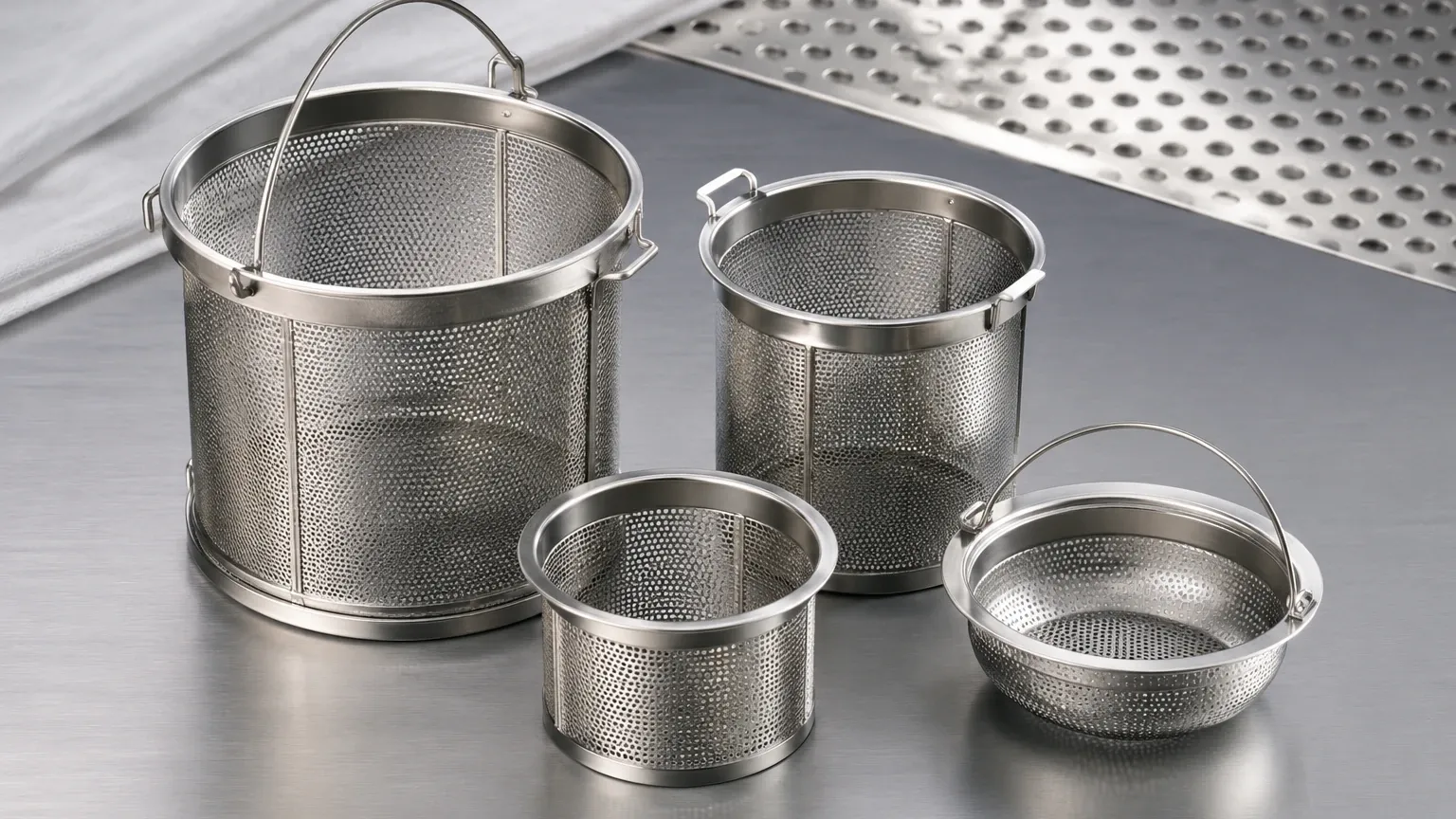
Strainer Basket Set
In industrial fluid handling systems, the protection of downstream equipment—such as pumps, valves, meters, and spray nozzles—is paramount to operational longevity and process efficiency. A strainer basket set serves as the primary line of defense, removing unwanted particulate matter from liquids. Unlike simple disposable filters, industrial Strainers & Baskets are engineered for durability, high flow capacity, and ease of maintenance, making them a critical component in chemical processing, water treatment, and food production environments.
Selecting a strainer basket set involves more than just choosing a size; it requires a deep understanding of fluid dynamics, material compatibility, and the specific mechanical stresses of the application. This guide explores the technical specifications, engineering considerations, and selection criteria necessary for procurement and maintenance teams to optimize their filtration systems.
Understanding the Components of an Industrial Strainer Basket Set
A complete strainer basket set typically consists of the primary basket, an optional fine-mesh liner, and the necessary sealing components. In some configurations, the "set" may also refer to a duplex system or a series of graduated baskets designed to provide multi-stage filtration within a single housing.
The Primary Basket
The core of the set is the heavy-duty basket, usually constructed from perforated stainless steel. This component provides the structural integrity required to withstand the differential pressure (Delta P) that increases as debris accumulates. The perforation pattern—whether staggered or straight—impacts both the strength of the basket and the total open area available for fluid flow.
The Mesh Liner
For applications requiring finer filtration than standard perforations can provide, a wire mesh liner is integrated into the basket. These liners are typically spot-welded or mechanically fastened to the interior or exterior of the perforated basket. By combining a rigid perforated shell with a fine wire mesh, engineers achieve high filtration precision without sacrificing the basket's ability to handle high-pressure surges.
Sealing and Hardware
A strainer basket set is only as effective as its seal. Industrial sets include high-performance gaskets or O-rings made from materials like Viton, EPDM, or PTFE, depending on the chemical nature and temperature of the process fluid. The handle of the basket is also a critical engineering feature; it must be robust enough for frequent removal and often serves as a tensioning device to ensure the basket remains seated firmly against the housing flange to prevent bypass.
Material Selection for Stainless Steel Filtration
Material science plays a decisive role in the performance of a strainer basket set. Stainless steel is the industry standard due to its corrosion resistance and mechanical strength. However, the specific grade of steel must be matched to the operating environment.
* Type 304 Stainless Steel: This is the most common grade used for general-purpose industrial filtration. It offers excellent strength and good corrosion resistance for water, oils, and mild chemicals. It is a cost-effective solution for many hydraulic and cooling water applications.
* Type 316/316L Stainless Steel: For more demanding environments, Type 316 contains molybdenum, which significantly enhances resistance to chlorides and pitting. This is the preferred material for marine applications, chemical processing, and pharmaceutical manufacturing. The "L" (low carbon) variant is often used for components that require extensive welding to prevent carbide precipitation and ensure long-term structural integrity.
* Specialty Alloys: In extreme cases involving highly acidic or alkaline fluids, manufacturers like Kaifil can utilize high-nickel alloys or specialized coatings. Understanding the pH levels, temperature fluctuations, and chemical concentrations of the process fluid is essential before finalizing the material specification.
Engineering Considerations: Flow Rate and Pressure Drop
The primary goal of an engineer when specifying a strainer basket set is to balance filtration efficiency with minimal pressure drop. A high pressure drop indicates that the pump is working harder than necessary, leading to increased energy costs and potential equipment fatigue.
The Open Area Ratio
One of the most important metrics in strainer design is the ratio of the basket's open area to the internal cross-sectional area of the inlet pipe. A common industry standard is a 6:1 ratio. This means the total area of the holes in the strainer basket is six times the area of the pipe. This high ratio ensures that even as the basket begins to fill with debris, the pressure drop remains low for a longer period, extending the time between cleaning cycles.
Viscosity and Flow Velocity
Fluid viscosity significantly impacts how a strainer basket set performs. High-viscosity fluids, such as heavy oils or syrups, require larger perforations or specialized mesh weaves to prevent excessive resistance. Engineers must also calculate the flow velocity; if the velocity is too high, it can cause turbulence within the strainer housing, potentially damaging the mesh liner or forcing particles through the filtration media.
Customization Options for Diverse Industrial Applications
Standard off-the-shelf strainer baskets often fail to meet the specific needs of complex industrial systems. Customization is frequently required to address unique space constraints or specialized filtration requirements.
Geometry and Configuration
Baskets can be designed with various bottom configurations, including flat, conical, or slanted tops. Slant-top baskets are often used in offset piping configurations to facilitate easier removal. For high-load applications, reinforced bands or "heavy-duty" skeletons can be added to the basket to prevent collapse under extreme differential pressure.
Multi-Stage Filtration
In some processes, a single strainer basket set may include multiple layers of different mesh sizes. This "gradient" approach allows larger particles to be trapped by the outer layer while finer particles are caught by the inner layer. This prevents the fine mesh from blinding (clogging) too quickly, thereby increasing the overall dirt-holding capacity of the system.
OEM and Specialized Designs
For manufacturers of industrial machinery, sourcing a custom strainer basket set through OEM channels ensures that the filtration component is perfectly integrated into the machine's design. This includes custom flange dimensions, specialized handle orientations for robotic maintenance, and proprietary mesh weaves tailored to a specific byproduct.
Maintenance and Operational Efficiency
The total cost of ownership (TCO) for a strainer basket set is heavily influenced by how easily it can be maintained. Unlike cartridge filters which are replaced, strainer baskets are designed to be cleaned and reused.
Cleaning Protocols
Establishing a regular cleaning schedule is vital. Most systems utilize differential pressure gauges to alert operators when the basket is reaching its capacity. Once the pressure drop reaches a predetermined limit (usually around 5-10 psi above the clean pressure drop), the basket should be removed. Cleaning methods vary from simple water hosing to ultrasonic cleaning for fine mesh liners that have become deeply fouled.
Signs of Wear and Replacement
While stainless steel baskets are durable, they are not indestructible. During maintenance, inspectors should look for:
1. Mesh Blinding: Permanent clogging that cannot be removed by standard cleaning.
2. Structural Distortion: Any bowing or denting of the perforated metal, which suggests the basket has been subjected to pressures beyond its design limit.
3. Bypass Evidence: Debris found downstream of the strainer, indicating a failure in the seal or a tear in the mesh.
Regularly replacing the gaskets and O-rings within the set is a low-cost way to prevent bypass and ensure the system operates at peak efficiency.
Selecting the Right Manufacturer for Custom Filtration
When procuring a strainer basket set, the expertise of the manufacturer is as important as the hardware itself. A professional manufacturer like Kaifil provides more than just a product; they offer engineering support to ensure the filtration solution matches the application's demands.
Key factors to confirm with a supplier include:
* Filtration Accuracy: Can they provide the exact micron rating required for your process?
* Material Certification: Are they providing mill certificates for the stainless steel used?
* Customization Capabilities: Can they modify the basket dimensions to fit existing non-standard housings?
* Durability Standards: What are the maximum differential pressure ratings for their standard and reinforced designs?
By focusing on these technical details, purchasing teams can avoid the pitfalls of low-quality components that lead to frequent downtime and equipment damage. A well-engineered strainer basket set is an investment in the reliability of the entire production line.
For engineers and procurement professionals looking to optimize their fluid handling systems, exploring specialized Strainers & Baskets is the first step toward achieving a balance of high flow, low maintenance, and superior protection. Whether you require a standard replacement or a fully customized OEM solution, understanding the technical boundaries of your filtration needs ensures long-term operational success.
