


Strainer Basket Tool
In industrial fluid handling and processing, the efficiency of a system often hinges on the reliability of its filtration components. Among these, strainer baskets serve as the primary line of defense, protecting downstream equipment such as pumps, valves, and heat exchangers from particulate contamination. However, the term "strainer basket tool" encompasses more than just the basket itself; it refers to the specialized design features and maintenance equipment required to ensure these components can be safely installed, removed, and cleaned without compromising operational uptime.
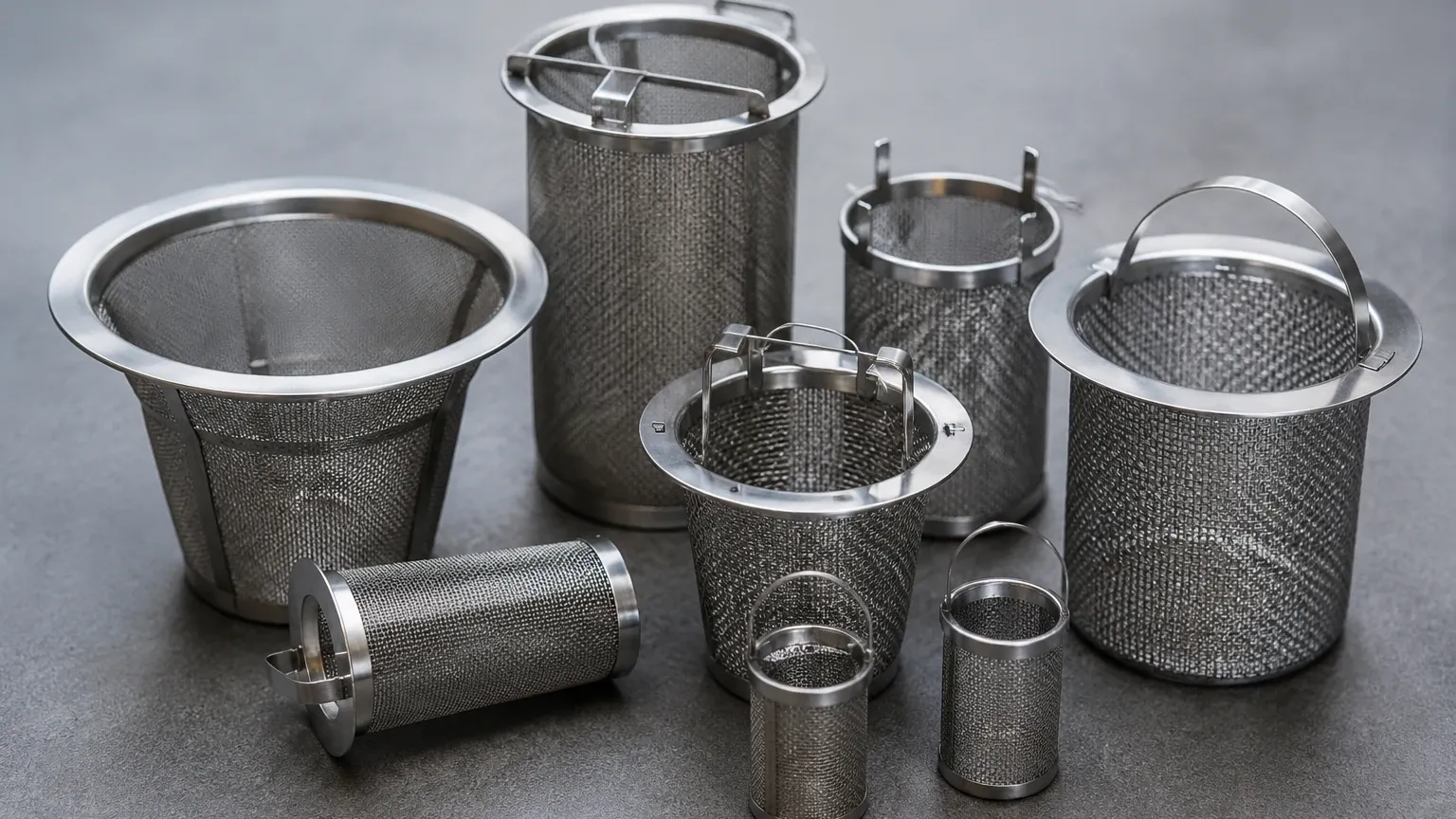
For engineers and procurement professionals, understanding the technical nuances of Strainers & Baskets is essential for optimizing system performance and minimizing the total cost of ownership. This guide examines the engineering principles, material considerations, and maintenance protocols associated with high-performance industrial strainer baskets.
The Critical Function of Strainers & Baskets in Fluid Systems
Industrial strainers are coarse filters designed to remove larger particles from liquids or gases. Unlike fine membrane filters, which may be positioned at the final stage of a process, strainers are typically located at the intake or upstream of sensitive machinery. The basket is the heart of this assembly, acting as a removable vessel that captures debris while allowing the fluid to pass through with minimal resistance.
In chemical processing, food and beverage production, and hydraulic systems, the failure of a strainer basket can lead to catastrophic equipment damage. If a basket ruptures due to excessive pressure or corrosive wear, debris can enter high-speed turbine pumps or clog precision nozzles. Therefore, the "strainer basket tool"—whether it be a specialized lifting handle or a reinforced basket structure—must be engineered to withstand the specific hydraulic stresses of the application.
Anatomy of an Industrial Strainer Basket: Engineering Considerations
When specifying a strainer basket, several engineering factors dictate its effectiveness and durability. A well-designed basket is not merely a mesh container; it is a precision-engineered component that must balance filtration accuracy with structural integrity.
1. Filtration Media: Perforated Metal vs. Wire Mesh
Most industrial baskets utilize a two-layer construction. The outer layer is typically a heavy-gauge perforated metal sheet that provides structural support. The inner layer consists of a fine wire mesh that determines the filtration rating. For applications requiring high flow rates and low pressure drops, the ratio of open area to total surface area is a critical metric. Engineers must ensure that the open area of the basket is at least two to four times the cross-sectional area of the inlet pipe to prevent excessive flow restriction.
2. Structural Reinforcement
In high-pressure or high-viscosity applications, the basket is subjected to significant mechanical stress. Reinforcing components, such as heavy-duty top rings, longitudinal stiffeners, and bottom plates, are essential. These elements prevent the basket from collapsing or "telescoping" under the weight of captured solids or the force of the fluid stream.
3. Sealing Mechanisms
To prevent bypass—where fluid flows around the basket rather than through it—the basket must feature a precise sealing surface. This is often achieved through a machined flange or an O-ring groove at the top of the basket. A secure fit ensures that 100% of the process fluid is subjected to the filtration media.
The Significance of the Strainer Basket Tool in Maintenance Operations
The term "strainer basket tool" frequently refers to the specialized hardware used to facilitate the removal and cleaning of the basket. In large-scale industrial housings, a basket filled with heavy debris or sludge can be difficult to extract manually.
Lifting Handles and Lugs
Standard baskets are often equipped with a simple handle, but for larger diameters (above 8 inches), specialized lifting lugs or heavy-duty bails are required. These allow maintenance personnel to use overhead hoists or specialized extraction tools to lift the basket safely.
Specialized Extraction Tools
In deep-well or multi-basket housings, a dedicated strainer basket tool may be required to reach and hook the basket handle. These tools are designed to provide a secure grip, preventing the basket from being dropped back into the housing, which could damage the internal seating surfaces.
Cleaning and Inspection Tools
Maintenance also involves the use of tools specifically designed for cleaning the filtration media. High-pressure wash systems and ultrasonic cleaning tanks are often employed to remove stubborn particulates from the wire mesh without damaging the delicate wires. Using the correct cleaning tool ensures the longevity of the basket and maintains its original flow characteristics.
Material Science: Selecting Stainless Steel for Longevity
Material selection is perhaps the most critical decision in the procurement of Strainers & Baskets. Because these components are often exposed to aggressive chemicals, extreme temperatures, and abrasive particles, the choice of alloy determines the replacement cycle.
* 304 Stainless Steel: The standard choice for general-purpose applications, offering good corrosion resistance and mechanical strength. It is widely used in water treatment and food processing.
* 316/316L Stainless Steel: Contains molybdenum, which provides superior resistance to chlorides and pitting. This is the preferred material for marine environments, pharmaceutical manufacturing, and chemical processing.
* Duplex and Super Duplex: For highly corrosive environments or high-pressure hydraulic systems, duplex stainless steels offer nearly double the yield strength of standard austenitic grades and exceptional resistance to stress corrosion cracking.
Beyond the alloy, the surface finish of the basket also plays a role. Electropolishing can be applied to stainless steel baskets to create a smooth, passive surface that resists bacterial growth and makes the cleaning process more efficient in sanitary applications.
Optimizing Performance: Flow Rates and Pressure Drop Analysis
A common challenge in industrial filtration is managing the "clean pressure drop" (ΔP). Every strainer basket introduces some resistance to flow. As the basket captures debris, the ΔP increases. If the pressure drop becomes too high, it can lead to cavitation in pumps or a total loss of flow.
Engineers use flow coefficient (Cv) values to calculate the expected pressure drop across a specific basket design. To optimize performance, the following strategies are employed:
1. Increased Surface Area: Utilizing pleated wire mesh instead of flat mesh can significantly increase the available filtration area within the same housing footprint, extending the time between cleaning cycles.
2. Optimized Mesh Geometry: Selecting a weave pattern (such as plain, twilled, or dutch weave) that balances particle retention with flow capacity.
3. Differential Pressure Monitoring: Installing sensors to monitor the pressure before and after the strainer. This allows maintenance teams to use the strainer basket tool for cleaning only when necessary, rather than on a fixed schedule, thereby reducing unnecessary downtime.
Custom Solutions and OEM Integration
While standard strainer baskets are available for common housing sizes, many industrial applications require custom-engineered solutions. OEM manufacturers often require unique basket geometries to fit proprietary equipment or to meet specific filtration targets that standard off-the-shelf products cannot achieve.
Customization options include:
* Magnetic Inserts: For applications involving metal machining or grinding, magnetic rods can be integrated into the strainer basket tool assembly to capture fine ferrous particles that might otherwise pass through the mesh.
* Multi-Stage Filtration: Baskets can be designed with multiple layers of varying mesh sizes to provide graduated filtration, capturing large debris in the outer layer and finer particles in the inner layer.
* Reinforced Bottoms: For high-load applications, such as mining or heavy industrial waste, the bottom of the basket can be reinforced with thicker plate steel or cross-bracing to prevent deformation.
Best Practices for Installation and Replacement
To ensure the effective use of a strainer basket and its associated tools, following a standardized installation and maintenance protocol is essential.
Before installation, the seating surface inside the strainer housing must be inspected for debris or pitting. Any imperfection in the seat can lead to fluid bypass. When inserting the basket, ensure that the handle or lifting lug is positioned correctly to allow for easy retrieval.
During replacement, the use of a proper strainer basket tool is vital for safety. Personnel should never attempt to reach into a housing by hand if the basket is stuck; instead, specialized hooks or mechanical pullers should be used. Furthermore, gaskets and O-rings should be replaced during every maintenance cycle to ensure a leak-proof seal.
Conclusion
The efficiency of industrial filtration systems relies on the synergy between robust Strainers & Baskets and the maintenance protocols that support them. By focusing on high-quality materials, precise engineering specifications, and the correct strainer basket tool for maintenance, facilities can achieve higher uptime and protect their most valuable equipment. Whether dealing with high-viscosity chemicals or high-volume water treatment, selecting a filtration partner with deep technical expertise in custom stainless steel solutions is the most effective way to ensure long-term operational success.
