


Strainer Baskets for Kitchen Sinks
In industrial food service, large-scale commercial kitchens, and food processing facilities, the management of wastewater and solid debris is a critical engineering challenge. While the term "strainer baskets for kitchen sinks" often brings to mind residential hardware, the requirements for industrial-grade applications are significantly more demanding. These components serve as the first line of defense in protecting plumbing infrastructure, grease traps, and downstream water treatment systems from solids that can cause blockages, equipment failure, and costly downtime.
For engineers and procurement professionals, selecting the right Strainers & Baskets involves more than just matching a drain diameter. It requires a deep understanding of material science, filtration precision, and structural integrity under high-flow conditions. This guide examines the technical specifications and engineering considerations necessary for high-performance sink filtration in professional environments.
Engineering Standards for Industrial Strainer Baskets
The primary differentiator between consumer-grade products and industrial strainer baskets is the material composition and manufacturing precision. In environments where chemicals, high temperatures, and abrasive food waste are common, the choice of material is the most significant factor in determining the component's service life.
Material Selection: SS304 vs. SS316
Stainless steel is the industry standard due to its inherent corrosion resistance and hygienic properties. However, the specific grade must be matched to the application:
* AISI 304 Stainless Steel: This is the most common material for standard commercial kitchen environments. It offers excellent resistance to water and mild cleaning agents. It is suitable for general food preparation areas where chloride exposure is minimal.
* AISI 316 Stainless Steel: For facilities processing acidic foods (such as citrus or pickled products) or those using harsh sanitizing chemicals, SS316 is required. The addition of molybdenum provides superior resistance to pitting and crevice corrosion, which is essential for maintaining the structural integrity of the mesh or perforated metal over time.
Gauge and Wall Thickness
Industrial strainer baskets for kitchen sinks must withstand the physical impact of heavy debris and frequent manual handling. Using thin-gauge materials leads to deformation, which compromises the seal between the basket and the drain body. A robust design typically utilizes 18-gauge or thicker stainless steel for the rim and support structure to ensure the basket remains seated correctly even after years of use.
Filtration Efficiency and Mesh Specifications
Filtration in a commercial sink setting is not a one-size-fits-all solution. The "efficiency" of a strainer is determined by its open area and the size of the particles it is designed to capture. Engineers must balance the need for fine filtration with the requirement for high flow rates.
Perforated Metal vs. Wire Mesh
Most heavy-duty strainer baskets utilize one of two media types:
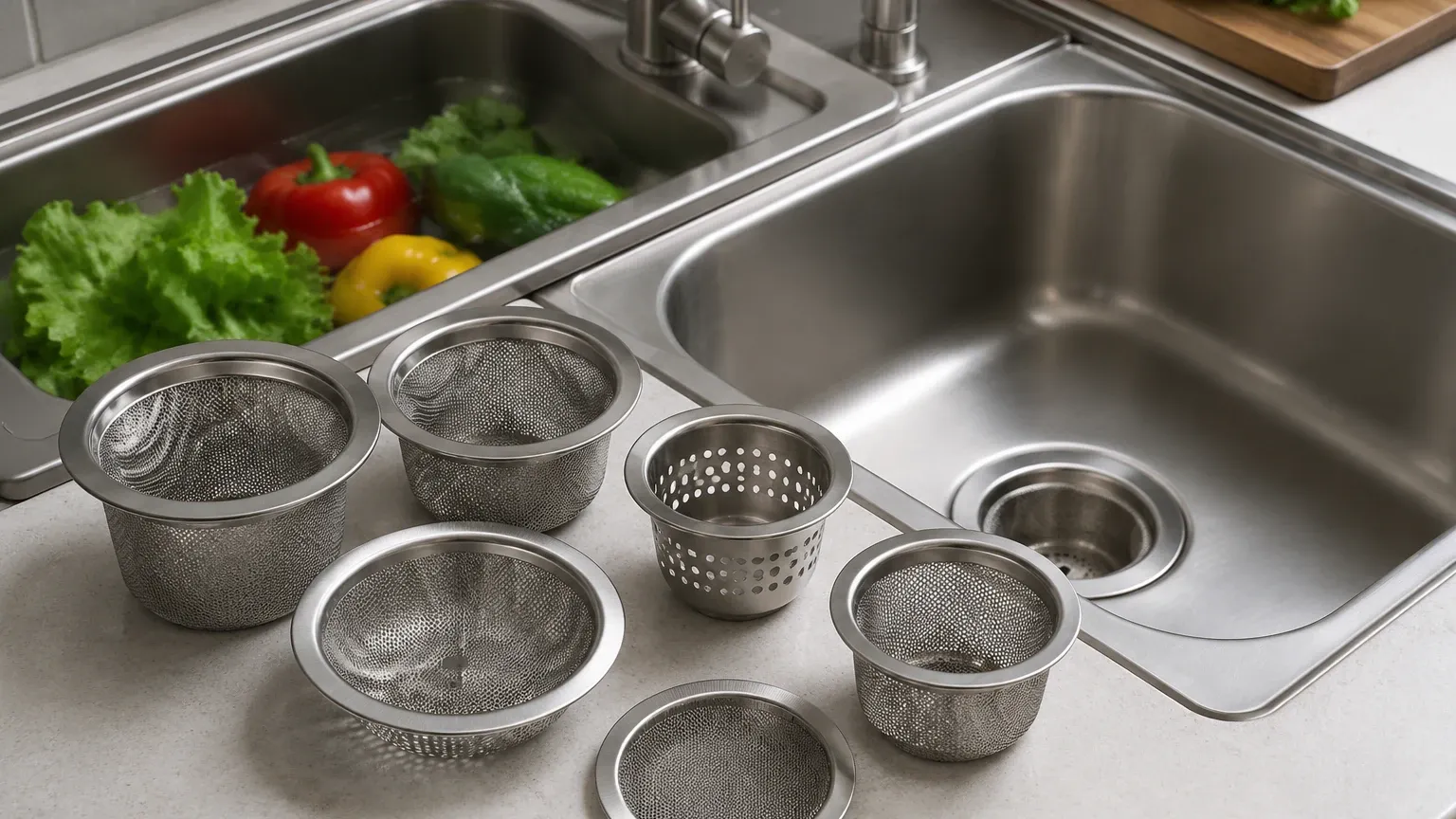
1. Perforated Metal: These are generally more durable and easier to clean. They are ideal for capturing large organic solids and preventing them from entering the drainage system. Common hole sizes range from 1/16" to 1/4", depending on the specific waste profile of the facility.
2. Wire Mesh Liners: In applications where smaller particles (such as coffee grounds or fine vegetable debris) must be captured, a secondary wire mesh liner can be integrated into the basket. This provides a finer level of filtration while the outer perforated shell provides the necessary structural support.
Open Area Calculations
The total open area of the strainer directly impacts the drainage speed. If the open area is too low, water will back up into the sink, slowing down operations and creating potential hygiene risks. High-quality industrial designs maximize the number of perforations while maintaining the structural strength of the basket walls, ensuring that the sink drains efficiently even as the basket begins to fill with debris.
Structural Design and Durability Features
A well-engineered strainer basket must be designed for both performance and ease of use. In a fast-paced commercial environment, the mechanical features of the basket can significantly impact labor efficiency and maintenance costs.
Precision Fit and Bypass Prevention
One of the most common failures in sink filtration is "bypass," where debris escapes around the edges of the basket because it does not fit the drain housing perfectly. Precision-machined rims and seated gaskets are essential. For industrial applications, a metal-to-metal seal or a high-durability EPDM gasket is often used to ensure that 100% of the effluent passes through the filtration media.
Handle and Lift Mechanisms
In high-volume kitchens, strainer baskets are emptied dozens of times per shift. The handle must be ergonomically designed for quick removal and robust enough to resist snapping under tension. Welded crossbars or integrated heavy-duty bail handles are preferred over thin wire handles. Furthermore, the handle should be positioned so that it does not obstruct the flow of waste into the basket.
Reinforcement and Bottom Support
As a basket fills with wet food waste, the weight can become considerable. Industrial-grade baskets often feature reinforced bottoms or additional support ribs to prevent the mesh from sagging or bursting. This is particularly important for deep-well baskets used in pot sinks or pre-rinse stations.
Maintenance and Longevity in High-Volume Environments
The total cost of ownership (TCO) for filtration components is heavily influenced by their maintenance requirements and replacement cycles. While a lower-quality basket may have a smaller upfront cost, the frequent need for replacement and the risk of plumbing blockages make it more expensive in the long run.
Cleaning Protocols
To maintain hygiene standards (such as HACCP compliance), strainer baskets must be easy to sanitize. Smooth welds and the absence of sharp corners prevent the buildup of bacteria and biofilm. Stainless steel's ability to withstand high-temperature dishwashing and chemical sanitizers is a key advantage here. Engineers should specify baskets with electropolished finishes to further improve cleanability and corrosion resistance.
Replacement Cycles
In a commercial setting, a standard strainer basket may last only a few months before the mesh tears or the handle breaks. By contrast, a heavy-duty industrial basket manufactured by specialists like Kaifil can last for years. Procurement teams should evaluate the "mean time between failures" (MTBF) for these components to justify the investment in higher-quality stainless steel solutions.
Customization Options for Specific Industrial Applications
Many industrial facilities have unique requirements that cannot be met by off-the-shelf products. Customization is often necessary to ensure the filtration system integrates perfectly with existing equipment.
OEM and Custom Designs
For manufacturers of industrial sinks or food processing equipment, sourcing custom-designed strainer baskets is essential for maintaining brand quality. Customization options include:
* Non-Standard Dimensions: Baskets designed for extra-deep drains or unusually shaped sumps.
* Variable Micron Ratings: Tailoring the mesh size to specific types of waste produced in a particular process.
* Integrated Flanges: For secure mounting in specialized industrial machinery.
* Magnetic Inserts: In some food processing applications, magnetic bars are added to the strainer to capture any metallic fragments that may have entered the waste stream.
By working with a professional manufacturer, engineers can develop Strainers & Baskets that are specifically optimized for their unique flow rates and debris types, ensuring maximum protection for downstream systems.
Key Considerations for Procurement and Engineering Teams
Before finalizing a purchase order for industrial strainer baskets, technical teams should confirm several key parameters to ensure the product is fit for purpose:
1. Chemical Compatibility: Does the stainless steel grade (304 vs 316) match the chemicals and food acids present in the facility?
2. Flow Rate Requirements: Is the open area of the basket sufficient to handle the maximum expected flow from the faucets or discharge valves without causing backup?
3. Debris Profile: What is the smallest particle size that needs to be captured? This determines whether a perforated plate or a fine wire mesh is required.
4. Interface Geometry: Does the basket rim geometry match the drain body exactly to prevent bypass?
5. Durability Requirements: Will the basket be subjected to heavy impact or high temperatures? This dictates the material gauge and welding specifications.
Conclusion: The Value of Quality Filtration
While strainer baskets for kitchen sinks may seem like minor components, their role in industrial and commercial operations is vital. A failure in this simple component can lead to clogged pipes, grease trap overflows, and significant operational disruptions. By prioritizing high-quality stainless steel construction, precision engineering, and application-specific design, facilities can ensure long-term reliability and lower maintenance costs.
Investing in professional-grade filtration solutions is a strategic decision that protects a facility's infrastructure. Whether for a high-traffic commercial kitchen or a specialized food processing plant, the right strainer basket ensures that waste is managed efficiently, hygiene standards are maintained, and plumbing systems remain clear. For those seeking reliable, high-performance components, focusing on the technical specifications of Strainers & Baskets is the best path toward optimized filtration performance.
