


Strainer Element
In industrial fluid handling systems, the strainer element serves as the primary line of defense for downstream equipment. Whether integrated into a T-type, Y-type, or duplex housing, the performance of the entire filtration system is dictated by the mechanical integrity and precision of the internal element. For engineers and procurement teams, selecting a strainer element is not merely a matter of matching dimensions; it requires a deep understanding of fluid dynamics, material science, and the specific operational stresses of the application.
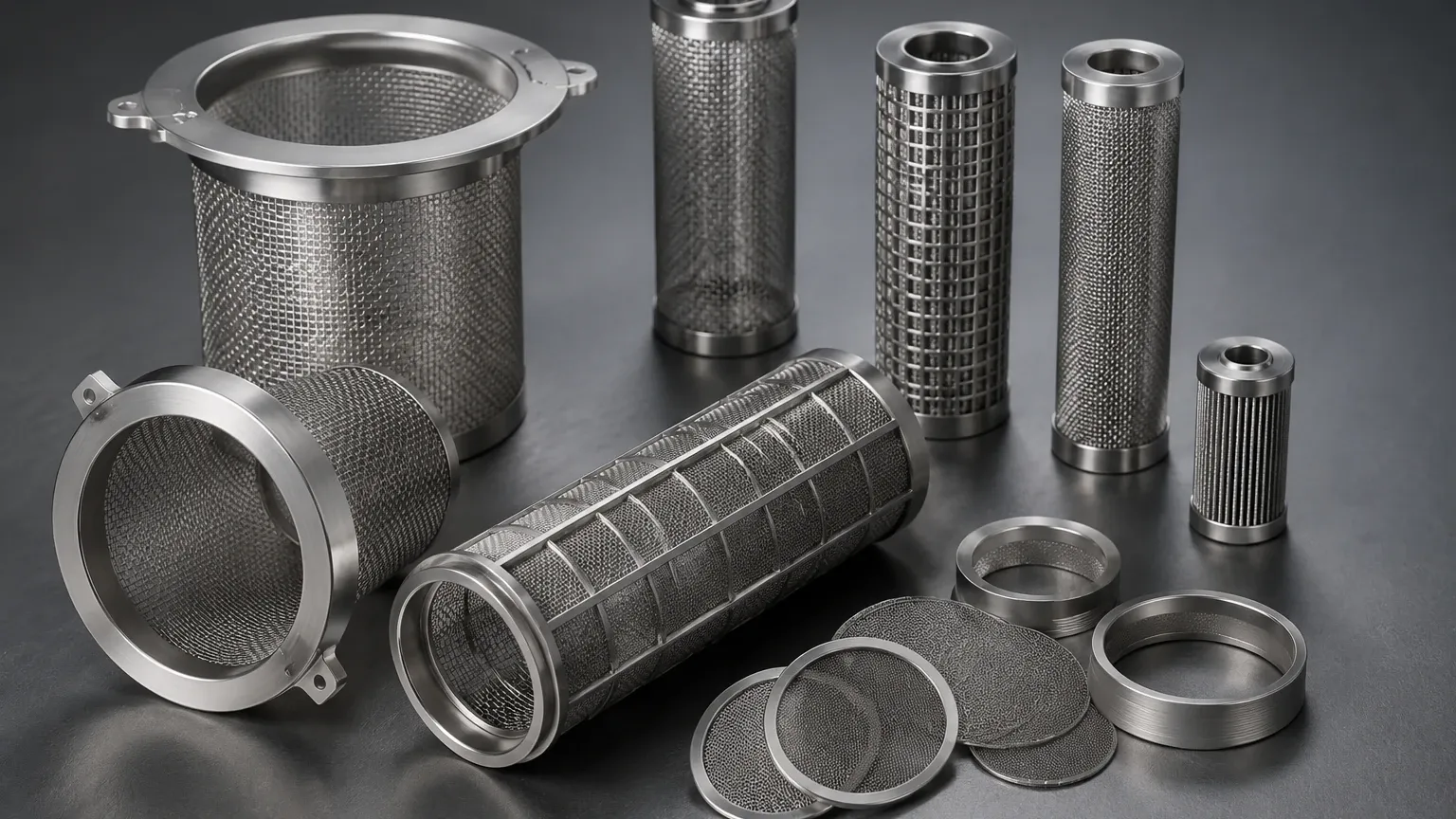
As a critical component within Strainers & Baskets, the element is designed to intercept and retain solid particulates from liquid or gas streams. Unlike fine filters that may target sub-micron particles, a strainer element is typically employed for coarser separation, protecting pumps, valves, and heat exchangers from damage caused by scale, weld slag, or foreign debris.
Technical Fundamentals of Strainer Element Design
The efficiency of a strainer element is defined by its ability to balance particle retention with minimal pressure loss. This balance is achieved through the manipulation of several engineering variables, most notably the open area ratio and the media configuration.
Open Area Ratio (OAR)
The open area ratio is the relationship between the total area of the openings in the strainer media and the internal cross-sectional area of the inlet pipe. A standard industrial requirement is an OAR of at least 4:1. A higher ratio ensures that even as the element begins to collect debris, the increase in differential pressure remains manageable, extending the time between cleaning cycles. If the OAR is too low, the fluid velocity through the remaining open apertures increases, which can lead to particle bypass or mechanical deformation of the media.
Media Types: Perforated vs. Mesh
Most industrial strainer elements utilize one of two primary media types, or a combination of both:
1. Perforated Metal: Used for coarse straining (typically 1/32" to 1/2" holes). It offers high structural strength and is ideal for heavy-duty applications where large debris is expected.
2. Wire Mesh: Used for finer applications (down to 20 microns). Because wire mesh lacks the inherent rigidity of perforated plate, it is almost always supported by a perforated metal backup tube to prevent collapse under high differential pressure.
Engineering Considerations for Selection
When specifying a strainer element for a new or existing system, several technical parameters must be evaluated to ensure long-term reliability and performance.
Micron Rating and Mesh Count
Understanding the difference between mesh count and micron rating is essential. Mesh count refers to the number of openings per linear inch, while the micron rating defines the actual size of the particles that will be retained. For example, a 100-mesh screen has a nominal rating of approximately 140 microns. Engineers must select a rating that is fine enough to protect sensitive downstream components but coarse enough to avoid premature clogging. A common rule of prime is to select an element with openings approximately one-half the diameter of the largest allowable particle for the downstream equipment.
Pressure Drop (Delta P) Calculations
Every strainer element introduces a restriction to the flow, resulting in a pressure drop. This "clean pressure drop" must be calculated based on the fluid's viscosity, specific gravity, and flow rate. As the element captures contaminants, the pressure drop increases. It is critical to define the maximum allowable differential pressure before the element must be cleaned or replaced. Exceeding this limit can result in the "bursting" of the mesh or the collapse of the support structure.
Flow Direction and Velocity
In most basket-style Strainers & Baskets, the flow is from the inside to the outside. This design ensures that debris is trapped within the basket, making it easier to remove during maintenance. However, in certain high-velocity applications, the impact of the fluid entering the element can cause erosion or fatigue at the weld points. In these cases, a "deflector plate" or reinforced inlet area may be necessary to distribute the flow more evenly.
Material Selection and Chemical Compatibility
The longevity of a strainer element is heavily dependent on its material of construction. Industrial environments often involve corrosive fluids, high temperatures, or strict sanitary requirements.
Stainless Steel Grades
* Type 304: The standard material for general industrial use. It provides good corrosion resistance and is cost-effective for water, oil, and mild chemical applications.
* Type 316/316L: Contains molybdenum, which provides superior resistance to chlorides and pitting. This is the preferred choice for marine environments, chemical processing, and pharmaceutical applications.
* Specialty Alloys: For highly aggressive environments involving concentrated acids or high-temperature steam, materials such as Monel, Hastelloy, or Titanium may be required to prevent premature failure.
Temperature and Thermal Expansion
High-temperature applications require careful consideration of the thermal expansion coefficients of the materials. If the strainer element and the housing are made of different materials, the resulting stress during thermal cycling can lead to seal failure or mechanical warping. Furthermore, at elevated temperatures, the tensile strength of the stainless steel decreases, which may necessitate a thicker support structure for the element.
Structural Integrity and Customization
A common failure point in industrial filtration is the mechanical breakdown of the strainer element due to hydraulic shock or high particulate loading. To mitigate these risks, custom engineering is often required.
Reinforcement Techniques
For high-pressure systems, a standard wire mesh element is insufficient. Engineers often specify a multi-layer construction. This typically involves a fine inner mesh for filtration, a coarser mesh for drainage, and a heavy-gauge perforated outer cylinder for structural support. Longitudinal and circumferential reinforcement ribs can also be added to the exterior of the basket to provide additional rigidity against collapsing forces.
Custom Dimensions and End Fittings
In many retrofit scenarios, standard off-the-shelf elements do not fit perfectly within existing housings. Customization of the flange diameter, overall length, and handle configuration is necessary to ensure a proper seal. A bypass-free seal is critical; even a small gap between the element flange and the housing seat can allow large particles to pass through, defeating the purpose of the strainer.
Maintenance, Cleaning, and Replacement Cycles
Unlike disposable filter cartridges, a high-quality stainless steel strainer element is designed to be cleaned and reused. However, the cleaning process must be handled correctly to avoid damaging the media.
Monitoring Differential Pressure
The most reliable way to determine when a strainer element requires maintenance is through differential pressure monitoring. Gauges should be installed on the inlet and outlet of the strainer housing. A common industry standard is to initiate cleaning when the differential pressure reaches 5-10 psi above the clean pressure drop. Waiting until the pressure drop is significantly higher can compress the debris into the mesh, making it nearly impossible to clean without damaging the wires.
Cleaning Procedures
For coarse perforated elements, manual brushing or high-pressure water washing is usually sufficient. For fine wire mesh elements, ultrasonic cleaning may be required to remove particles lodged deep within the weave. It is important to inspect the element after every cleaning cycle for signs of "blinding" (permanent clogging of the pores) or mechanical wear such as broken wires or cracked welds.
Total Cost of Ownership (TCO)
While a custom-engineered stainless steel strainer element has a higher initial purchase price than a plastic or low-grade metal alternative, its TCO is significantly lower. The durability of stainless steel allows for hundreds of cleaning cycles, and the precision of the fit ensures that downstream equipment is protected, preventing costly unscheduled downtime and repairs.
Selecting the Right Partner for Filtration Solutions
Choosing the correct strainer element involves balancing complex technical requirements with budgetary constraints. Working with a manufacturer that understands the nuances of industrial filtration is essential. High-performance Strainers & Baskets are the result of precise material selection, advanced welding techniques, and a thorough understanding of the application's fluid dynamics.
Before finalizing a purchase, engineers should confirm the following with their supplier:
1. Material Certification: Ensure the stainless steel grade meets the required standards (e.g., ASTM).
2. Pressure Ratings: Confirm the element's collapse pressure exceeds the maximum possible differential pressure of the system.
3. Chemical Compatibility: Verify that all components, including seals and adhesives (if used), are compatible with the process fluid.
4. Customization Capability: Ensure the manufacturer can accommodate specific dimensional requirements for a bypass-free fit.
By focusing on these factual engineering boundaries, technical professionals can ensure their systems remain efficient, protected, and operational for the long term. The strainer element may be a small part of the overall plant, but its role in maintaining process integrity is indispensable.
