


Strainer Engine Oil
In the engineering of industrial internal combustion engines and large-scale hydraulic systems, the reliability of the lubrication circuit is paramount. The strainer engine oil component, often referred to as a suction strainer or oil pickup screen, serves as the critical first stage of defense within this circuit. Unlike secondary fine filters that target microscopic particulates, the strainer is designed to capture larger contaminants—such as metal shavings, gasket fragments, and carbon deposits—before they can reach and damage the oil pump.
For engineers and procurement professionals, selecting the right Strainers & Baskets involves a deep understanding of fluid dynamics, material science, and the specific mechanical requirements of the engine or machinery in question. This guide explores the technical considerations necessary for optimizing strainer performance in industrial oil applications.
Understanding the Primary Function of an Engine Oil Strainer
The fundamental role of a strainer engine oil assembly is to protect the positive displacement pumps that circulate lubricant through the engine block or hydraulic manifold. Because these pumps operate with tight tolerances, the introduction of even a single large metallic shard can lead to catastrophic pump failure or "seizing," which subsequently starves the entire system of oil.
In most industrial configurations, the strainer is positioned at the lowest point of the oil sump or reservoir. It acts as a coarse filter, typically rated between 100 and 400 microns. While fine filtration (5 to 25 microns) occurs later in the circuit via spin-on or cartridge filters, the strainer must ensure that the oil entering the pump is free of "trash" that could cause immediate mechanical interference. Furthermore, the strainer must facilitate a high flow rate even when the oil is cold and its viscosity is at its peak, preventing pump cavitation.
Material Engineering: Why Stainless Steel is Standard
Industrial engine environments are characterized by high temperatures, varying chemical compositions of lubricants, and constant vibration. Consequently, the material selection for a strainer engine oil component is restricted to high-performance alloys. Kaifil specializes in utilizing stainless steel for these applications due to several technical advantages:
1. Thermal Stability: Engine oils can reach operating temperatures exceeding 120°C (248°F). Stainless steel maintains its structural integrity and tension at these temperatures, whereas polymer-based screens may soften or deform.
2. Chemical Compatibility: Modern synthetic oils contain complex additive packages, including detergents, dispersants, and anti-wear agents. Stainless steel (specifically grades 304 and 316L) is inert to these chemicals, preventing corrosion or degradation over long service intervals.
3. Mechanical Strength: The suction force generated by heavy-duty oil pumps can be significant. Stainless steel wire mesh, often reinforced with a perforated metal core, resists collapsing under the pressure differential ($ΔP$) created by high-viscosity cold starts.
4. Cleanability: In many industrial B2B applications, sustainability and total cost of ownership (TCO) are improved by using cleanable components. Stainless steel mesh can be ultrasonically cleaned or backflushed, extending the component's life far beyond that of disposable alternatives.
Design Parameters: Flow Rate and Pressure Drop Optimization
When specifying a strainer engine oil solution, engineers must balance filtration efficiency with the allowable pressure drop. If a strainer is too restrictive, the oil pump will struggle to pull fluid from the sump, leading to cavitation—a phenomenon where vacuum bubbles form and collapse, causing erosive damage to pump internals.
The Importance of Open Area
The "Open Area" percentage of the wire mesh is a critical metric. It is calculated based on the wire diameter and the mesh count. A higher open area reduces the initial pressure drop but may compromise the structural rigidity of the mesh. Engineering teams must calculate the Effective Filtration Area (EFA) to ensure that even as the strainer begins to accumulate debris, there remains sufficient surface area to maintain the required flow rate for the engine's RPM range.
Structural Reinforcement
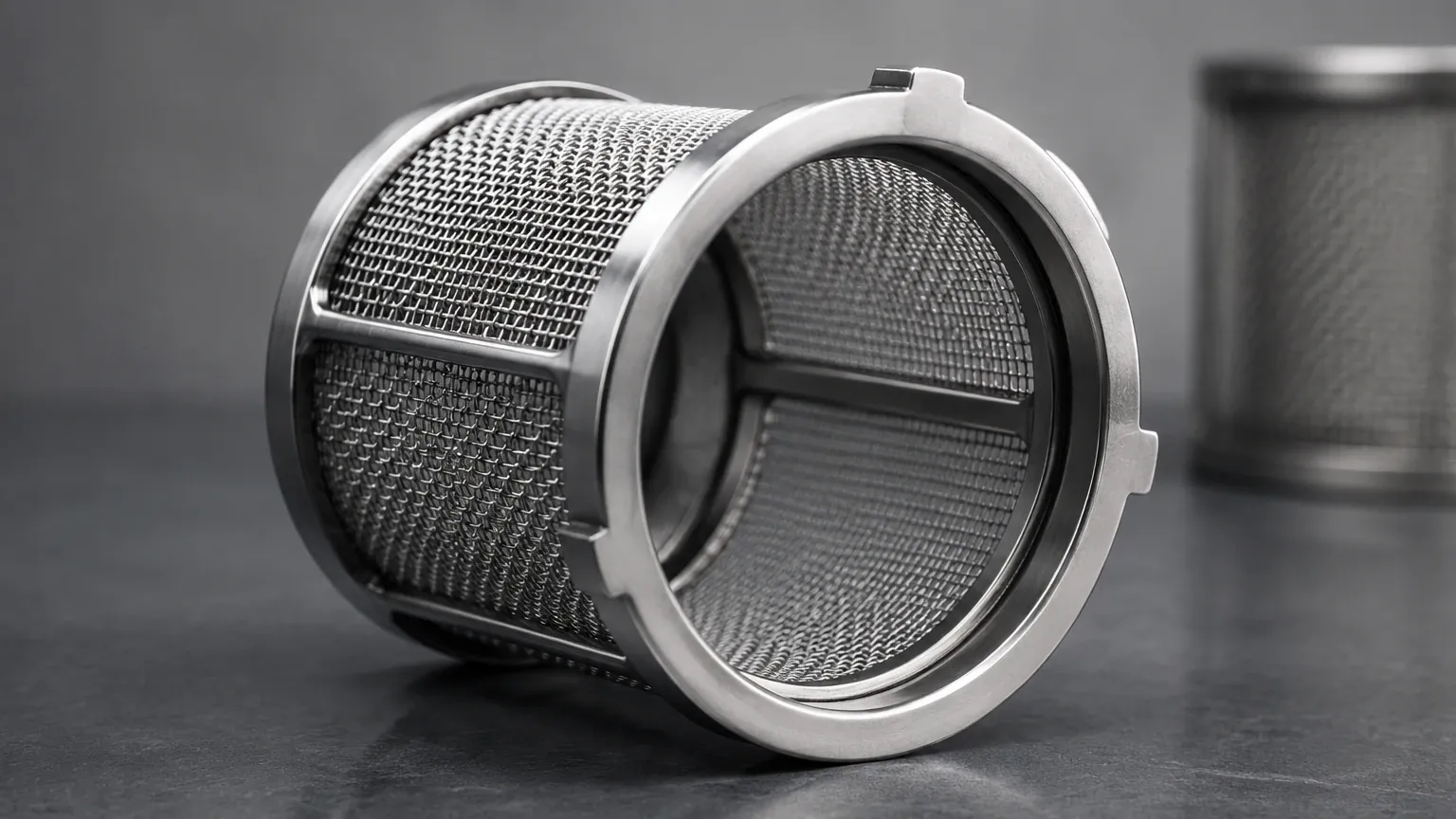
For larger industrial strainers, the wire mesh is typically pleated or wrapped around a perforated metal support tube. This "basket" design increases the surface area within a compact footprint and provides the mechanical backbone necessary to withstand the suction pressure of high-volume pumps used in power generation or marine propulsion engines.
Selecting the Correct Mesh for Industrial Lubrication Systems
The mesh size for a strainer engine oil application is determined by the specific tolerances of the downstream oil pump. Common configurations include:
* 60 to 80 Mesh: Often used in heavy machinery where the oil is exceptionally thick or where the environment is prone to large-scale contamination.
* 100 to 150 Mesh: The industry standard for most industrial diesel and gas engines, providing a balance between protection and flow.
* Custom Weaves: In high-precision hydraulic power units, a Dutch weave or twilled weave may be used to provide higher strength and finer filtration levels while maintaining the flow characteristics of a coarser mesh.
Kaifil’s expertise in Strainers & Baskets allows for the customization of these weave patterns to meet the exact micron requirements of an OEM’s engine design, ensuring that the strainer captures harmful particles without unnecessarily hindering the oil's path.
Maintenance Protocols for Reusable Strainer Baskets
In B2B industrial settings, maintenance cycles are planned to minimize downtime. The strainer engine oil is usually inspected during major engine overhauls or when oil analysis reports indicate an unusual increase in large-scale wear particles.
Inspection Criteria
* Mesh Integrity: Technicians should look for signs of wire fatigue or "blinded" areas where sludge has hardened into the mesh.
* Seal Condition: Many strainers utilize a flange or O-ring seal to ensure oil is pulled *through* the mesh rather than around it. Any bypass at the seal interface renders the strainer ineffective.
* Debris Analysis: The material caught in the strainer provides a diagnostic history of the engine. Finding non-ferrous metal flakes may indicate bearing wear, while magnetic particles point toward gear or camshaft degradation.
Cleaning Procedures
Unlike disposable filters, a high-quality stainless steel strainer can be restored to near-original condition. The preferred method is ultrasonic cleaning in a solvent bath, which dislodges fine particulates trapped within the wire intersections. After cleaning, a "bubble point" test can be performed to verify that the pore size remains within the original specification.
Customization and Integration in OEM Engine Design
Standard off-the-shelf strainers rarely meet the rigorous demands of specialized industrial equipment. OEM engineers often require custom-engineered strainer engine oil components that fit specific sump geometries or integrate directly with the oil pump intake manifold.
Custom Mounting and Housing
Kaifil provides tailored solutions that include specialized mounting brackets, threaded connections, or quick-release flanges. These features simplify the installation process on the assembly line and facilitate easier access for maintenance teams in the field.
Multi-Stage Filtration Baskets
In some advanced applications, a multi-stage basket is employed. This involves a coarse outer screen to stop large debris and a finer inner mesh for secondary protection. This dual-layer approach prevents the finer mesh from becoming prematurely clogged by large contaminants, thereby extending the service interval of the equipment.
Evaluating Total Cost of Ownership (TCO)
While a low-cost, low-quality strainer may seem attractive during the initial procurement phase, the TCO of a high-performance stainless steel strainer engine oil component is significantly lower over the equipment's lifespan. Factors contributing to TCO include:
* Reduced Engine Failure Risk: The cost of a single engine rebuild due to pump failure far outweighs the investment in a premium strainer.
* Extended Oil Life: By removing large-scale contaminants that can act as catalysts for oil oxidation, a high-quality strainer helps maintain the chemical integrity of the lubricant.
* Operational Efficiency: Optimized flow characteristics reduce the load on the oil pump, leading to marginal but cumulative gains in fuel or energy efficiency.
Conclusion
The strainer engine oil assembly is a vital component that demands technical precision in both design and manufacture. For industrial applications where equipment uptime is the primary KPI, relying on expert-grade Strainers & Baskets ensures that the lubrication system remains robust against the threats of contamination and mechanical wear.
By focusing on material quality, precise mesh selection, and structural integrity, Kaifil provides the engineering support necessary to protect the heart of industrial machinery. Whether for a new OEM project or a fleet-wide maintenance upgrade, understanding these filtration principles is the key to achieving long-term operational success.
