


Strainer Jali
In industrial fluid handling, the integrity of downstream equipment such as pumps, valves, and heat exchangers depends heavily on the efficiency of primary filtration components. One of the most critical elements in this process is the strainer jali, a term frequently used in various engineering contexts to describe the mesh screen or perforated basket that serves as the functional core of industrial strainers. These components are designed to remove large particles and debris from liquid or gas streams, ensuring that the process fluid meets the required cleanliness standards before reaching sensitive machinery.
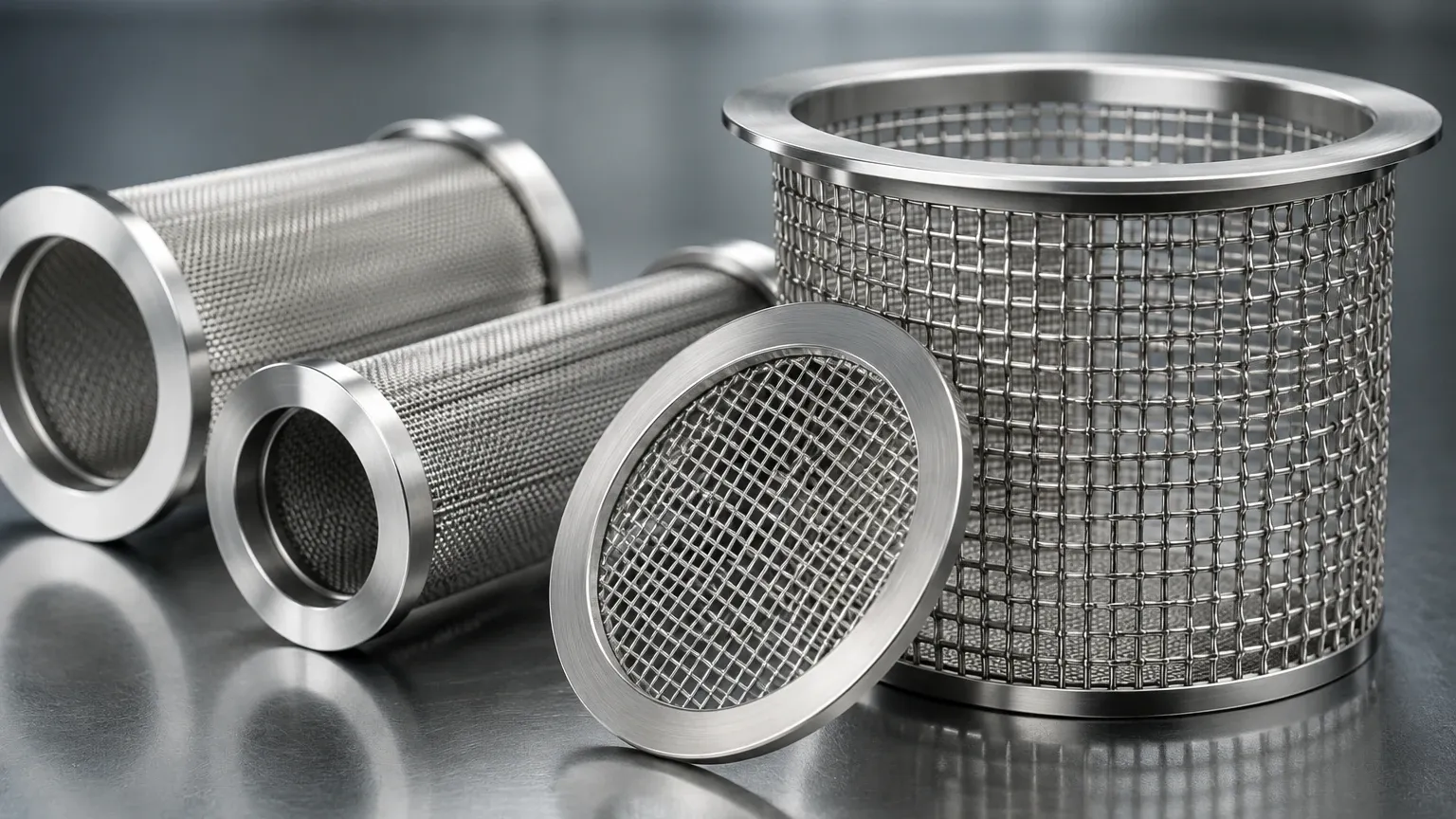
As a specialized manufacturer, Kaifil provides high-performance Strainers & Baskets engineered to withstand the rigorous demands of chemical processing, food and beverage production, and hydraulic systems. Understanding the technical nuances of the strainer jali—from material selection to structural design—is essential for engineers and procurement teams tasked with optimizing system uptime and reducing maintenance costs.
The Role of Strainer Jali in Industrial Process Systems
The primary function of a strainer jali is mechanical separation. Unlike fine membrane filters that target microscopic contaminants, these components are typically used for coarse filtration, capturing solids that could cause mechanical wear or blockages. In many industrial layouts, the strainer is the first line of defense, positioned at the suction side of a pump or at the inlet of a processing unit.
In B2B procurement, the term "jali" often refers to the specific geometry of the filtration media, whether it is a woven wire mesh, a perforated metal sheet, or a combination of both. The effectiveness of this component is measured by its ability to maintain a high flow rate while capturing a specific size of particulate matter. Failure to select the correct specifications for a strainer jali can lead to excessive pressure drops, bypass of contaminants, or even structural collapse of the basket under high differential pressure.
Technical Specifications: Material Selection and Durability
Material compatibility is the most critical factor in the longevity of a strainer jali. Industrial environments often involve corrosive chemicals, high temperatures, and abrasive particles. Stainless steel is the industry standard due to its mechanical strength and resistance to oxidation.
1. Stainless Steel 304: This is the most common material for general-purpose industrial applications. It offers excellent corrosion resistance in water treatment and food processing environments where chemical exposure is moderate.
2. Stainless Steel 316/316L: For more demanding applications, such as chemical processing or marine environments, SS316 is preferred. The addition of molybdenum enhances resistance to pitting and crevice corrosion, particularly in chloride-rich environments. SS316L (low carbon) is often specified for components requiring extensive welding to prevent carbide precipitation.
3. Specialty Alloys: In highly acidic or high-temperature environments, engineers may require Duplex stainless steel or Monel. These materials provide the necessary durability to prevent premature failure of the strainer jali in aggressive media.
Kaifil ensures that all materials used in the construction of their Strainers & Baskets meet international standards, providing the structural integrity required for continuous industrial operation.
Engineering Considerations for Mesh and Perforation Sizing
The performance of a strainer jali is defined by its filtration rating, which is determined by the size of the openings in the mesh or perforated plate. This is usually expressed in microns, mesh count, or fractional inches.
Perforated Metal vs. Wire Mesh
Most industrial baskets utilize a two-layer design. The outer layer is often a perforated metal plate that provides structural rigidity, while the inner lining is a fine wire mesh (the jali) that determines the actual filtration level.
* Perforated Plates: These are used for coarse straining (typically 1/32" to 1/4" holes). They are robust and easy to clean but have a lower open area ratio compared to mesh.
* Woven Wire Mesh: This allows for much finer filtration, ranging from 20 mesh to 400 mesh or finer. The weave type—such as plain weave or twill weave—affects the flow characteristics and the strength of the screen.
The Importance of Open Area Ratio (OAR)
The Open Area Ratio is the relationship between the total area of the openings and the total area of the screen. For an efficient strainer jali, a high OAR is desirable to minimize the initial pressure drop. A common engineering benchmark is to provide an OAR that is at least 6 to 8 times the cross-sectional area of the inlet pipe. This ensures that even as the basket begins to collect debris, the system can maintain a functional flow rate before requiring cleaning.
Structural Design of Strainers & Baskets
The physical configuration of the strainer jali must match the housing type used in the facility. There are several standard designs used in industrial filtration:
* Simplex Baskets: Used in systems where the flow can be shut down temporarily for cleaning. These are common in batch processing.
* Duplex Baskets: Designed for continuous operation. A valve system diverts flow between two separate baskets, allowing one strainer jali to be cleaned while the other remains in service.
* Y-Strainer Elements: These are typically smaller and used for protecting individual pieces of equipment. The jali in a Y-strainer is usually cylindrical and must be precisely fitted to prevent fluid bypass.
* T-Strainer Elements: Often used in large-diameter pipelines where low pressure drop is critical. These baskets are usually larger and require significant internal reinforcement.
Kaifil specializes in the precision manufacturing of these components, ensuring that the flange seats and gaskets provide a leak-proof seal, which is vital for maintaining the integrity of the filtration process.
Calculating Flow Efficiency and Pressure Drop
For engineers, the most significant performance metric for a strainer jali is the pressure drop (Delta P). As fluid passes through the mesh, resistance is created. This resistance increases as the mesh becomes blinded by captured particles.
Calculating the clean pressure drop involves analyzing the fluid's viscosity, specific gravity, and flow rate. If the initial pressure drop is too high, it indicates that the strainer jali has insufficient open area or that the mesh is too fine for the application. Conversely, a pressure drop that is too low might suggest that the mesh is too coarse or that fluid is bypassing the filter element entirely.
To optimize performance, it is recommended to install differential pressure gauges across the strainer housing. This allows operators to monitor the condition of the strainer jali in real-time. A common industry standard is to clean or replace the basket when the differential pressure reaches 10-15 psi over the clean start-up pressure.
Customization and OEM Manufacturing for Specific Applications
Off-the-shelf filtration components often fail to meet the specific requirements of complex industrial systems. This is where custom manufacturing becomes a necessity. A custom strainer jali can be engineered to fit legacy equipment, accommodate unusual flow rates, or handle specific types of contaminants that standard mesh cannot manage.
Kaifil’s OEM capabilities allow for the development of tailored filtration solutions. This includes:
* Custom Dimensions: Adjusting the height, diameter, and flange configuration of the basket to fit existing housings without the need for piping modifications.
* Reinforced Construction: Adding internal support cages or external skeletons to the strainer jali to prevent deformation in high-viscosity or high-pressure applications.
* Multi-Stage Filtration: Designing baskets with multiple layers of different mesh sizes to capture a range of particle sizes in a single pass, extending the time between cleaning cycles.
By working closely with global customers, Kaifil ensures that each strainer jali is optimized for its specific environment, whether it is a high-temperature steam line or a sanitary food processing conveyor.
Maintenance and Replacement Strategies for Optimal Performance
Even the highest quality strainer jali will eventually require maintenance. The accumulation of debris leads to "blinding," where the openings in the mesh are completely obstructed. Proper maintenance protocols are essential for preventing system downtime.
Cleaning Procedures
Most stainless steel baskets are designed to be reusable. Cleaning methods vary depending on the contaminant:
* Backwashing: Using a reverse flow of clean fluid to dislodge particles from the mesh.
* Ultrasonic Cleaning: For fine mesh that has become deeply embedded with particles, ultrasonic baths can effectively remove contaminants without damaging the wire structure.
* Chemical Cleaning: Using compatible solvents to dissolve organic or chemical buildup.
Signs That Replacement is Necessary
While cleaning can extend the life of a strainer jali, certain conditions necessitate a full replacement:
* Mechanical Deformation: If the basket has been crushed or warped by high differential pressure, it will no longer seal correctly, leading to bypass.
* Mesh Fraying: In woven wire mesh, individual wires can break over time due to fatigue or abrasion. These broken wires can enter the process stream and damage downstream equipment.
* Corrosion Pitting: Small holes caused by chemical attack can compromise the filtration rating, allowing larger particles to pass through.
Conclusion: Selecting the Right Filtration Partner
Selecting a strainer jali is not merely a matter of choosing a mesh size; it is an engineering decision that impacts the efficiency, safety, and cost-effectiveness of an entire industrial process. By focusing on high-quality materials, precise manufacturing tolerances, and application-specific designs, Kaifil provides the technical support needed to solve complex filtration challenges.
For engineers and purchasing teams, confirming the flow requirements, chemical compatibility, and structural needs of a system is the first step toward selecting the ideal Strainers & Baskets. With the right strainer jali in place, industrial operations can achieve longer equipment lifespans and more reliable production cycles, ultimately reducing the total cost of ownership for filtration infrastructure.
