


Strainer Kit
In industrial fluid handling systems, the protection of downstream equipment is paramount to operational efficiency and longevity. A professional strainer kit serves as a critical assembly of components designed to remove unwanted solids from liquids or gases. Unlike standard off-the-shelf components, an industrial-grade kit is often a precision-engineered solution tailored to specific pressure ratings, flow rates, and chemical compatibility requirements. For engineers and procurement teams, understanding the technical nuances of these kits is essential for maintaining system integrity and minimizing unplanned downtime.
Industrial filtration relies on the structural integrity of Strainers & Baskets to capture debris that could otherwise damage pumps, valves, and heat exchangers. This article explores the engineering considerations, material science, and selection criteria involved in specifying a high-performance strainer kit for demanding industrial environments.
Understanding the Role of a Strainer Kit in Industrial Systems
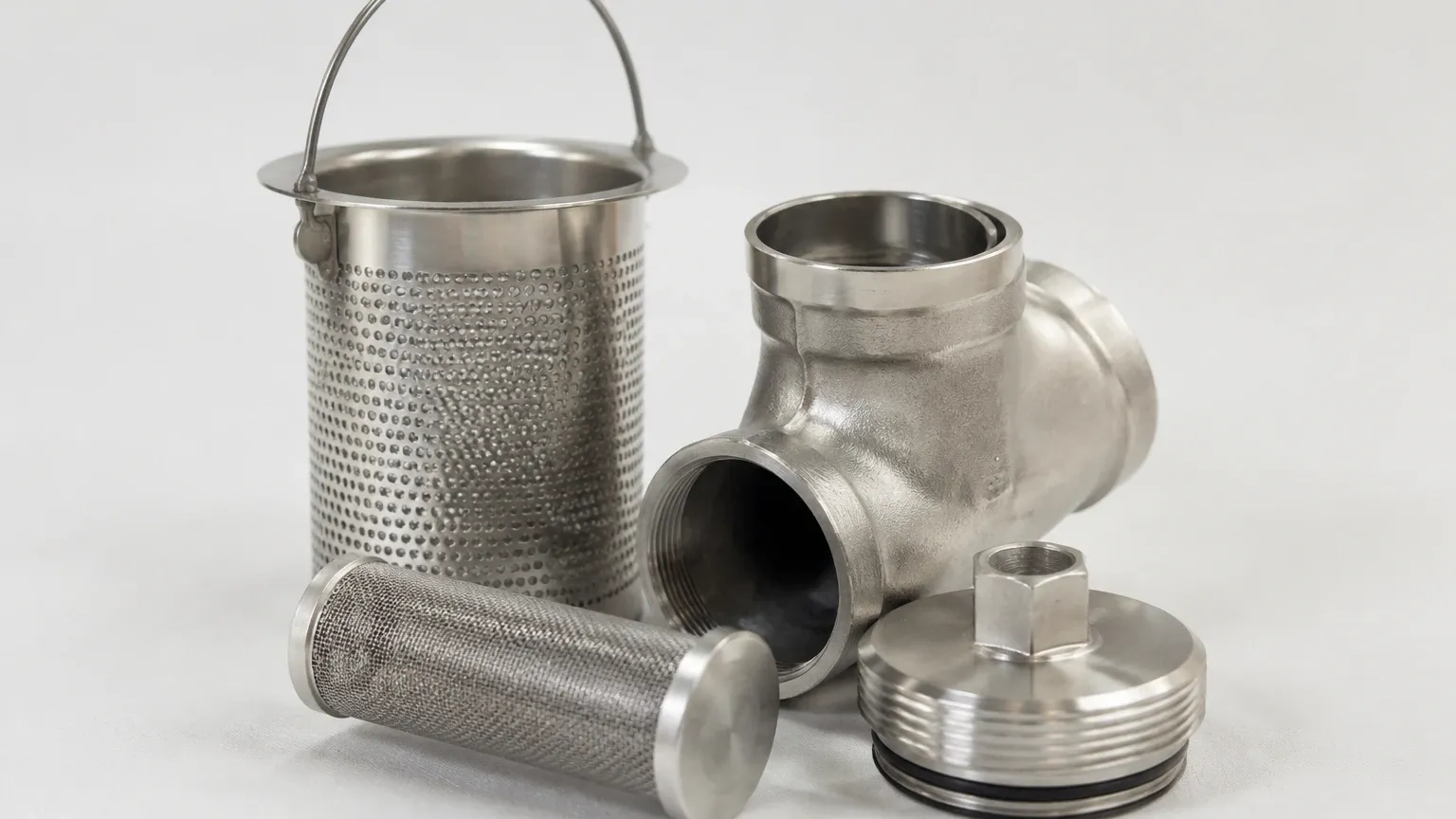
A strainer kit is more than just a mesh screen; it is a comprehensive set of components required to integrate a filtration point into a piping system. Typically, these kits include the strainer housing (or the basket itself), replacement seals, gaskets, and occasionally specialized hardware for installation. The primary function is the mechanical removal of solids via a perforated metal or wire mesh interface.
In sectors such as chemical processing and water treatment, the strainer kit acts as the first line of defense. By capturing macro-particulates, it prevents the erosion of pump impellers and the clogging of spray nozzles. The choice of a kit depends heavily on the nature of the fluid—its viscosity, temperature, and the specific gravity of the contaminants being targeted. Engineers must evaluate whether a temporary start-up strainer or a permanent high-capacity basket strainer is required for the application.
Key Components of a Comprehensive Strainer Kit
When sourcing a strainer kit for industrial use, the assembly usually consists of several critical parts that must work in unison to ensure a leak-proof and efficient filtration process:
1. The Filter Element (Basket or Screen): This is the core of the kit. It can be constructed from perforated metal, single-layer wire mesh, or multi-layer sintered mesh depending on the required filtration fineness.
2. Seals and Gaskets: High-performance O-rings or flat gaskets are essential for maintaining a seal between the strainer body and the cover. Common materials include Viton, EPDM, or PTFE, selected based on chemical resistance and thermal stability.
3. Support Structures: For high-pressure applications, the mesh element may require a backup tube or a reinforced frame to prevent collapsing under differential pressure.
4. Cover and Closure Hardware: In many kits, specialized bolts or quick-release clamps are included to facilitate rapid maintenance and cleaning cycles.
By providing these components as a unified kit, manufacturers ensure that all parts are dimensionally compatible, reducing the risk of bypass—a common failure mode where fluid leaks around the filter element rather than passing through it.
Material Engineering: Why Stainless Steel Dominates Industrial Strainers & Baskets
The material of construction is perhaps the most significant factor in the performance of a strainer kit. Stainless steel is the industry standard due to its exceptional mechanical strength and resistance to corrosion. At Kaifil, the focus is on utilizing grades that withstand the rigors of industrial processing.
304 Stainless Steel
This is the most common grade used in general industrial applications. It offers good corrosion resistance to most oxidizing acids and is highly durable. It is suitable for water treatment, food and beverage, and standard hydraulic applications where extreme chemical exposure is not a primary concern.
316 and 316L Stainless Steel
For more aggressive environments, such as pharmaceutical manufacturing or chemical processing, 316 stainless steel is preferred. The addition of molybdenum enhances resistance to pitting and crevice corrosion, particularly in chloride-rich environments. The "L" (low carbon) variant is often specified for components that require welding, as it prevents carbide precipitation that can lead to intergranular corrosion.
Specialized Alloys
In extreme cases involving high temperatures or highly acidic fluids, exotic alloys like Monel or Hastelloy may be integrated into the strainer kit. However, for the majority of industrial filtration needs, precision-manufactured stainless steel provides the best balance of performance and cost-effectiveness.
Technical Specifications: Micron Ratings and Open Area Ratios
Selecting the correct strainer kit requires a deep dive into the technical specifications of the mesh or perforation. Two primary metrics define the efficiency of the filter element: the micron rating and the open area ratio.
Micron Rating and Mesh Count
The micron rating indicates the size of the smallest particle the strainer is designed to trap. In industrial Strainers & Baskets, this can range from coarse 1/4-inch perforations for large debris to fine 5-micron wire mesh for precision fluid polishing. It is important to note that a finer mesh increases the frequency of cleaning and creates a higher pressure drop across the system.
Open Area Ratio (OAR)
The OAR is the relationship between the total area of the holes in the mesh and the total area of the screen. A higher OAR results in a lower initial pressure drop and a longer service life before the strainer becomes clogged. Engineering standards often recommend an OAR of at least 6:1 relative to the cross-sectional area of the inlet pipe to ensure the system does not experience excessive flow restriction.
Customization and OEM Solutions for Specific Industrial Needs
Standard strainer kits often fail to meet the unique geometric or performance requirements of specialized machinery. This is where custom manufacturing becomes essential. OEM (Original Equipment Manufacturer) solutions allow for the development of filtration components that fit perfectly within existing footprints or meet non-standard filtration targets.
Customization options include:
* Variable Dimensions: Adjusting the height, diameter, and flange types of the basket to fit proprietary housing designs.
* Reinforced Construction: Adding internal ribs or external cages to the strainer kit to handle high-viscosity fluids or high-velocity flows.
* Multi-Stage Filtration: Designing baskets with multiple layers of different mesh sizes to provide graduated filtration, capturing large debris in the outer layer and fine particles in the inner layer.
By working with a manufacturer that understands these engineering constraints, purchasing teams can procure kits that are optimized for the specific fluid dynamics of their facility.
Installation, Maintenance, and Operational Best Practices
The performance of a strainer kit is heavily dependent on proper installation and a disciplined maintenance schedule. Even the highest quality stainless steel filter can fail if it is not managed correctly.
Installation Considerations
When installing a new kit, it is vital to ensure that the flow direction matches the orientation of the basket. Most industrial strainers are designed for "outside-in" or "inside-out" flow. Reversing this can lead to the structural failure of the mesh. Additionally, ensuring that gaskets are seated perfectly is necessary to prevent bypass and external leaks.
Monitoring Differential Pressure
The most effective way to determine when a strainer kit needs cleaning is by monitoring the differential pressure (ΔP) across the unit. As the basket collects debris, the pressure at the outlet drops relative to the inlet. Most systems are designed to trigger a maintenance alert when the ΔP reaches a pre-defined limit (often 5-10 psi). Operating beyond this point can cause the mesh to deform or rupture.
Cleaning and Replacement Cycles
Stainless steel baskets are generally cleanable and reusable. Methods such as backwashing, ultrasonic cleaning, or manual pressure washing are common. However, every cleaning cycle subjects the mesh to mechanical stress. It is a best practice for facilities to keep a spare strainer kit on-site to allow for immediate replacement during cleaning, thereby eliminating system downtime.
Evaluating the Total Cost of Ownership (TCO)
When evaluating the cost of a strainer kit, procurement professionals should look beyond the initial purchase price. The Total Cost of Ownership (TCO) includes maintenance labor, the cost of replacement parts, and the potential cost of downstream equipment damage if the strainer fails.
Investing in a high-quality stainless steel kit may have a higher upfront cost but often results in a lower TCO due to:
* Longevity: Stainless steel resists corrosion and mechanical wear far better than plastic or lower-grade metal alternatives.
* Reduced Downtime: Precision-engineered kits with high OARs require less frequent cleaning.
* Equipment Protection: A reliable strainer prevents catastrophic failures in expensive pumps and valves, which can cost tens of thousands of dollars to repair or replace.
Conclusion: Selecting the Right Solution
Choosing the appropriate strainer kit is a technical decision that impacts the entire fluid handling system. By focusing on material quality, precise micron ratings, and the specific needs of the application, engineers can ensure reliable and efficient filtration. Whether for chemical processing, pharmaceutical production, or hydraulic systems, the right combination of Strainers & Baskets provides the necessary protection to keep industrial operations running smoothly.
For those seeking specialized designs or high-volume OEM production, partnering with a manufacturer like Kaifil ensures access to the technical expertise required to develop durable and effective filtration components. From initial material selection to the final production of a custom strainer kit, every step should be guided by the goal of achieving optimal filtration performance and long-term reliability.
