


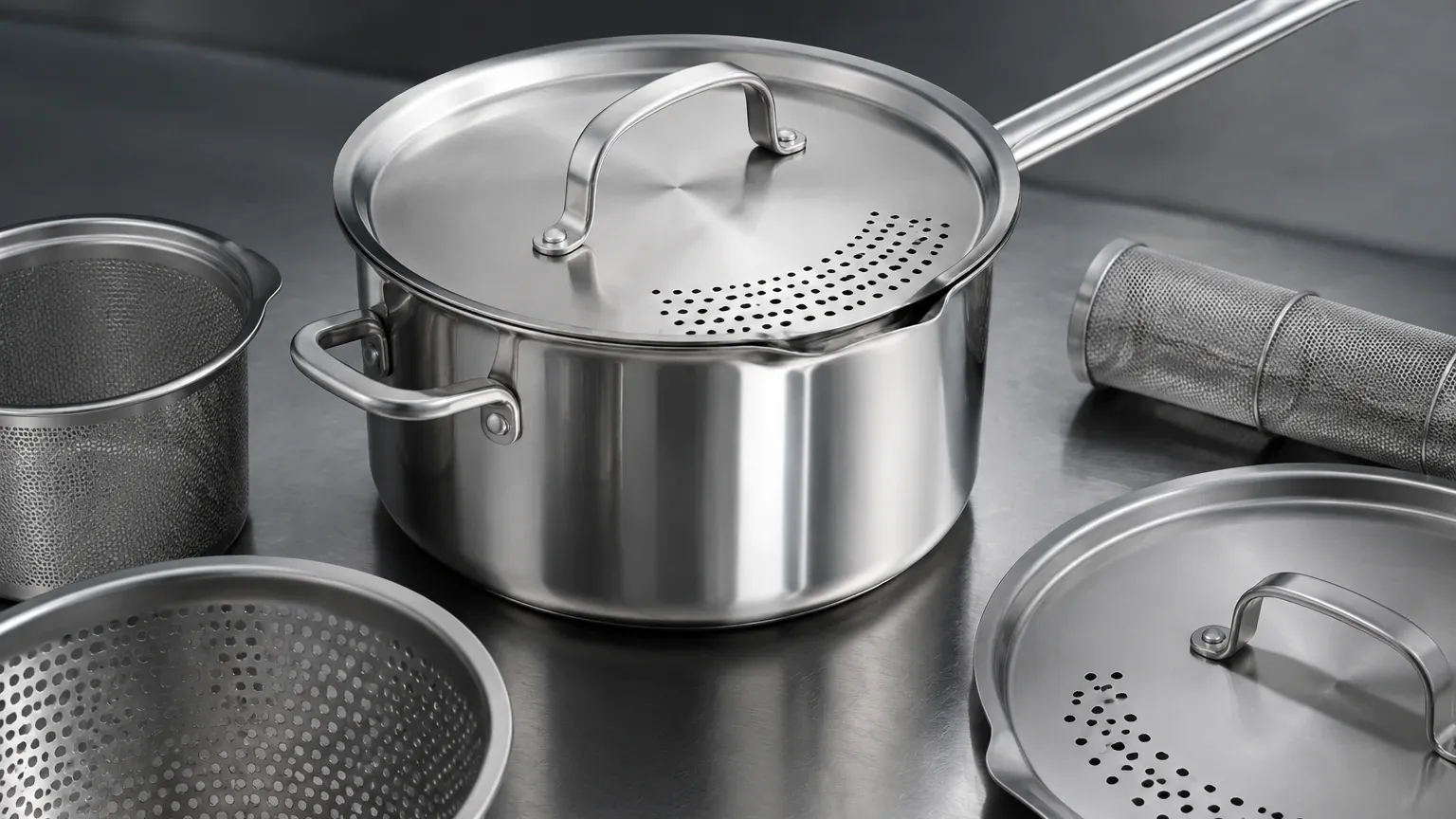
Strainer Lid Pot
In industrial fluid handling and processing systems, the term "strainer lid pot" typically refers to the assembly of a basket strainer housing and its corresponding closure mechanism. These components are critical for protecting downstream equipment—such as pumps, valves, and flow meters—from damage caused by particulate matter. Unlike simple inline filters, a pot-style strainer is designed for high-capacity debris retention and ease of maintenance, making it a staple in chemical processing, water treatment, and food production.
Selecting the right configuration for Strainers & Baskets requires a deep understanding of pressure vessel engineering, material compatibility, and the specific dynamics of the fluid being processed. This guide examines the technical nuances of strainer pot design, focusing on how the lid assembly and housing structure impact operational efficiency and safety.
Understanding the Role of Strainer Pots in Industrial Filtration
An industrial strainer pot serves as a specialized housing that directs fluid through a perforated or wire mesh basket. The "pot" refers to the main body of the strainer, which is often larger in diameter than the pipeline itself to allow for a significant reduction in fluid velocity. This reduction in velocity is essential; it permits heavier solids to settle and ensures that the pressure drop across the internal basket remains within acceptable limits.
From an engineering perspective, the strainer pot is more than just a container. It is a pressure-rated vessel that must withstand the mechanical stresses of the piping system while providing a secure environment for the filtration media. The design of the pot determines the "open area ratio," which is the relationship between the total area of the basket openings and the cross-sectional area of the inlet pipe. A high-quality strainer lid pot assembly typically aims for an open area ratio of at least 6:1 to 8:1, ensuring that the system can operate for extended periods before requiring a cleaning cycle.
Engineering Considerations for Strainer Lid Design
The lid, or cover, of the strainer pot is the primary interface for maintenance. Its design directly influences the "downtime" associated with cleaning the internal basket. In industrial applications, several lid configurations are commonly utilized, each offering different balances of safety, speed, and pressure handling.
Bolted Covers
For high-pressure applications or systems handling hazardous chemicals, bolted lids are the standard. These covers are secured with a series of studs and nuts, providing a uniform seal across the gasket surface. While they require more time to open, they offer the highest level of structural integrity and are less prone to accidental opening under pressure.
Quick-Opening Covers
In processes where the particulate load is high and frequent cleaning is necessary, quick-opening lids—such as swing-bolt or clamp-style covers—are preferred. These designs allow operators to access the internal basket without specialized tools. However, engineering teams must ensure these lids include safety interlocks or vent valves to prevent the cover from being opened while the pot is still pressurized.
Sealing Mechanisms
The integrity of the strainer lid pot depends heavily on the sealing interface. Common sealing materials include EPDM, Viton (FKM), PTFE, and Buna-N. The choice of elastomer depends on the chemical composition of the fluid and the operating temperature. For example, in steam or high-temperature oil applications, metallic gaskets or specialized high-temp O-rings are required to prevent bypass and external leaks.
Material Selection and Chemical Compatibility
The durability of a strainer pot is dictated by the materials used in its construction. Stainless steel is the industry standard due to its corrosion resistance and mechanical strength.
1. SS304 Stainless Steel: Suitable for general industrial use, water treatment, and less corrosive chemical environments. It provides excellent structural support and is cost-effective for standard applications.
2. SS316/316L Stainless Steel: The preferred choice for marine environments, pharmaceutical production, and aggressive chemical processing. The addition of molybdenum enhances resistance to pitting and crevice corrosion, particularly in chloride-rich environments.
3. Specialty Alloys: For highly specialized applications involving concentrated acids or extreme temperatures, alloys like Hastelloy or Monel may be used for the internal baskets and lid hardware.
When specifying a strainer lid pot, engineers must also consider the finish of the internal surfaces. In the food and beverage industry, for instance, a polished internal surface (often measured in Ra) is required to prevent bacterial growth and ensure the system meets sanitary standards.
Performance Parameters: Flow Rate and Pressure Drop
The primary technical challenge in implementing Strainers & Baskets is managing the pressure drop ($ΔP$). Every strainer introduces some resistance to the flow. If the strainer lid pot is undersized, the velocity of the fluid increases, leading to a higher pressure drop and potential cavitation in downstream pumps.
Calculating Clean Pressure Drop
Manufacturers provide flow coefficient ($Cv$) values for their strainer housings. The $Cv$ represents the flow of water in gallons per minute (GPM) that will result in a 1 psi pressure drop. Engineers use this value, along with the fluid's specific gravity and viscosity, to calculate the initial pressure drop.
The Impact of Viscosity
Viscosity is a critical factor often overlooked during the procurement of a strainer lid pot. High-viscosity fluids (like resins, syrups, or heavy oils) require larger housings and coarser mesh to maintain flow. If the fluid is highly viscous, the effective open area of the basket is reduced, necessitating a larger pot diameter to compensate for the increased resistance.
Maintenance Protocols and Operational Safety
A strainer lid pot is only effective if it is maintained correctly. Because these units are designed to collect debris, they will eventually clog. Monitoring this process is essential for system health.
* Differential Pressure Monitoring: Installing pressure gauges on the inlet and outlet of the strainer pot allows operators to monitor the $ΔP$. A common rule of thumb is to clean the basket when the pressure drop reaches 5-10 psi above the clean reading.
* Venting and Draining: Before the lid is removed, the pot must be isolated from the flow, vented to atmospheric pressure, and drained. Quality strainer pots include dedicated vent and drain ports to facilitate this process safely.
* Basket Inspection: During maintenance, the basket should be inspected not just for debris, but for signs of mechanical fatigue or "blinded" mesh (where particles are permanently wedged in the openings). A damaged basket can allow bypass, defeating the purpose of the strainer.
Customization Options for Specific Industrial Applications
Standard off-the-shelf strainer pots may not meet the requirements of complex industrial systems. Customization is often necessary to ensure the filtration solution fits the spatial and functional constraints of the plant.
Connection Types
Depending on the piping standards, a strainer lid pot can be configured with flanged (ANSI, DIN, JIS), NPT threaded, or socket-weld connections. Flanged connections are typically preferred for larger diameters (2" and above) as they provide a more robust seal and easier installation.
Steam Jacketing
For fluids that solidify at room temperature (such as chocolate, bitumen, or certain waxes), the strainer pot can be equipped with a steam jacket. This ensures the fluid remains at a constant temperature, preventing the strainer from becoming a bottleneck due to fluid solidification.
Magnetic Inserts
In metalworking or hydraulic applications, magnetic rods can be suspended from the strainer lid into the center of the basket. These magnets capture fine ferrous particles that might otherwise pass through the mesh, providing an extra layer of protection for precision components.
Conclusion: Selecting the Right Solution
Selecting a strainer lid pot is an engineering decision that impacts the long-term reliability of an entire industrial process. By focusing on the structural integrity of the housing, the efficiency of the lid closure mechanism, and the precision of the internal basket, facilities can significantly reduce maintenance costs and prevent catastrophic equipment failure.
When evaluating options for Strainers & Baskets, it is essential to work with a manufacturer that understands the nuances of material science and fluid dynamics. Proper sizing, material selection, and a clear understanding of the operational environment are the foundations of effective industrial filtration. Whether the application requires a standard water strainer or a custom-engineered vessel for corrosive chemicals, the focus must remain on technical performance and safety.
