


Strainer Lid
In industrial filtration systems, the strainer lid serves as the primary interface between the internal filtration media and the external environment. While the internal basket or mesh performs the actual separation of solids from liquids, the lid—often referred to as the cover or closure—is critical for maintaining pressure integrity, ensuring operator safety, and facilitating efficient maintenance cycles. For engineers and procurement specialists, selecting the appropriate strainer lid design is as vital as specifying the filtration micron rating, as it directly impacts the total cost of ownership and operational downtime.
As a core component of Strainers & Baskets, the lid must withstand the maximum operating pressure of the system while providing a leak-proof seal. This article examines the engineering considerations, material selections, and closure mechanisms that define high-performance industrial strainer lids.
The Role of the Lid in Pressure Vessel Integrity
Industrial strainers are essentially pressure vessels. The strainer lid must be engineered to meet specific pressure and temperature ratings, often governed by standards such as ASME Section VIII. The lid's thickness, bolting pattern, and sealing surface are calculated based on the internal force exerted by the process fluid.
When a strainer is in operation, the lid is under constant stress. If the lid is improperly designed or if the closure mechanism is compromised, it can lead to catastrophic failure, fluid bypass, or hazardous leaks. In high-pressure applications, the lid often incorporates reinforced ribs or a domed structure to distribute stress more evenly across the metal surface, preventing deformation over time.
Types of Strainer Lid Closure Mechanisms
The method by which a strainer lid is secured to the body determines how quickly a technician can access the internal basket for cleaning. In B2B industrial environments, where every minute of downtime translates to lost production, the choice of closure mechanism is a strategic decision.
Bolted Covers
Bolted lids are the industry standard for high-pressure or high-temperature applications. They utilize a series of studs and nuts to compress a gasket between the lid and the strainer body. While they offer the highest level of security and pressure containment, they are the most time-consuming to open, requiring manual or pneumatic tools. These are typically found on simplex and duplex strainers where cleaning cycles are infrequent.
Swing Bolt Closures
Swing bolts provide a balance between the security of a bolted cover and the speed of a quick-opening design. The bolts are permanently attached to the strainer body via a pivot pin. To open the lid, the nuts are loosened (but not removed), and the bolts are swung out of the way. This prevents the loss of hardware and significantly reduces the time required for basket inspection.
Quick-Opening Clamp Covers
For low-to-medium pressure applications where frequent cleaning is required—such as in food processing or cooling water systems—clamp-style lids are preferred. These utilize a heavy-duty V-retainer or a toggle clamp mechanism. They can often be operated without tools, making them ideal for systems that require daily or shift-based maintenance.
Threaded Lids
Commonly found on smaller, compact strainers, threaded lids screw directly into the strainer body. While simple, they are prone to galling if made from similar grades of stainless steel and may require specialized wrenches to break the seal after long periods of operation.
Material Selection and Chemical Compatibility
The material of the strainer lid must match or exceed the specifications of the strainer body to prevent galvanic corrosion and ensure chemical compatibility with the process fluid. Kaifil specializes in stainless steel solutions, which are the preferred choice for demanding industrial environments.
1. Stainless Steel 304: Suitable for general industrial use, water treatment, and mildly corrosive environments. It offers excellent structural integrity and cost-effectiveness.
2. Stainless Steel 316/316L: The standard for chemical processing, pharmaceutical, and marine applications. The addition of molybdenum provides superior resistance to chlorides and acetic acids.
3. Specialty Alloys: For highly aggressive fluids, lids may be manufactured from Duplex stainless steel or Hastelloy, depending on the specific pH levels and temperature profiles of the application.
Beyond the metal, the sealing element (the gasket or O-ring) is the most frequent point of failure. Engineers must confirm that the seal material—whether EPDM, Viton (FKM), PTFE, or Buna-N—can withstand the chemical composition and thermal expansion of the process.
Engineering Considerations for Heavy Lids
In large-scale industrial filtration, a strainer lid can weigh hundreds of pounds. Manually lifting such a component poses significant safety risks to operators and increases the likelihood of damage to the sealing surfaces. To address this, several engineering enhancements are commonly integrated into the lid design:
* Davit Arms: A mechanical pivot assembly that allows the lid to be lifted and swung to the side without the need for external cranes or hoists.
* Hinge Assists: Spring-loaded hinges that offset the weight of the lid, allowing a single operator to open it with minimal physical effort.
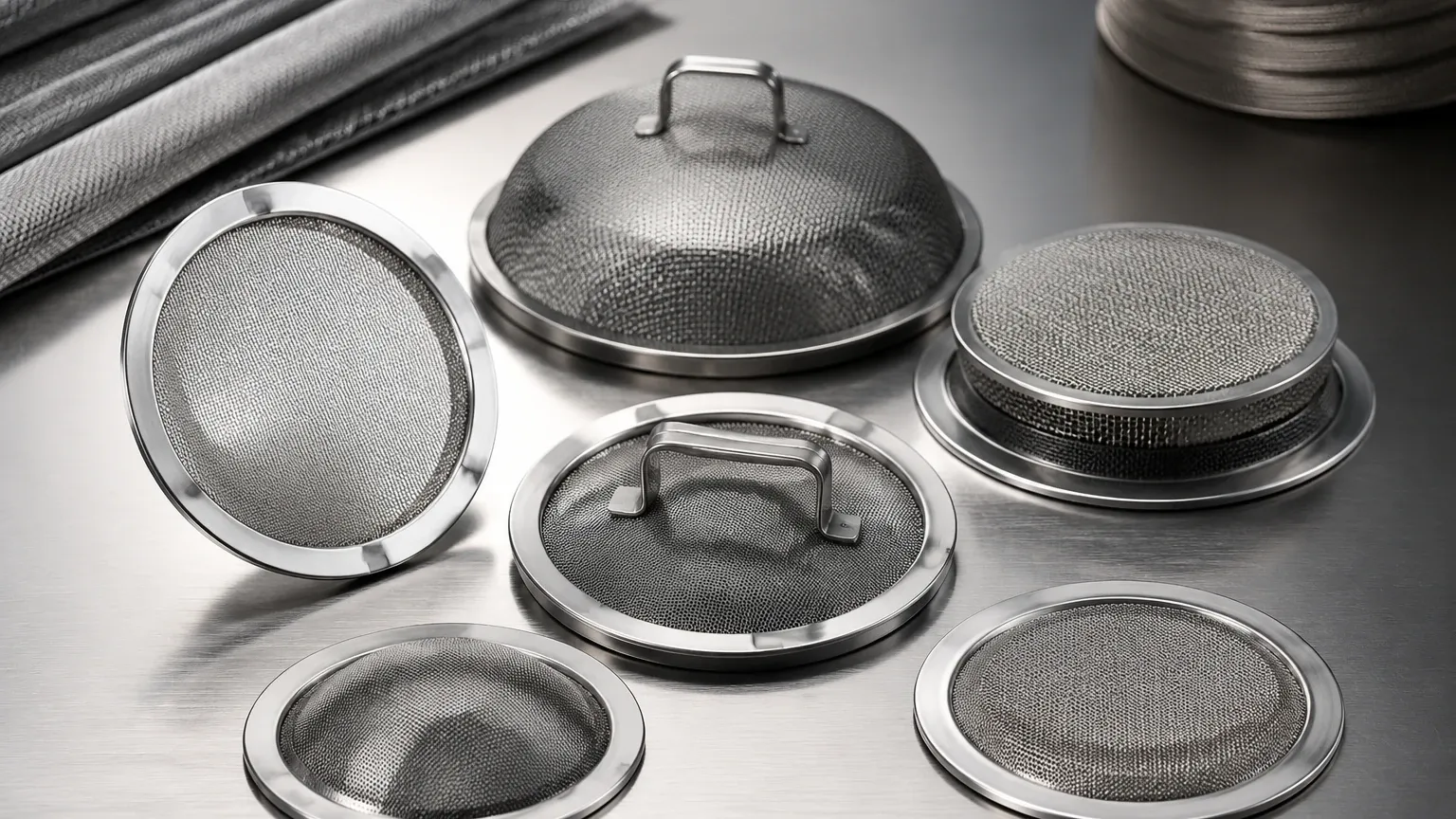
* Handle Integration: Ergonomically placed handles ensure that the lid can be maneuvered safely once the fasteners are released.
Safety Features and Venting
A critical, yet often overlooked, aspect of the strainer lid is the inclusion of safety venting. Before a lid is opened, the internal pressure of the strainer must be completely relieved. Many high-quality lids feature a 1/4" or 1/2" NPT vent port. This allows operators to install a vent valve or a pressure gauge directly onto the lid.
Some advanced designs include a safety interlock. This mechanism prevents the closure from being loosened until the vent valve has been opened, ensuring that the operator is not exposed to a sudden release of pressurized fluid or steam. When specifying Strainers & Baskets, confirming the presence of these safety ports is a standard requirement for EHS (Environmental Health and Safety) compliance.
Maintenance and Troubleshooting
The strainer lid is a wear component. Over time, the repeated cycles of opening and closing can lead to several common issues that engineers should monitor:
* Sealing Surface Erosion: If the lid is not tightened evenly, "wire-drawing" or erosion can occur on the metal seating surface as fluid bypasses the gasket at high velocity. This requires machining the lid or body to restore a flat profile.
* Thread Wear: On swing bolts and threaded covers, lack of lubrication can lead to stripped threads. Using anti-seize compounds compatible with the process (e.g., food-grade anti-seize) is essential.
* O-Ring Compression Set: Over time, elastomeric seals lose their elasticity and fail to "spring back," leading to leaks. O-rings should be replaced every time the lid is opened for a major cleaning cycle.
Customization Options for OEM Applications
For original equipment manufacturers (OEMs) building specialized machinery, a standard off-the-shelf strainer lid may not suffice. Customization allows for the integration of the strainer directly into the machine's footprint. Custom options include:
* Low-Profile Designs: For applications with restricted overhead clearance.
* Integrated Sensors: Lids pre-drilled and tapped for differential pressure transmitters that alert operators when the internal basket is clogged.
* Surface Finishes: For the pharmaceutical and food industries, lids may require electropolishing to achieve a specific Ra (Roughness Average) value, preventing bacterial growth and ensuring CIP (Clean-in-Place) efficiency.
Conclusion: Selecting the Right Lid for Your System
Choosing the correct strainer lid is a technical decision that impacts safety, maintenance speed, and system reliability. By understanding the trade-offs between bolted, swing-bolt, and quick-opening designs, and by ensuring material compatibility for both the metal and the seals, engineers can optimize their filtration processes.
When evaluating Strainers & Baskets, it is essential to confirm the maximum operating parameters, the required cleaning frequency, and the available space for lid removal. A well-engineered lid ensures that the filtration system remains a reliable asset rather than a maintenance bottleneck.
