


Strainer Litter Box
In the landscape of industrial fluid handling and waste management, the efficiency of a filtration system is often determined by its ability to manage high-volume particulate matter. While the term "strainer litter box" may occasionally be associated with consumer applications, in a B2B and industrial engineering context, it refers to specialized high-capacity Strainers & Baskets designed to capture and contain significant amounts of debris, or "litter," from process streams. These components are critical for protecting downstream equipment, ensuring product purity, and managing industrial waste in sectors ranging from food processing to chemical manufacturing.
Industrial strainer boxes are engineered to provide a primary stage of separation. Unlike fine polishing filters, a strainer litter box is built for durability and high dirt-holding capacity. Engineering these systems requires a deep understanding of fluid dynamics, material science, and the specific characteristics of the solids being removed. This article explores the technical considerations, design parameters, and material requirements for industrial strainer and basket systems used in demanding debris-removal applications.
Engineering Principles of Industrial Strainer Baskets
The primary function of an industrial strainer is the mechanical removal of solids from a liquid or gas stream. This is achieved by passing the fluid through a mesh or perforated screen. The design of these baskets is governed by several key engineering factors that determine their performance and longevity.
Open Area Ratio and Flow Velocity
One of the most critical metrics in strainer design is the open area ratio. This is the ratio of the total area of the holes in the mesh or perforated plate to the area of the inlet pipe. A well-engineered strainer litter box typically maintains an open area ratio of at least 6:1. This high ratio ensures that the pressure drop ($ΔP$) across the strainer remains low, even as the basket begins to fill with debris. If the velocity through the mesh is too high, it can lead to impingement erosion or force deformable particles through the filter media, compromising filtration integrity.
Micron Rating and Mesh Selection
The selection of the mesh or perforation size depends on the nature of the "litter" being strained. For coarse debris, perforated metals with hole diameters ranging from 1/16" to 1/2" are common. For finer particulate management, stainless steel wire mesh is layered over a perforated support basket. Engineers must balance the need for fine filtration with the risk of rapid blinding (clogging). In many industrial settings, a multi-stage approach is used, where a coarse strainer box captures large debris before the fluid reaches finer secondary filters.
Understanding the Strainer Litter Box in Industrial Contexts
In industrial waste management and municipal processing, the term "strainer litter box" describes a robust containment unit integrated into a piping system or a gravity-fed channel. These units are designed to handle the "litter"—the miscellaneous solids, fibers, and large particulates—that can accumulate in industrial runoff or process bypass lines.
Solids Loading and Capacity
Unlike standard inline Y-strainers, which are designed for systems with low concentrations of solids, a strainer box or basket is intended for high solids loading. The geometry of the basket is optimized to allow debris to settle at the bottom while fluid continues to flow through the sides. This design prevents the immediate blockage of the flow path, allowing the system to operate for longer periods between cleaning cycles.
Structural Integrity under Pressure
Industrial strainer boxes must withstand significant mechanical stress. As debris accumulates, the differential pressure across the basket increases. If the basket is not properly reinforced, this pressure can cause the mesh to collapse or the frame to deform. High-quality industrial baskets utilize heavy-duty top rings, longitudinal reinforcements, and reinforced bottoms to ensure they can be safely extracted and cleaned even when fully loaded with heavy waste.
Design Considerations for Custom Strainer Boxes
Every industrial application presents unique challenges, making customization a necessity for optimal performance. When specifying a strainer litter box for a specific process, engineers must consider the following design elements:
Connection Types and Housing Integration
Strainer baskets are housed within vessels that must be seamlessly integrated into existing piping. Common connection types include flanged (ANSI, DIN, or JIS), NPT threaded, or socket weld. For systems requiring continuous operation, a duplex strainer configuration is often employed. This allows one strainer box to be cleaned while the other remains in service, preventing costly system downtime.
Ease of Maintenance and Cleaning
The "litter" captured by these strainers must be removed regularly. Design features such as quick-opening covers (swing bolts or cam-locks) and ergonomic handle designs on the baskets are essential for operational efficiency. In applications involving hazardous chemicals or high temperatures, the design must also prioritize operator safety during the extraction of the strainer basket.
Custom Mesh and Perforation Patterns
Standard circular perforations are not always the most efficient. Depending on the shape of the debris (e.g., fibrous materials vs. spherical pellets), engineers may specify slotted perforations or wedge wire screens. Wedge wire is particularly effective in a strainer litter box application because its V-shaped profile reduces the risk of "pegging" (particles getting stuck in the openings) and facilitates easier backwashing or manual cleaning.
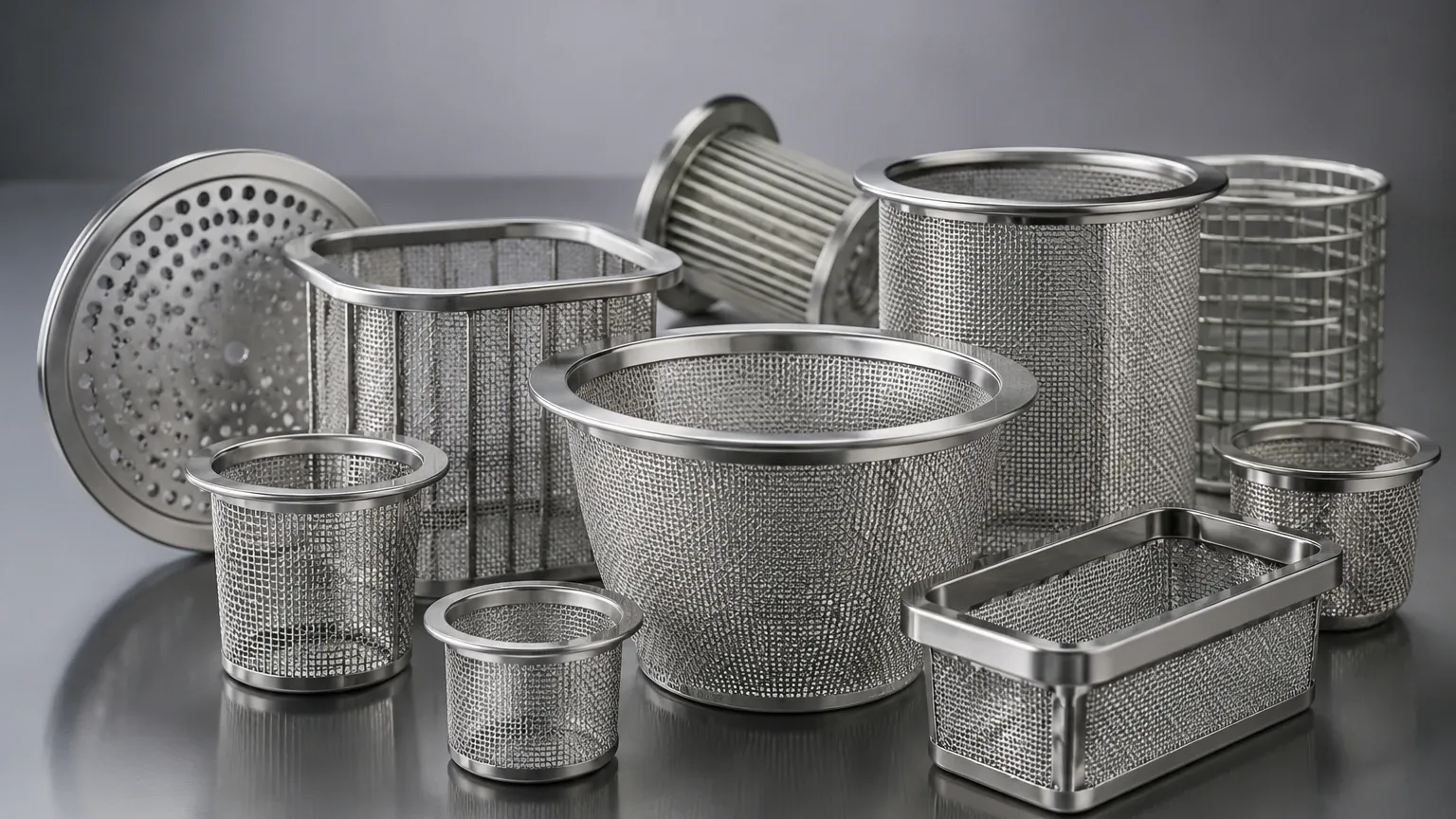
Material Selection: The Importance of Stainless Steel
The environment in which a strainer litter box operates is often corrosive or abrasive. Consequently, material selection is paramount to the component's lifecycle and the total cost of ownership.
Grade 304 and 316L Stainless Steel
Stainless steel is the industry standard for high-performance Strainers & Baskets. Grade 304 provides excellent durability and corrosion resistance for general industrial and food-grade applications. For more aggressive environments, such as chemical processing or marine applications, Grade 316L is preferred due to its increased molybdenum content, which enhances resistance to pitting and crevice corrosion in chloride-rich environments.
Specialty Alloys for Extreme Conditions
In cases involving extreme temperatures or highly acidic/alkaline fluids, specialty alloys like Monel, Hastelloy, or Duplex Stainless Steel may be required. These materials ensure that the strainer box does not become a point of failure in the system, maintaining structural integrity where standard materials would succumb to chemical attack or thermal fatigue.
Surface Treatments and Finishes
Beyond the base metal, surface finishes play a role in performance. Electropolishing can be applied to stainless steel baskets to create a smooth, mirror-like finish. This reduces the adhesion of sticky debris, making the cleaning process faster and more effective. For food and pharmaceutical applications, ensuring a specific Ra (Roughness Average) value is mandatory to prevent bacterial growth and ensure compliance with sanitary standards.
Maintenance and Operational Efficiency
A well-maintained strainer system is essential for preventing equipment damage and maintaining flow rates. Implementing a structured maintenance schedule for your strainer litter box components can significantly reduce long-term costs.
Monitoring Differential Pressure
The most effective way to determine when a strainer basket needs cleaning is by monitoring the differential pressure ($ΔP$). Installing pressure gauges upstream and downstream of the strainer housing allows operators to see the exact moment the "litter" accumulation begins to impede flow. Many modern systems utilize DP sensors that trigger an alarm or automate a bypass valve when a pre-set threshold is reached.
Replacement Cycles and Spare Parts
While stainless steel baskets are designed for long-term use, the mesh inserts are sacrificial components that will eventually wear out due to abrasion or repeated cleaning. Maintaining an inventory of replacement baskets and gaskets is a best practice for industrial facilities. Understanding the expected replacement cycle based on the abrasiveness of the process fluid helps in budgeting and preventing emergency shutdowns.
Total Cost of Ownership (TCO)
When evaluating strainer options, purchasing teams should look beyond the initial acquisition cost. The TCO includes the cost of downtime for cleaning, the cost of replacement parts, and the energy costs associated with pumping fluids through a high-resistance (clogged) strainer. Investing in a high-quality, custom-engineered strainer box with a larger surface area often results in a lower TCO over the life of the equipment.
Selecting the Right Strainer for Your Application
Choosing the correct strainer litter box or basket assembly requires a comprehensive analysis of the application's technical requirements. Engineers should be prepared to provide the following information to manufacturers:
1. Fluid Characteristics: Viscosity, density, and chemical compatibility.
2. Flow Parameters: Minimum, normal, and maximum flow rates, as well as operating pressure and temperature.
3. Particulate Profile: The size, shape, and concentration of the debris to be removed.
4. Filtration Goal: The required micron rating or maximum allowable particle size in the effluent.
5. Space Constraints: The physical footprint available for the strainer housing.
By focusing on these factual engineering requirements, procurement teams can ensure they receive a filtration solution that is fit for purpose. Whether the application involves protecting a high-pressure pump from gravel in a water treatment plant or removing vegetable skins in a food processing line, the right strainer basket is a fundamental component of a reliable system.
For organizations looking to optimize their filtration processes, exploring specialized Strainers & Baskets is the first step toward achieving higher efficiency and better equipment protection. Custom-manufactured solutions offer the precision and durability required to handle the most challenging industrial "litter" management tasks, ensuring that your operations remain fluid and uninterrupted.
