


Strainer Replacement
In industrial fluid handling systems, the integrity of filtration components is paramount to protecting downstream equipment such as pumps, valves, and precision nozzles. Industrial strainers and baskets serve as the primary line of defense against particulate contamination. However, these components are subject to mechanical stress, chemical corrosion, and physical wear over time. Timely strainer replacement is not merely a maintenance task; it is a critical engineering intervention designed to prevent system-wide failures and optimize operational efficiency.
For engineers and procurement teams, understanding when and how to execute a replacement requires a technical evaluation of the current filtration performance versus the original design specifications. This guide examines the technical indicators for replacement, material selection criteria, and the engineering considerations necessary to ensure that new Strainers & Baskets meet the rigorous demands of modern industrial applications.
Technical Indicators for Strainer Replacement
Identifying the precise moment for a strainer replacement involves monitoring several key performance metrics and physical conditions. Relying solely on a fixed calendar schedule often leads to either premature replacement or, more dangerously, operating with a compromised filter.
1. Irreversible Pressure Drop (Delta P)
Every strainer assembly has a clean pressure drop rating. As the mesh or perforated surface captures debris, the differential pressure increases. While standard cleaning cycles can restore performance, over time, fine particulates can become deeply embedded in the wire mesh—a phenomenon known as blinding. When the "clean" pressure drop after a maintenance cycle remains significantly higher than the original baseline, the effective open area of the strainer has been permanently reduced, signaling the need for replacement.
2. Structural Deformation and Fatigue
Industrial strainers are often subjected to high-pressure environments and hydraulic shocks. Repeated pressure cycles can lead to metal fatigue, resulting in the buckling or collapsing of the basket. A deformed basket may not seat correctly within the housing, allowing fluid to bypass the filtration media entirely. Any sign of structural warping or broken welds is a definitive indicator that the component's structural integrity is compromised.
3. Mesh Erosion and Pitting
In applications involving abrasive slurries or corrosive chemicals, the wire mesh or perforated plate will eventually thin. Erosion can enlarge the mesh openings, allowing larger particles to pass through and damage sensitive downstream equipment. Similarly, localized pitting corrosion—common in stainless steel exposed to high-chloride environments—can create microscopic holes that bypass the intended filtration rating.
Engineering Considerations for Selecting Replacement Components
When sourcing a replacement, it is rarely sufficient to simply match the dimensions of the previous unit. Engineering teams should take the opportunity to evaluate if the current process conditions have changed since the original installation.
Material Compatibility
Stainless steel is the industry standard for durability and hygiene, but the specific grade must be matched to the medium.
- Type 304 Stainless Steel: Suitable for general-purpose applications, water treatment, and food processing where moderate corrosion resistance is required.
- Type 316/316L Stainless Steel: Essential for chemical processing, pharmaceutical applications, and marine environments due to its superior resistance to pitting and acetic acid.
- Specialty Alloys: For extreme temperatures or highly aggressive acids, alloys like Monel or Hastelloy may be required to extend the service life between replacements.
Filtration Accuracy and Mesh Selection
The micron rating of the replacement strainer must balance the need for particle retention with the requirement for flow volume. A mesh that is too fine will clog rapidly, leading to frequent downtime, while a mesh that is too coarse will fail to protect downstream assets. Engineers must specify the wire diameter and the weave type (e.g., plain weave, twilled weave, or Dutch weave) to ensure the replacement provides the necessary mechanical strength and filtration precision.
The Role of Open Area Ratio in Performance
A critical factor in strainer replacement is the Open Area Ratio (OAR). The OAR is the relationship between the total area of the openings in the mesh or perforated metal and the cross-sectional area of the inlet pipe.
Ideally, a basket strainer should have an OAR of at least 6:1. A high OAR ensures that the strainer can accumulate a significant amount of debris before the pressure drop becomes critical. When selecting a replacement, increasing the OAR by using a pleated mesh design or a larger basket (if the housing permits) can significantly extend the intervals between cleaning and reduce the total cost of ownership by lowering energy consumption at the pump.
Customization and OEM Solutions for Legacy Systems
Many industrial facilities operate legacy systems where the original equipment manufacturer (OEM) may no longer provide support or where the original parts are prohibitively expensive. In these instances, custom-engineered strainer replacement becomes the most viable path forward.
Custom fabrication allows for the optimization of the strainer design to fit existing housings while improving performance. This includes:
- Reinforced Support: Adding perforated metal backings to fine wire mesh to prevent collapse under high differential pressure.
- Custom Dimensions: Ensuring a precision fit for non-standard housings to eliminate bypass.
- Handle and Seal Modifications: Improving the ease of removal for maintenance teams and ensuring leak-proof sealing with upgraded gasket materials like EPDM, PTFE, or Viton.
By working with a specialized manufacturer like Kaifil, engineers can obtain high-quality stainless steel filtration components that are tailored to their specific chemical, hydraulic, or food-grade requirements. This level of customization ensures that the replacement part is not just a substitute, but an upgrade to the system's reliability.
Best Practices for Installation and Commissioning
The effectiveness of a strainer replacement is heavily dependent on the quality of the installation. Even the most precisely engineered basket will fail if fluid is allowed to bypass the media.
1. Seating and Alignment
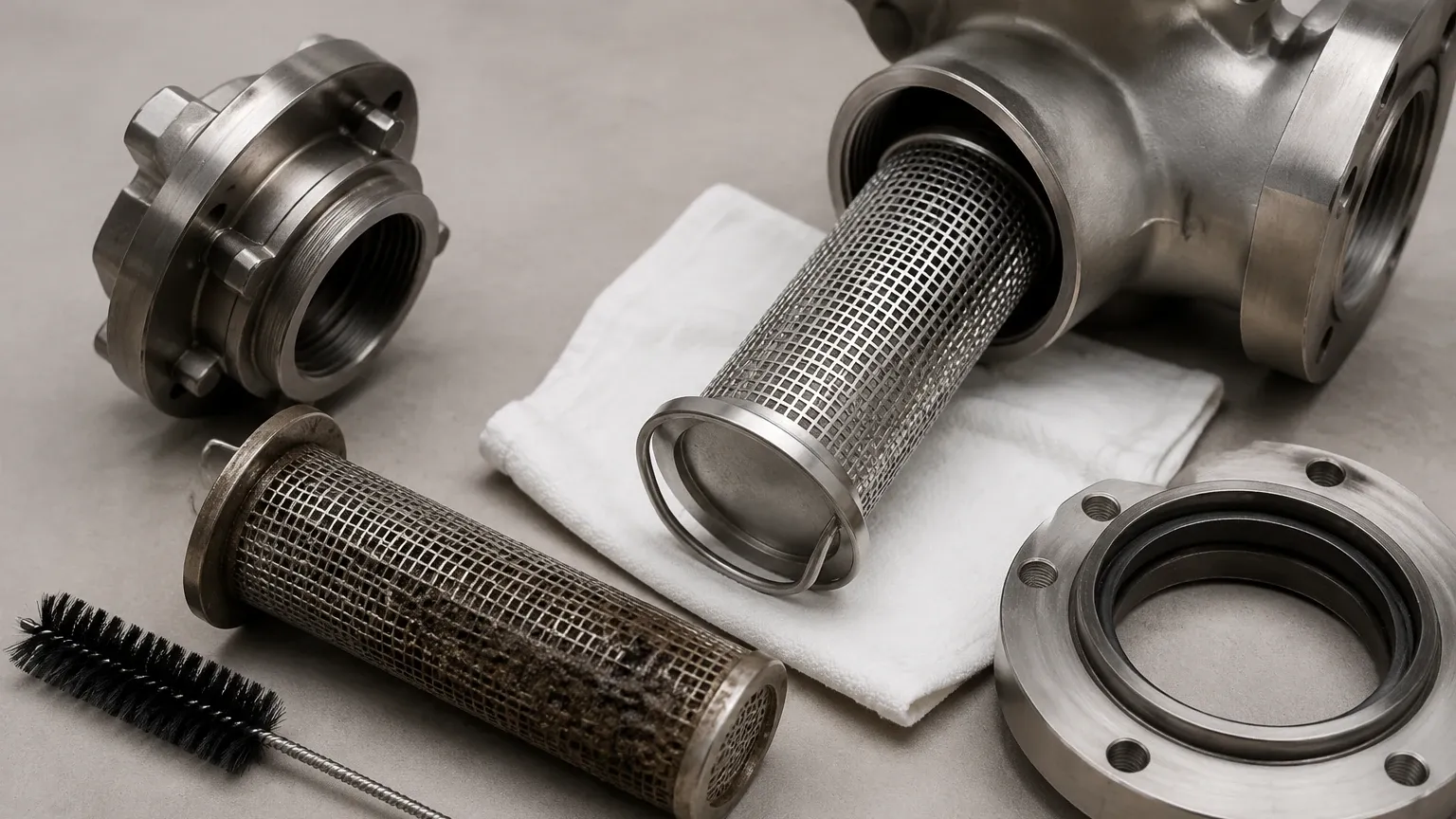
Ensure that the basket is perfectly aligned with the housing's internal flange. For Y-strainers and basket strainers, the seal between the basket and the body is the most common point of failure. If the basket is not seated correctly, the resulting bypass can lead to catastrophic failure of downstream turbines or pumps.
2. Gasket and O-Ring Inspection
Never reuse old gaskets or O-rings during a strainer replacement. Thermal cycling and chemical exposure cause these seals to lose their elasticity. A fresh seal ensures that the system maintains its pressure rating and prevents external leaks.
3. Initial Monitoring
Immediately following a replacement, the system should be monitored closely for the first few hours of operation. Recording the initial "clean" pressure drop provides a new baseline for future maintenance. Unexpectedly low pressure drops may indicate a bypass or a hole in the mesh, while unexpectedly high pressure drops may suggest an incorrect micron rating or an air pocket within the housing.
Maintenance vs. Replacement: A Cost-Benefit Analysis
While cleaning is the first line of maintenance, there is a point where continued cleaning becomes less cost-effective than a full strainer replacement. Factors to consider in this analysis include:
- Labor Costs: The man-hours required for frequent cleaning of a blinded or partially clogged strainer.
- Energy Costs: The increased power required for pumps to overcome the higher resistance of an aging strainer.
- Risk of Failure: The potential cost of downstream equipment damage if an old strainer collapses.
- Production Downtime: The loss of revenue associated with frequent system halts for filtration maintenance.
In many high-volume industrial environments, switching to a high-quality stainless steel replacement from a reliable manufacturer provides a superior return on investment by extending service cycles and ensuring consistent product quality.
Conclusion
Successful strainer replacement is a technical process that requires a thorough understanding of fluid dynamics, material science, and mechanical design. By recognizing the signs of wear—such as irreversible pressure drop and structural fatigue—and selecting replacements based on precise engineering criteria like OAR and material compatibility, industrial operators can significantly enhance the longevity and efficiency of their systems. Whether dealing with standard simplex strainers or complex custom-fabricated baskets, prioritizing quality and precision in replacement components is essential for maintaining the integrity of industrial fluid processes.
