


Strainer Sieve
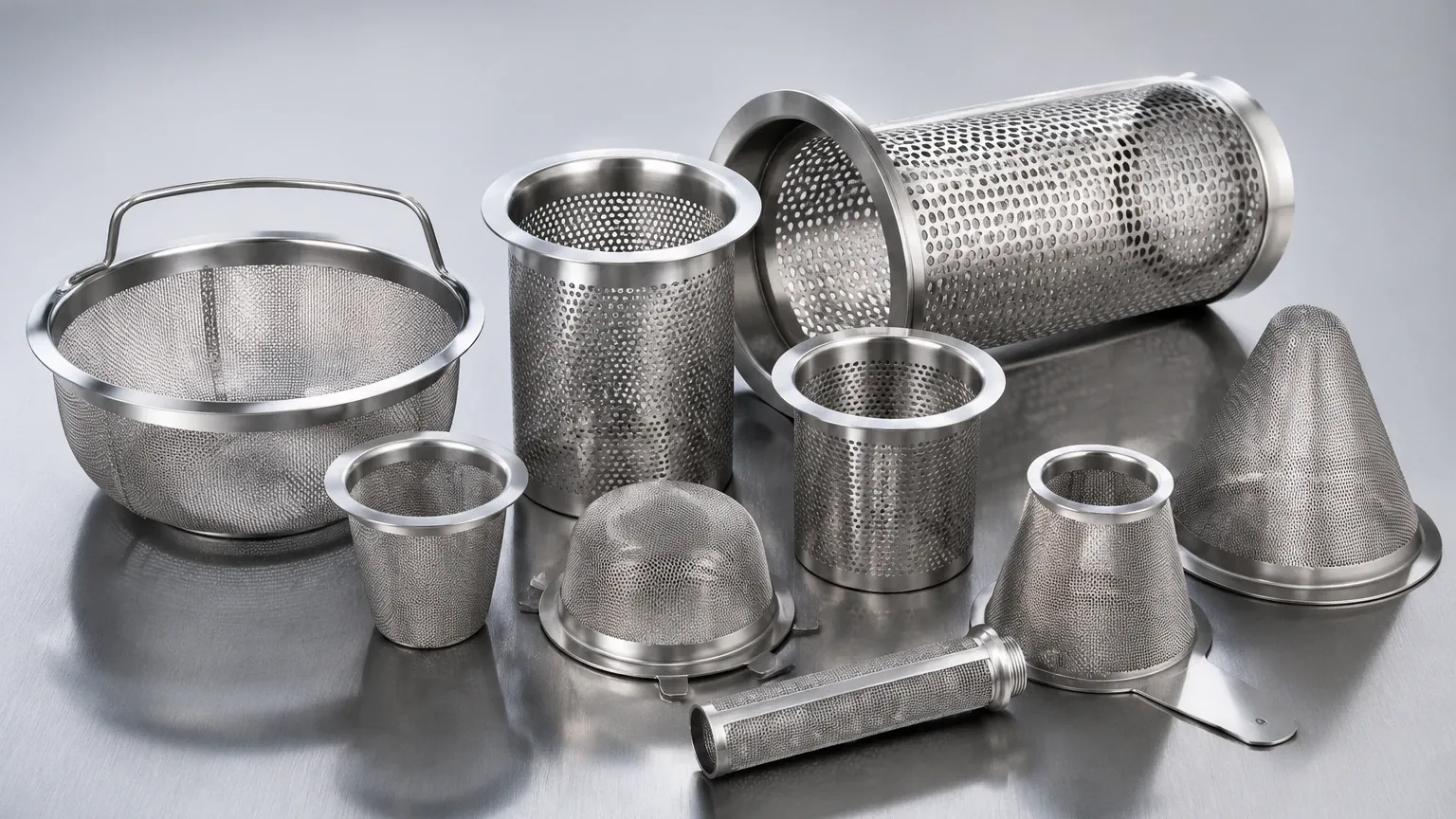
In industrial fluid handling and process engineering, the term "strainer sieve" refers to the functional core of a filtration system designed to remove solid contaminants from liquid or gas streams. While the terms "strainer" and "filter" are often used interchangeably in casual conversation, in a technical B2B context, a strainer sieve typically refers to a component used for the removal of larger particles—usually those visible to the naked eye. These components are essential for protecting downstream equipment such as pumps, valves, and heat exchangers from damage caused by debris.
Selecting the correct strainer sieve requires a deep understanding of fluid dynamics, material science, and the specific mechanical requirements of the application. For engineers and procurement teams, the challenge lies in balancing filtration efficiency with system performance, ensuring that the chosen Strainers & Baskets provide the necessary protection without inducing excessive pressure drops or requiring frequent, costly maintenance.
Technical Fundamentals of Strainer Sieves
The primary function of a strainer sieve is to act as a physical barrier. As fluid passes through the mesh or perforated surface, particles larger than the opening size are trapped, while the cleaned fluid continues through the system. The effectiveness of this process is governed by several technical parameters:
Micron Rating and Mesh Count
For wire mesh sieves, the "mesh count" refers to the number of openings per linear inch. A higher mesh count indicates a finer sieve capable of capturing smaller particles. However, in industrial straining, it is often more precise to discuss the "micron rating," which defines the actual size of the largest particle that can pass through the sieve. Understanding the particle size distribution of the contaminants in your process is the first step in determining the required micron rating.
Open Area Ratio
The open area is the total area of the holes in the sieve divided by the total area of the sieve surface, expressed as a percentage. A higher open area typically results in a lower initial pressure drop and a higher flow capacity. However, increasing the open area often involves using thinner wires or larger holes, which can compromise the structural integrity of the strainer sieve under high-pressure conditions.
Material Selection and Engineering Considerations
Industrial environments often involve corrosive fluids, extreme temperatures, and high-pressure cycles. Therefore, the material of construction for a strainer sieve is a critical factor in its longevity and performance. Stainless steel is the industry standard due to its versatile mechanical properties.
Stainless Steel 304 vs. 316L
* Stainless Steel 304: This is the most common material for general-purpose industrial sieves. It offers excellent strength and good corrosion resistance for water treatment and standard chemical applications.
* Stainless Steel 316L: For more demanding environments, such as marine applications, pharmaceutical processing, or highly acidic chemical streams, 316L is preferred. The addition of molybdenum provides superior resistance to pitting and crevice corrosion, particularly in chloride-rich environments.
Specialty Alloys
In certain high-temperature or highly aggressive chemical processes, standard stainless steels may not suffice. In these cases, engineers may specify Monel, Hastelloy, or Inconel for the strainer sieve construction to ensure the component does not fail prematurely due to chemical attack or thermal fatigue.
Structural Design and Mesh Configurations
The physical configuration of a strainer sieve determines how it handles mechanical stress and how easily it can be cleaned. Depending on the application, several design options are available:
Perforated Metal vs. Wire Mesh
Perforated metal sieves are typically used for coarse straining. They are incredibly robust and can withstand significant differential pressures. However, they are limited in how fine they can strain. To achieve finer filtration, a wire mesh layer is often bonded or pleated onto a perforated metal support. This "composite" design provides the fine sieving capability of the mesh with the structural rigidity of the perforated plate.
Weave Types
The way the wires are woven in a strainer sieve affects its flow characteristics and cleaning efficiency:
* Plain Weave: The most common and cost-effective weave, suitable for most general straining tasks.
* Dutch Weave: This weave uses different wire diameters in the warp and shute directions, resulting in a much tighter, more robust mesh that is ideal for high-pressure applications and fine particle retention.
* Twill Weave: Used for finer meshes where the wire diameter is too large to allow for a plain weave, providing a more flexible but still durable sieving surface.
Performance Factors: Flow Rate and Pressure Drop
One of the most common mistakes in specifying a strainer sieve is failing to account for the "dirty" pressure drop. Every sieve creates a restriction in the flow, leading to a loss of pressure (delta P). As the sieve captures particles, the available open area decreases, and the pressure drop increases.
Calculating Differential Pressure
Engineers must ensure that the system's pump capacity can handle the maximum expected pressure drop across the strainer. If the pressure drop becomes too high, it can lead to cavitation in pumps or even the mechanical collapse of the strainer sieve itself. High-quality Strainers & Baskets are designed with sufficient surface area to minimize this risk, allowing for longer run times between cleaning cycles.
Viscosity Considerations
The viscosity of the fluid significantly impacts the performance of a strainer sieve. Highly viscous fluids, such as oils or syrups, require larger open areas and lower flow velocities to prevent excessive pressure buildup. When dealing with non-Newtonian fluids, the shear forces at the sieve surface must also be considered to avoid altering the product's properties.
Industrial Applications and Customization
No two industrial processes are identical, which is why customization is a hallmark of professional filtration solutions. The design of a strainer sieve must be tailored to the specific operational parameters of the industry it serves.
Food and Beverage Processing
In this sector, hygienic design is paramount. Strainer sieves must be manufactured with smooth welds and high-grade finishes (often electropolished) to prevent bacterial growth. Materials must be FDA-compliant, and the sieves must be designed for easy Clean-in-Place (CIP) or removal for manual cleaning.
Chemical and Petrochemical
These applications often involve high pressures and hazardous materials. Strainer sieves here are frequently designed as heavy-duty baskets with reinforced handles and specialized gaskets to ensure a leak-proof seal within the strainer housing. The ability to withstand aggressive solvents and high thermal loads is essential.
Hydraulic and Lube Oil Systems
Precision is the priority in hydraulic systems. A strainer sieve in this context is often used as a "last chance" filter to protect sensitive servo-valves. These sieves must be manufactured to extremely tight tolerances to ensure that no bypass occurs and that every particle above the micron rating is captured.
Maintenance, Cleaning, and Replacement Cycles
The total cost of ownership (TCO) of a strainer sieve is heavily influenced by its maintenance requirements. While stainless steel sieves are durable, they are not indestructible. Proper maintenance protocols are necessary to ensure consistent performance.
Cleaning Methods
* Backwashing: In automated systems, fluid flow is reversed to flush contaminants off the sieve surface.
* Ultrasonic Cleaning: For fine meshes where particles may become wedged (blinding), ultrasonic baths are highly effective at dislodging contaminants without damaging the delicate wires.
* Chemical Cleaning: Used when the contaminants are organic or scale-based, requiring specific solvents to dissolve the buildup.
When to Replace
Despite regular cleaning, a strainer sieve will eventually reach the end of its service life. Signs that a replacement is necessary include:
* Permanent Blinding: When the mesh can no longer be cleaned to its original flow capacity.
* Mechanical Deformation: Visible sagging or bulging of the mesh, indicating it has been subjected to pressures beyond its design limit.
* Wire Breakage: Any breach in the mesh surface allows contaminants to bypass the sieve, rendering it useless for equipment protection.
Specifying the Right Strainer Sieve for Your Project
When consulting with a manufacturer for a custom strainer sieve, providing detailed technical data is essential for an accurate design. Engineers should be prepared to confirm the following information:
1. Fluid Properties: Type of fluid, viscosity at operating temperature, and chemical compatibility requirements.
2. Flow Parameters: Minimum, normal, and maximum flow rates, along with the maximum allowable pressure drop.
3. Contaminant Profile: The nature of the solids (hard, soft, fibrous), the expected concentration, and the target micron rating.
4. Mechanical Constraints: Dimensions of the existing housing, connection types (flanged, threaded), and any weight limitations.
5. Regulatory Compliance: Requirements for PED (Pressure Equipment Directive), ASME, FDA, or other industry-specific certifications.
By focusing on these factual engineering boundaries, procurement teams can ensure they receive a strainer sieve that is not only fit for purpose but also optimized for long-term reliability and cost-efficiency. High-performance filtration is not just about the mesh; it is about the precision of the entire assembly and its integration into the broader industrial system.
