


Strainer Symbol
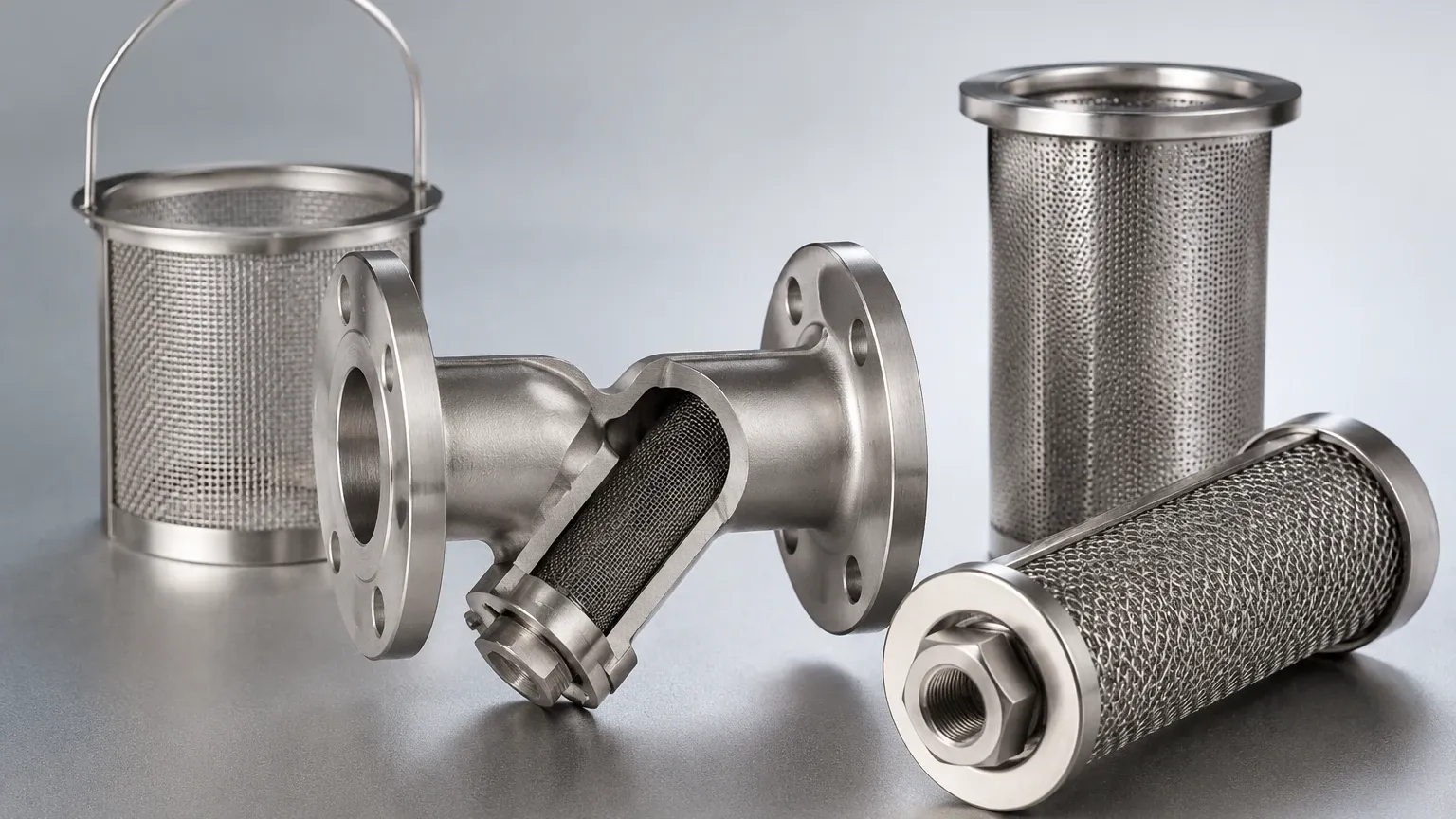
In industrial piping and instrumentation diagrams (P&IDs), the strainer symbol serves as a critical technical shorthand for engineers, designers, and maintenance teams. It represents a mechanical device designed to remove solid particles from a flowing fluid—whether liquid or gas—to protect downstream equipment such as pumps, valves, and flow meters. For procurement professionals and plant engineers, understanding the nuances of the strainer symbol is the first step in ensuring that the physical hardware, specifically Strainers & Baskets, matches the operational requirements of the system.
Accurate representation on technical drawings prevents installation errors and ensures that the filtration media—often stainless steel wire mesh or perforated plate—is appropriately specified for the application's pressure, temperature, and filtration accuracy requirements.
The Role of Strainer Symbols in Industrial Piping Design
Industrial systems rely on P&IDs to communicate the functional relationship between piping, sensors, and equipment. The strainer symbol is not merely a graphic; it conveys the type of strainer required, its orientation, and often its specific function within the process loop. In a standard P&ID, symbols are generally governed by standards such as ISA-5.1 or ISO 14617, though individual engineering firms may use proprietary variations.
When an engineer encounters a strainer symbol, they must interpret several key factors:
1. Flow Direction: Most symbols indicate a preferred flow path, which is critical for the proper functioning of internal baskets or screens.
2. Type of Housing: The geometry of the symbol (e.g., a diagonal leg versus a vertical box) indicates whether a Y-strainer, T-strainer, or basket strainer is required.
3. Maintenance Requirements: Certain symbols imply the need for blow-off valves or differential pressure gauges, which are essential for monitoring the cleanliness of the internal mesh.
For manufacturers like Kaifil, these symbols translate into specific manufacturing parameters, including material selection (typically 304 or 316 stainless steel) and the required micron rating of the internal filtration element.
Decoding Common Strainer Symbols: Y, T, and Basket Configurations
Different strainer geometries are suited for different flow conditions and solids loading. The strainer symbol on a drawing will typically distinguish between these three primary categories:
Y-Strainer Symbols
The Y-strainer is perhaps the most common symbol in industrial filtration. It is represented by a diagonal line extending from the main pipe run, forming a "Y" shape. This symbol indicates a compact design suitable for high-pressure applications where the amount of solids to be removed is relatively low. In steam, gas, or liquid lines where frequent cleaning is not expected, the Y-strainer is the standard choice. The symbol often points downward in horizontal lines to allow for gravity-assisted debris collection.
Basket Strainer Symbols
Basket strainers are represented by a rectangular or square box symbol intersecting the pipe line. This indicates a larger holding capacity for debris compared to Y-strainers. The basket strainer symbol suggests a system where high flow rates and higher solids loading are present. Because the basket is serviced from the top, the symbol implies that there is sufficient overhead clearance for the removal and cleaning of the internal basket.
Duplex Strainer Symbols
A duplex strainer symbol consists of two parallel strainer symbols connected by a three-way valve or a crossover manifold. This indicates a critical process where flow cannot be interrupted for cleaning. The symbol tells the engineer that the system must allow for one side to be operational while the other is being serviced. This is common in fuel oil systems, lubrication lines, and continuous chemical processes.
Technical Evaluation: From P&ID Symbol to Physical Component
Once the strainer symbol is identified, the technical specification process moves to the physical attributes of the Strainers & Baskets. Engineers must bridge the gap between the schematic representation and the mechanical reality by confirming several performance criteria.
Filtration Accuracy and Mesh Selection
The symbol does not usually specify the mesh size, which must be determined based on the particle size of the contaminants and the sensitivity of downstream equipment. Kaifil specializes in custom wire mesh filters, where the "open area" ratio is a primary engineering concern. A higher open area reduces the initial pressure drop across the strainer, extending the time between cleaning cycles.
Material Compatibility
While the strainer symbol remains the same regardless of material, the process fluid dictates whether the housing and internal basket should be carbon steel, 304 stainless steel, or 316L stainless steel. In chemical processing or food and beverage applications, stainless steel is the standard due to its corrosion resistance and ease of sterilization.
Pressure and Temperature Ratings
The symbol is placed within a piping class on the P&ID. This class dictates the wall thickness and flange rating (e.g., ANSI Class 150, 300, or 600). It is vital to ensure that the physical strainer body can withstand the maximum allowable working pressure (MAWP) and temperature of the system, particularly in high-temperature steam or thermal oil applications.
Engineering Considerations for Installation and Maintenance
The placement of a strainer symbol on a drawing also dictates the physical installation requirements. Failure to account for these can lead to operational inefficiencies or mechanical failure.
Orientation and Gravity
For liquid service, Y-strainers should be installed with the sediment leg pointing downward. In steam service, the leg is often installed horizontally to prevent water hammer caused by condensate buildup. The strainer symbol's orientation on the P&ID should ideally reflect these requirements to guide the installation team.
Differential Pressure Monitoring
In many sophisticated systems, the strainer symbol is accompanied by symbols for differential pressure (DP) transmitters or gauges. This is an essential engineering consideration. As the internal basket or mesh collects debris, the pressure drop increases. Monitoring this delta-P is the only reliable way to determine when the strainer requires cleaning. Relying on a fixed schedule often leads to either unnecessary downtime or, conversely, a ruptured mesh due to excessive pressure buildup.
Replacement Cycles and Durability
Unlike disposable cartridge filters, the stainless steel elements within industrial strainers are designed for reuse. However, they are subject to mechanical fatigue and abrasion. Engineers should specify reinforced baskets for high-velocity flows to prevent the mesh from collapsing. The total cost of ownership is significantly reduced when using high-quality, precision-manufactured components that can withstand multiple cleaning cycles without losing structural integrity.
Customization and OEM Solutions for Specialized Filtration
Standard off-the-shelf strainers do not always meet the specific needs of complex industrial environments. When a unique strainer symbol appears on a specialized P&ID—perhaps indicating a custom flange-to-face dimension or an integrated heating jacket—OEM manufacturing becomes necessary.
Kaifil provides tailored solutions that align with specific engineering drawings. This includes:
* Custom Mesh Configurations: Layering different mesh counts to achieve multi-stage filtration within a single basket.
* Specialized Coatings: For highly abrasive or corrosive environments where standard stainless steel requires additional protection.
* Non-Standard Dimensions: Fitting high-performance filtration into tight spatial envelopes where standard Y or T housings cannot fit.
By working closely with a manufacturer that understands the transition from a technical symbol to a precision-engineered component, purchasing teams can ensure that the final product meets all regulatory and performance standards, including those required in pharmaceutical and food-grade applications.
Summary of Evaluation Criteria for Engineers
Before finalizing a purchase based on a strainer symbol in a design document, technical professionals should confirm the following data points:
* Fluid Properties: Viscosity, density, and chemical corrosivity.
* Contaminant Profile: Particle size distribution and the nature of the solids (e.g., hard, fibrous, or gelatinous).
* Flow Rate: Minimum, normal, and maximum flow to calculate the clean pressure drop.
* Connection Type: Flanged, threaded, or socket-welded connections to match the piping specification.
* Seal Materials: Ensuring that O-rings or gaskets (PTFE, EPDM, Viton) are compatible with the process fluid and temperature.
Correctly interpreting the strainer symbol and translating it into a robust technical specification ensures the longevity of the entire piping system. Whether it is a simple Y-strainer for a water line or a complex duplex system for a chemical refinery, the precision of the internal Strainers & Baskets is what ultimately determines the success of the filtration process.
