


Strainer Steel
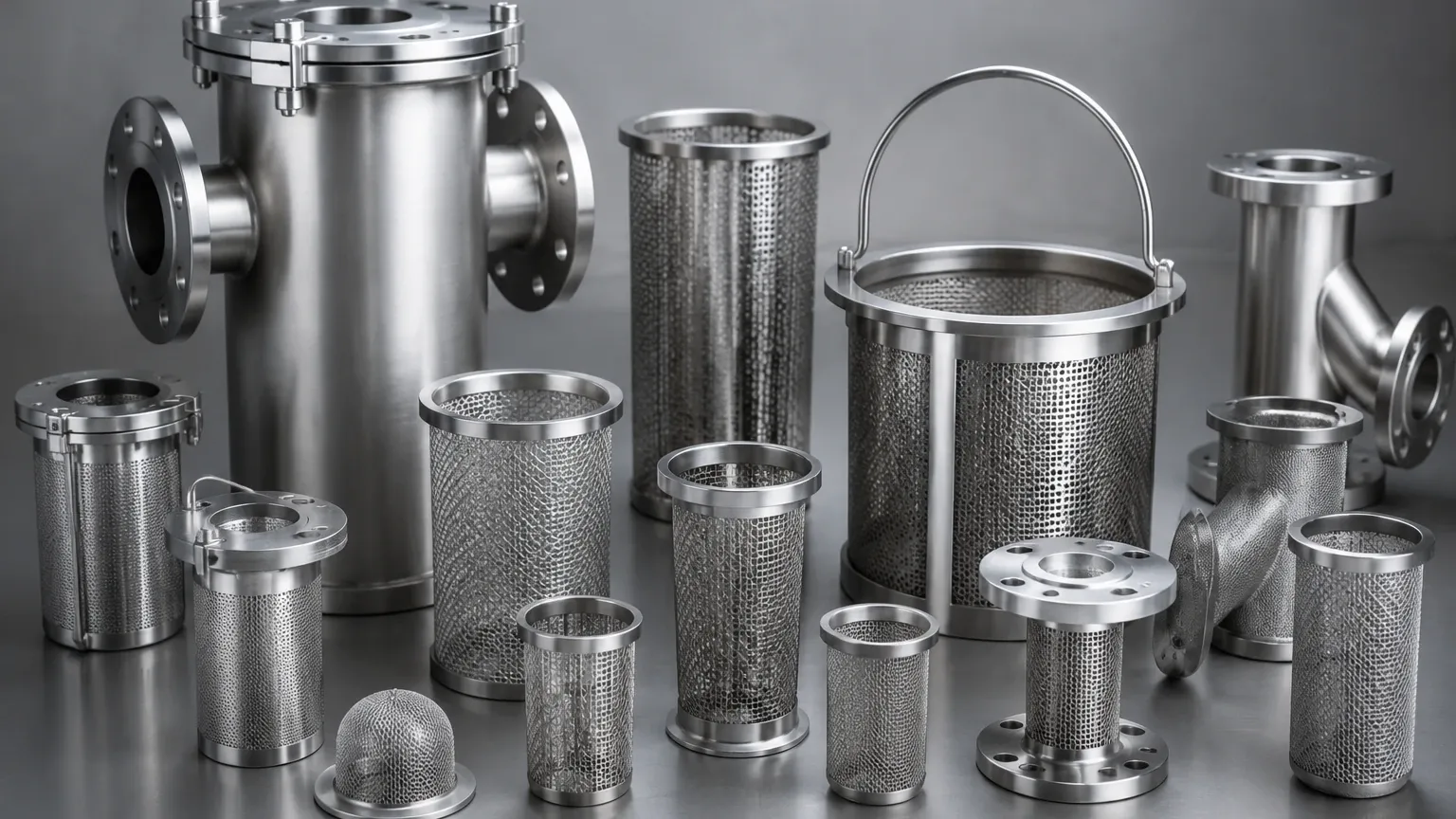
In industrial fluid handling, the term "strainer steel" refers to the specific grades of stainless steel and metal alloys engineered to withstand the mechanical stresses, corrosive environments, and thermal fluctuations inherent in filtration processes. Selecting the correct material and configuration for Strainers & Baskets is a critical engineering decision that directly impacts the longevity of downstream equipment, such as pumps, valves, and heat exchangers.
Industrial strainers serve as the first line of defense, removing coarse particles from liquid or gas streams. Unlike fine membrane filters, these components must provide high flow rates with minimal pressure drop while maintaining structural integrity under significant differential pressure. This article examines the technical specifications of strainer steel, the engineering considerations for basket design, and the factors that influence material selection in demanding industrial applications.
Material Selection for Industrial Strainer Steel
The performance of a strainer is fundamentally limited by the properties of the steel used in its construction. While various metals can be used, stainless steel is the industry standard due to its balance of mechanical strength and chemical resistance.
AISI 304 Stainless Steel
Grade 304 is the most common variety of strainer steel. It contains approximately 18% chromium and 8% nickel, providing excellent resistance to atmospheric corrosion and many organic and inorganic chemicals. In water treatment and general industrial cooling systems, 304 stainless steel offers a cost-effective solution. However, it is susceptible to pitting and crevice corrosion in high-chloride environments, such as seawater or concentrated brine.
AISI 316 and 316L Stainless Steel
For more aggressive environments, such as chemical processing or pharmaceutical manufacturing, AISI 316 is the preferred choice. The addition of 2-3% molybdenum significantly enhances its resistance to chlorides and acidic solutions. 316L, the low-carbon version, is specifically utilized when components require extensive welding. The lower carbon content prevents carbide precipitation during the welding process, which maintains the corrosion resistance of the heat-affected zones in the basket frame or mesh seams.
Specialty Alloys and Super Duplex
In extreme cases involving high-temperature sulfuric acid or high-pressure offshore applications, standard stainless steels may fail. Engineers may specify Duplex stainless steels (like 2205) which offer higher yield strength and superior resistance to stress corrosion cracking. For specialized chemical filtration, Hastelloy or Monel may be used, though these significantly increase the initial capital expenditure.
Engineering the Open Area Ratio in Strainers & Baskets
One of the most misunderstood concepts in strainer design is the relationship between the physical size of the strainer and its effective filtration capacity. This is defined by the "Open Area Ratio" (OAR). The OAR is the ratio of the total area of the holes in the strainer steel (the open area) to the cross-sectional area of the inlet pipe.
Calculating the Ratio
A well-engineered strainer basket typically aims for an OAR of 6:1 or 8:1. A higher ratio means the strainer can accumulate a significant amount of debris before the pressure drop (delta P) becomes critical. If the OAR is too low, the strainer will require frequent cleaning, leading to increased labor costs and potential system downtime.
Mesh vs. Perforated Plate
Strainer steel components are usually constructed using a combination of materials:
1. Perforated Plate: This provides the primary structural strength. It consists of a steel sheet with punched holes, typically ranging from 1/32" to 1/2".
2. Wire Mesh Lining: For finer filtration (measured in microns), a woven wire mesh is lined inside the perforated plate. The perforated plate acts as a "backup" or support cage, preventing the delicate mesh from collapsing under the force of the fluid flow.
Structural Integrity and Pressure Management
Strainer steel must be capable of withstanding "Maximum Differential Pressure." This is the pressure difference between the upstream and downstream sides of the basket. If a basket becomes clogged, the differential pressure rises. If the steel is not thick enough or the welds are insufficient, the basket may rupture, sending both the debris and pieces of the damaged strainer into the downstream system.
Burst Pressure Considerations
Engineers must calculate the burst pressure of the strainer steel based on the housing's operating pressure. In high-pressure hydraulic or steam systems, the basket is often reinforced with longitudinal and circumferential stiffeners. The welding technique is also vital; TIG (Tungsten Inert Gas) welding is preferred for its precision and strength, ensuring that the seams of the strainer steel do not become a point of failure.
Flow Velocity and Erosion
High fluid velocities can cause erosion-corrosion, especially if the fluid contains abrasive solids. In these scenarios, the thickness of the strainer steel must be increased, or specialized coatings may be applied. Proper design ensures that the flow is distributed evenly across the surface of the basket to prevent localized wear and "hot spots" where the steel might thin prematurely.
Fabrication Techniques for Precision Metal Filters
The manufacturing process of strainer steel components involves several precision steps to ensure the final product meets industrial tolerances.
Precision Perforating and Weaving
For perforated sections, CNC punching ensures uniform hole distribution, which is critical for calculating predictable flow rates. For the mesh components, the weave type—such as plain weave, twilled weave, or Dutch weave—determines the filtration accuracy and the mechanical strength of the mesh. Dutch weaves, for example, offer a higher density of wires, providing a more robust strainer steel surface for high-pressure applications.
Surface Treatments and Passivation
After fabrication, stainless steel strainers should undergo passivation. This chemical process removes free iron from the surface of the steel and enhances the protective chromium oxide layer. In the food and beverage or pharmaceutical industries, the strainer steel may also be electropolished to achieve a mirror-like finish (RA < 0.8 μm). This reduces the risk of bacterial growth and makes the basket easier to clean during CIP (Clean-in-Place) cycles.
Maintenance Cycles and Total Cost of Ownership
While the initial cost of high-grade strainer steel is a factor, the total cost of ownership (TCO) is heavily influenced by maintenance and replacement cycles.
Monitoring Pressure Drop
The most effective way to manage a strainer is through differential pressure monitoring. Installing gauges upstream and downstream allows operators to identify exactly when the strainer steel basket is reaching its holding capacity. Cleaning the basket before it reaches the maximum allowable delta P prevents permanent deformation of the steel mesh.
Cleaning Procedures
Depending on the application, strainer steel can be cleaned via:
* Backwashing: Reversing the flow to dislodge particles.
* Ultrasonic Cleaning: Using high-frequency sound waves in a solvent bath to remove fine particles trapped in the mesh pores.
* Manual Scrubbing: Using soft brushes and compatible cleaning agents. It is vital to avoid carbon steel brushes, as they can embed iron particles into the stainless steel, leading to "tea staining" or localized rusting.
Customization and OEM Considerations
Standard off-the-shelf strainers often fail to meet the specific nuances of complex industrial systems. Customization of Strainers & Baskets allows engineers to tailor the filtration solution to the exact fluid dynamics of their process.
Key Information for Technical Confirmation
When sourcing custom strainer steel components, purchasing teams and engineers should confirm the following parameters:
1. Fluid Compatibility: Does the steel grade resist the specific chemicals and concentrations in the process stream?
2. Particle Size Distribution: What is the smallest particle that must be captured, and what is the largest particle expected?
3. Flow Rate and Viscosity: High-viscosity fluids (like heavy oils or resins) require larger open areas and more robust structural support.
4. Temperature Extremes: Will the steel be subject to cryogenic temperatures or high-heat sterilization?
5. Connection Types: Does the basket require specific flange interfaces, handles for easy removal, or magnetic inserts to capture ferrous fines?
By focusing on these technical boundaries, manufacturers can produce filtration components that offer reliable performance in demanding environments. Whether it is a simple simplex strainer for a cooling water line or a complex duplex system for a continuous chemical process, the quality of the strainer steel remains the determining factor in system reliability.
