


Strainer Tool
In industrial fluid handling, the term "strainer tool" refers to the specialized mechanical components designed to remove coarse solids from liquid or gas streams. Unlike fine membrane filters used for sub-micron sterilization, industrial strainers and baskets are engineered for high-capacity debris removal, protecting downstream equipment such as pumps, control valves, nozzles, and heat exchangers from damage and clogging. For engineers and maintenance professionals, selecting the correct strainer configuration is a critical step in ensuring system longevity and operational efficiency.
Industrial filtration requires a balance between flow rate, pressure drop, and particle retention. A well-designed strainer tool must withstand the mechanical stresses of the process while providing a reliable barrier against contaminants. This guide explores the engineering fundamentals, material considerations, and selection criteria for high-performance industrial strainers.
The Role of the Strainer Tool in Industrial Fluid Systems
The primary function of an industrial strainer is the mechanical separation of solids from a fluid medium. While the terminology can vary, the "strainer tool" essentially acts as a sacrificial barrier. It is often the first line of defense in a multi-stage filtration system or a standalone protector for sensitive machinery.
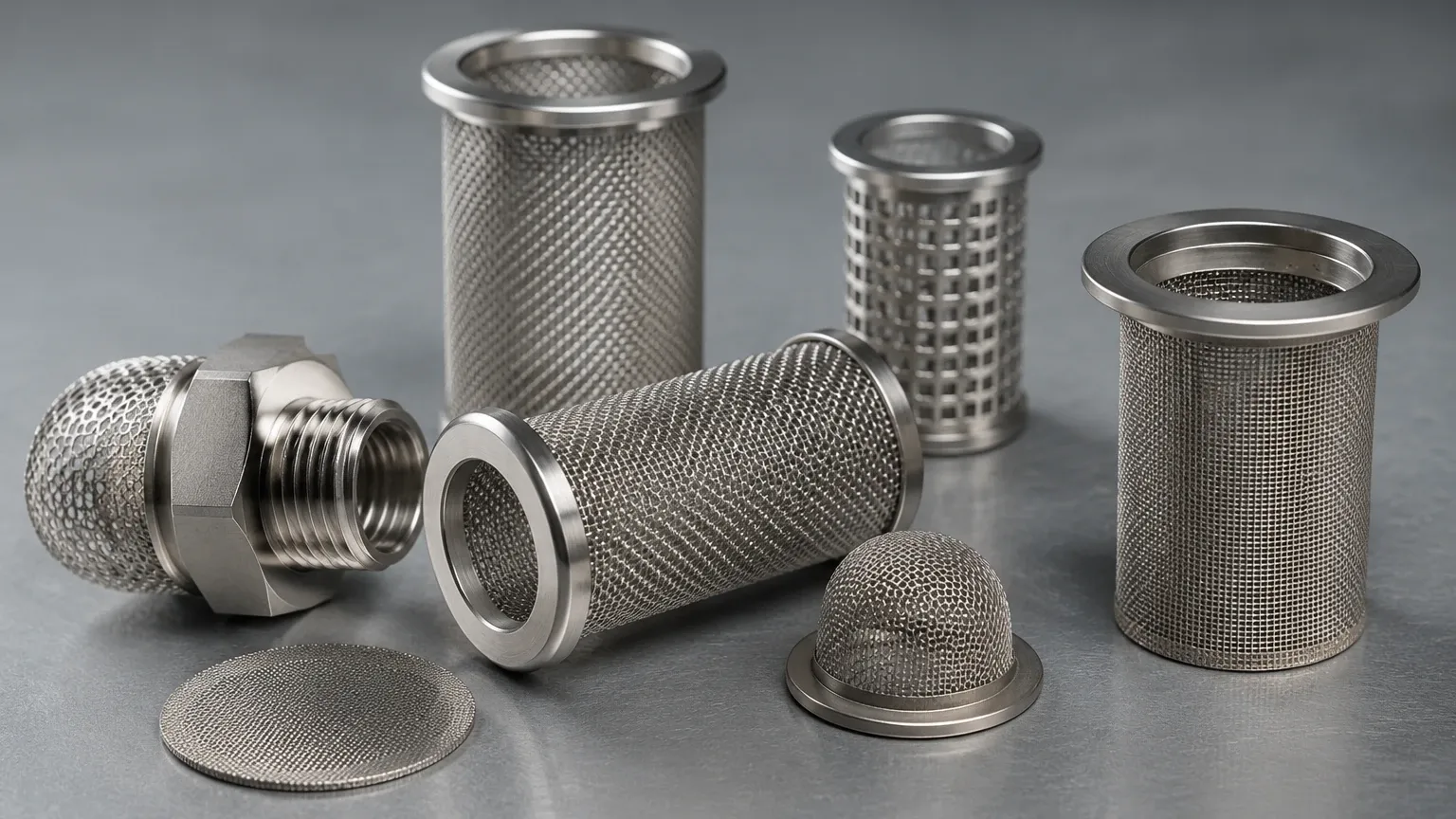
In chemical processing and water treatment, large debris—such as pipe scale, weld beads, or accidental foreign objects—can cause catastrophic failure in high-speed centrifugal pumps or precision valves. By integrating robust Strainers & Baskets into the piping architecture, facilities can prevent unplanned downtime and extend the service life of more expensive system components. The effectiveness of these tools is measured by their ability to maintain a low pressure drop while capturing the maximum volume of solids before requiring cleaning or replacement.
Key Engineering Specifications for Strainers and Baskets
When specifying a strainer tool for an industrial application, engineers must look beyond simple pipe size. Several technical factors dictate the performance and durability of the component.
Material Selection and Chemical Compatibility
Stainless steel is the industry standard for high-performance filtration due to its corrosion resistance and mechanical strength.
- Type 304 Stainless Steel: Suitable for general industrial use, water treatment, and food-grade applications where mild corrosion resistance is required.
- Type 316/316L Stainless Steel: Preferred for chemical processing, pharmaceutical manufacturing, and marine environments. The addition of molybdenum provides superior resistance to chlorides and acidic solutions.
- Specialty Alloys: For highly aggressive environments, materials like Monel or Hastelloy may be utilized to prevent pitting and stress corrosion cracking.
Filtration Media: Mesh vs. Perforated Plate
The internal element of the strainer tool can be constructed using different media types depending on the required filtration accuracy.
- Perforated Metal: Used for coarse straining (typically 1/32" to 1/2" holes). It provides a high degree of structural rigidity.
- Wire Mesh: Used for finer straining requirements. Multiple layers of stainless steel wire mesh can be sintered or pleated to increase surface area and improve the retention of smaller particles.
- Wedge Wire: Ideal for heavy-duty applications where high pressure and abrasive solids are present. The V-shaped profile of the wire reduces the risk of "blinding" or clogging.
Evaluating Filtration Accuracy and Flow Dynamics
One of the most common mistakes in strainer selection is over-filtering. Selecting a mesh that is too fine for the application will lead to rapid clogging and an excessive pressure drop, which can starve pumps and reduce system efficiency.
Understanding Micron Ratings and Mesh Sizes
The "strainer tool" must be sized based on the smallest particle that needs to be removed to protect downstream equipment. For example, if a spray nozzle has an orifice of 0.050 inches, the strainer should ideally be rated for 0.025 inches (approximately 50% of the orifice size) to ensure reliable operation.
The Importance of the Open Area Ratio
The ratio of the total open area of the strainer element to the cross-sectional area of the inlet pipe is a key performance indicator. A high open area ratio (typically 4:1 or higher) ensures that the fluid can pass through the strainer with minimal resistance, even as the basket begins to fill with debris. This extends the interval between maintenance cycles and prevents sudden spikes in backpressure.
Customization Options for Demanding Applications
Standard off-the-shelf strainers often fail to meet the specific spatial or performance requirements of complex industrial systems. Custom manufacturing allows for the optimization of the strainer tool to fit existing infrastructure or unique fluid profiles.
Structural Reinforcements
In high-pressure hydraulic systems or high-viscosity fluid processing, the strainer basket may be subjected to significant differential pressure. Custom designs can include internal support cores, external cages, or reinforced flanges to prevent the mesh from collapsing or bypassing under load.
Connection Types and Housing Designs
Depending on the installation environment, strainers can be designed with various connection types, including:
- Flanged Connections (ANSI/DIN): For high-pressure and large-diameter piping.
- Threaded (NPT/BSP): For smaller, low-pressure lines.
- Sanitary Tri-Clamp: Essential for food, beverage, and pharmaceutical applications where ease of disassembly and cleaning is paramount.
Customized Strainers & Baskets can also be engineered as duplex systems, allowing for continuous flow by diverting fluid to a second chamber while the first is being cleaned.
Maintenance, Replacement Cycles, and Total Cost of Ownership
While the initial purchase price of a strainer tool is a factor, the total cost of ownership (TCO) is largely determined by maintenance requirements and durability. Stainless steel filters offer a significant advantage over disposable plastic or fabric elements because they are cleanable and reusable.
Monitoring Pressure Drop
Engineers should install differential pressure gauges across the strainer housing. A significant increase in the pressure drop ($ΔP$) indicates that the strainer tool is reaching its dirt-holding capacity. Establishing a baseline $ΔP$ for a clean strainer allows maintenance teams to schedule cleanings before the flow is restricted enough to impact production.
Cleaning Procedures
Depending on the contaminant, stainless steel baskets can be cleaned using several methods:
- Backwashing: Reversing the flow to flush particles off the surface.
- Ultrasonic Cleaning: Effective for removing fine particles trapped within complex mesh weaves.
- Chemical Cleaning: Using compatible solvents to dissolve organic or mineral buildup.
Investing in a high-quality, precision-manufactured strainer tool reduces the frequency of replacement and ensures that the internal elements do not shed metal fragments into the process stream—a common risk with lower-quality components.
Selection Criteria for Procurement and Engineering Teams
Before finalizing a purchase order for industrial filtration components, technical teams should confirm several key variables to ensure the equipment is fit for purpose.
1. Fluid Characteristics: What is the viscosity, temperature, and chemical composition of the fluid? High-viscosity fluids require larger surface areas to maintain flow.
2. Contaminant Profile: Are the solids hard, abrasive, fibrous, or gelatinous? This determines the type of mesh or perforated plate required.
- Operating Pressure and Temperature: Ensure the housing and the internal strainer tool are rated for the maximum possible system pressure, including potential surges.
- Flow Rate: What is the normal and maximum flow rate (GPM or m³/h)?
- Target Particle Size: What is the micron rating required to protect downstream assets?
- Space Constraints: Does the installation require a compact Y-strainer, or is there room for a high-capacity basket strainer?
By addressing these questions, engineers can select a filtration solution that provides the optimal balance of protection and performance. Whether for a new installation or an OEM replacement, the quality of the strainer tool directly impacts the reliability of the entire industrial process.
Kaifil specializes in the production of custom stainless steel filtration solutions, providing the technical expertise required to develop durable and precise components for the world’s most demanding industries. From material selection to final production, the focus remains on delivering dependable performance in chemical, food, pharmaceutical, and hydraulic applications.
