


Strainer Uk
In industrial fluid handling, the integrity of downstream equipment such as pumps, valves, and flow meters depends heavily on the effectiveness of primary filtration. For engineers and procurement specialists seeking a reliable strainer uk solution, the focus often shifts toward finding components that balance high flow rates with precise particulate removal. Industrial strainers and baskets serve as the first line of defense, removing coarse solids from liquids and gases to prevent mechanical wear and system failure.
Selecting the right filtration component requires a deep understanding of hydraulic dynamics, material compatibility, and the specific demands of the application environment. Whether the system is operating in a chemical processing plant, a food and beverage facility, or a high-pressure hydraulic circuit, the choice of strainer impacts both operational efficiency and long-term maintenance costs.
Engineering Fundamentals of Industrial Strainers
Industrial strainers are essentially closed pressure vessels that contain a removable screen or basket. Unlike fine filters, which may target sub-micron particles, strainers are typically designed to remove larger debris. However, the distinction between a strainer and a filter is often determined by the mesh size and the intended application. In many heavy industrial contexts, these components are critical for protecting expensive machinery from "tramp iron," scale, and other particulate matter.
Simplex vs. Duplex Systems
The most common configuration is the simplex strainer. This is a single-chamber unit used in systems where the flow can be interrupted for cleaning. If the process requires continuous operation, a duplex strainer is necessary. Duplex systems consist of two separate strainer baskets connected by a diverting valve. This allows the operator to switch flow to the clean basket while the other is serviced, preventing downtime in critical applications like oil lubrication or continuous chemical processing.
Y-Strainers and T-Strainers
For compact installations, Y-strainers are often the preferred choice. Their name comes from their shape, and they are typically used for steam, gas, or liquid applications where the amount of material to be removed is relatively small. T-strainers, or bath-tub strainers, offer a larger debris-holding capacity and are often easier to service in larger pipe diameters. When sourcing a strainer uk for a specific project, the orientation of the piping (horizontal vs. vertical) and the available space will dictate which of these geometries is most appropriate.
Material Selection and Durability
The longevity of a filtration system is primarily determined by its material composition. In aggressive industrial environments, stainless steel is the industry standard due to its corrosion resistance and structural integrity under high temperatures and pressures.
Stainless Steel 304 vs. 316
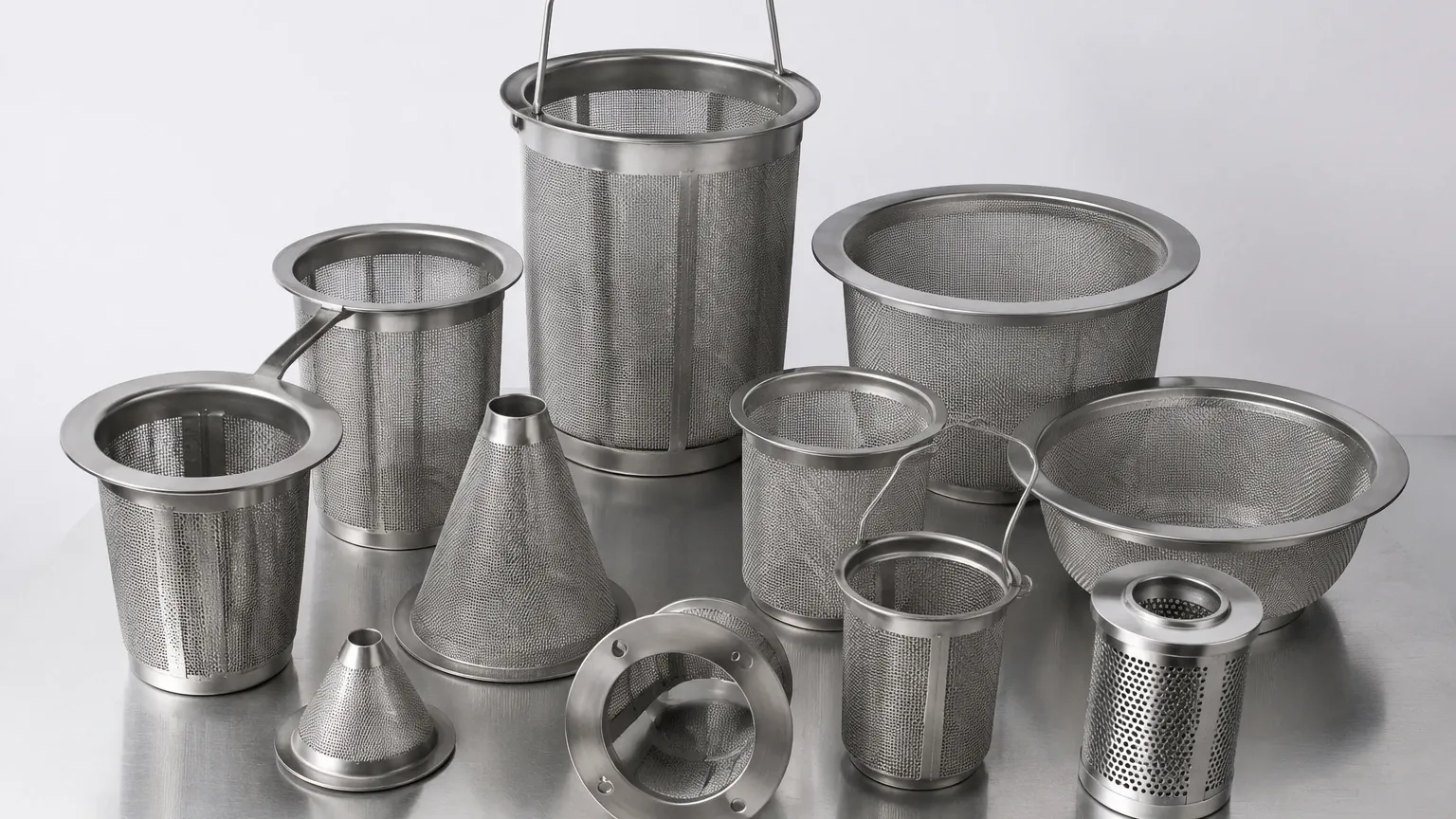
Most industrial Strainers & Baskets are manufactured from either Grade 304 or Grade 316 stainless steel.
* Grade 304: Suitable for general-purpose applications, providing excellent strength and basic corrosion resistance. It is commonly used in water treatment and standard industrial manufacturing.
* Grade 316: Contains molybdenum, which significantly enhances resistance to chlorides and acidic environments. This makes it the preferred choice for marine applications, pharmaceutical production, and chemical processing where the fluid may be highly reactive.
Beyond the housing, the internal mesh or perforated plate must also be carefully selected. A common engineering mistake is choosing a housing material that resists corrosion while neglecting the metallurgy of the internal basket, leading to premature failure and potential contamination of the fluid stream.
Customization and OEM Capabilities
Off-the-shelf filtration solutions often fail to meet the exact requirements of specialized industrial processes. Customization is a core component of high-performance filtration, allowing engineers to specify dimensions, connection types (flanged, threaded, or socket weld), and filtration accuracy.
Precision Mesh and Perforation
The performance of a strainer is defined by its internal element. Custom manufacturers like Kaifil provide a range of options, from coarse perforated metal for large debris to fine wire mesh for precision separation. In many cases, a multi-layered approach is used, where a fine mesh is supported by a heavier perforated metal basket to provide both filtration accuracy and structural strength against high differential pressures.
Tailored Flow Dynamics
Every system has a unique flow profile. Customizing the internal geometry of the basket can help minimize turbulence and pressure drop. For engineers looking for a strainer uk provider, the ability to modify the open area ratio—the ratio of the total area of the holes in the basket to the cross-sectional area of the inlet pipe—is vital. A higher open area ratio typically results in a lower pressure drop and longer intervals between cleanings.
Performance Evaluation: Pressure Drop and Flow Rate
One of the most critical factors in strainer selection is the "Clean Pressure Drop." This refers to the loss in pressure that occurs when the fluid passes through a clean strainer. If the pressure drop is too high, it can starve downstream pumps or reduce the overall efficiency of the system.
Calculating the Open Area Ratio
To ensure optimal performance, the open area ratio (OAR) should generally be at least 4:1. This means the total area of the openings in the strainer basket should be four times the area of the inlet pipe. In applications involving highly viscous fluids, such as heavy oils or syrups, an even higher OAR may be required to maintain flow velocity without exceeding the pump's capacity.
Monitoring Differential Pressure
In an operational setting, the differential pressure (the difference between the inlet and outlet pressure) is the primary indicator of when a strainer needs cleaning. Installing pressure gauges on both sides of the strainer allows maintenance teams to monitor the buildup of debris. Most industrial standards recommend cleaning or replacing the basket once the differential pressure reaches a predetermined limit, typically between 5 and 10 psi, depending on the system's design.
Maintenance and Total Cost of Ownership
While the initial purchase price of a strainer is an important consideration, the total cost of ownership (TCO) is influenced more by maintenance requirements and durability. A low-quality strainer may save costs upfront but lead to frequent downtime, high replacement part costs, and potential damage to downstream equipment.
Ease of Access
Maintenance efficiency is largely determined by the design of the strainer cover. For applications requiring frequent cleaning, quick-opening covers (such as swing-bolt or knob-style closures) are preferable over standard bolted covers. This reduces the time required for technicians to access the basket, minimizing labor costs and system downtime.
Durability of the Filter Element
The basket is the most vulnerable part of the strainer. In high-pressure applications, the basket can succumb to "buckling" if it is not properly reinforced. Using high-quality stainless steel wire mesh and robust support structures ensures that the element can withstand the stresses of industrial operation without deforming. This reliability is essential for maintaining the safety and efficiency of the entire fluid circuit.
Selecting a Strainer UK Supplier for Industrial Projects
When sourcing components for the UK market or global industrial projects, technical expertise and manufacturing quality are the most important criteria. Engineers should look for suppliers who understand the nuances of filtration physics and can provide detailed documentation, including material certifications and pressure test reports.
Technical Support and Engineering Guidance
A reliable partner does more than just supply a part; they provide engineering guidance. This includes helping to determine the correct micron rating for a specific fluid, advising on the chemical compatibility of different alloys, and calculating the expected pressure drop for a given flow rate. For those searching for a strainer uk solution, working with a manufacturer like Kaifil ensures access to professional product information and customized designs that align with specific application requirements.
Compliance and Standards
Industrial strainers must often comply with international standards such as ASME (American Society of Mechanical Engineers) or PED (Pressure Equipment Directive) in Europe. Ensuring that the manufacturer adheres to these quality management systems is crucial for risk mitigation, especially in high-pressure or hazardous fluid applications.
Conclusion
The selection of industrial strainers and baskets is a critical engineering decision that affects the reliability and efficiency of fluid handling systems. By focusing on material quality, hydraulic performance, and customization options, engineers can protect their equipment and optimize their processes. Whether the requirement is for a standard Y-strainer or a highly customized duplex basket system, the goal remains the same: achieving durable, cost-effective, and precise filtration performance. For global customers and those specifically requiring a strainer uk standard of quality, partnering with an experienced manufacturer like Kaifil provides the technical assurance needed for demanding industrial environments.
