


Strainer Xpander
In industrial fluid handling, the efficiency of a system is often dictated by its ability to manage debris and particulate matter without compromising flow rates or causing excessive pressure drops. The concept of a strainer xpander—whether referring to the expansion of filtration capacity within existing footprints or the adaptation of strainer components to meet increasing process demands—is a critical consideration for mechanical and process engineers. As systems scale or fluid characteristics change, the standard configurations of Strainers & Baskets must often be re-evaluated to ensure they provide the necessary protection for downstream equipment like pumps, valves, and heat exchangers.
Kaifil, as a specialist in custom stainless steel filtration, understands that industrial filtration is not a one-size-fits-all discipline. Engineering a strainer xpander solution requires a deep understanding of fluid dynamics, material science, and the specific mechanical constraints of the installation site. This article explores the technical nuances of expanding strainer performance, the engineering criteria for selecting high-performance baskets, and the factors that influence the total cost of ownership in demanding B2B environments.
The Engineering Logic of Capacity Expansion
The primary goal of any strainer xpander initiative is to increase the Effective Filtration Area (EFA) relative to the pipe size and flow rate. In many industrial applications, a standard strainer may initially meet the requirements, but as production ramps up or the source fluid becomes more contaminated, the frequency of cleaning cycles increases. This leads to higher labor costs and potential downtime.
Expanding the capacity of a strainer system involves several engineering strategies:
1. Basket Geometry Optimization: By utilizing pleated mesh or multi-layered designs, engineers can significantly increase the surface area within the same housing volume. This "expansion" of surface area allows for lower face velocity across the media, which reduces the rate of cake buildup and extends the time between maintenance intervals.
2. Housing Adaptation: In some cases, a strainer xpander refers to the physical expansion of the strainer body to accommodate larger baskets. This is often necessary when the initial system design underestimated the solids loading or when the process has shifted to a higher viscosity fluid.
3. Material Upgrades: Moving from standard carbon steel or low-grade alloys to high-performance stainless steel (such as 316L or Duplex) allows for thinner, yet stronger, support structures. This increases the open area ratio, effectively expanding the throughput capacity of the unit.
Technical Specifications of Strainers & Baskets
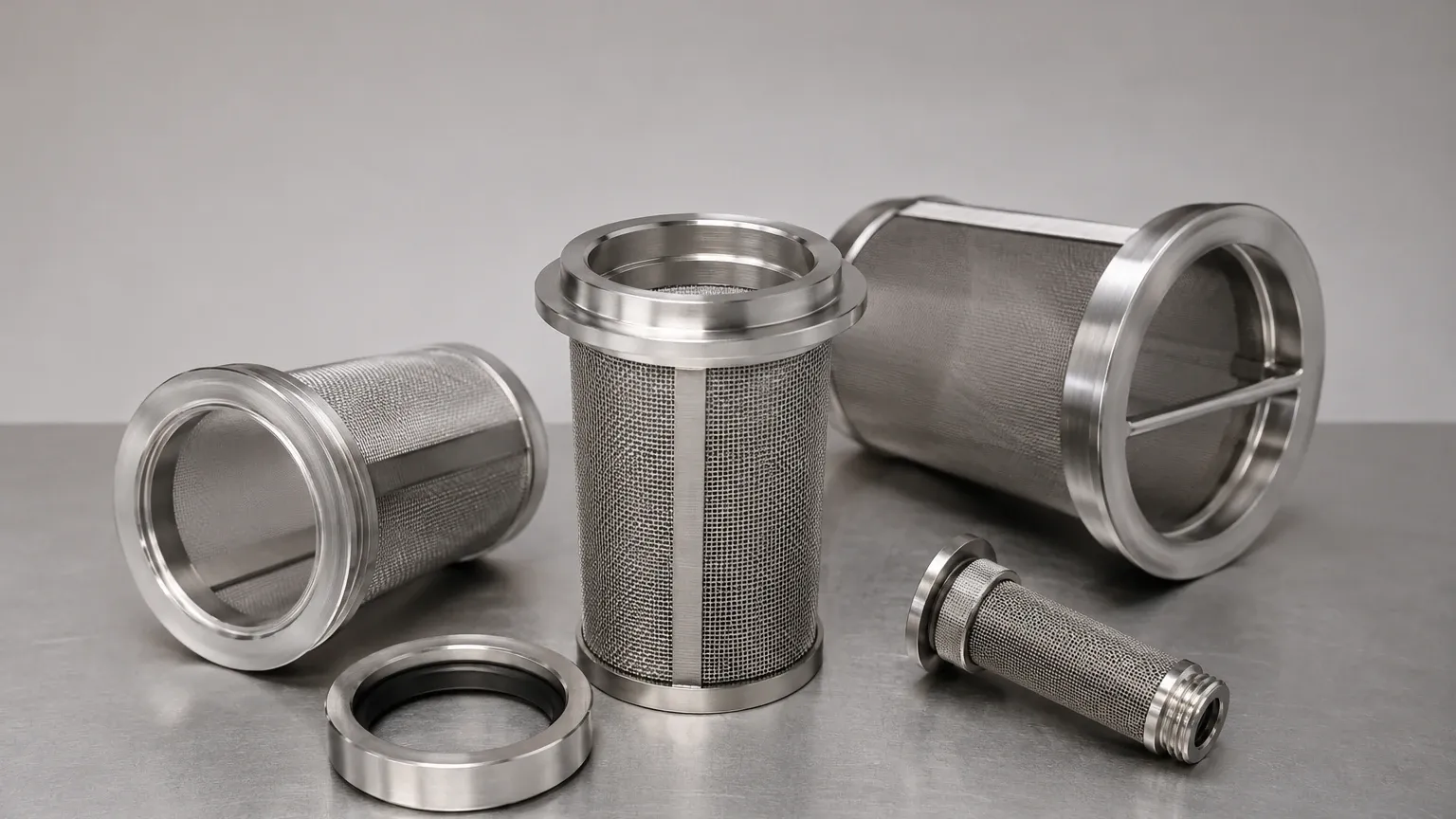
When evaluating a strainer xpander solution, engineers must focus on the technical specifications of the internal components. The basket is the heart of the strainer, and its design determines the efficiency of the entire filtration stage. At Kaifil, we focus on precision-engineered components that balance structural integrity with high flow efficiency.
Micron Ratings and Mesh Selection
The selection of the mesh or perforated metal is the first step in defining the performance of a strainer. For coarse filtration, perforated plate with hole diameters ranging from 1/16" to 1/2" is common. However, for finer applications, a multi-layer sintered mesh or a fine woven wire mesh is required.
When considering a strainer xpander approach, the ratio of the open area of the basket to the cross-sectional area of the inlet pipe (the "Burst Ratio") is paramount. A standard industrial strainer typically aims for a 6:1 ratio. If a process requires higher reliability, engineers may specify an expansion to an 8:1 or 10:1 ratio to ensure that even when the basket is 50% clogged, the pressure drop remains within acceptable limits.
Structural Integrity Under Differential Pressure
One of the risks of expanding the surface area without proper engineering is the potential for structural failure. As the basket accumulates debris, the differential pressure ($ΔP$) increases. A strainer xpander design must account for the maximum possible $ΔP$ the system can generate. This involves reinforcing the basket with heavy-duty support cages or using wedge wire technology, which offers superior mechanical strength and resistance to collapsing compared to standard wire mesh.
Material Selection for Corrosive and High-Temperature Environments
Industrial filtration often takes place in harsh environments where chemical compatibility and thermal stability are non-negotiable. Stainless steel is the industry standard for these applications due to its corrosion resistance and ability to withstand high temperatures without losing structural form.
* SS304: Suitable for general industrial use, water treatment, and food-grade applications where mild corrosion resistance is required.
* SS316/316L: The preferred choice for chemical processing, pharmaceutical, and marine environments. The addition of molybdenum provides enhanced resistance to pitting and crevice corrosion in chloride-rich environments.
* Specialty Alloys: For highly aggressive media, alloys such as Monel or Hastelloy may be integrated into the strainer xpander design to ensure longevity and prevent metal leaching into the process stream.
For engineers, the choice of material directly impacts the replacement cycle. A lower-cost material may save on initial procurement but lead to frequent failures and contamination risks, whereas a precision-engineered stainless steel basket from a manufacturer like Kaifil provides a predictable service life.
Critical Evaluation Criteria for Procurement Teams
When purchasing or upgrading to a strainer xpander system, procurement teams and engineers should confirm several key data points to ensure the solution is fit for purpose. Relying on generic marketing claims can lead to system underperformance. Instead, focus on the following factual boundaries:
Flow Rate and Pressure Drop Curves
Request specific pressure drop ($ΔP$) vs. flow rate curves for the specific mesh size and fluid viscosity being used. An effective strainer xpander should demonstrate a lower initial pressure drop than the standard component it is replacing. This data is essential for pump sizing and energy consumption calculations.
Seal and Gasket Compatibility
The effectiveness of a strainer is only as good as its seals. Ensure that the strainer xpander housing or basket interface uses gaskets (such as EPDM, Viton, or PTFE) that are compatible with the process fluid and temperature. Bypass leakage—where fluid flows around the basket rather than through it—is a common failure mode in poorly designed expansion kits.
Ease of Maintenance and Cleaning
A primary driver for seeking a strainer xpander is to reduce maintenance labor. Evaluate how the basket is removed. Is it a quick-opening cover? Does the basket have a handle designed for ergonomic extraction? For heavy industrial baskets, lifting lugs may be necessary. Furthermore, consider the cleanability of the media; sintered mesh and wedge wire are generally easier to backwash or ultrasonically clean than complex multi-layered felt media.
Common Risks in Strainer Modification
While expanding filtration capacity is generally beneficial, there are risks associated with improper implementation. One significant risk is the "oversizing" of the mesh. If an engineer specifies a mesh that is too fine in an attempt to improve product quality, the strainer may clog almost instantly, leading to pump cavitation.
Another risk involves the mechanical fit. A strainer xpander component must seat perfectly within the housing. Even a millimeter of misalignment can allow oversized particles to pass through, potentially damaging expensive downstream equipment like high-pressure nozzles or turbine blades. This is why working with an OEM manufacturer like Kaifil, who can provide exact tolerances and custom designs, is safer than sourcing generic off-the-shelf components.
Total Cost of Ownership (TCO) Considerations
In the B2B sector, the initial purchase price of Strainers & Baskets is only a fraction of the total cost. A well-engineered strainer xpander solution reduces the TCO through several mechanisms:
* Reduced Downtime: Longer intervals between cleaning mean more uptime for the production line.
* Pump Protection: By maintaining a low pressure drop and effectively removing harmful solids, the lifespan of expensive pumps is significantly extended.
* Reduced Waste: High-quality stainless steel baskets are cleanable and reusable, unlike disposable cartridge filters which generate ongoing waste and recurring procurement costs.
* Energy Savings: Lower differential pressure means the system pumps do not have to work as hard, leading to measurable reductions in electricity consumption over the life of the plant.
Conclusion: Selecting the Right Filtration Partner
Implementing a strainer xpander strategy requires a balance of theoretical engineering and practical manufacturing expertise. Engineers must account for the flow dynamics of the fluid, the physical properties of the contaminants, and the mechanical limitations of the existing infrastructure.
Kaifil provides the technical support and manufacturing precision necessary to develop these high-performance solutions. By focusing on durable stainless steel construction and customized designs, Kaifil ensures that every strainer and basket meets the specific demands of the application, from chemical processing to food and beverage production. When the goal is to optimize filtration performance and protect critical industrial assets, selecting a partner with deep expertise in metal filtration components is the most reliable path to success.
