


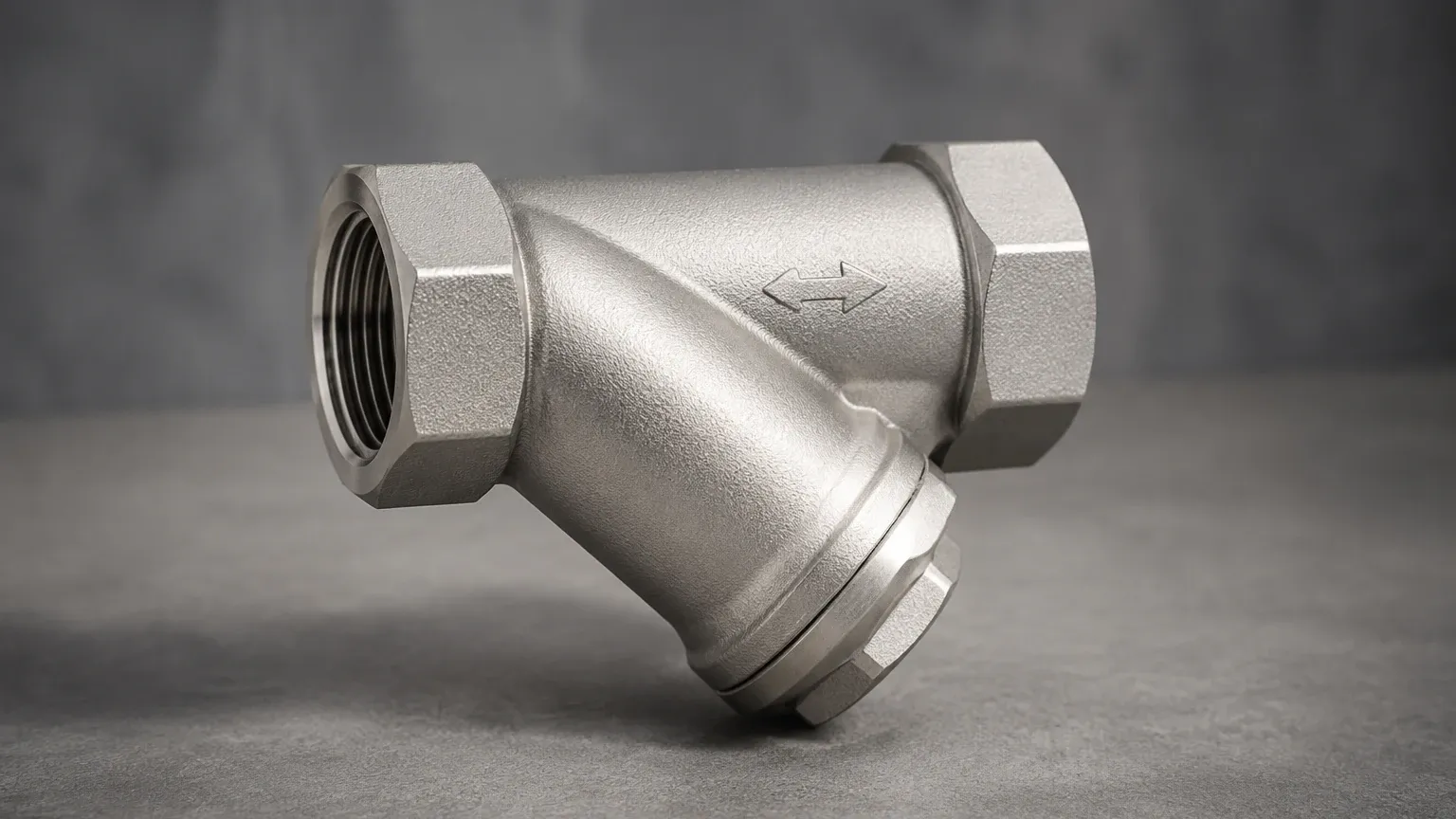
Strainer Y 2 Inch
In industrial fluid handling systems, the protection of sensitive downstream equipment is a primary engineering priority. The Y-strainer, named for its cylindrical branch and body configuration, serves as a mechanical filter that removes unwanted solids from liquid, gas, or steam lines by means of a straining element. Among the various sizes available, the strainer y 2 inch is one of the most common specifications found in chemical processing, water treatment, and food and beverage production lines. This size typically balances high flow capacity with a compact footprint, making it a versatile choice for protecting pumps, control valves, and flow meters.
Selecting a 2-inch Y-strainer requires more than simply matching the pipe diameter. Engineers must evaluate material compatibility, pressure ratings, filtration accuracy, and the specific flow characteristics of the medium. As a manufacturer specializing in Strainers & Baskets, Kaifil provides precision-engineered filtration components designed to withstand the rigorous demands of industrial environments.
Technical Specifications and Material Selection
The performance of a strainer y 2 inch is fundamentally tied to its construction materials. In industrial applications where corrosion resistance and durability are non-negotiable, stainless steel is the preferred choice.
Material Grades
* 304 Stainless Steel: Suitable for general industrial use, providing excellent resistance to oxidation and many organic chemicals. It is frequently used in water treatment and standard industrial cooling systems.
* 316/316L Stainless Steel: Contains molybdenum, which enhances resistance to chloride-induced pitting and crevice corrosion. This is the standard for pharmaceutical, chemical processing, and marine applications where the environment is more aggressive.
* Specialty Alloys: For highly corrosive or high-temperature environments, materials such as Monel or Hastelloy may be required, though stainless steel remains the industry benchmark for most 2-inch installations.
Connection Types
The method of integrating the strainer into the 2-inch piping system affects both the ease of installation and the integrity of the seal. Common connection types include:
* Threaded (NPT/BSPT): Ideal for smaller, lower-pressure systems where quick assembly is required.
* Flanged (ANSI/DIN): Preferred for high-pressure or high-temperature applications. Flanged connections allow for easier removal of the entire unit for maintenance or replacement.
* Socket Weld: Used in high-pressure systems where a permanent, leak-proof joint is necessary, often in steam or hazardous chemical lines.
Internal Filtration Components: Mesh and Perforation
The core of any strainer y 2 inch is the internal element, often referred to as the basket or screen. The choice of filtration media determines the particle size that will be captured and the resulting pressure drop across the system.
Perforated Screens
Perforated metal screens are typically used for "coarse" straining. They consist of a metal sheet with punched holes, usually ranging from 1/32" to 1/4". These are robust and capable of handling significant mechanical stress, making them suitable for removing large debris like scale, welding slag, or pebbles from the fluid stream.
Wire Mesh Liners
For finer filtration, a wire mesh liner is added to the perforated screen. Mesh is defined by the number of openings per linear inch. For a 2-inch Y-strainer, mesh counts can range from 20 mesh (840 microns) to as fine as 400 mesh (37 microns). When selecting mesh, engineers must balance the need for clean fluid with the risk of rapid clogging. A finer mesh provides better protection but increases the frequency of required cleaning.
Effective Area Ratio
A critical engineering metric is the ratio of the open area of the screen to the cross-sectional area of the 2-inch inlet pipe. A high-quality strainer should offer an open area ratio of at least 3:1 or 4:1. This ensures that the strainer does not become a significant bottleneck in the system, even as it begins to collect debris.
Engineering Considerations: Flow Rate and Pressure Drop
One of the most common challenges in piping design is managing the pressure drop (delta P) introduced by filtration components. For a strainer y 2 inch, the pressure drop is a function of the fluid’s velocity, viscosity, and the cleanliness of the internal screen.
Calculating the Cv Value
The flow coefficient (Cv) represents the volume of water in gallons per minute that will flow through the strainer with a pressure drop of 1 psi. For a standard 2-inch Y-strainer, the Cv value typically ranges between 50 and 80, depending on the body design and screen type. Engineers use this value to ensure the pump head is sufficient to overcome the resistance of the strainer when it is partially loaded with contaminants.
Impact of Viscosity
While water-like fluids flow easily through a 2-inch strainer, high-viscosity fluids (such as oils or syrups) require careful consideration. Higher viscosity increases the pressure drop significantly. In such cases, it may be necessary to oversize the strainer or use a coarser mesh to maintain the required flow rate without cavitation in downstream pumps.
Installation and Orientation Best Practices
The physical orientation of a strainer y 2 inch is vital for its functionality and ease of maintenance. Because Y-strainers rely on gravity to collect debris in the "leg" of the Y, they must be installed correctly relative to the flow direction.
Horizontal Installation
In horizontal pipelines, the strainer leg should point downward. This allows the collected particles to settle in the lowest point of the leg, away from the main flow path. This orientation also facilitates the use of a blow-off valve for self-cleaning.
Vertical Installation
Y-strainers can be installed in vertical lines, but only if the flow is downward. If the flow is upward, the collected debris would fall back toward the inlet when the flow stops, potentially clogging the pipe or damaging upstream equipment. In downward vertical installations, the Y-leg must point downward to ensure debris is trapped effectively.
Clearance for Maintenance
When designing the layout for a 2-inch line, engineers must ensure there is sufficient clearance to remove the strainer cap and pull out the internal basket. For a 2-inch unit, this typically requires at least 4 to 6 inches of unobstructed space below or to the side of the strainer leg.
Maintenance and Operational Longevity
A strainer y 2 inch is not a "fit and forget" component. Its effectiveness depends on a regular maintenance schedule. The frequency of cleaning is dictated by the cleanliness of the process fluid and the sensitivity of the downstream equipment.
Blow-off Valves and Self-Cleaning
Most Y-strainers are equipped with a drain plug in the cap. This plug can be replaced with a blow-off ball valve. This allows the operator to flush out the collected debris without shutting down the system or dismantling the strainer. By opening the valve, the internal pressure of the line forces the debris out through the blow-off port.
Manual Cleaning Cycles
In applications with sticky or fibrous debris, blow-off valves may not be sufficient. Periodic manual cleaning is required. This involves depressurizing the line, removing the cap, and physically cleaning the basket. During this process, gaskets and seals should be inspected for wear. For 2-inch strainers, PTFE or EPDM gaskets are commonly used to ensure a leak-proof seal after reassembly.
Monitoring Pressure Differential
To optimize maintenance cycles, many engineers install pressure gauges upstream and downstream of the strainer. A significant increase in the pressure differential indicates that the screen is becoming clogged and requires cleaning. This data-driven approach prevents unnecessary downtime and protects the system from the risks associated with high-pressure drops.
Customization and Specialized Applications
While standard off-the-shelf units satisfy many requirements, certain industrial processes demand customized solutions. Kaifil specializes in tailoring Strainers & Baskets to meet specific engineering challenges.
High-Pressure and Temperature Requirements
For steam service or high-pressure hydraulic systems, a standard strainer y 2 inch may not suffice. Custom wall thicknesses, reinforced baskets, and specialized metallurgy are employed to ensure the unit can handle pressures exceeding 600 PSI or temperatures above 500°F.
Precision Filtration
In the pharmaceutical and food industries, the internal finish of the strainer body and the precision of the mesh are paramount. Sanitary Y-strainers often require polished internal surfaces (Ra < 0.8 µm) to prevent bacterial growth and ensure easy CIP (Clean-In-Place) operations. Kaifil’s manufacturing capabilities allow for the production of these high-precision components, ensuring compliance with strict industry standards.
Magnetic Inserts
In systems where metallic fines or iron particles are a concern (such as in lubricating oil systems), magnetic inserts can be added to the 2-inch Y-strainer. These magnets capture fine ferrous particles that might otherwise pass through a standard mesh screen, providing an extra layer of protection for precision bearings and gears.
Conclusion: Selecting the Right 2-Inch Y-Strainer
The selection of a strainer y 2 inch is a critical decision that impacts the reliability and efficiency of an entire industrial system. By focusing on material integrity, precise filtration ratings, and proper installation orientation, engineers can significantly reduce the total cost of ownership and prevent catastrophic equipment failure.
Whether the application involves protecting a cooling tower pump from scale or ensuring the purity of a chemical batch, the right strainer configuration is essential. By partnering with a dedicated manufacturer like Kaifil, purchasing teams and engineers gain access to technical expertise in Strainers & Baskets, ensuring that every component is optimized for its specific operational environment.
