


Strainer Y Filter
In industrial fluid handling systems, the protection of downstream equipment—such as pumps, valves, meters, and nozzles—is a critical engineering priority. A strainer y filter serves as the primary line of defense, utilizing a mechanical process to remove unwanted solids from liquid, gas, or steam lines. Named for its characteristic "Y" shape, this component is indispensable in applications where the amount of solids to be removed is relatively small, or where frequent cleaning is not required.
As a specialized manufacturer, Kaifil provides high-performance Strainers & Baskets designed to meet the rigorous demands of chemical processing, pharmaceuticals, and hydraulic systems. Understanding the technical nuances of the strainer y filter, from material compatibility to pressure drop calculations, is essential for engineers and procurement teams tasked with maintaining system integrity and operational efficiency.
Understanding the Design and Function of Y-Strainers
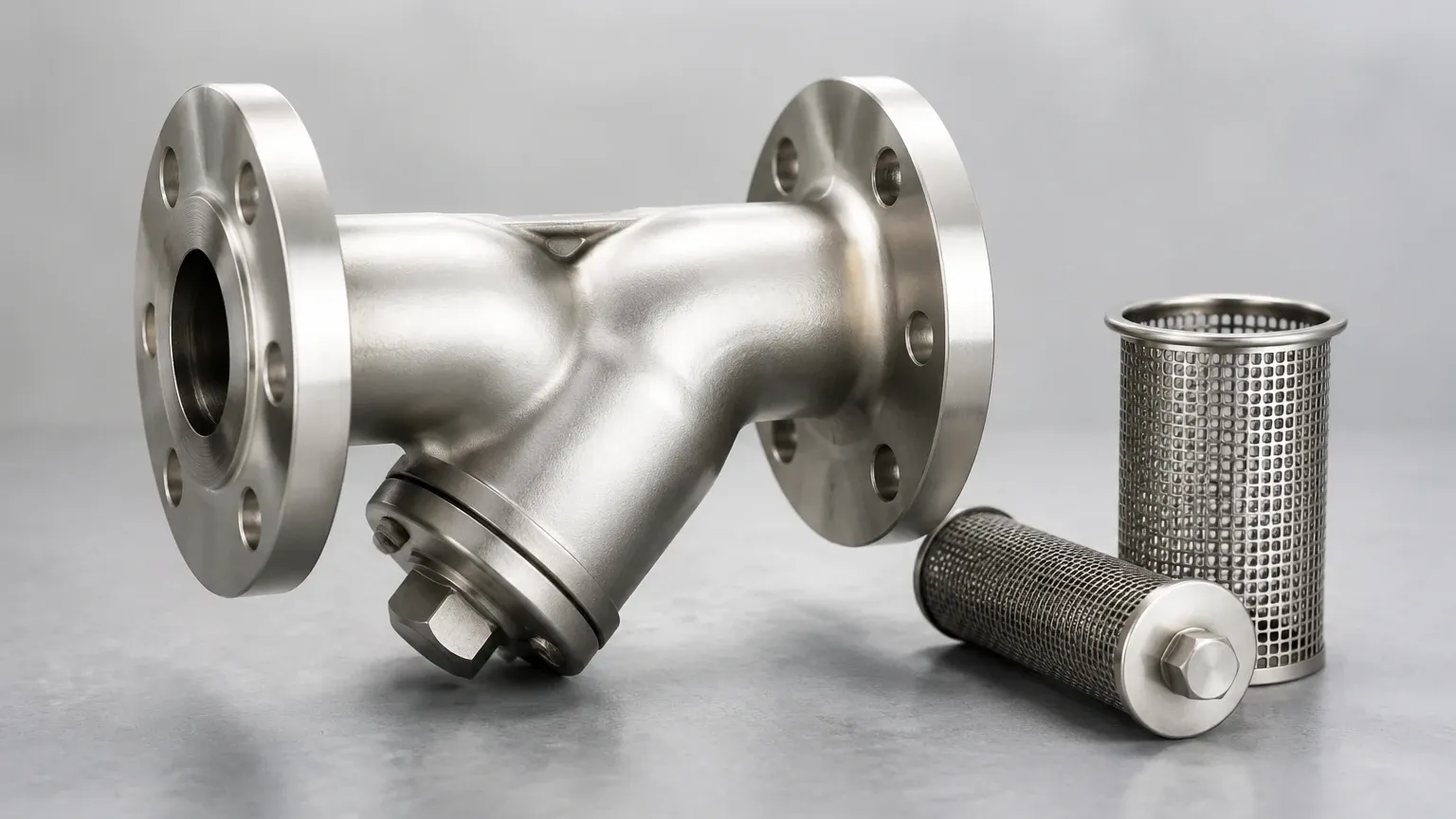
The fundamental design of a strainer y filter consists of a main flow body and a side-angled cylinder—the "leg"—which houses the straining element. This configuration allows the fluid to pass through the main housing while the debris is diverted and trapped within the mesh or perforated screen located in the leg.
Flow Dynamics
When fluid enters the inlet of a Y-strainer, it is forced through the straining element. The solids are retained on the inner surface of the screen, while the clean fluid continues through the outlet. Because the straining leg is positioned at an angle to the main flow path, the strainer can often be cleaned without being fully removed from the pipeline, provided a blow-off valve is installed in the strainer cap.
Component Anatomy
1. Housing: Usually cast or fabricated from metals like stainless steel, carbon steel, or bronze. The housing must withstand the maximum operating pressure and temperature of the system.
2. Straining Element (Screen): The heart of the filter. It can be a simple perforated plate or a complex multi-layered wire mesh, depending on the required filtration accuracy.
3. Cover/Cap: The removable part of the leg that allows access to the screen. It may be threaded or bolted (bolted covers are preferred for high-pressure or large-diameter applications).
4. Gasket/Seal: Ensures a leak-proof connection between the body and the cap, selected based on chemical compatibility with the process fluid.
Material Selection for Industrial Filtration
In B2B industrial environments, the longevity of a strainer y filter is heavily dependent on material selection. While various alloys are available, stainless steel remains the industry standard for demanding applications due to its mechanical strength and resistance to corrosion.
Stainless Steel Grades
* Type 304: Suitable for general industrial use, water treatment, and food processing where moderate corrosion resistance is required.
* Type 316/316L: Contains molybdenum, providing superior resistance to chlorides and acids. This is the preferred choice for chemical processing, marine environments, and pharmaceutical manufacturing.
* Specialty Alloys: For highly aggressive environments, materials like Monel or Hastelloy may be used for the internal mesh to prevent premature failure due to pitting or stress-corrosion cracking.
Screen Configurations
The straining element itself is often a point of customization. For coarse filtration, perforated sheets with hole diameters ranging from 1/32" to 1/4" are common. For finer filtration, a wire mesh liner is added to the interior of the perforated basket. Kaifil specializes in custom wire mesh filters that provide precise micron ratings, ensuring that even microscopic particles are captured before they can damage sensitive downstream components.
Comparing Strainers & Baskets: Selecting the Right Configuration
When designing a filtration system, engineers must choose between a Y-type strainer and a basket-type strainer. Both fall under the category of Strainers & Baskets, but their applications differ based on flow volume, debris load, and installation space.
Y-Strainers vs. Basket Strainers
* Pressure Handling: The strainer y filter is generally capable of handling higher pressures than a standard basket strainer. Its compact, streamlined design makes it ideal for high-pressure steam or hydraulic lines.
* Debris Capacity: Basket strainers have a larger internal volume, allowing them to hold more debris before requiring cleaning. They are better suited for liquid lines with high concentrations of solids.
* Installation Orientation: One of the primary advantages of the Y-strainer is its versatility. It can be installed in either a horizontal or vertical (downward flow) orientation. Basket strainers are almost exclusively limited to horizontal installations.
* Maintenance: Basket strainers are typically easier to clean because the element is accessed from the top. However, Y-strainers equipped with a blow-off port allow for "self-cleaning" or flushing without stopping the flow, which is a significant advantage in continuous processes.
Technical Performance: Pressure Drop and Filtration Accuracy
For an engineer, the two most critical performance metrics for a strainer y filter are the filtration rating (micron size) and the pressure drop (Delta P).
Calculating Pressure Drop
Every filter introduces a restriction to the flow, resulting in a loss of pressure. This is measured by the flow coefficient (Cv), which represents the volume of water at 60°F that will flow through the strainer with a 1 psi pressure drop.
Factors affecting pressure drop include:
* Viscosity of the Fluid: Thicker fluids require more force to pass through the mesh.
* Mesh Open Area: A finer mesh provides better filtration but reduces the total open area, leading to a higher initial pressure drop.
* Debris Loading: As the screen captures particles, the open area decreases, and the pressure drop increases exponentially. It is standard practice to clean or flush the strainer when the pressure drop reaches a predetermined limit (typically 5-10 psi above the clean drop).
Filtration Accuracy
Selecting the correct micron rating is a balance between protection and maintenance. If the mesh is too coarse, harmful particles pass through. If it is too fine, the strainer will clog prematurely. Engineers must identify the "largest allowable particle" for the most sensitive downstream component and select a mesh size slightly smaller than that dimension.
Installation Best Practices and Maintenance Protocols
Proper installation is paramount to the performance of a strainer y filter. Failure to follow engineering guidelines can lead to bypass, screen collapse, or physical damage to the housing.
Orientation and Placement
* Horizontal Lines: The leg of the Y-strainer should point downward. This ensures that the trapped debris is collected in the leg and does not spill back into the main pipe during cleaning.
* Vertical Lines: Y-strainers can only be used in vertical pipes if the flow is downward. If installed in an upward-flow pipe, the debris would fall back toward the source, potentially causing blockages.
* Upstream Protection: The strainer should be placed as close to the equipment it is protecting as possible. However, it is also advisable to leave sufficient straight-pipe runs before and after the strainer to minimize turbulence.
The Role of the Blow-Off Valve
The strainer cap usually features a NPT plug. Replacing this plug with a ball valve allows for "blow-off" cleaning. When the valve is opened, the internal pressure of the system flushes the accumulated debris out of the leg. This is an effective way to extend the time between manual cleanings and is a standard feature in many industrial Strainers & Baskets setups.
Maintenance Checklist
1. Monitor Differential Pressure: Install pressure gauges upstream and downstream of the strainer.
2. Inspect Seals: During manual cleaning, always inspect the gasket or O-ring for signs of wear or chemical degradation.
3. Screen Integrity: Check the mesh for signs of "blinded" areas (permanent clogging) or physical deformation. A collapsed screen often indicates that the strainer was left in service too long under high differential pressure.
Industry Applications and Customization Options
The versatility of the strainer y filter makes it a staple across numerous sectors. Each industry brings unique challenges that dictate the final specification of the component.
Chemical and Petrochemical
In these environments, chemical compatibility is the primary concern. Stainless steel 316L housings with PTFE seals are common. These strainers protect expensive metering pumps and prevent catalysts from being contaminated by pipe scale.
Food and Beverage
Sanitary requirements dictate the use of polished stainless steel surfaces and specialized mesh that can be easily sterilized. The strainer y filter is often used to remove pulp from juices or ensure that no foreign particulates enter bottling lines.
Power Generation and Steam Systems
Steam lines are notorious for "pipe scale"—rust and debris that breaks off the interior of carbon steel pipes. Because steam systems operate at high temperatures and pressures, Y-strainers are the preferred choice for protecting steam traps and turbines.
Custom OEM Solutions
At Kaifil, we recognize that standard off-the-shelf components do not always meet the specific needs of a complex system. Customization options include:
* Non-standard Mesh Sizes: Tailoring the weave pattern to capture specific particle shapes.
* Reinforced Baskets: Adding internal supports to prevent screen collapse in high-viscosity applications.
* Custom Dimensions: Adjusting the face-to-face length or flange type (ANSI, DIN, JIS) to fit existing piping layouts.
Conclusion: Making an Informed Purchase Decision
Selecting a strainer y filter involves more than simply matching a pipe size. It requires a thorough analysis of the fluid properties, flow rates, pressure limits, and the specific nature of the contaminants. By focusing on high-quality materials and precision-engineered mesh, facilities can significantly reduce downtime and repair costs for their most expensive machinery.
For engineers and purchasing managers, the total cost of ownership is a vital metric. While a lower-quality strainer might save on initial capital expenditure, the risks of bypass, frequent clogging, or housing failure often far outweigh the initial savings. Investing in robust Strainers & Baskets from a manufacturer with proven technical expertise ensures long-term reliability and system safety.
When evaluating your next filtration requirement, confirm the following with your supplier:
* The precise micron or mesh rating required for your application.
* The maximum allowable pressure drop for your system's pump capacity.
* The chemical compatibility of both the housing and the internal seals.
* The availability of custom-designed elements if standard sizes are insufficient.
By adhering to these technical standards, industrial operators can ensure that their fluid systems remain clean, efficient, and protected against the inevitable presence of particulate matter.
