


Strainers 15mm
In industrial fluid systems, the protection of sensitive downstream equipment—such as pumps, valves, and flow meters—often begins with small-bore filtration. Strainers 15mm, typically corresponding to a nominal diameter of DN15 or a 1/2-inch pipe size, serve as a critical first line of defense against particulate contamination. Despite their compact size, these components are engineered to handle significant pressure and flow requirements while maintaining system integrity.
Selecting the correct 15mm strainer involves more than simply matching a pipe diameter. Engineers must evaluate material compatibility, filtration accuracy, and the physical constraints of the installation environment. Whether used in chemical processing, hydraulic lines, or food and beverage production, the performance of these small-bore strainers directly impacts the longevity and efficiency of the entire system.
Engineering Fundamentals of 15mm Strainers
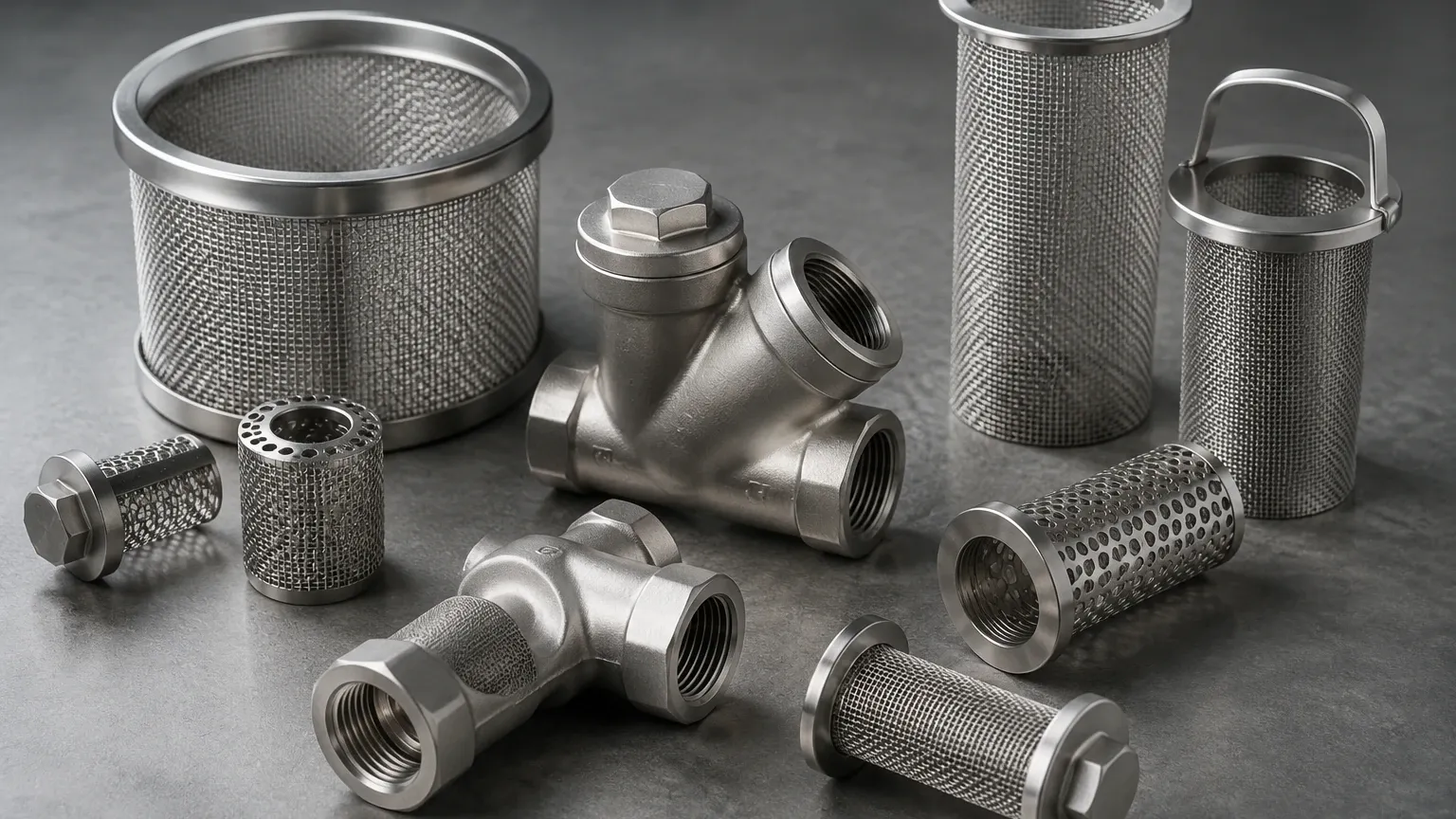
A 15mm strainer is designed to remove unwanted solids from a liquid or gas stream via a perforated or wire mesh straining element. In industrial applications, these are most commonly found in Y-strainer or basket strainer configurations. The "15mm" designation refers to the nominal bore of the inlet and outlet connections, which must integrate seamlessly into a DN15 piping architecture.
The Relationship Between Size and Surface Area
One of the primary engineering challenges with 15mm strainers is the limited internal volume. To prevent excessive pressure drop, the straining element (the basket or screen) must provide a total open area significantly larger than the cross-sectional area of the 15mm pipe. A well-engineered Strainers & Baskets solution typically offers an open area ratio of at least 3:1 or 4:1. This ensures that even as the mesh begins to capture debris, the flow remains relatively unimpeded until the next scheduled maintenance cycle.
Configuration Types
* Y-Strainers: These are the most common choice for 15mm lines where space is at a premium. Their compact, angular design allows for installation in both horizontal and vertical pipelines. They are typically used for applications with lower levels of contamination where frequent cleaning is not required.
* Basket Strainers: While less common in 15mm sizes than in larger diameters, basket strainers are used when the application requires a higher dirt-holding capacity. The upright basket design allows for easier manual cleaning and is generally preferred for liquid service where the debris load is higher.
Material Selection for Industrial Durability
In B2B industrial environments, the material of construction for strainers 15mm is non-negotiable. The choice of material determines the component's resistance to corrosion, temperature fluctuations, and mechanical stress. Kaifil specializes in stainless steel solutions because of the material's versatility across demanding sectors.
Stainless Steel 304 vs. 316
* Grade 304: This is the standard industrial grade, offering excellent strength and basic corrosion resistance. It is suitable for water treatment, HVAC systems, and general industrial lubricants.
* Grade 316/316L: For more aggressive environments, such as chemical processing or marine applications, Grade 316 is the preferred choice. The addition of molybdenum provides superior resistance to chlorides and pitting. In pharmaceutical and food-grade applications, 316L (low carbon) is often specified to prevent intergranular corrosion during welding and to meet strict hygiene standards.
Specialized Alloys
In specific high-temperature or highly corrosive chemical environments, standard stainless steels may not suffice. Engineering teams may require strainers constructed from Duplex stainless steel or Monel, though these are typically custom-ordered for specific 15mm applications where standard components would fail prematurely.
Understanding Mesh and Micron Ratings
The heart of any 15mm strainer is the internal element. This is usually constructed from stainless steel wire mesh or perforated metal. The selection of the filtration grade is a balance between protecting downstream equipment and minimizing flow resistance.
Perforated Plate vs. Wire Mesh
For coarse filtration (removing large pebbles, scale, or welding slag), a perforated plate with holes ranging from 1mm to 3mm is often sufficient. However, for precision applications, a wire mesh lining is added to the perforated support.
Micron Accuracy
In 15mm lines, filtration requirements often range from 40 microns to 500 microns.
* Coarse (Over 200 microns): Used for protecting rugged equipment like centrifugal pumps.
* Fine (40 to 100 microns): Necessary for protecting spray nozzles, solenoid valves, and heat exchangers that are prone to clogging from fine particulates.
When specifying a 15mm strainer, engineers must confirm the "absolute" vs. "nominal" micron rating. An absolute rating indicates that 99.9% of particles of a specific size will be captured, whereas a nominal rating is more of an average efficiency guideline.
Flow Dynamics and Pressure Drop (ΔP)
In a 15mm piping system, every component adds resistance. The pressure drop (ΔP) across a strainer is a critical metric for system design. If the ΔP is too high, the system may suffer from reduced flow rates, cavitation in pumps, or even the collapse of the strainer element itself.
Factors Influencing Pressure Drop
1. Viscosity of the Fluid: Thicker fluids (like heavy oils) require larger mesh openings or a larger strainer body to maintain flow.
2. Percentage of Clogging: As the 15mm strainer captures debris, the available open area decreases, and the pressure drop increases exponentially.
3. Velocity: Small-bore lines often have higher fluid velocities. A 15mm line moving fluid at 3 meters per second will experience a much higher pressure drop through a strainer than a line moving at 1 meter per second.
Engineers should consult flow coefficient (Cv) charts provided by the manufacturer. The Cv value represents the flow of water in gallons per minute at a 1 psi pressure drop. For a 15mm strainer, a higher Cv value indicates a more efficient internal design with less resistance to flow.
Installation and Connection Standards
How a 15mm strainer connects to the rest of the system impacts both the ease of installation and the long-term leak-proof integrity of the line. There are three primary connection types found in industrial 15mm setups:
Threaded Connections (NPT/BSP)
Threaded connections are the most common for 15mm sizes. They are cost-effective and easy to install in tight spaces. NPT (National Pipe Thread) is standard in North America, while BSP (British Standard Pipe) is prevalent in Europe and Asia. It is vital to ensure the thread standard matches the existing piping to avoid cross-threading or sealing issues.
Flanged Connections
While more common in larger diameters, flanged 15mm strainers are used in high-pressure systems or where frequent removal for cleaning is expected. Flanges (such as ANSI/ASME B16.5 or DIN standards) provide a more robust seal and are easier to align in rigid piping systems.
Socket Weld Connections
In high-pressure or high-temperature applications where leak prevention is paramount (such as steam lines), socket weld connections are used. These provide a permanent, welded joint that eliminates the risk of thread leaks but makes the strainer body more difficult to replace.
Application-Specific Considerations
The operational context of a 15mm strainer dictates its design features. A strainer used in a hydraulic system has different requirements than one used in a brewery.
Hydraulic and Lubrication Systems
In these applications, the 15mm strainer protects sensitive valves from metal shavings and wear particles. These strainers must be rated for high operating pressures, often exceeding 100 bar, and must use high-strength stainless steel mesh that won't deform under the force of high-viscosity oil.
Chemical Processing
Chemical compatibility is the primary concern here. Beyond the stainless steel body, the seals and gaskets (typically EPDM, Viton, or PTFE) must be checked for resistance to the specific chemicals being processed. For 15mm lines carrying volatile or hazardous fluids, a Y-strainer with a bolted cover is often preferred over a threaded cap for enhanced safety.
Food and Beverage
In the food industry, "dead legs" or areas where bacteria can grow must be minimized. 15mm strainers for this sector often feature polished internal surfaces (Ra < 0.8 µm) and tri-clamp connections for quick disassembly and cleaning (CIP/SIP compatibility).
Maintenance and Total Cost of Ownership
While the initial purchase price of a 15mm strainer is a factor, the total cost of ownership (TCO) is driven by maintenance requirements and durability. A cheap strainer made from inferior materials may save money upfront but will cost significantly more in downtime and replacement parts.
Cleaning Cycles
The frequency of cleaning depends on the fluid's cleanliness. In many 15mm installations, a differential pressure gauge is installed across the strainer. When the pressure drop reaches a predetermined limit (e.g., 0.5 bar to 1 bar), the strainer must be cleaned. For Y-strainers, this may involve opening a "blow-off" valve to flush out debris without stopping the flow, although a full manual cleaning of the element is periodically necessary.
Replacement Parts
The most common wear item is the internal mesh or basket. High-quality manufacturers like Kaifil provide replaceable Strainers & Baskets elements, allowing the heavy metal body to remain in the piping while only the filtration media is refreshed. This modularity is essential for reducing waste and maintenance labor.
Technical Confirmation Before Purchase
Before finalizing a purchase for strainers 15mm, technical professionals should confirm the following data points with their supplier:
1. Maximum Allowable Working Pressure (MAWP): Ensure the strainer rating exceeds the system's peak pressure, including potential surges.
2. Temperature Limits: Confirm that both the metal body and the internal seals can handle the maximum operating temperature.
3. Effective Filtration Area: Ask for the ratio of the screen area to the pipe area to predict cleaning intervals.
4. Seal Material: Verify that the O-rings or gaskets are compatible with the process fluid.
5. Certification Requirements: Determine if the application requires specific certifications, such as PED (Pressure Equipment Directive), FDA compliance, or material traceability reports (MTRs).
By focusing on these technical parameters, engineering and purchasing teams can ensure they select a 15mm strainer that provides reliable, long-term protection for their industrial processes. The precision of the filtration, combined with the durability of stainless steel construction, makes these small components a vital part of modern industrial infrastructure.
