


Strainers and Sweepers
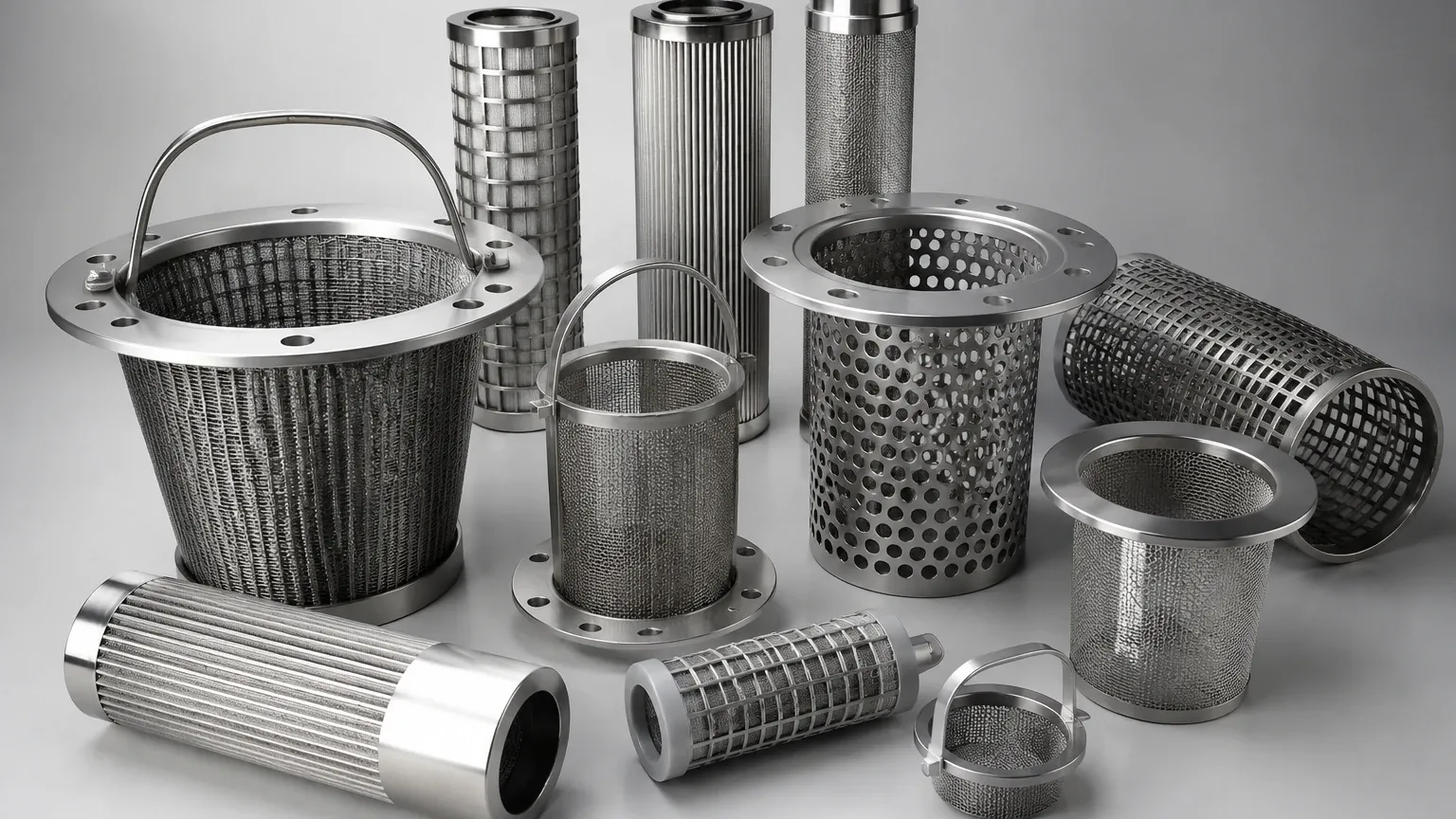
In industrial fluid handling, the management of suspended solids and debris is a critical factor in maintaining system efficiency and protecting expensive downstream equipment. The implementation of Strainers & Baskets serves as the primary line of defense in piping systems, ensuring that pumps, valves, and heat exchangers are not compromised by particulate matter. When discussing "strainers and sweepers," engineers are often looking at the intersection of static filtration and mechanical cleaning mechanisms designed to maintain continuous flow in high-debris environments.
Industrial filtration is rarely a one-size-fits-all solution. The selection between a manual basket strainer and an automated system featuring internal sweepers or scrapers depends on several variables, including fluid viscosity, particle load, and the cost of process downtime. This article examines the technical nuances of these systems, providing the engineering data necessary to optimize filtration performance in chemical, pharmaceutical, and water treatment applications.
Understanding the Role of Strainers in Industrial Fluid Systems
Strainers are closed pressure vessels that remove solids from flowing liquids or gases using a perforated or wire mesh straining element. Unlike filters, which typically remove particles in the sub-micron range, strainers are generally used for coarser removal, protecting equipment from larger debris that could cause mechanical failure or clogging.
Simplex and Duplex Configurations
The most common industrial configurations are simplex and duplex basket strainers. A simplex strainer is used in systems where the flow can be periodically shut down for basket cleaning. In contrast, duplex strainers consist of two separate chambers connected by a diverting valve. This allows one chamber to be serviced while the other remains in operation, making them essential for continuous processes where downtime is not an option.
The Importance of the Open Area Ratio (OAR)
One of the most critical engineering metrics for a strainer is the Open Area Ratio. This is the ratio of the total open area of the strainer basket to the internal cross-sectional area of the inlet pipe. A high OAR (typically 4:1 or higher) ensures a lower initial pressure drop and extends the time between cleaning cycles. Kaifil’s engineering approach emphasizes maximizing this ratio through precision-engineered wire mesh and perforated metal designs to ensure long-term operational efficiency.
The Mechanics of Sweepers in Self-Cleaning Strainers
In applications where the debris load is exceptionally high or where manual cleaning is labor-prohibitive, the concept of "strainers and sweepers" becomes relevant. Mechanical sweepers or scrapers are integrated into automated self-cleaning strainers to provide continuous debris removal without interrupting the process flow.
Internal Cleaning Mechanisms
Automated systems often utilize a rotating sweeper arm or a reciprocating scraper blade. As the fluid passes through the cylindrical straining element, solids accumulate on the internal surface. When the differential pressure reaches a predetermined setpoint, the sweeper mechanism is activated.
1. Brush Sweepers: These utilize nylon or stainless steel brushes to sweep the surface of the mesh, dislodging soft or fibrous contaminants.
2. Scraper Blades: For more tenacious or viscous materials, rigid metal scrapers "sweep" the inner wall of the element, pushing the collected debris into a sump area at the bottom of the housing for periodic purging.
Advantages of Integrated Sweeper Systems
The primary advantage of integrating sweepers into the filtration process is the reduction in fluid loss and the elimination of manual labor. Because the cleaning occurs while the system is online, there is no need to bypass the strainer or shut down the line. This is particularly valuable in cooling water systems or chemical processing lines where the fluid may be hazardous or expensive to handle manually.
Engineering Considerations for Material Selection
The durability of strainers and sweepers is heavily dependent on the materials used in their construction. Industrial environments often involve corrosive fluids, high temperatures, and abrasive particles, necessitating a careful review of metallurgy.
Stainless Steel Grades: 304 vs. 316L
Stainless steel is the industry standard for high-performance filtration components due to its strength and corrosion resistance.
* Grade 304: Suitable for general-purpose applications, including water treatment and food processing where moderate corrosion resistance is required.
* Grade 316L: The "L" stands for low carbon, which improves weldability and prevents sensitization. 316L contains molybdenum, providing superior resistance to chlorides and pitting, making it the preferred choice for chemical processing and marine environments.
Specialty Alloys and Coatings
In extreme cases, such as handling highly acidic or alkaline fluids, specialty alloys like Hastelloy or Monel may be required for the straining element. Additionally, the housing may be lined with PTFE or epoxy coatings to prevent chemical attack on the vessel walls. When selecting a manufacturer like Kaifil, it is essential to confirm that the material certifications match the specific chemical compatibility requirements of the project.
Comparing Manual Basket Strainers vs. Automated Sweeper Systems
Choosing between a traditional basket strainer and an automated system with sweepers involves a balance of initial capital expenditure (CAPEX) and long-term operational expenditure (OPEX).
Manual Basket Strainers
* Pros: Lower initial cost, simple design with no moving parts, easy to inspect visually.
* Cons: Requires manual labor for cleaning, requires system downtime (for simplex units), higher risk of fluid exposure for operators.
Automated Sweeper Systems
* Pros: Continuous operation, minimal fluid loss during backwash/purge, reduced labor costs, enhanced safety by containing hazardous fluids.
* Cons: Higher initial investment, requires power (electric or pneumatic), more complex maintenance due to moving parts and seals.
Total Cost of Ownership (TCO)
For many purchasing teams, the TCO is the deciding factor. While a manual basket strainer is cheaper upfront, the cost of labor and the potential loss of production during cleaning cycles can quickly exceed the cost of an automated system. In high-flow applications with high solids loading, a system utilizing strainers and sweepers often pays for itself within the first year of operation.
Critical Performance Metrics: Pressure Drop and Filtration Accuracy
To ensure the filtration system meets the process requirements, engineers must evaluate the pressure drop (ΔP) and the required filtration accuracy.
Calculating Differential Pressure
The pressure drop across a strainer is a function of fluid velocity, viscosity, and the percentage of the basket that is clogged. A clean strainer should typically have a pressure drop of less than 2 PSI. If the ΔP exceeds 10-15 PSI, the structural integrity of the basket may be at risk, and the flow rate will significantly decrease. Monitoring this metric is essential for determining when the sweepers should be activated or when a manual basket needs to be pulled.
Filtration Accuracy and Micron Ratings
Strainers are usually rated by mesh size or perforation diameter.
* Perforated Plate: Used for coarse filtration (typically 1/32" to 1/4" holes). It provides excellent structural strength.
* Wire Mesh: Used for finer filtration (down to 20 microns). For high-pressure applications, the mesh is often sintered or supported by a perforated metal backup tube to prevent collapsing.
When specifying a strainer, it is vital to select a micron rating that is fine enough to protect downstream equipment but coarse enough to avoid premature clogging. Over-filtering (selecting a mesh that is too fine) leads to excessive pressure drop and frequent cleaning cycles.
Maintenance and Operational Safety
Proper maintenance of Strainers & Baskets is vital for preventing system failures. Even the most robust stainless steel components require periodic inspection.
Inspection Intervals
For manual systems, inspection intervals should be based on the differential pressure readings. For automated systems with sweepers, the mechanical seals and motor drive assemblies should be inspected every six months to ensure there is no leakage or wear on the scraper blades. Replacing worn sweepers promptly prevents damage to the expensive internal mesh elements.
Safety Protocols
Opening a strainer housing under pressure is a significant safety hazard. All systems should be equipped with vent and drain valves to ensure the vessel is depressurized and emptied before the cover is removed. In applications involving steam or high-temperature liquids, thermal expansion must be accounted for to prevent the "locking" of the strainer cover.
Customization and OEM Solutions
As a professional manufacturer, Kaifil understands that standard off-the-shelf strainers often fail to meet the specific spatial or performance constraints of complex industrial layouts. Customization options often include:
* Custom Flange Orientations: To fit into existing piping footprints without extensive repiping.
* Variable Mesh Layers: Combining different mesh counts to create a multi-stage filtration effect within a single basket.
* Reinforced Structures: For high-viscosity fluids that exert significant force on the straining element.
By working closely with a manufacturer during the design phase, engineers can ensure that the selected strainers and sweepers are optimized for the specific flow dynamics and contaminant profiles of their application.
Conclusion: Selecting the Right Filtration Strategy
The effective management of industrial fluids requires a strategic approach to debris removal. Whether your application demands the simplicity of a manual basket strainer or the sophisticated continuous cleaning of a system with integrated sweepers, the goal remains the same: protecting the integrity of the process and the longevity of the equipment.
Before finalizing a purchase, technical teams should confirm the fluid's chemical properties, the expected solids loading, and the allowable pressure drop. By leveraging high-quality stainless steel components and precision engineering, facilities can achieve a reliable filtration solution that minimizes maintenance and maximizes uptime. For those seeking durable, custom-engineered filtration components, exploring professional Strainers & Baskets options is the first step toward a more efficient industrial operation.
