


Strainers Bar
In industrial fluid handling systems, the integrity of filtration components is paramount to protecting downstream equipment such as pumps, valves, and heat exchangers. While many technical discussions focus on micron ratings and mesh counts, the structural components—specifically the strainers bar and internal support frameworks—play a critical role in the longevity and performance of the system. For engineers and procurement specialists, understanding the mechanical requirements of these components is essential for ensuring system reliability under varying pressure and flow conditions.
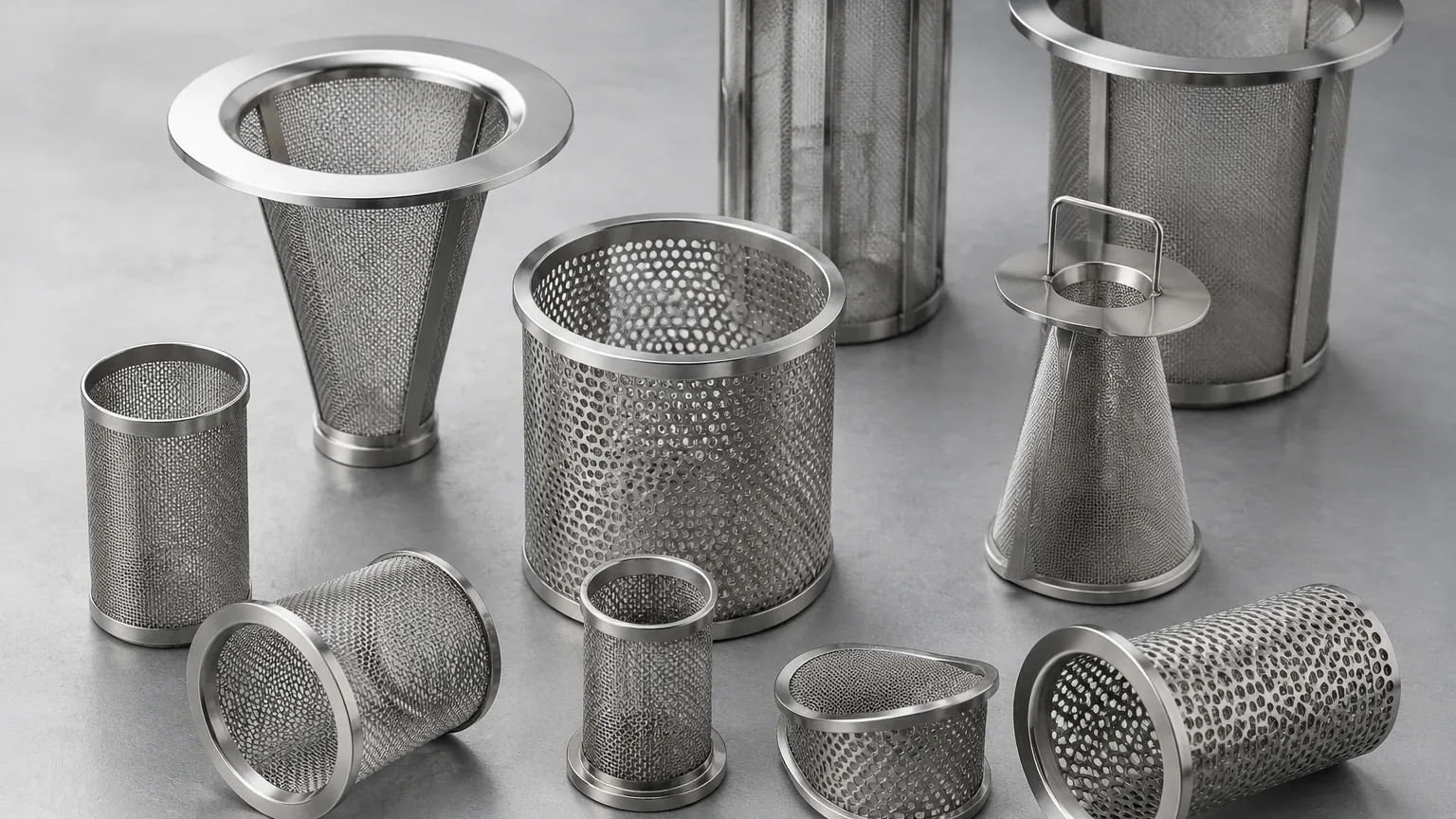
Industrial Strainers & Baskets are designed to remove unwanted solids from liquid or gas streams. However, the filtration media alone is often insufficient to withstand the mechanical stresses of high-velocity flows. This is where the engineering of the strainer bar and reinforcing structures becomes vital. This article examines the technical specifications, material considerations, and engineering principles behind these essential filtration components.
The Role of the Strainer Bar in Structural Integrity
The term "strainer bar" typically refers to one of two critical elements in industrial filtration: the structural reinforcement bars within a basket strainer or the primary filtration bars in a coarse bar strainer (often used in water intake systems). In both contexts, the primary function is mechanical resistance.
Reinforcement in Basket Strainers
In large-diameter basket strainers, the differential pressure ($ΔP$) across the mesh can increase rapidly as debris accumulates. Without a robust internal framework, the fine wire mesh or perforated plate would likely collapse or deform. The strainer bar acts as a rib or skeleton, distributing the hydraulic load across the housing. Engineers must calculate the yield strength of these bars to ensure they can withstand the maximum possible pressure surge of the system, not just the nominal operating pressure.
Coarse Bar Strainers
In applications involving high-volume water intake—such as power plant cooling or large-scale municipal water treatment—a strainers bar configuration is used to capture large debris (wood, plastic, or stones) before the fluid reaches finer filtration stages. These bars are spaced at specific intervals to balance flow efficiency with debris capture. The cross-sectional profile of the bar (e.g., rectangular, round, or teardrop) significantly impacts the drag coefficient and the potential for "vortex shedding," which can lead to vibration-induced fatigue.
Material Selection: SS304 vs. SS316L
Material selection is perhaps the most critical decision in the specification of strainers and their internal bars. Since these components are in constant contact with the process fluid, corrosion and erosion are constant threats.
1. Stainless Steel 304: This is the standard choice for general industrial applications, including water treatment and some food processing. It offers excellent strength and good corrosion resistance at a cost-effective price point. However, it is susceptible to pitting in high-chloride environments.
2. Stainless Steel 316L: For chemical processing, pharmaceutical manufacturing, or marine environments, 316L is preferred. The addition of molybdenum provides superior resistance to chlorides and acidic environments. The "L" (Low Carbon) designation is crucial for components that require welding, as it prevents carbide precipitation and ensures the structural integrity of the strainer bar joints.
3. Specialty Alloys: In highly aggressive environments, such as those involving concentrated sulfuric acid or high-temperature steam, alloys like Monel or Hastelloy may be required for the support bars to prevent catastrophic failure.
Engineering Considerations for Flow Dynamics
When integrating a strainers bar into a filtration design, engineers must account for the impact on fluid dynamics. Any structural element placed in the flow path introduces a degree of turbulence and pressure drop.
Minimizing Pressure Drop
A primary goal in strainer design is to maximize the "open area ratio." This is the ratio of the total area of the openings in the strainer to the cross-sectional area of the inlet pipe. While the strainer bar provides necessary strength, it also reduces the open area. High-performance designs utilize high-tensile materials that allow for thinner bar profiles without sacrificing structural safety, thereby maintaining a lower $ΔP$.
Turbulence and Erosion
Fluid hitting a flat strainer bar at high velocity creates localized turbulence. This turbulence can lead to "impingement erosion," where the material is gradually worn away. In high-velocity systems, rounded or wedge-shaped bars are often specified to create a more laminar flow profile, extending the service life of both the bar and the surrounding mesh.
Customization and OEM Specifications
Standard off-the-shelf strainers often fail to meet the specific demands of specialized industrial processes. Customization is frequently necessary to address unique flow rates, viscosity levels, and debris types.
Tailored Bar Spacing
In bar-type strainers, the spacing between each strainers bar must be precisely engineered. If the gap is too wide, harmful debris passes through; if it is too narrow, the strainer will clog prematurely, leading to excessive maintenance downtime. Custom OEM solutions allow engineers to define these tolerances based on the specific particle size distribution of their process fluid.
Integration of Lifting Mechanisms
For large industrial baskets, the strainer bar often doubles as a lifting handle or an attachment point for mechanical hoists. In these cases, the bar must be engineered not only for hydraulic pressure but also for the tensile loads associated with removing a heavy, debris-laden basket during cleaning cycles.
Performance Evaluation and Maintenance
To ensure the long-term reliability of a filtration system, a proactive approach to performance evaluation is required. The condition of the internal support bars should be a key focus during routine inspections.
* Differential Pressure Monitoring: A sudden drop in $ΔP$ without a corresponding change in flow rate can indicate a structural failure, such as a snapped strainer bar or a bypassed mesh. Conversely, a rapid increase may suggest that the bars are trapping debris that the cleaning system cannot reach.
* Visual Inspection for Stress Cracking: In systems subject to thermal cycling or pressure pulsations, the weld points where the bar meets the basket frame are susceptible to stress corrosion cracking. Non-destructive testing (NDT), such as dye penetrant inspection, can identify these issues before they lead to component failure.
* Replacement Cycles: While stainless steel components are durable, they are not infinite. Establishing a replacement cycle based on the fatigue life of the internal structures is safer than a "run-to-failure" strategy, which risks downstream equipment damage.
Total Cost of Ownership (TCO) in Filtration
When evaluating the purchase of Strainers & Baskets, it is a mistake to focus solely on the initial capital expenditure. The total cost of ownership is heavily influenced by the durability of the internal components.
A cheaper strainer with an undersized or poorly welded strainers bar may save money upfront but will lead to higher costs through:
* Frequent Replacements: Low-quality materials or thin-gauge bars fail faster under pressure.
* Increased Energy Costs: Poorly designed bars that create excessive turbulence increase the load on system pumps.
* Unscheduled Downtime: Structural failure often requires an immediate system shutdown to prevent debris from entering sensitive machinery.
Investing in precision-engineered components ensures that the filtration system performs its primary function—protection—without becoming a point of failure itself.
Conclusion: Selecting the Right Partner
Effective industrial filtration requires a balance of material science, mechanical engineering, and fluid dynamics. The strainers bar might seem like a simple component, but its design and execution are fundamental to the success of the entire system. Whether you are dealing with high-pressure hydraulic lines or large-scale chemical processing, the structural integrity of your strainers cannot be overlooked.
For engineers and purchasing teams, the key is to work with manufacturers who provide transparent technical data regarding material grades, pressure ratings, and customization capabilities. By focusing on these technical boundaries, you can ensure that your filtration solutions provide reliable, long-term service in even the most demanding industrial environments.
