


Strainers Big
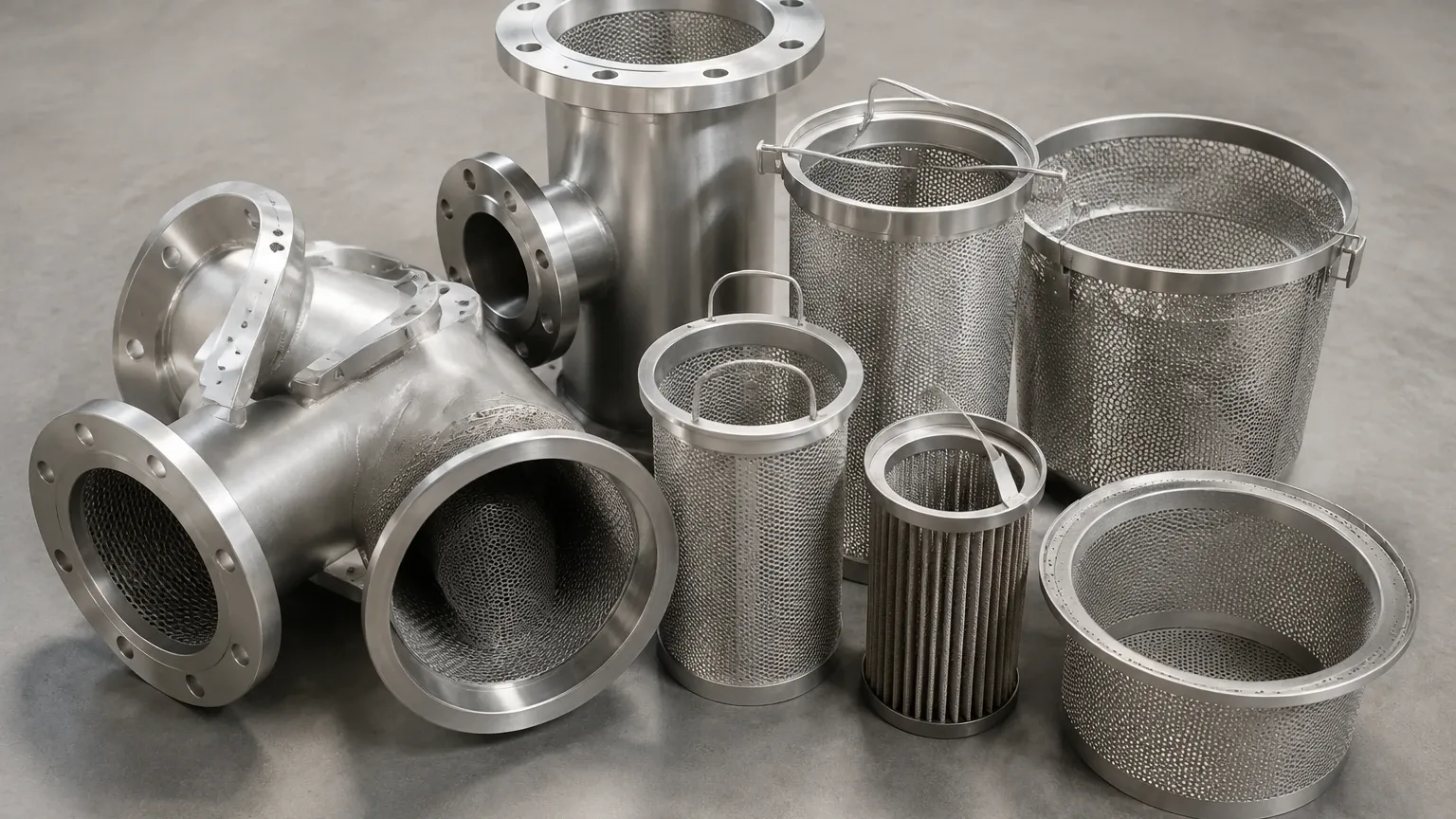
In industrial fluid handling, the term "strainers big" refers to large-capacity filtration components designed to manage high flow rates and significant debris loads in large-diameter piping systems. These components are critical for protecting downstream equipment such as pumps, valves, and heat exchangers from damage caused by particulate matter. As a professional manufacturer, Kaifil specializes in engineering Strainers & Baskets that meet the rigorous demands of chemical processing, water treatment, and heavy industrial applications.
Selecting the correct large-scale strainer involves more than simply matching pipe diameters. It requires a technical understanding of fluid dynamics, material compatibility, and the structural integrity necessary to withstand high-pressure environments. This guide explores the engineering considerations, types, and maintenance requirements of large industrial strainers.
Understanding the Role of Large-Scale Strainers & Baskets
Large-scale strainers are typically integrated into systems where the flow volume exceeds the capacity of standard off-the-shelf components. These systems often utilize pipes ranging from 6 inches to 24 inches or larger. The primary function of these units is the removal of solids from liquids or gases through a perforated plate or wire mesh screen.
Unlike fine filters, which are designed to remove microscopic particles, large strainers focus on "coarse" filtration. However, the definition of coarse is relative; in high-precision chemical processing, a large basket might still require a relatively fine mesh to protect sensitive instrumentation. The design of these units must balance the need for effective particle capture with the necessity of maintaining a low pressure drop across the system.
For engineers, the choice of a strainer often hinges on the "open area ratio." This is the ratio of the total open area of the strainer screen to the internal cross-sectional area of the pipe. For large-scale applications, a ratio of 4:1 or higher is often preferred to ensure that the strainer does not become a bottleneck in the system, even as it accumulates debris.
Engineering Specifications for Large Filtration Systems
When dealing with large-scale filtration, the mechanical stresses on the filter housing and the internal basket are significantly higher than in smaller systems. Several engineering factors must be evaluated during the specification phase.
Material Selection and Corrosion Resistance
Stainless steel is the industry standard for high-performance industrial strainers. Kaifil utilizes SS304 and SS316L to ensure long-term durability.
- SS304: Suitable for general industrial use, water treatment, and food-grade applications where moderate corrosion resistance is required.
- SS316L: Preferred for chemical processing and marine environments due to its superior resistance to chlorides and acidic solutions.
In large systems, the thickness of the stainless steel plate used for the basket is a critical safety factor. Thinner materials may buckle under the weight of accumulated debris or the force of high-velocity fluid flow.
Pressure Ratings and Structural Integrity
Large strainers must be designed to withstand the maximum operating pressure of the pipeline. This involves adherence to international standards such as ASME or DIN. For "strainers big" in size, the housing must be reinforced, and the baskets often require internal supports or external cages to prevent deformation. If a basket fails structurally, it can release a surge of debris into the downstream system, leading to catastrophic equipment failure.
Types of Strainers for Large-Diameter Pipelines
The configuration of the strainer is dictated by the installation space and the requirement for continuous operation.
Simplex Basket Strainers
Simplex strainers are used in systems where the flow can be intermittently shut down for cleaning. In large-scale operations, these units feature heavy-duty covers, often equipped with davit arms or swing bolts to assist maintenance personnel in removing the large, heavy baskets. Because of their size, these baskets can hold a substantial volume of debris, extending the time between cleaning cycles.
Duplex Basket Strainers
For critical processes that cannot be stopped, duplex strainers are the standard. These consist of two separate strainer chambers connected by a diverting valve. When one basket becomes clogged, the flow is diverted to the clean chamber, allowing the first basket to be serviced without interrupting the process. In large industrial settings, the synchronized valve mechanism must be robust enough to handle high torque and high flow velocities.
Y-Strainers in Large Sizes
While basket strainers are preferred for horizontal lines and high debris loads, large Y-strainers are often used in steam or gas applications where the amount of debris is lower. In large-diameter Y-strainers, the orientation is crucial; they are typically installed in horizontal or vertical-downward lines to ensure that gravity assists in trapping the particles in the blow-off leg.
Performance Metrics: Pressure Drop and Flow Efficiency
One of the most common challenges with large-scale filtration is the "Delta P" or pressure drop. Every strainer introduces some resistance to flow. As the mesh or perforated plate traps debris, this resistance increases.
In large systems, a high pressure drop can lead to increased energy consumption for pumps and may eventually cause cavitation. Engineers must calculate the clean pressure drop based on the fluid's viscosity, specific gravity, and flow rate. For large-scale applications, using a pleated wire mesh within the basket can significantly increase the surface area, thereby reducing the initial pressure drop and increasing the dirt-holding capacity without increasing the overall footprint of the strainer housing.
Customization for Specialized Industrial Applications
Standardized components often fail to meet the specific needs of complex industrial environments. Kaifil provides customized OEM solutions for large filtration requirements. Customization options include:
* Custom Micron Ratings: Tailoring the mesh size to the specific particle distribution of the process fluid.
* Reinforced Baskets: Adding structural ribs or heavy-duty backing screens for high-pressure applications.
* Specialized Connections: Beyond standard flanges, large strainers can be designed with specialized coupling systems to match existing infrastructure.
* Magnetic Inserts: For applications involving metal fragments (such as in hydraulic systems or machining coolant), magnetic rods can be added to the center of the basket to capture fine ferrous particles that might otherwise pass through the mesh.
When sourcing "strainers big" enough for municipal water or large chemical reactors, working with a manufacturer that understands these nuances is essential for system reliability.
Maintenance Protocols for Heavy-Duty Baskets
The maintenance of large strainers requires a systematic approach to ensure safety and efficiency. Because the baskets in these systems can be quite heavy when full of debris, mechanical lifting aids are often required.
Cleaning Cycles
Monitoring the differential pressure is the most effective way to determine when a basket needs cleaning. For large systems, automated differential pressure sensors are recommended. These sensors can trigger an alarm or automatically switch chambers in a duplex system when the pressure drop reaches a predetermined limit (typically 5-10 psi above the clean pressure drop).
Inspection for Fatigue
During cleaning, the basket should be inspected for signs of mechanical fatigue. In large-scale systems, the constant vibration and turbulence of high-velocity flow can cause "wire draw" or stress cracking at the weld points of the basket. If the mesh is pulling away from the frame, the basket must be repaired or replaced immediately to prevent bypass.
Total Cost of Ownership (TCO)
When evaluating large strainers, purchasing teams should consider the total cost of ownership rather than just the initial purchase price. A cheaper, poorly constructed basket may require frequent replacement or, worse, may fail and cause damage to a multi-million dollar pump. High-quality stainless steel construction and precision engineering from Kaifil ensure that the components provide a longer service life and lower maintenance costs over the life of the plant.
Conclusion: Selecting the Right Partner for Large Filtration
Large-scale industrial filtration is a critical component of plant infrastructure. Whether you are managing cooling water for a power plant or processing raw chemicals, the reliability of your Strainers & Baskets directly impacts your operational uptime.
By focusing on high-grade materials, structural integrity, and optimized flow designs, Kaifil provides the technical expertise needed to support demanding industrial applications. When specifying large strainers, engineers should prioritize the open area ratio, pressure ratings, and ease of maintenance to ensure the system performs as designed. For custom requirements or technical consultations regarding large-diameter filtration components, engaging with an experienced manufacturer early in the design phase is the most effective way to achieve optimal filtration performance.
