


Strainers Bunnings
For maintenance engineers and procurement professionals, the search for filtration components often begins with immediate, off-the-shelf availability. Searching for terms like "strainers bunnings" typically leads to consumer-grade or light commercial hardware solutions designed for residential plumbing, kitchen sinks, or basic irrigation. While these retail options serve a vital purpose in domestic environments, industrial process requirements—ranging from chemical processing to high-pressure hydraulic systems—demand a level of engineering precision that standard retail products cannot provide.
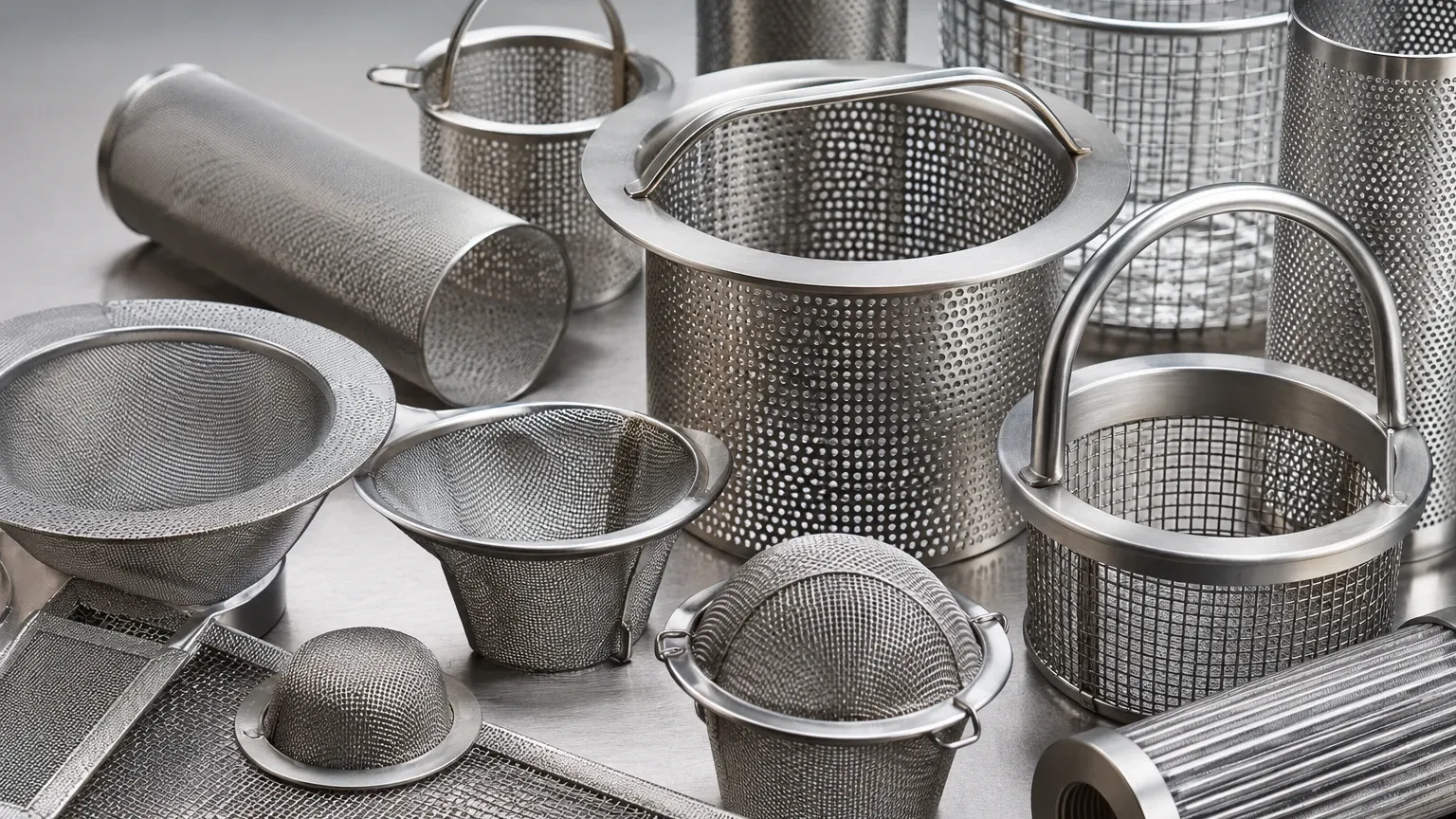
In industrial settings, the selection of Strainers & Baskets is a critical decision that impacts equipment longevity, product purity, and operational safety. Understanding the technical gap between retail-grade hardware and custom-engineered industrial filtration is essential for optimizing system performance and reducing the total cost of ownership.
Retail vs. Industrial Strainers: Understanding the Engineering Gap
When evaluating options like those found through a search for strainers bunnings, it is important to distinguish between "utility" filtration and "process" filtration. Retail strainers are generally manufactured for low-pressure, ambient-temperature water applications. In contrast, industrial baskets and strainers are designed to withstand extreme variables.
Material Integrity and Chemical Compatibility
Retail-grade strainers often utilize standard 304 stainless steel or even chrome-plated plastics. While 304 stainless steel is corrosion-resistant in many environments, it may fail in industrial chemical processing or marine applications. Industrial manufacturers like Kaifil specialize in 316L stainless steel and other high-performance alloys that offer superior resistance to pitting and crevice corrosion, especially in the presence of chlorides or acidic cleaning agents used in the food and beverage industry.
Pressure and Temperature Ratings
Standard hardware store strainers are rarely rated for high-pressure differentials. In a heavy-duty industrial pipeline, a strainer must maintain structural integrity under significant flow velocities and pressure surges. Industrial baskets are often reinforced with perforated metal backings to prevent the fine wire mesh from collapsing or bypassing under load—a feature not found in consumer-grade products.
Filtration Accuracy (Micron vs. Millimeter)
Retail strainers are typically designed to catch large debris, such as food waste or stones, with openings measured in millimeters. Industrial applications often require precision down to the micron level. Whether it is protecting a high-pressure nozzle or ensuring the clarity of a pharmaceutical batch, industrial Strainers & Baskets are engineered with specific mesh counts to provide repeatable, verifiable filtration results.
Key Evaluation Criteria for Industrial Baskets
Engineers must look beyond immediate availability and focus on technical specifications that ensure the component is fit for purpose. When moving from a general search for strainers bunnings toward a professional filtration solution, consider the following criteria:
1. Open Area Ratio
The open area ratio is the relationship between the total area of the holes in the strainer and the cross-sectional area of the inlet pipe. A high open area ratio is critical to minimize pressure drop (ΔP). If the pressure drop is too high, it can lead to pump cavitation and increased energy consumption. Industrial designs prioritize a large surface area to ensure long run times between cleaning cycles.
2. Structural Reinforcement
For high-viscosity fluids or high-velocity gas streams, the wire mesh alone is insufficient. Industrial baskets typically feature a multi-layer construction:
* Outer Support: A heavy-gauge perforated metal cylinder provides the primary structural strength.
* Filtration Layer: A precision-woven wire mesh is bonded to the support layer.
* Inner Lining: In some cases, an inner mesh is added to protect the primary media during backwashing or manual cleaning.
3. Connection and Sealing Types
While retail strainers often use simple drop-in designs or standard threaded connections, industrial systems may require specialized interfaces. These include ANSI or DIN flanges, sanitary Tri-Clamp fittings for the dairy and biotech industries, or custom-machined housings to ensure a zero-bypass seal. Ensuring a proper seal is vital; even a small bypass can allow contaminants to damage downstream equipment like heat exchangers or flow meters.
Customization: Why One Size Does Not Fit All
A primary limitation of searching for strainers bunnings is the lack of customization. Industrial processes are rarely "standard." A custom manufacturer like Kaifil provides engineering flexibility that retail outlets cannot match.
Tailored Geometry
Industrial strainers often need to fit into existing footprints with specific height or diameter constraints. Custom-fabricated baskets can be designed with slanted bottoms, offset handles, or specialized lifting lugs to facilitate easier removal and maintenance in cramped mechanical rooms.
Specialized Mesh Weaves
Depending on the particle shape and concentration, different weave types—such as plain weave, twilled weave, or Dutch weave—may be required. For example, a Dutch weave provides a much tighter pore structure and higher strength, making it ideal for high-pressure liquid filtration where a standard square mesh might deform.
Surface Treatments
In industries like food processing or pharmaceuticals, the surface finish of the strainer is as important as the filtration rating. Electropolishing can be applied to stainless steel baskets to remove surface imperfections, reducing the risk of bacterial growth and making the component easier to sanitize (CIP – Clean-in-Place).
Common Risks of Using Under-Specified Strainers
Attempting to save on initial costs by using retail-grade components in an industrial environment often leads to higher long-term expenses. The risks include:
* Frequent Downtime: Under-sized strainers clog rapidly, requiring frequent manual cleaning and stopping production lines.
* Equipment Damage: If a low-quality strainer fails or collapses, the resulting debris (and the contaminants it was supposed to catch) can cause catastrophic failure in downstream pumps, valves, and instrumentation.
* Product Contamination: Inconsistent mesh openings in non-industrial strainers allow over-sized particles to pass through, potentially ruining entire batches of product and leading to costly recalls.
* Safety Hazards: Industrial fluids are often hot, corrosive, or under high pressure. Using a component not rated for these conditions poses a significant risk to plant personnel.
Total Cost of Ownership and Maintenance
When comparing Strainers & Baskets from an industrial manufacturer versus a retail source, the total cost of ownership (TCO) should be the primary metric. While a retail strainer might have a lower purchase price, its lifespan in a rigorous industrial environment is significantly shorter.
Durability and Reusability
Industrial stainless steel filters are designed to be cleaned and reused hundreds of times. The high-quality welding (often TIG or plasma welding) used by specialist manufacturers ensures that the seams do not fail under the stress of ultrasonic cleaning or high-pressure hosing.
Ease of Maintenance
Features such as swing-bolt covers on housings and ergonomic handles on baskets reduce the time required for maintenance. In a high-volume production facility, reducing the time a technician spends cleaning a strainer by just ten minutes can result in thousands of dollars in recovered production time over the course of a year.
Conclusion: Selecting the Right Filtration Partner
While a search for "strainers bunnings" is a logical starting point for household repairs or minor commercial tasks, industrial excellence requires a more rigorous approach to filtration. Engineers must prioritize material science, structural integrity, and custom design to ensure their systems operate at peak efficiency.
Kaifil provides the technical expertise and manufacturing capability required to produce high-performance stainless steel filtration solutions. By focusing on the specific needs of the chemical, food, pharmaceutical, and hydraulic industries, Kaifil ensures that every strainer and basket is engineered to meet the most demanding operational requirements. When precision and reliability are non-negotiable, moving beyond retail hardware to professional-grade filtration components is the only way to safeguard your process and your bottom line.
