


Amazon Tea Strainers
In the landscape of modern beverage production and specialized laboratory environments, the requirement for precise particle separation is paramount. While many procurement officers and small-scale operations initially look toward consumer-facing platforms, searching for "amazon tea strainers" often reveals a vast array of light-duty tools designed for domestic use. However, for industrial applications, food processing facilities, and high-volume commercial brewing, the distinction between a consumer-grade strainer and an engineered industrial component is significant. Understanding the technical specifications of these tools is essential for ensuring product consistency, equipment longevity, and compliance with safety standards.
Industrial filtration requires a level of durability and precision that standard retail products rarely provide. When evaluating Strainers & Baskets for professional use, engineers must look beyond basic aesthetics and focus on material science, weave geometry, and structural integrity.
The Engineering Behind Fine Mesh Separation
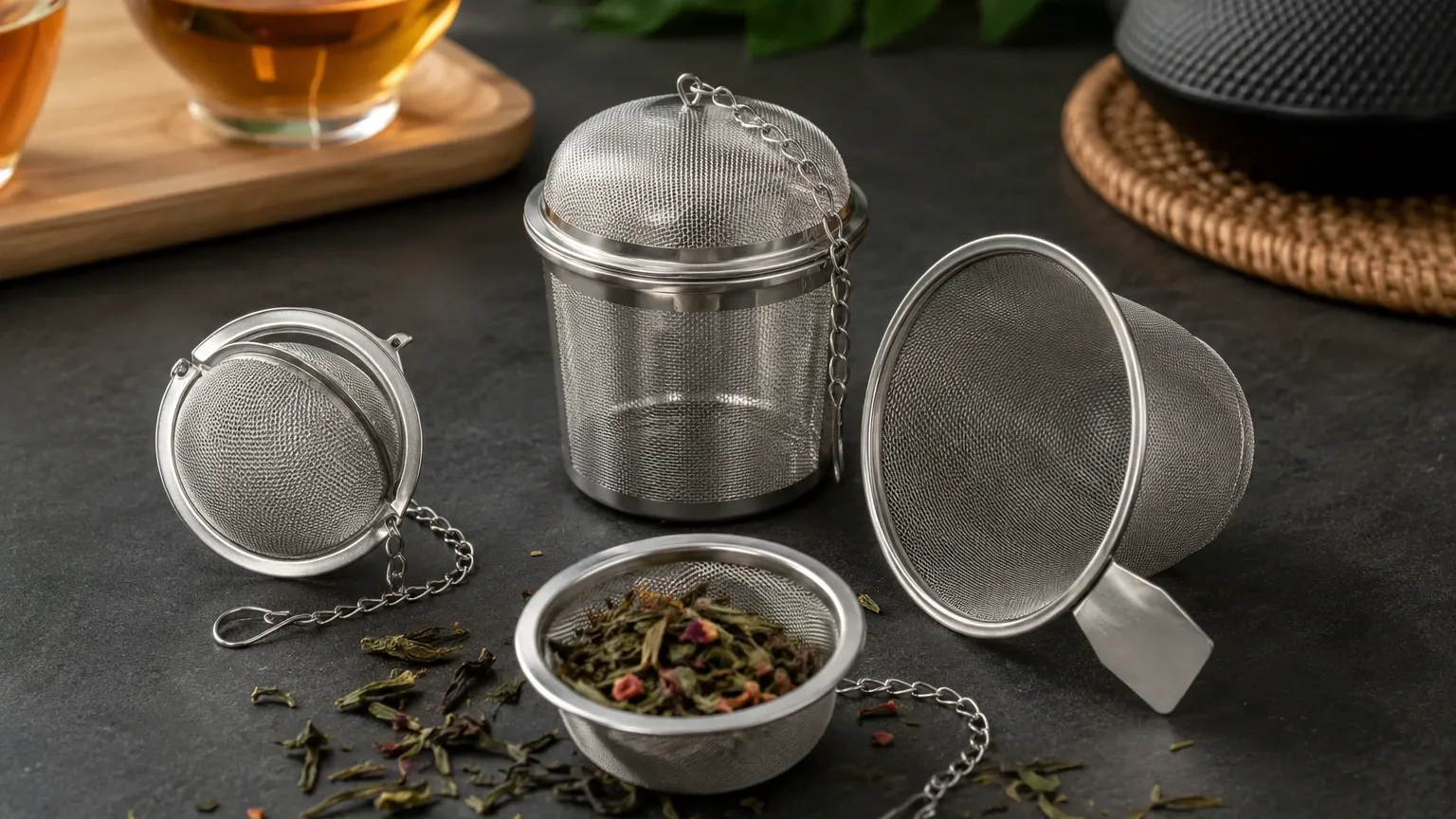
At its core, a tea strainer is a mechanical sieve designed to allow liquid to pass while retaining solid botanical matter. In a domestic context, the "amazon tea strainers" category typically features products made from thin-gauge stainless steel with basic spot-welded frames. In contrast, industrial-grade strainers are engineered to withstand repeated mechanical stress, high-temperature cleaning cycles, and chemical exposure.
Material Selection: SS304 vs. SS316
Most consumer strainers utilize Grade 304 stainless steel, which is generally sufficient for occasional contact with water. However, in commercial tea production or botanical extraction, the presence of organic acids and the use of caustic cleaning agents (CIP – Clean-In-Place) demand a more robust material. Grade 316 stainless steel, which contains molybdenum, offers superior resistance to chloride-induced pitting and corrosion. For B2B applications, specifying the exact alloy is a critical first step in the selection process to prevent premature failure and metallic leaching into the product.
Weave Types and Micron Ratings
The effectiveness of a strainer is determined by its mesh count and weave type. Standard consumer strainers often have inconsistent hole sizes, leading to "fines" or dust passing into the final beverage. Industrial wire mesh filtration components utilize precise weaves:
* Plain Weave: The most common type, where each warp wire crosses over and under each shute wire. This provides high flow rates but is limited in terms of how fine the mesh can be while maintaining strength.
* Twill Weave: Used for finer filtration requirements. The wires are woven over two and under two, allowing for a heavier wire diameter in a given mesh count.
* Dutch Weave: This provides a much tighter, denser mesh structure, often used in high-pressure applications where extremely fine particle retention (down to 5-10 microns) is required.
Comparing Consumer-Grade vs. Industrial-Grade Components
When a purchasing team searches for "amazon tea strainers," they are often met with products optimized for price rather than performance. For industrial operations, the total cost of ownership (TCO) is a more relevant metric than the initial purchase price.
Structural Integrity and Welding
Consumer-grade strainers typically feature thin wire frames that can easily deform under the weight of wet solids or during vigorous cleaning. Industrial Strainers & Baskets are manufactured with reinforced rims, heavy-duty support cages, and TIG (Tungsten Inert Gas) welding. TIG welding ensures a smooth, crevice-free joint that prevents the accumulation of bacteria, which is a vital requirement in food-grade environments.
Filtration Efficiency and Consistency
In a commercial setting, consistency is the hallmark of quality. A batch of tea filtered through an inconsistently manufactured mesh will vary in clarity and flavor profile. Industrial manufacturers like Kaifil ensure that the wire diameter and aperture size are uniform across the entire surface area of the strainer. This precision prevents "channeling," where liquid takes the path of least resistance through larger gaps, bypassing the intended filtration level.
Key Evaluation Criteria for Industrial Procurement
Engineers and technical professionals should confirm several technical parameters before selecting a filtration solution for their facility. Relying on consumer-grade descriptions found on retail sites can lead to operational bottlenecks.
1. Flow Rate and Open Area
The "open area" of a strainer refers to the percentage of the mesh surface that is actually open space. A higher open area allows for faster flow rates and lower pressure drops across the filter. However, there is a trade-off between open area and the structural strength of the mesh. Engineering teams must calculate the required flow rate of their system to ensure the strainer does not become a bottleneck in the production line.
2. Differential Pressure (Delta P)
As solids accumulate in a strainer basket, the pressure on the upstream side increases. Industrial strainers are rated for specific differential pressures. If a strainer is too weak, the mesh may "balloon" or burst, contaminating the downstream product with both the retained solids and fragments of the metal mesh itself.
3. Micron Retention Requirements
Tea leaves vary significantly in size, from whole-leaf varieties to fine fannings and dust. A standard strainer might be rated at 200 microns, but if the product contains particles at 50 microns, the resulting beverage will be cloudy. Specifying the exact micron rating is essential for achieving the desired clarity.
Customization Options for Commercial Beverage Production
One of the primary limitations of "amazon tea strainers" is the lack of customization. Industrial applications often require specific geometries to fit into existing tanks, pipes, or brewing vessels. Customization options typically include:
* Flange and Connection Types: Integrating the strainer directly into a piped system using Tri-Clamp, NPT, or flanged connections.
* Handle and Lifting Lug Configurations: For large-scale baskets, ergonomic handles or mechanical lifting points are necessary for safe removal and cleaning.
* Multi-Layer Mesh Sintering: For applications requiring extreme durability, multiple layers of wire mesh can be sintered (heat-bonded) together to create a rigid, high-strength filter media that maintains its shape under high pressure.
* Reinforcement Cages: Adding a perforated metal outer shell to protect the fine inner mesh from mechanical damage during handling.
Maintenance and Sanitation Standards
In the food and beverage industry, the ability to sanitize equipment is non-negotiable. Consumer-grade strainers often have rolled edges or overlapping joints where organic matter can become trapped, leading to microbial growth.
Industrial Strainers & Baskets are designed with "hygienic design" principles. This includes:
* Smooth Surface Finishes: Electropolishing can be applied to stainless steel strainers to reduce surface roughness, making it harder for particles to adhere and easier for cleaning agents to reach every surface.
* High-Temperature Tolerance: Industrial components must withstand sterilization temperatures, often exceeding 121°C (250°F) in autoclave or steam-cleaning processes.
* Chemical Compatibility: The materials must be inert to the wide range of acids and bases used in industrial sanitation cycles.
Total Cost Considerations and Selection Advice
While a pack of strainers from a retail platform may seem cost-effective, the frequency of replacement due to mesh tearing, frame deformation, or corrosion often makes them more expensive in the long run. Furthermore, the risk of a production halt due to a failed filter component can result in significant financial losses.
For purchasing teams, the following steps are recommended:
1. Define the Particle Profile: Determine the smallest particle size that must be retained.
2. Assess the Environment: Identify the temperature, pressure, and chemical exposure the strainer will face.
3. Specify Connection Points: Ensure the strainer fits perfectly within the existing infrastructure to avoid leaks or bypass.
4. Verify Compliance: Ensure the manufacturer provides material certifications (such as FDA or 3A standards) for food-contact surfaces.
By focusing on these technical requirements, engineers can move beyond the limitations of consumer-level products and implement a filtration solution that enhances production efficiency and product quality. Whether you are looking for standard sizes or fully customized Strainers & Baskets, working with a professional manufacturer ensures that the component is fit for purpose in a demanding industrial environment.
