


Strainers for Kidney Stones
In the specialized field of medical diagnostics and patient care, the recovery of solid particles from fluid streams requires high-precision filtration tools. While the term "strainers for kidney stones" often brings to mind simple consumer-grade collection devices, the engineering behind these components involves sophisticated metal fabrication and material science. For medical device OEMs, laboratory equipment distributors, and healthcare procurement teams, understanding the technical specifications of these strainers is essential for ensuring diagnostic accuracy and product durability.
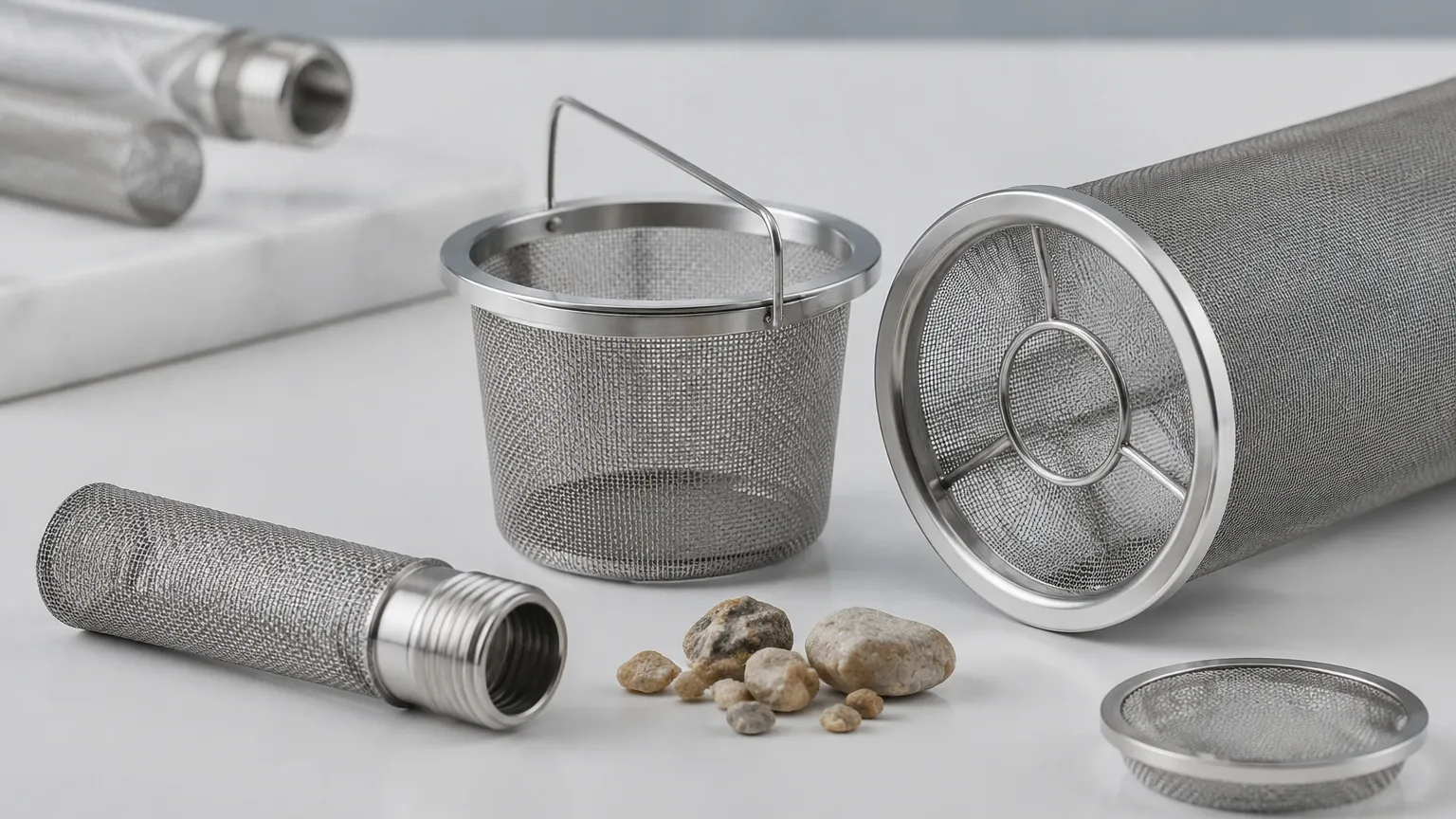
Industrial-grade filtration manufacturers like Kaifil specialize in the production of precision Strainers & Baskets designed to meet the rigorous demands of fine particle capture. When a patient is required to collect stones for chemical analysis, the reliability of the mesh and the integrity of the frame are paramount. This article explores the engineering considerations, material requirements, and manufacturing standards associated with high-performance stone collection strainers.
The Engineering of Fine Particle Capture
Kidney stones, or renal calculi, can vary significantly in size, ranging from microscopic crystals to several millimeters in diameter. To ensure that even the smallest "gravel" or fragments are captured for laboratory analysis, the strainer must feature a specific mesh density. In the world of industrial filtration, this is measured by mesh count or micron rating.
Micron Ratings and Aperture Size
For effective stone collection, the aperture (the clear opening between wires) must be smaller than the smallest expected particle. Most professional-grade strainers utilize a fine wire mesh with an aperture size between 200 and 500 microns. This ensures that even sand-like deposits are retained while allowing fluid to pass through quickly without backup or overflow. Engineering a mesh that balances high flow rates with fine retention requires a precise calculation of the "open area" percentage.
Flow Dynamics and Mesh Stability
Unlike coarse industrial strainers, strainers for kidney stones must handle rapid fluid displacement without the mesh deforming. If the mesh is too thin, the weight of the fluid or the pressure of the stream could cause the wires to shift, creating larger gaps that allow particles to bypass the filter. Manufacturers use specialized weaving techniques, such as plain weave or twill weave, to ensure the wires remain locked in position under various operational stresses.
Material Selection: Why Stainless Steel is Superior
While disposable plastic strainers are common in high-volume clinical settings, high-quality stainless steel strainers offer significant advantages in terms of hygiene, durability, and chemical neutrality. For research environments or reusable medical kits, stainless steel is the gold standard.
Grade 304 and 316L Stainless Steel
Most precision Strainers & Baskets are fabricated from Grade 304 or Grade 316L stainless steel. Grade 316L, in particular, contains molybdenum, which provides superior resistance to corrosion from salts and acidic fluids. In the context of stone collection, where the strainer is exposed to biological fluids that may be highly acidic or concentrated, the corrosion resistance of 316L prevents the leaching of metallic ions into the sample, which could otherwise interfere with spectroscopic analysis.
Biocompatibility and Surface Finish
Stainless steel is inherently non-porous and resistant to bacterial growth. Furthermore, industrial manufacturers can apply various surface treatments, such as electropolishing, to the mesh and frame. Electropolishing removes microscopic peaks and valleys on the metal surface, creating a mirror-like finish that is exceptionally easy to clean and sterilize. This process also enhances the passive oxide layer of the steel, further protecting it against the harsh chemicals used in laboratory sterilization protocols.
Design Considerations for Strainers & Baskets
The physical architecture of a strainer determines its ease of use and its effectiveness in a clinical or laboratory workflow. When designing strainers for kidney stones, engineers focus on three primary structural elements: the basket geometry, the handle ergonomics, and the rim seal.
Basket Geometry
A deep-conical or bowl-shaped basket is preferred over a flat mesh surface. This design utilizes gravity to direct all captured particles toward the center of the strainer, making it easier for laboratory technicians to recover the sample with tweezers or a spatula. The depth of the basket also prevents splashing and ensures that the fluid is contained during the filtration process.
Handle and Support Frame
For manual collection, the handle must provide a secure grip and enough length to keep the user’s hands away from the fluid stream. In an industrial OEM context, handles are often spot-welded or TIG-welded to the main frame. These welds must be smooth and free of crevices to prevent the accumulation of biological material. A reinforced rim around the top of the basket provides structural rigidity, ensuring the strainer maintains its circular shape even after repeated use or autoclave cycles.
Integrated Collection Vials
Some advanced designs incorporate the strainer directly into a collection housing or vial. In these cases, the mesh is often over-molded or ultrasonically welded into a plastic or metal housing. This integrated approach reduces the risk of sample loss during transfer, a critical factor when dealing with very small or brittle stones.
Manufacturing Processes for Precision Filtration
Producing a high-quality strainer involves more than just cutting a piece of mesh. It requires a series of controlled manufacturing steps to ensure the final product meets the required tolerances.
1. Wire Drawing and Weaving: The process begins with drawing stainless steel wire to the exact diameter required (often as fine as a human hair). This wire is then woven on high-precision looms to create a consistent mesh.
2. Stamping and Forming: The mesh is cut into circular blanks and then deep-drawn or pressed into the basket shape. This must be done carefully to avoid over-stretching the wires, which would enlarge the apertures.
3. Welding and Assembly: The basket is joined to the frame and handle. In high-end filtration manufacturing, resistance welding or laser welding is used to create a seamless bond. Unlike traditional soldering, these methods do not introduce foreign metals (like lead or tin) into the assembly.
4. Cleaning and Passivation: After fabrication, the strainers undergo an ultrasonic cleaning process to remove oils and debris from the manufacturing floor. They are then passivated in a nitric or citric acid bath to ensure the stainless steel is fully resistant to oxidation.
Quality Standards and Procurement Considerations
When sourcing strainers for kidney stones for professional use, purchasing teams must look beyond the unit price and evaluate the total cost of ownership and the reliability of the manufacturer.
Compliance and Certification
For components used in medical or laboratory settings, it is vital to confirm that the manufacturer follows ISO quality management standards. This ensures traceability of materials—meaning the manufacturer can provide mill test reports (MTRs) for the stainless steel used, proving it is the correct grade and free of contaminants.
Customization Options
Many applications require non-standard dimensions. Whether it is a specific diameter to fit a laboratory beaker or a unique handle configuration for a specialized diagnostic kit, working with a manufacturer that offers OEM services is essential. Customization allows for the optimization of the Strainers & Baskets to fit the exact workflow of the end-user, reducing the likelihood of errors during sample collection.
Durability vs. Disposability
While the initial cost of a stainless steel strainer is higher than a plastic alternative, the ability to sterilize and reuse the metal version often makes it more cost-effective over time. For hospitals and clinics looking to reduce plastic waste and ensure the highest level of sample integrity, investing in durable metal filtration components is a strategic choice.
Maintenance and Sterilization Protocols
To maintain the performance of a stainless steel stone strainer, proper maintenance is required. Because kidney stones can be composed of various minerals (calcium oxalate, uric acid, etc.), the strainer may develop a build-up of mineral scale over time if not cleaned properly.
* Cleaning: After each use, the strainer should be rinsed with deionized water and cleaned with a neutral pH detergent. For stubborn deposits, an ultrasonic bath is the most effective method for clearing the mesh without damaging the wires.
* Sterilization: Stainless steel strainers are compatible with most sterilization methods, including steam autoclaving, ethylene oxide (EtO), and dry heat. It is important to ensure that the strainer is completely dry before storage to prevent any potential for localized pitting corrosion, although this is rare with high-grade 316L steel.
Conclusion
Selecting the right strainers for kidney stones involves a deep understanding of filtration mechanics and material science. By focusing on high-quality stainless steel Strainers & Baskets, organizations can ensure they are providing tools that offer precision, durability, and ease of use. Whether for clinical diagnostics, research, or specialized medical kits, the engineering behind the mesh is what ultimately determines the success of the sample recovery. Manufacturers like Kaifil provide the technical expertise and manufacturing precision necessary to produce these critical components to the highest industrial standards.
