


Strainers for Tea
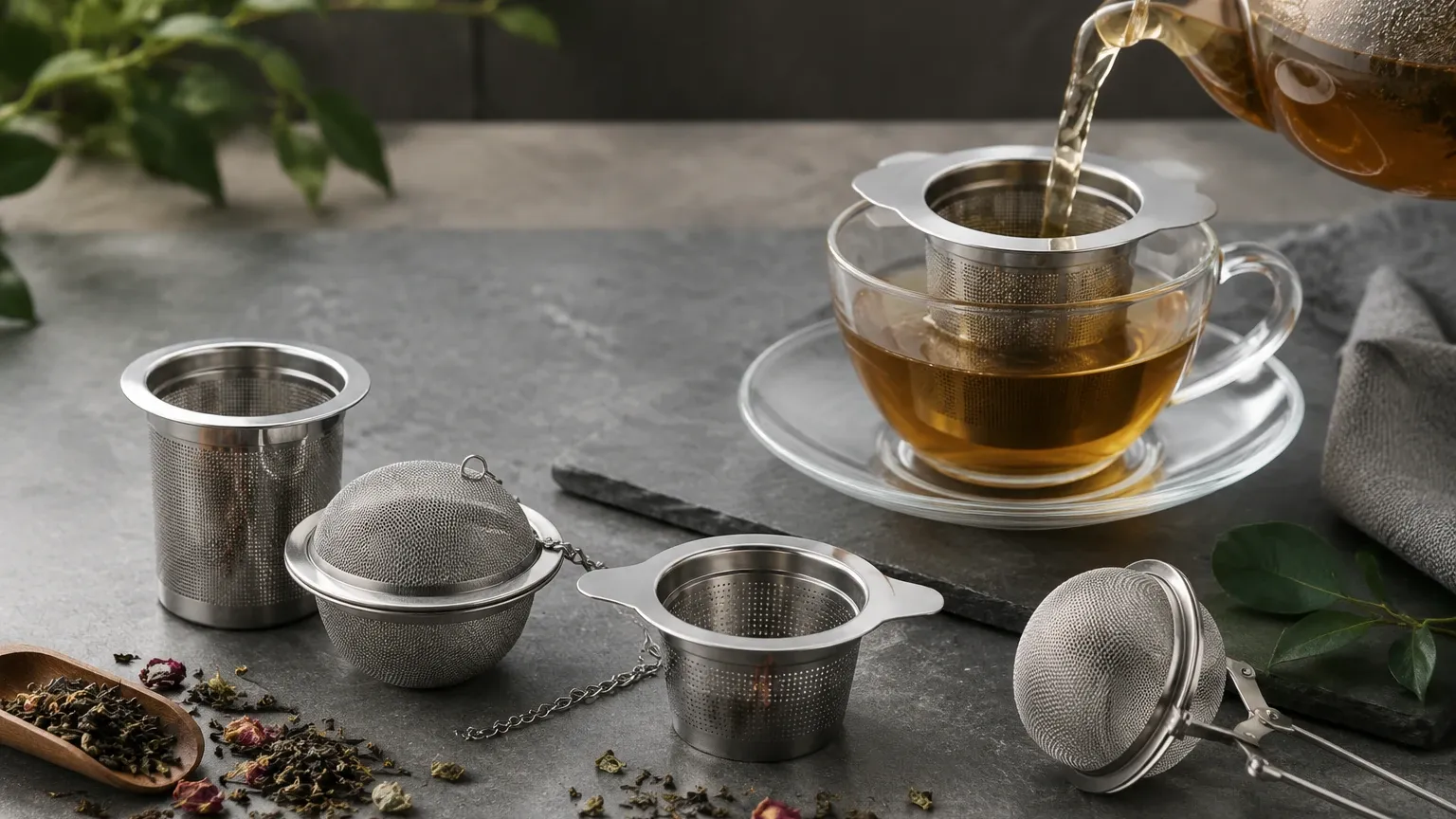
In the industrial food and beverage sector, the production of tea-based beverages—ranging from ready-to-drink (RTD) bottled teas to concentrated extracts and kombucha—requires a sophisticated approach to solid-liquid separation. While a consumer might view a strainer as a simple kitchen tool, for an engineer or production manager, strainers for tea are precision-engineered components designed to manage flow rates, prevent downstream equipment damage, and ensure the clarity and sensory consistency of the final product.
Selecting the appropriate filtration hardware involves understanding the physical properties of tea leaves, the chemical nature of the extraction process, and the sanitary requirements of food-grade manufacturing. This guide explores the technical considerations for integrating industrial Strainers & Baskets into tea processing lines, focusing on material science, filtration accuracy, and operational efficiency.
The Role of Industrial Strainers in Tea Processing
Tea processing is unique because the "waste" product—the spent tea leaves—is bulky and highly absorbent. Unlike simple sediment in water treatment, tea solids can quickly blind a filter if the surface area is insufficient or if the mesh geometry is poorly suited to the leaf shape.
Industrial strainers serve several critical functions in a production line:
1. Primary Separation: Removing large whole leaves or broken orange pekoe (BOP) grades immediately after the steeping or extraction phase.
2. Equipment Protection: Safeguarding high-pressure pumps, heat exchangers, and filling nozzles from "fines" (small tea particles) that could cause abrasion or clogging.
3. Clarity Control: Achieving the specific turbidity levels required for the product, whether it is a clear iced tea or a more robust, full-bodied brew.
4. Batch Consistency: Ensuring that every liter of extract has been subjected to the same level of particulate removal, which stabilizes the flavor profile and prevents over-extraction during storage.
Material Selection: Why Stainless Steel is Mandatory
When specifying strainers for tea, material selection is the first line of defense against batch contamination and equipment failure. Tea is naturally acidic, with a pH typically ranging from 4.5 to 6.0, and contains complex organic compounds like tannins and polyphenols.
Stainless Steel 304 vs. 316L
While Type 304 stainless steel is common in many industrial applications, Type 316L is often preferred for tea extraction, particularly in high-temperature environments. The addition of molybdenum in 316L provides superior resistance to pitting and crevice corrosion caused by the organic acids and cleaning agents used in food plants.
Furthermore, stainless steel is non-reactive. Unlike plastic or lower-grade metals, it does not leach flavors or chemicals into the tea, preserving the delicate aromatic profile of the leaves. For B2B buyers, ensuring that the Strainers & Baskets are constructed from certified food-grade alloys is a non-negotiable requirement for FDA and EHEDG compliance.
Technical Specifications: Mesh Size and Micron Ratings
The efficiency of strainers for tea is defined by their filtration rating. In the tea industry, the challenge lies in the diversity of the raw material. A strainer designed for large-leaf Oolong will fail if used for CTC (Crush, Tear, Curl) tea dust.
Understanding the Grading Scale
* Coarse Straining (20 to 60 Mesh): Used for initial separation of whole leaves and large botanical pieces. These strainers focus on high flow rates and high dirt-holding capacity.
* Medium Filtration (60 to 150 Mesh): Designed to capture broken leaves and larger stalks. This is the standard for most commercial brewing operations.
* Fine Filtration (200+ Mesh / <75 Microns): Necessary for removing "tea dust" and fines. This stage is critical for RTD products where clarity is a primary selling point and sediment at the bottom of the bottle must be avoided.
Engineers must balance the desire for fine filtration with the reality of pressure drop. A finer mesh creates higher resistance, requiring more pump power and more frequent cleaning cycles. Custom-designed baskets allow for optimized surface area, which can mitigate these pressure losses even at finer micron ratings.
Engineering Considerations for Basket Design
The physical configuration of the strainer—often referred to as the basket—dictates how the system handles solids. In high-volume tea production, the basket must be robust enough to withstand the weight of saturated tea leaves and the pressure of the fluid flow.
Flow Dynamics and Pressure Drop
An essential metric in filter selection is the "Clean Pressure Drop" (ΔP). For strainers for tea, the goal is to maintain a low ΔP to ensure consistent flow to the filling line. As the basket fills with spent leaves, the ΔP increases. Engineering the basket with a high open-area ratio (the ratio of the area of the holes to the total area of the mesh) extends the time between cleaning cycles.
Structural Integrity
Industrial tea baskets are often subjected to "slugs" of solids when a steeping tank is drained. Without proper reinforcement, such as a perforated metal backup or a heavy-duty support frame, the fine wire mesh can bulge or burst. Quality manufacturing involves precision welding and the use of support cages that allow the mesh to perform its filtration task without bearing the full mechanical load of the system.
Sanitary Design and Maintenance in Food Production
In the B2B context, the "Total Cost of Ownership" of a strainer is heavily influenced by how easily it can be cleaned. Tea is a biological product; any residue left in the strainer can become a breeding ground for bacteria or mold, leading to batch spoilage.
Clean-In-Place (CIP) Compatibility
Modern tea processing lines rely on CIP systems to sanitize equipment without disassembly. Strainers for tea must be designed without "dead zones"—corners or crevices where tea particles can hide from the cleaning solution. Smooth, polished surfaces (often measured by Ra, or roughness average) are essential. A lower Ra value means the surface is microscopically smooth, preventing organic matter from adhering to the metal.
Manual Cleaning and Ergonomics
In many batch processes, baskets must be removed manually for cleaning. Features such as quick-release handles, swing-bolt covers on the strainer housing, and lightweight but durable basket designs are critical for operational efficiency. Reducing the time a technician spends struggling with a stuck basket directly translates to increased production uptime.
Customization: Tailoring Strainers to Specific Tea Varieties
One of the most common mistakes in purchasing industrial filtration is opting for a "one-size-fits-all" solution. The physical characteristics of tea vary wildly by region and processing method.
* Green Tea: Often contains thin, needle-like leaves that can align with the flow and slip through standard mesh. A twilled weave or a multi-layered sintered mesh may be required.
* Herbal Infusions: Ingredients like hibiscus or dried fruit pieces are sticky and can clog traditional baskets quickly. These require specialized coatings or larger basket volumes.
* Matcha and Powders: These require specialized membrane-type filters or extremely fine sintered metal elements rather than standard wire baskets.
By working with a manufacturer that offers OEM and customized filtration solutions, engineers can specify the exact wire diameter, weave type, and basket dimensions needed for their specific raw materials. Customization ensures that the strainer is an asset to the production line rather than a bottleneck.
Evaluating the Investment: Beyond the Purchase Price
When procurement teams evaluate Strainers & Baskets, the focus should remain on performance longevity. A low-cost strainer made from inferior mesh will likely suffer from wire shifting (where the wires move, changing the micron rating) or fatigue failure at the weld points.
Investing in high-quality stainless steel filtration components provides several long-term benefits:
* Reduced Replacement Frequency: Durable 316L baskets can last for years with proper maintenance.
* Product Safety: Eliminating the risk of metal fragments or plastic pieces entering the product stream.
* Optimized Yield: Efficient separation means less product is lost in the "sludge" at the bottom of the tank.
Before finalizing a purchase, technical teams should confirm the manufacturer’s capabilities in material certification, pressure testing, and their ability to provide technical drawings for integration into existing CAD layouts.
Conclusion
In the demanding environment of industrial tea production, the humble strainer is a vital piece of engineering. From managing the corrosive nature of tea tannins to ensuring the precise removal of fines for a crystal-clear RTD beverage, the choice of strainers for tea impacts every stage of the manufacturing process.
By prioritizing high-grade stainless steel, calculating the correct micron ratings, and insisting on sanitary design principles, B2B buyers can ensure their filtration systems provide reliable, cost-effective performance. For those seeking specialized configurations or high-durability components, exploring a comprehensive range of Strainers & Baskets is the first step toward optimizing a tea production line for the global market.
