


Strainers in Birds
In the field of industrial filtration, engineering solutions often draw inspiration from the efficiency of natural systems. The concept of "strainers in birds" refers to the sophisticated biological filtration mechanisms found in avian species, such as the lamellae in the beaks of flamingos, ducks, and geese. These natural structures serve as highly specialized particle separation tools, allowing birds to filter nutrients from water and sediment with remarkable precision.
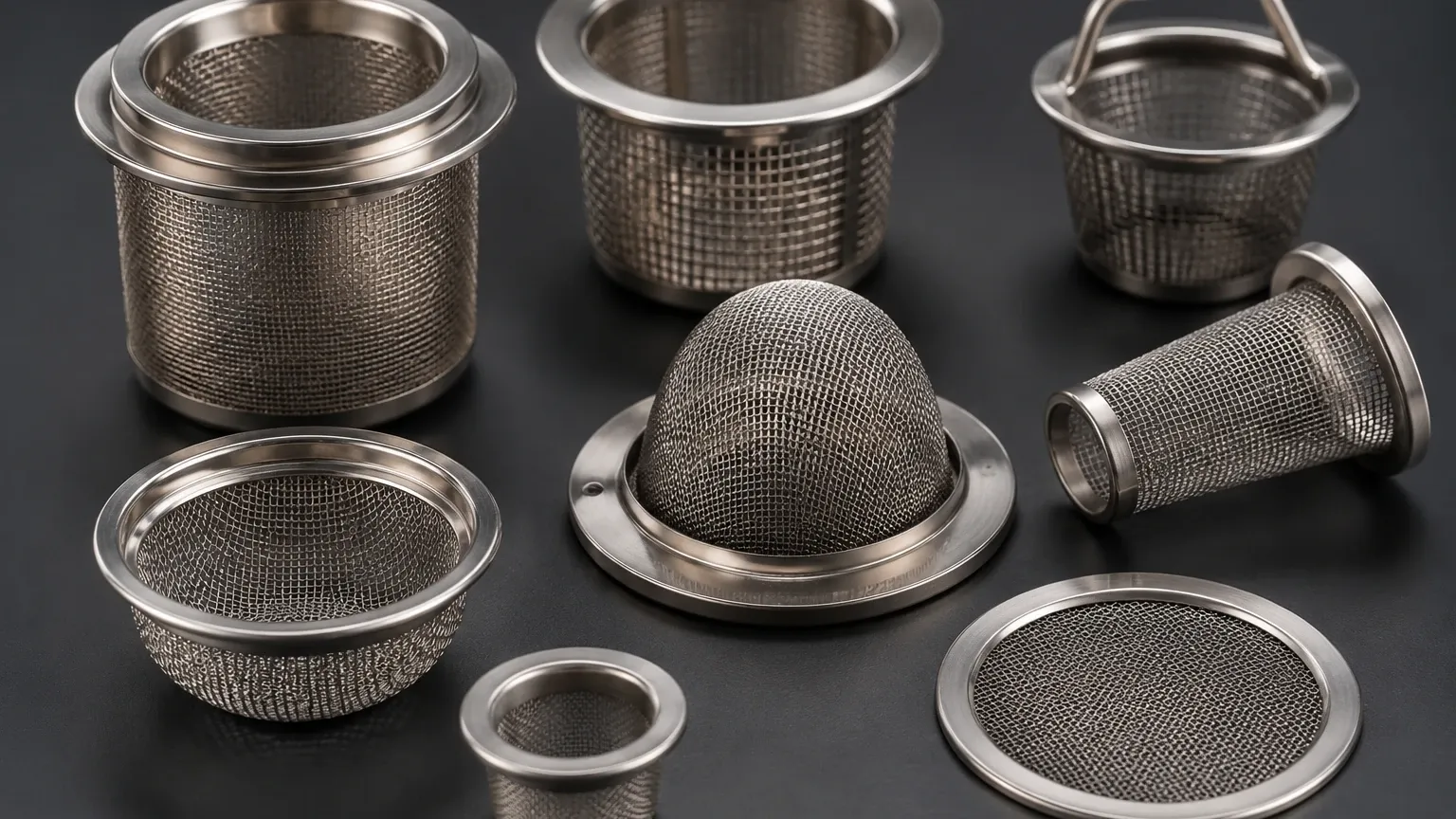
For engineers and procurement professionals, understanding these biological blueprints provides a unique perspective on fluid dynamics and particle retention. Just as nature has optimized these structures for specific environments, industrial Strainers & Baskets are engineered to meet the rigorous demands of chemical processing, food production, and hydraulic systems. This article explores the technical parallels between biological filtration and industrial strainer design, focusing on material selection, flow efficiency, and customization.
The Mechanics of Biological Filtration: Strainers in Birds
Biological filtration in avian species is primarily achieved through a structure known as the lamellae. These are comb-like or plate-like structures located along the edges of the beak. When a bird takes in a mouthful of water and sediment, it uses its tongue as a piston to force the fluid through these lamellae.
Key technical features of these biological strainers include:
* Variable Mesh Density: Different species have evolved specific lamellar spacing to target different particle sizes. For instance, flamingos possess extremely fine lamellae to capture microscopic algae and crustaceans, whereas mallard ducks have coarser structures for larger aquatic plants and insects.
* Cross-Flow Dynamics: The arrangement of the lamellae often facilitates a cross-flow filtration effect, which minimizes the buildup of debris on the filter surface—a principle widely utilized in industrial membrane and mesh filtration.
* Self-Cleaning Properties: Through the movement of the tongue and the reversal of fluid flow, birds can clear their internal strainers of trapped particles, ensuring continuous operation without permanent clogging.
In the industrial sector, these principles translate directly into the design of basket strainers and wire mesh filters, where the goal is to maximize particle capture while maintaining a low pressure drop.
Engineering Parallels: From Avian Beaks to Industrial Baskets
While the "strainers in birds" are made of keratin and organic tissue, industrial filtration requires materials capable of withstanding high pressures, corrosive chemicals, and extreme temperatures. Kaifil specializes in translating these high-efficiency separation concepts into durable stainless steel components.
Material Integrity and Durability
In industrial applications, the choice of material is the first line of defense against system failure. Unlike biological structures, industrial Strainers & Baskets must resist oxidation and chemical degradation.
* Stainless Steel 304: Suitable for general-purpose applications where basic corrosion resistance is required, such as in water treatment or standard hydraulic systems.
* Stainless Steel 316/316L: The industry standard for pharmaceutical and chemical processing due to its superior resistance to chlorides and acidic environments.
* Specialty Alloys: For highly aggressive environments, materials like Monel or Hastelloy may be used to ensure the strainer maintains structural integrity over long service cycles.
Precision Filtration Media
The lamellae in birds act as a fixed-gap strainer. In industrial manufacturing, this is replicated using various media types:
1. Perforated Metal: Used for coarse straining where high structural strength is needed to withstand high differential pressures.
2. Woven Wire Mesh: Provides precise micron ratings. By varying the weave pattern (plain, twill, or dutch weave), engineers can control the effective filtration area and the shape of the pores.
3. Sintered Mesh: For the most demanding applications, multiple layers of wire mesh are sintered together to create a rigid, high-strength filter element that offers exceptional depth filtration and cleanability.
Key Evaluation Criteria for Industrial Strainers
When selecting a strainer or basket for an industrial process, engineers must look beyond simple dimensions. The performance of the system depends on several critical factors that mirror the efficiency found in natural filtration.
Effective Filtration Area (EFA)
Just as a bird with a larger beak area can process more water, an industrial strainer with a higher EFA will have a lower initial pressure drop and a longer service life between cleanings. A common engineering mistake is undersizing the basket, which leads to high fluid velocity through the mesh, increasing the risk of particle "breakthrough" and accelerated wear on the mesh.
Pressure Drop (ΔP)
The difference in pressure between the inlet and outlet of the strainer is a primary indicator of efficiency. A well-designed basket strainer should provide a large open area ratio—often 4:1 or higher relative to the cross-sectional area of the inlet pipe—to ensure that the introduction of the filter does not significantly impede system flow.
Particle Retention and Micron Rating
Engineers must define the "nominal" versus "absolute" filtration requirements. While "strainers in birds" are generally designed for a range of organic matter, industrial processes often require absolute retention of particles above a specific micron size to protect downstream equipment like pumps, nozzles, and heat exchangers.
Common Risks and Maintenance Considerations
Even the most efficiently designed strainer will fail if not properly maintained. In nature, a bird that cannot clear its lamellae will starve; in industry, a clogged strainer can lead to pump cavitation, pipe bursts, or contaminated product batches.
Clogging and Blinding
"Blinding" occurs when particles that are roughly the same size as the mesh openings become wedged in the screen. To mitigate this, engineers may select a "wedge wire" design or a different weave pattern that allows for easier backwashing or mechanical cleaning.
Mechanical Stress and Fatigue
Industrial Strainers & Baskets are often subjected to pressure surges and vibrations. If the basket is not properly reinforced with a heavier perforated backup tube, the fine wire mesh can fatigue and tear, allowing contaminants to bypass the filter entirely.
Maintenance Cycles
Establishing a regular cleaning schedule based on differential pressure readings is essential. Many modern systems utilize DP (differential pressure) sensors that alert operators when the pressure drop exceeds a pre-set threshold (typically 5-10 psi), indicating that the basket requires manual cleaning or replacement.
Customization and OEM Solutions in Filtration
Every industrial environment presents unique challenges that off-the-shelf components may not address. Kaifil provides customized engineering services to develop filtration solutions tailored to specific fluid characteristics and spatial constraints.
Tailored Geometry
In many retrofit projects, the available space for a strainer is limited. Custom-designed baskets can be manufactured with offset handles, slanted bottoms, or specialized flange connections to fit into existing piping architectures without compromising filtration surface area.
High-Viscosity Applications
Standard strainers may struggle with high-viscosity fluids like syrups, resins, or heavy oils. In these cases, the internal structure of the basket must be modified to prevent channeling and ensure that the fluid utilizes the entire surface of the mesh.
Engineering Support for Purchasing Teams
When procuring Strainers & Baskets, purchasing teams should confirm the following with their manufacturer:
* Material Certification: Ensure the stainless steel grade matches the technical specification (MTRs).
* Pressure Ratings: Verify that the housing and the internal basket can handle the maximum system pressure.
* Compatibility: Confirm that seals and gaskets (EPDM, Viton, PTFE) are compatible with the process fluid.
Conclusion: The Path to Optimized Filtration
Whether observing the natural "strainers in birds" or specifying a complex stainless steel basket for a chemical refinery, the fundamental goal remains the same: efficient, reliable separation of solids from liquids. By focusing on the engineering principles of flow dynamics, material science, and structural integrity, industrial professionals can ensure their filtration systems provide maximum protection for downstream assets.
Kaifil continues to lead the industry in providing high-performance, custom-manufactured filtration components. By combining advanced manufacturing techniques with a deep understanding of industrial application requirements, we help engineers achieve superior filtration results in even the most demanding environments. For those seeking to optimize their processes, selecting the right strainer is not just a matter of part replacement, but a critical step in system-wide performance management.
