


Strainers in Fencing
In the realm of perimeter security, agricultural management, and industrial site containment, the term "strainer" carries a specific mechanical definition distinct from its more common use in fluid processing. While the broader category of Strainers & Baskets typically refers to filtration components designed to remove solids from liquid or gas streams, strainers in fencing serve as the primary tensioning mechanism for wire-based barriers.
For engineers and procurement professionals tasked with designing durable infrastructure, understanding the engineering principles behind these components is essential. Whether the application involves a high-tensile security fence for a chemical plant or a simple boundary for a rural facility, the selection of the right tensioning hardware determines the longevity and structural integrity of the entire system. This guide explores the technical aspects of strainers in fencing, the material science involved, and how these principles align with high-performance metal component manufacturing.
The Mechanical Function of Strainers in Fencing
A fence is only as effective as its tension. Over time, environmental factors such as temperature fluctuations, physical impact, and material creep cause wire to sag. Strainers in fencing are the mechanical devices integrated into the fence line to apply and maintain the necessary tension on the wire strands.
There are several types of strainers used in professional fencing installations:
1. In-Line Strainers: These are installed along the length of the wire. They allow for incremental tightening using a ratchet or a similar geared mechanism. This is particularly useful for long spans where wire stretch is more pronounced.
2. End-Post Strainers: These are fixed directly to the terminal posts. They act as the primary anchor point, pulling the wire taut from the start and end of the run.
3. Ratchet Strainers: Utilizing a cog-and-pawl system, these allow for easy adjustment without cutting the wire, making them a preferred choice for industrial maintenance teams.
From an engineering perspective, the strainer must be capable of withstanding the constant tensile load of the wire plus additional dynamic loads from wind, snow, or physical pressure. Failure of a single strainer can lead to the collapse of an entire section, compromising site security.
Material Science: Beyond Basic Galvanization
When specifying strainers in fencing for industrial or coastal environments, material selection is the most critical factor in preventing premature failure. While standard agricultural strainers often use basic galvanized steel, industrial-grade applications demand higher corrosion resistance.
Stainless Steel vs. Galvanized Steel
Most standard fencing hardware is hot-dip galvanized. While this provides a layer of zinc protection, the mechanical friction within a ratchet or geared strainer can wear down this coating, exposing the raw steel to oxidation. In contrast, stainless steel—specifically Grade 304 or 316—offers inherent corrosion resistance throughout the entire cross-section of the component.
For facilities located near chemical processing plants or in saline maritime environments, 316 stainless steel is the industry standard. The addition of molybdenum in 316 stainless steel provides superior resistance to pitting and crevice corrosion, which is common in the tight tolerances of tensioning hardware.
Load-Bearing Capacity and Tensile Strength
Engineers must calculate the "breaking strain" of the wire and ensure the strainer's rated capacity exceeds that limit by a safety factor (typically 1.5x to 2x). High-tensile wire systems often require strainers that can handle upwards of 400kg to 600kg of constant force. Using under-specified hardware leads to "necking" of the metal components and eventual mechanical shear.
Comparing Fencing Strainers with Industrial Strainers & Baskets
While the application of a fence strainer is mechanical tensioning, it shares several manufacturing and engineering overlaps with industrial Strainers & Baskets used in fluid filtration. Both categories of products rely on the precision of metal fabrication and the durability of the base material.
| Feature | Fencing Strainers | Industrial Filter Strainers |
| :— | :— | :— |
| Primary Function | Mechanical Tensioning | Particulate Removal |
| Load Type | Static Tensile Load | Dynamic Pressure/Flow Load |
| Common Materials | Galvanized Steel, SS304 | SS304, SS316, Monel |
| Failure Mode | Mechanical Shear / Corrosion | Clogging / Mesh Rupture |
| Maintenance | Periodic Re-tensioning | Cleaning / Backwashing |
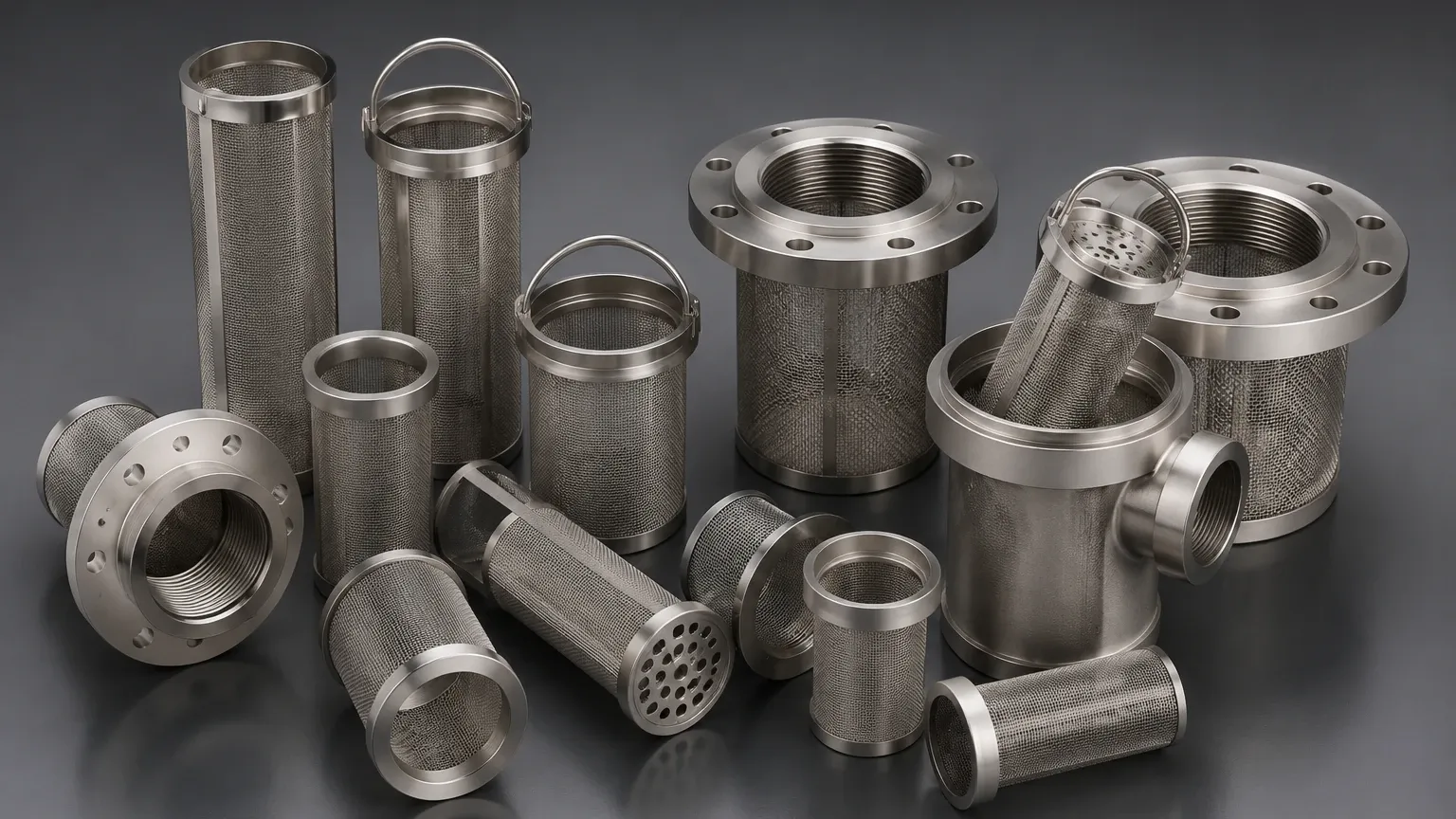
At Kaifil, our expertise in manufacturing precision stainless steel components for filtration allows us to understand the rigorous demands placed on metal hardware. Whether it is a wire mesh basket designed to withstand high-pressure fluid flow or a custom metal component for a structural application, the principles of metallurgy and precision tolerances remain the same.
Engineering Considerations for High-Tension Environments
When integrating strainers in fencing into a project's technical specifications, engineers should consider the following variables to ensure long-term performance:
Thermal Expansion and Contraction
Metal wires expand in heat and contract in cold. In regions with extreme seasonal temperature variations, a fence line can undergo significant stress changes. High-quality strainers must allow for easy adjustment to compensate for these fluctuations. Some advanced systems incorporate heavy-duty springs that provide a "buffer," maintaining relatively constant tension as the wire length changes.
Electrolytic Corrosion (Galvanic Corrosion)
One of the most common mistakes in B2B procurement is mixing dissimilar metals. If a stainless steel strainer is used with a galvanized wire, the zinc on the wire will act as an anode and corrode rapidly at the contact point. It is essential to ensure that the strainer material is compatible with the wire material, or that appropriate insulation/coating is used to prevent galvanic reaction.
Precision of the Ratchet Mechanism
In industrial security fencing, the precision of the teeth on a ratchet strainer is vital. Poorly machined teeth can slip under high load or create stress concentrations that lead to wire breakage. Precision-cast or CNC-machined components provide a more secure lock than cheap stamped-metal alternatives.
Customization and OEM Solutions for Specialized Hardware
Standard off-the-shelf strainers may not meet the requirements of specialized industrial projects. For example, high-security prisons, nuclear power plants, and deep-sea research facilities often require custom-engineered tensioning solutions.
Kaifil’s manufacturing capabilities extend beyond standard filtration products. By leveraging our experience in custom stainless steel fabrication, we support OEM partners in developing specialized metal components that require:
* High-Grade Material Sourcing: Ensuring the exact alloy composition required for specific environmental hazards.
* Precision Manufacturing: Utilizing advanced welding and machining techniques to ensure structural integrity.
* Quality Assurance: Rigorous testing of load capacities and corrosion resistance to meet international standards.
When a project demands more than a generic hardware store solution, working with a manufacturer that understands the complexities of industrial metalwork is essential for reducing the total cost of ownership through extended service life.
Procurement and Quality Standards for Industrial Components
For purchasing teams, evaluating a supplier for strainers in fencing or industrial Strainers & Baskets involves more than just comparing unit prices. The total cost of ownership (TCO) includes installation labor, maintenance frequency, and the cost of potential security breaches or system failures.
Key Evaluation Criteria for B2B Buyers:
1. Material Certification: Always request mill test reports (MTRs) to verify that the stainless steel used is of the grade specified (e.g., confirming the nickel and chromium content in SS304).
2. Load Rating Documentation: Ensure the manufacturer provides technical data sheets specifying the maximum tension the component can safely handle.
3. Finish Quality: Inspect for burrs or sharp edges. In fencing, a burr on a strainer can nick the wire coating, creating a localized spot for corrosion to begin.
4. Consistency: For large-scale infrastructure projects, component consistency is key. Automated manufacturing processes ensure that every strainer in a 5,000-unit order performs identically to the first.
Conclusion: Selecting the Right Solution for Your Infrastructure
While "strainers in fencing" may seem like a simple hardware category, they are critical engineering components that require careful selection based on material science and mechanical load requirements. By moving away from low-grade galvanized options and toward precision-engineered stainless steel components, industrial operators can significantly reduce maintenance overhead and improve the reliability of their perimeter systems.
Whether you are managing a fluid processing plant that requires high-quality Strainers & Baskets or designing a structural wire system that demands robust tensioning hardware, the focus should always be on quality, durability, and technical precision. At Kaifil, we remain committed to providing the technical expertise and manufacturing excellence required to support these demanding industrial applications, ensuring that every component—whether for filtration or tensioning—meets the highest professional standards.
