


Strainers in River
In industrial water management, the intake of raw water from natural sources like rivers presents a unique set of engineering challenges. Unlike treated municipal water or closed-loop systems, river water contains a diverse array of contaminants, ranging from organic debris like leaves and twigs to abrasive sediments and aquatic organisms. To protect downstream equipment—such as centrifugal pumps, heat exchangers, and sensitive instrumentation—the implementation of robust filtration systems is essential. Specifically, the use of industrial strainers in river applications serves as the first line of defense, ensuring that large solids are removed before they can cause mechanical failure or process inefficiencies.
Selecting the correct filtration components for these environments requires a deep understanding of fluid dynamics, material science, and the specific biological profile of the water source. For engineers and procurement teams, the goal is to balance filtration efficiency with operational uptime and long-term durability.
The Critical Function of River Water Intake Strainers
Industrial facilities, including power plants, chemical processing sites, and municipal water treatment works, often rely on river water for cooling or processing. The primary role of Strainers & Baskets in these systems is the removal of macro-solids. Without adequate straining, debris can lead to several systemic issues:
1. Pump Impeller Damage: Large debris or abrasive silt can cause catastrophic failure or rapid wear of pump internals.
2. Heat Exchanger Fouling: Organic matter can lodge in the narrow tubes of heat exchangers, reducing thermal efficiency and necessitating frequent manual cleaning.
3. Nozzle Clogging: In spray systems or irrigation, even small particles can obstruct nozzles, leading to uneven distribution or system shutdowns.
When deploying strainers in river settings, the equipment must be designed to handle high-volume flow while resisting the physical stresses of the environment, such as varying water levels, high-velocity currents, and seasonal spikes in debris load.
Technical Challenges of River Water Filtration
Filtration in a natural river environment is significantly more complex than in a controlled industrial environment. Engineers must account for several variables that do not exist in indoor piping systems.
Seasonal Variability
River conditions are rarely static. During spring thaws or heavy rain events, the concentration of suspended solids and large debris increases exponentially. A strainer system that performs well in the dry season may become overwhelmed during peak flow periods. This necessitates a design that allows for rapid cleaning or features a high dirt-holding capacity to prevent excessive pressure drops.
Biological Fouling
Biological growth is a persistent issue for any equipment submerged in river water. Algae, zebra mussels, and other aquatic life can colonize the surfaces of the strainer mesh or perforated plate. Over time, this bio-fouling restricts flow and increases the frequency of maintenance cycles. Selecting materials with smooth surface finishes or utilizing specific mechanical cleaning designs can help mitigate these effects.
Abrasive Sediments
Rivers often carry high loads of sand and silt. While the primary purpose of a strainer is to catch large debris, the constant flow of abrasive particles can erode the filter media. This is why high-grade stainless steel is the industry standard for these applications, providing the necessary hardness to withstand long-term erosion.
Engineering Criteria for Selecting Strainers & Baskets
When specifying filtration components for river intake, several engineering parameters must be evaluated to ensure the system meets the required performance standards. The choice of filter media and structural design directly impacts the total cost of ownership and system reliability.
Material Selection and Corrosion Resistance
In raw water applications, corrosion resistance is non-negotiable. Stainless steel 304 is often used for general-purpose river intake, but in environments with higher salinity or chemical runoff, Stainless Steel 316 or 316L is preferred. These alloys offer superior resistance to pitting and crevice corrosion, which is vital for components that remain submerged for extended periods.
Filtration Accuracy and Micron Ratings
The "mesh size" or perforation diameter is a critical decision. If the opening is too large, harmful debris will pass through; if it is too small, the strainer will clog too quickly, leading to high maintenance costs. Engineers must determine the largest particle size the downstream equipment can tolerate and select a strainer rating slightly below that threshold. For river intake, this often involves a multi-stage approach: a coarse bar screen followed by more precise basket strainers.
Structural Integrity and Differential Pressure
As a strainer collects debris, the pressure drop (differential pressure) across the filter media increases. In river applications, where debris loads can spike suddenly, the strainer basket must be structurally reinforced to prevent collapsing under high-pressure conditions. Heavy-duty support cages and reinforced seams are standard features in high-performance industrial baskets.
Comparing Strainer Designs for River Applications
Different system configurations require different strainer geometries. Understanding the pros and cons of each design is essential for effective system integration.
Simplex vs. Duplex Basket Strainers
Simplex strainers are used in systems where the flow can be temporarily halted for cleaning. However, for critical river intake systems that must operate 24/7, duplex strainers are the standard. A duplex system consists of two separate strainer chambers connected by a diverting valve. When one side becomes clogged, the flow is diverted to the clean chamber, allowing the operator to service the dirty basket without interrupting the process.
T-Type and Y-Type Strainers
T-Type strainers are often favored in large-diameter river intake lines because they offer a compact footprint and can be serviced without removing the entire unit from the piping. Y-Type strainers are typically used for smaller lines or where the debris load is relatively low, as they have a smaller holding capacity than basket-style designs.
Custom Intake Baskets
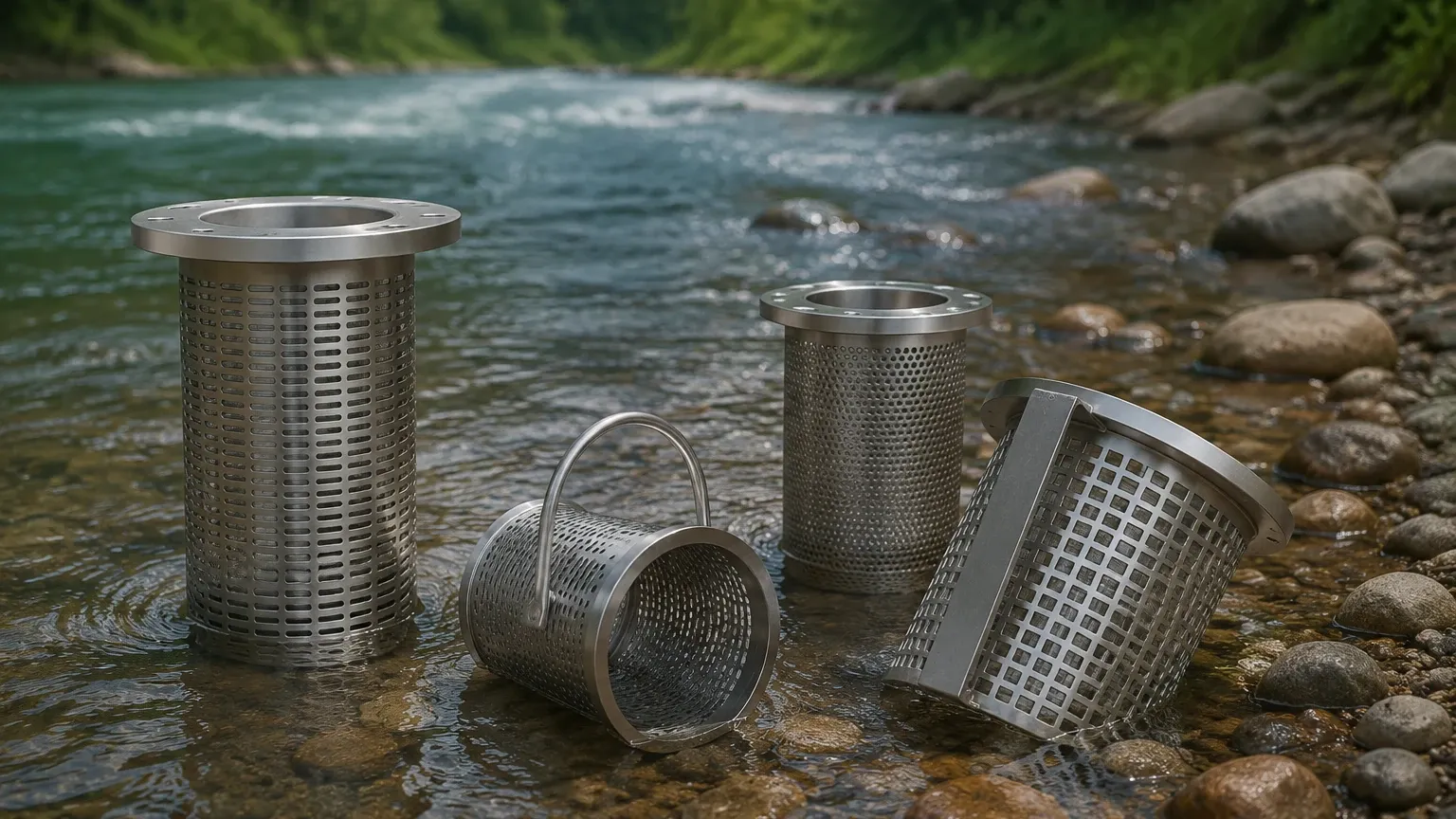
For pump suction lines submerged directly in the river, custom-designed intake baskets or screens are often required. These are engineered to prevent fish and large debris from entering the suction bell while maintaining a low entrance velocity to comply with environmental regulations regarding aquatic life protection.
Maintenance Protocols and Service Life
The longevity of strainers in river environments is heavily dependent on the maintenance regime. A well-designed system includes monitoring tools that allow operators to react before a failure occurs.
1. Pressure Monitoring: Installing differential pressure gauges is the most effective way to track the status of a strainer. A sudden rise in pressure indicates a high debris load or a clog, signaling that cleaning is required.
2. Cleaning Cycles: In high-debris river environments, manual cleaning can become labor-intensive. Automated backwashing strainers are an alternative for high-flow applications, using a portion of the filtered water to periodically flush debris from the screen.
3. Inspection for Wear: Even the most durable stainless steel components eventually show signs of wear. Regular inspections should check for mesh blinding (permanent clogging), mechanical deformation of the basket, and signs of localized corrosion.
By establishing a clear replacement cycle and keeping spare baskets on-site, facilities can minimize the risk of unplanned downtime.
Customization and OEM Solutions for River Filtration
Off-the-shelf filtration products often fall short in complex river intake scenarios. Customization is frequently necessary to accommodate specific flow rates, space constraints, or unique debris profiles. As a professional manufacturer, Kaifil specializes in developing tailored Strainers & Baskets that meet precise engineering specifications.
Customization options include:
* Variable Mesh and Perforation: Combining different layers of wire mesh and perforated plate to achieve specific filtration levels with high structural strength.
* Specialized Coatings: Applying epoxy or other protective coatings to enhance resistance in particularly aggressive water conditions.
* Custom Dimensions: Engineering filter components to fit existing housings or unique intake structures, which is critical for retrofit projects where space is limited.
Working with an OEM manufacturer allows engineering teams to ensure that every aspect of the strainer—from the alloy grade to the handle design for easy removal—is optimized for the specific demands of the river environment.
Total Cost of Ownership (TCO) in River Filtration
When evaluating filtration solutions, it is a mistake to focus solely on the initial purchase price. The total cost of ownership (TCO) includes maintenance labor, the cost of replacement parts, energy consumption (due to pressure drops), and the potential cost of downstream equipment damage.
Investing in high-quality stainless steel strainers with a design optimized for the specific river conditions may have a higher upfront cost but significantly reduces OPEX over the life of the system. Durable, high-performance baskets require fewer replacements and provide better protection, ensuring that the entire water intake system remains efficient and reliable.
Conclusion: Optimizing Industrial Water Intake Systems
Effective filtration is the cornerstone of any industrial system relying on river water. By selecting the right strainers in river applications, engineers can protect their infrastructure from the unpredictable nature of raw water sources. Success depends on a technical approach to selection, focusing on material durability, structural integrity, and the ability to handle fluctuating debris loads. Whether through standard basket strainers or custom-engineered OEM solutions, the goal remains the same: achieving consistent, reliable filtration that supports the long-term health of the industrial process.
